

You’ve probably come across the viral ads promising to fix blurry vision in just seven seconds using a so-called “Eye Flow Hack.” With oatmeal visuals, sensational testimonials, and phrases like “Red Root Hack” or “cancelled optometrist,” these ads lead to a product called Retina Clear. It claims to restore 20/20 vision, improve blood flow to the eyes, and support eye health naturally. But is there any truth behind the claims, or is this just another cleverly marketed scam? Let’s break it down.
Scam Overview: How the Retina Clear Ads Mislead Consumers
Retina Clear is marketed through a network of deceptive online advertisements rather than through credible medical channels. The scam isn’t just about a product; it’s built on a manipulative advertising ecosystem that exploits consumer fears and hopes. Here’s how the ad system itself is the real con.
The Red Flags in the Ads
1. Fake Authority and Scientific Buzzwords
The ads are plastered with words like “Harvard,” “Oxford-backed,” “vascular eye flow,” and “clinically proven.” However, none of these claims are supported by actual studies or verified endorsements. There is no evidence linking the promoted methods to any research from reputable institutions.
2. Clickbait Titles and Thumbnails
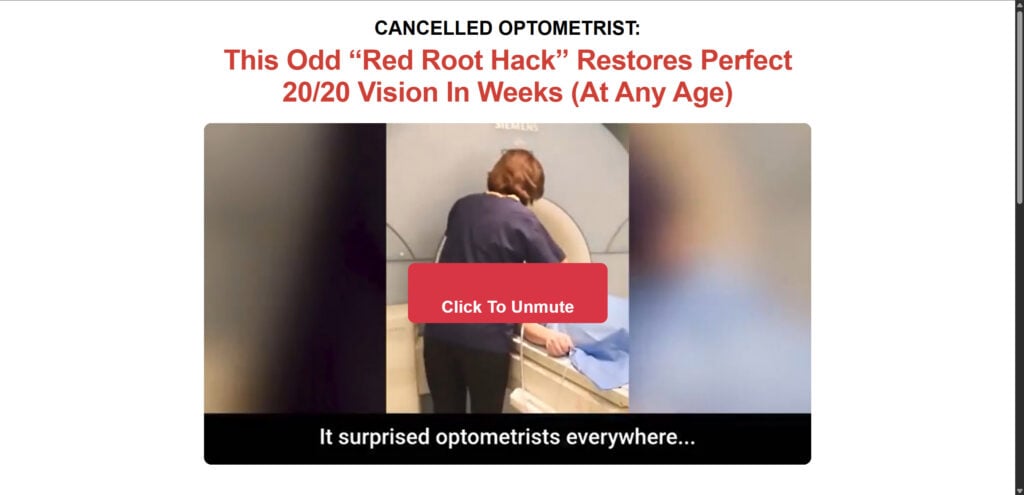
Examples like “Cancelled Optometrist Reveals Vision Secret” or “Red Root Hack Restores 20/20 Vision in Weeks” are designed purely to grab attention. These ads mimic news articles or health reports, misleading viewers into thinking the content is medically or journalistically vetted.
3. Manipulative Visuals
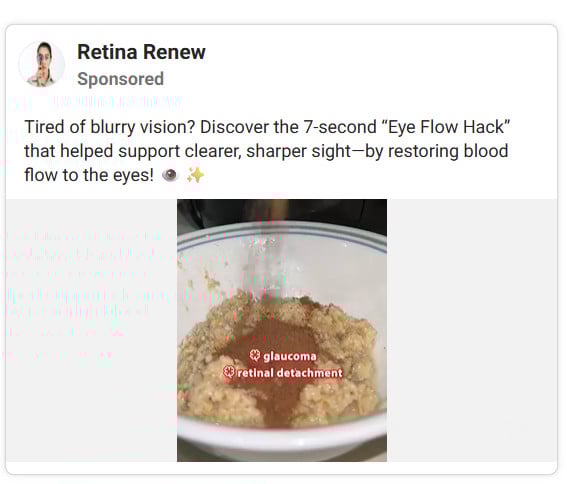
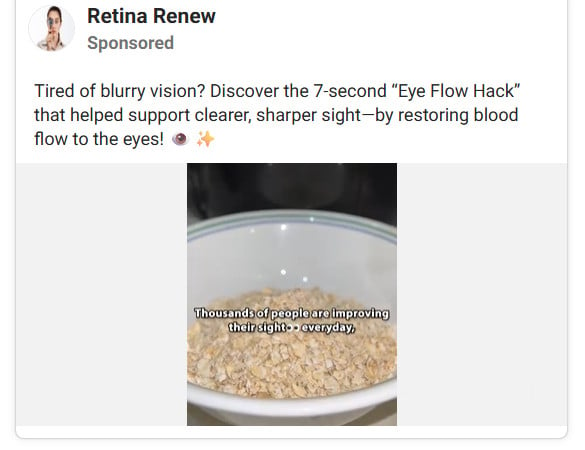
Many ads use close-up shots of oatmeal with cinnamon, or clips of people applying strange remedies to their eyes. These visuals imply a natural remedy or life hack, only to funnel viewers toward buying Retina Clear pills. It’s a classic bait-and-switch tactic.
4. Fake Testimonials and Social Proof
The ads show people claiming to have reversed serious eye conditions like glaucoma or retinal detachment. The images and quotes appear staged or are lifted from stock photo databases. None of the endorsements can be verified.
5. Pretend News Coverage and Misused Logos
Logos from CNN, NBC, NIH, and Johns Hopkins are often shown to give the illusion of credibility. But these organizations have never endorsed Retina Clear or any of the methods mentioned in the ads. It’s a false association meant to exploit trust in authority.
6. Long-Form Video Funnels
Clicking on an ad typically leads to a lengthy video filled with emotional storytelling and misleading science. These videos are crafted to maintain your attention and build trust before revealing Retina Clear as the “solution.”
7. Limited-Time Offers and Fake Scarcity
Ads claim there are “only 4 bottles left” or “limited stock for your area.” These tactics are used to rush decision-making and suppress critical thinking.
How the Retina Clear Ad Scam Works
This scam isn’t random. It’s an orchestrated digital marketing campaign engineered to extract money from vulnerable users. Here’s a detailed look at each stage of the funnel:
Step 1: Social Media Hook
Users first see a video or static ad on platforms like Facebook, YouTube, or Instagram. These ads often mimic the style of personal testimonials, fake medical reports, or DIY health hacks.
Step 2: Misdirection Through Storytelling
Once the user clicks, they’re taken to a long-form video or blog post. These stories are usually fictionalized narratives involving someone who “almost went blind” but found a miracle remedy. It builds emotional tension while withholding the product’s identity.
Step 3: Fake Science and Medical Jargon
The content then introduces unproven concepts like “eye blood vessel blockage” or “neural vascular disconnection.” These terms are meant to sound plausible but are unsupported by real ophthalmological science.
Step 4: Product Reveal
After luring the user with storytelling and fake science, the video or article finally reveals the solution: Retina Clear. At this point, the user has invested time and emotion, making them more likely to purchase.
Step 5: High-Pressure Sales Funnel
A limited-time offer appears. Claims of free shipping, discount bundles, and “today-only” pricing are introduced. The goal is to convert the viewer before they have time to research.
Step 6: Obscured Purchase Details
The checkout process often lacks transparency. There is little information about refunds, recurring charges, or shipping policies. Once payment is submitted, customers frequently find it difficult to get support.
Step 7: Ongoing Charges and Subscription Traps
Many users report unauthorized recurring charges on their accounts. What appears to be a one-time purchase turns into a subscription without clear consent.
What To Do If You Have Fallen Victim to the Retina Clear Ad Scam
1. Dispute the Charges Immediately
Call your credit card company or bank to report the unauthorized transaction and request a chargeback. Provide evidence if possible.
2. Cancel Any Recurring Payments
Check your bank statements for future charges. If you’re enrolled in a subscription, request cancellation through your card provider.
3. Report the Scam to Authorities
Submit a complaint to the FTC at https://reportfraud.ftc.gov. This helps build a case against fraudulent advertising networks.
4. Warn Others Publicly
Post your experience on consumer forums, Reddit, Trustpilot, or BBB. This spreads awareness and can prevent others from falling victim.
5. Monitor for Identity Theft
If you entered personal information, consider running a credit check or setting up identity protection to guard against further fraud.
6. Scan Your Device
Use malware protection software to check for adware or spyware installed from scam websites.
7. Contact Your Email Provider
If you signed up with your email, mark future messages as spam and block the sender to stop further promotional content..
Frequently Asked Questions (FAQ)
What is Retina Clear?
Retina Clear is a vision supplement marketed online that claims to restore eyesight, support eye health, and improve blood flow to the eyes using a “7-second Eye Flow Hack.” It is primarily advertised through social media and clickbait-style video sales pages.
Is Retina Clear FDA approved?
No, Retina Clear is not approved by the U.S. Food and Drug Administration (FDA). It is sold as a dietary supplement, which means it is not subject to the same rigorous testing and regulation as prescription medications.
Can Retina Clear really improve your vision?
There is no verified scientific evidence that Retina Clear can improve or restore vision as advertised. The product’s claims are not supported by clinical trials or peer-reviewed studies, and many of its testimonials and references appear misleading or fabricated.
Who is behind Retina Clear?
The company behind Retina Clear does not publicly disclose its full name, address, or contact details. This lack of transparency is a red flag and typical of potentially deceptive online supplement sales.
Are the testimonials on the Retina Clear website real?
Many of the testimonials appear to be stock images or scripted content. There is no verifiable evidence that the individuals shown are real customers or that they experienced the advertised results.
Is the “7-second Eye Flow Hack” real?
No. The “7-second Eye Flow Hack” is a marketing phrase with no medical or scientific basis. It is used as a hook to lead consumers into purchasing Retina Clear.
How much does Retina Clear cost?
Pricing varies depending on the promotion or sales page, but typical packages range from $39 to $69 per bottle. There may also be upsells or subscriptions disguised as one-time purchases.
What happens after I buy Retina Clear?
Some customers report receiving the product, while others experience delayed shipping or never receive anything at all. There are also complaints about being enrolled in recurring billing without clear consent.
Can I get a refund?
While Retina Clear advertises a money-back guarantee, many consumers find it difficult to obtain a refund. The process is unclear, and customer service is often unresponsive or untraceable.
Where is Retina Clear manufactured?
The product labeling and website do not provide clear information about where Retina Clear is manufactured, making it difficult to verify the quality or safety standards behind its production.
What should I do if I ordered Retina Clear?
If you made a purchase and suspect it was a scam, immediately contact your bank or credit card provider to dispute the charge. You should also report the incident to the FTC and monitor your accounts for any suspicious activity.
The Bottom Line
Retina Clear isn’t just about a questionable supplement—it’s part of a larger scam network built around misleading advertisements. These ads use fear, false hope, and psychological manipulation to trick consumers into buying unverified health products.
The most effective way to protect yourself is to recognize the warning signs, avoid clickbait ads, and rely on licensed healthcare providers for medical concerns. Stay cautious, ask questions, and always verify before you buy.

Join the discussion
7 commentsShare your experience or ask a question about this article.
Discussion
Thank goodness for people like Thomas. I almost took Retina’s bait. After the ridiculous long video, I knew this was a money scam trap. I have watched many other videos like this one, with the same results. Fake everything, absurd fees, no customer support, etc. To top it off, when I verified if this was legit, i landed on another scam, Vision 20. Then I found Thomas’s website for the true story, and he won’t be lacking for investigating scams. I have an account now. Thanks, Thomas.
In reply to Judine W.
Thank you – and you did the most important thing, which was to stop and check before paying. The detail you mention at the end is the part people rarely notice: when you went to verify it, you landed on another one. Those “is X legit?” pages are frequently written by the same operation, or by affiliates earning commission, precisely to catch people at the moment of doubt and reassure them.
A rule that survives all of it: verify the claim, not the product name, and do it somewhere that is not selling anything. If the only sources discussing it are review pages with a buy button, that is your answer.
Thanks for this. A massive red flag for me was the constant mention of myopia and short-sightedness as two different conditions. Really?! Did they come down in the last shower, or were they assuming that i did?
In reply to Joy
Hi Joy, exactly. Treating “myopia” and “short-sightedness” as separate conditions is a strong sign the ad copy was not written by credible medical professionals. Details like that are often what expose these campaigns.
In reply to Joy
Hi Joy, exactly.
Treating “myopia” and “short-sightedness” as separate conditions is a strong sign the ad copy was not written by credible medical professionals. Details like that often expose these campaigns.
Thank you, i almost bought this garbage. There story is so convincing. Thank you 1000 X 1000. They would have stole my money.
In reply to Mike Cheatham
Hi Mike, thank you for commenting.
That is exactly why these scam ads are so dangerous. They are written to sound convincing, professional, and urgent enough to push people into buying before they stop to verify anything. I’m glad you checked first and avoided losing money.