

There has been a growing buzz around Junie Boutique, a supposed handmade leather shop offering elegant bags, belts, and accessories at striking discounts. The website presents a charming story of a retiring craftswoman, a final sale, and an emotional farewell that seems designed to tug at the heart. At first glance, everything appears warm, nostalgic, and trustworthy.
Yet many shoppers have walked away from the experience feeling confused, disappointed, or misled. If you have come across this boutique and wondered whether its offers are genuine, you are not alone. This guide breaks everything down clearly so you can understand what is really happening behind the curtain and what steps to take if you were affected.
Scam Overview
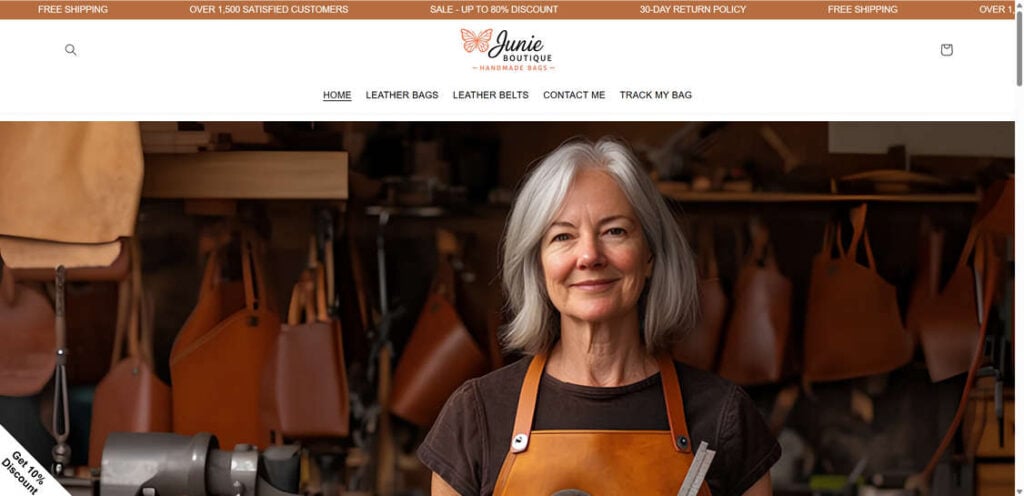
Junie Boutique markets itself as a small handmade leather studio run by an older artisan preparing for retirement. The story is familiar to anyone who has seen recent closure and retirement scam sites spreading across social media. These websites use high quality photos, emotional narratives, and aggressive discounts to create a powerful sense of urgency. The goal is to make shoppers feel like they have discovered a rare, personal opportunity to buy artisanal goods before they disappear forever.
The surface presentation looks polished. Junie Boutique uses modern layouts, friendly typography, and attractive product images. Each bag is photographed in warm lighting, often with props that suggest a rustic workshop or a carefully curated artisan environment. The copywriting throughout the site appears sentimental and sincere, speaking about tradition, craftsmanship, and a lifetime of passion poured into every stitch.
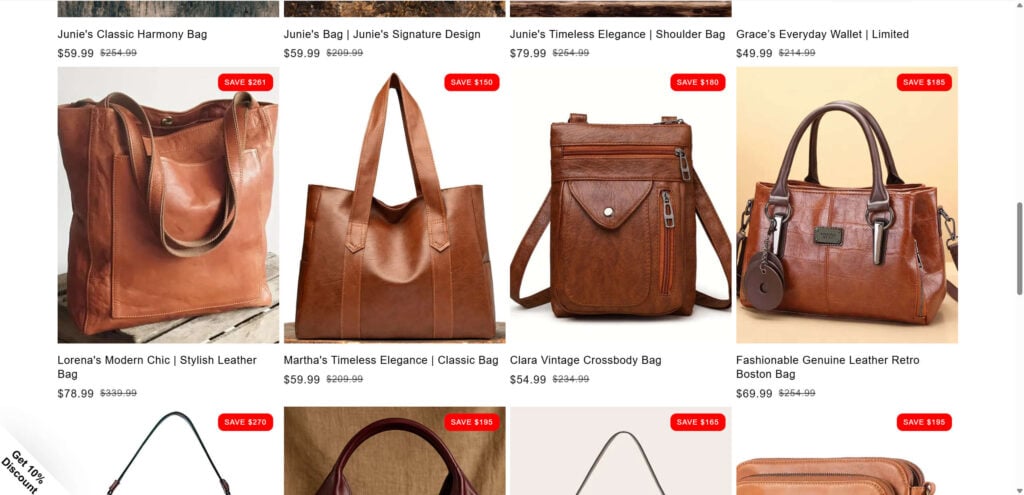
But when you look deeper, cracks begin to appear. The first major red flag is the pricing structure. Leather bags advertised as handcrafted, high quality, and originally valued at more than $250 are routinely slashed to $49.99 or $59.99. The discounts stretch far beyond standard retail practices and are clearly designed to spark impulse buying. High quality leather goods take time, labor, and material cost. A price drop of more than 70% raises questions immediately about authenticity and sourcing.
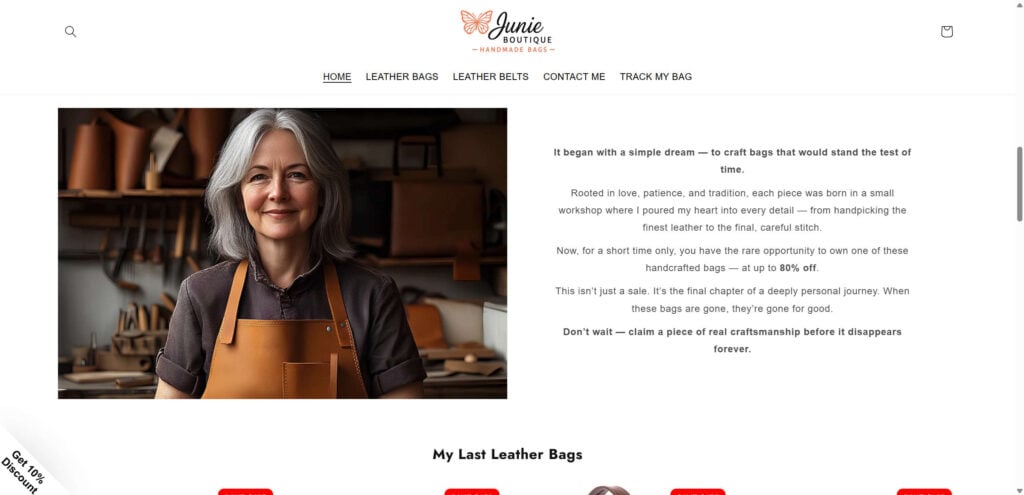
The website also uses AI generated photography, especially for portraits of the alleged craftswoman. The images show telltale signs of blending artifacts, imprecise details, and unnatural background elements. Several of the photos appear in reverse, heavily retouched, or inconsistent with each other, suggesting that the “Junie” persona is a fictional character created to support the emotional narrative.
Product images are another major warning sign. Many are identical to mass produced leather bags found on marketplaces like AliExpress, Temu, and DHgate. Sellers on these platforms often offer the same designs for extremely low prices, which signals that Junie Boutique is not producing handcrafted goods but instead reselling cheap imports with inflated discounts.
Shipping behavior is another point of concern. Customers often report that packages take weeks to arrive or never arrive at all. When they do arrive, the contents are not as described. Many buyers receive imitation leather products with poor stitching, flimsy hardware, and a smell associated with low grade synthetic materials rather than genuine leather. These issues are consistent with dropshipping operations that source products from overseas factories with little quality control.
Communication is also a challenge. Scam boutiques typically provide either no customer service or extremely slow, template based responses. Refund requests often go unanswered. When a response is provided, customers are told they must return their order to an address in China, which forces the buyer to pay expensive international shipping fees. This tactic discourages returns and ensures the business keeps most of the money while avoiding accountability.
The return policy itself is crafted to appear generous on the surface. Junie Boutique promotes a 30 day money back guarantee, which suggests confidence in the products. In practice, however, the policy is almost impossible to use. Processing times are lengthy, return instructions are unclear, and return addresses are often deliberately vague. Many customers find that after they request support, the company stops responding altogether.
Reviews on independent platforms reflect a consistent pattern. Shoppers describe feeling misled, receiving inferior products, or never receiving their orders at all. Complaints often mention tracking numbers that do not update, parcels that appear stuck in transit indefinitely, or shipping notifications that never correspond to an actual package.
Another issue is the emotional manipulation used throughout the site. Junie Boutique features long stories about a retiring artisan, decades of craftsmanship, and a final sale meant to thank loyal customers. These narratives are identical to those found on dozens of known scam sites. It is a copy based formula designed to build trust quickly and bypass skepticism. The intention is to create a sense of connection with shoppers and encourage purchases based on sentiment rather than logic.
The checkout system also raises questions. Payment is typically handled through third party processors that provide limited consumer protection. Unlike reputable merchants, these systems do not offer extensive buyer safeguards. Once funds are transferred, it becomes difficult to dispute the transaction, especially when dealing with unresponsive vendors.
The urgency messaging is another tool used to pressure buyers. Phrases like “final sale”, “last chance”, “shop before it is gone forever”, and “only a few left” are placed throughout the site. Limited time offers are prominent, and pop ups often announce that other customers are buying the same product. These tactics create fear of missing out and encourage fast decisions.
Taken together, the polished storefront, emotional storytelling, new domain registration, cheap sourcing, delayed or missing shipments, low product quality, and poor customer service form a complete pattern that aligns with widely recognized e commerce scam structures. Junie Boutique does not operate as a genuine artisan workshop. Instead, it uses the appearance of a personal studio to disguise a mass produced dropshipping scheme.
The website is built to blend credibility with emotion, creating a compelling illusion of authenticity. This combination can make it difficult for customers to identify the warning signs until after they have placed an order. The goal of this overview is to help you understand how each element fits into the larger picture and why the concerns around Junie Boutique are significant.
How The Scam Works
The Emotional Hook
The scam begins with storytelling. Visitors are greeted by photos of an older craftswoman in a leather workshop and a heartfelt message stating that she is retiring. The message speaks about love, tradition, and a lifetime of handcrafting leather goods. This narrative is designed to create trust instantly. It gives the impression of a small family run business that needs support.
The emotional appeal is powerful. People often want to support artisans, especially when the work seems personal or nostalgic. By introducing the idea of a closure or retirement, the website adds urgency and sentiment, two psychological triggers that increase conversions.
The Illusion of Handmade Quality
The products on the site are presented as handcrafted items made with premium leather. Each bag appears in rich, well lit product photos that suggest texture, warmth, and fine craftsmanship. The descriptions emphasize durability, tradition, and attention to detail.
However, these same designs can be found on multiple wholesale websites, often priced at less than $20 before shipping. The claim of handmade craftsmanship is not supported by any traceable evidence. There are no workshop photos beyond AI generated images, no videos of production, and no verifiable background on the supposed artisan.
The Massive Price Slashes
Once customers are drawn in by the emotional story, they encounter dramatic discounts. Bags allegedly retailing for $254 are reduced to $49.99. Larger totes originally priced at $339 are offered for $78.99. The price cuts appear significant enough to create a sense of extraordinary opportunity.
Customers believe they are buying a luxury product at a rare price. In reality, the price reflects the low cost of mass produced factory goods. The inflated original pricing is fabricated to create the illusion of value.
The Checkout Push
The website uses several tools to encourage fast purchasing:
- Constant reminders of limited stock
- Pop ups showing supposed recent purchases
- A countdown timer or sale end date
- Buy more save more discounts
These tactics create fear of missing out and reduce the time shoppers spend evaluating the brand. Many customers act before fully assessing credibility.
The Dropshipping Pipeline
When an order is placed, Junie Boutique does not ship products from a local artisan workshop. Instead, the order is forwarded to an overseas factory or warehouse. The vendor then ships the package directly to the customer.
This leads to several problems:
- Extremely slow shipping times
- Lack of quality control
- Inconsistent product appearance
- No accountability for errors or defects
Dropshipping itself is not inherently unethical. Many brands use it responsibly. The issue arises when a company claims to sell handcrafted, premium items while actually sourcing cheap mass produced goods.
The Poor Quality Products
Customers who do receive a package often report that the product inside is entirely different from what was advertised. Common issues include:
- Thin, imitation leather instead of genuine leather
- Chemical odors from synthetic materials
- Fraying edges and uneven stitching
- Rusty or low grade metal hardware
- Misaligned pockets and zipper issues
- Wrong colors or sizes
The contrast between the advertised photos and the delivered items can be dramatic.
The Return Trap
The return policy appears generous. It promises a 30 day money back guarantee. The site claims customer satisfaction is a priority.
In reality, returns are nearly impossible.
When customers request a refund, they are often told to mail the product back to a warehouse in China. International shipping can cost more than the product itself. Some customers are provided incorrect or non functional return addresses. Others simply never receive a reply.
By making returns expensive, confusing, or unreachable, the company effectively prevents refunds.
The Sudden Silence
After customers complain, communication often stops. Emails go unanswered. Customer service becomes inaccessible. Tracking numbers stop updating. Many customers realize too late that the business has no real support team behind it.
This silence is a critical part of the scam. Once the company has the payment, their goal is to minimize engagement and avoid accountability.
The Website Disappears
Many scam boutiques follow a pattern where they operate for a few months, collect payments, and then shut down the domain. Later, the same operators launch a new website under a different name but with identical design, storytelling, and products.
Junie Boutique shows several similarities with known brands that have already disappeared after scamming thousands of shoppers.
The Emotional Manipulation Cycle
The scam works because it combines emotion with urgency. Shoppers feel they are helping a retiring artisan. They feel they are buying something meaningful. They feel they are getting a rare deal. This combination reduces skepticism and increases the likelihood of impulse purchases.
Understanding how this manipulation works is key to recognizing similar scams in the future.
What To Do If You Have Fallen Victim to This Scam
- Contact your bank or credit card provider immediately
Explain that you purchased from a deceptive website that misrepresented its products. Ask to file a chargeback. Banks often approve disputes, especially when goods were not delivered or were counterfeit. - Document everything
Take screenshots of the website, product descriptions, emails, tracking numbers, and the items you received. This evidence strengthens your case in chargeback investigations. - Report the transaction to your payment platform
If you used PayPal, initiate a dispute promptly. Provide details about misleading advertising and product quality issues. - Stop further communication with the seller if they become evasive
Scam operators often use delay tactics. Do not allow them to stall your refund window. - Report the website to online fraud portals
Include agencies such as the FTC, BBB Scam Tracker, and your local consumer protection office. These reports help authorities track patterns. - Warn others by sharing your experience
Leave honest reviews on independent platforms. Your feedback can help prevent others from falling into the same trap. - Monitor your financial accounts
Scam websites sometimes attempt unauthorized future charges. Keep an eye on your statements for at least several months. - Use this experience to build future online shopping habits
Research new stores before buying. Look for independent reviews, established domain ages, and transparent business information.
The Bottom Line
Junie Boutique is designed to look heartfelt, handcrafted, and trustworthy, but the deeper you look, the clearer the risks become. The emotional retirement story, dramatic discounts, AI generated imagery, and mass produced products all point to a deceptive operation built to capitalize on impulse buyers. Many customers receive low quality goods or no goods at all, and refunds are extremely difficult to obtain.
If you have already been affected, take action quickly through chargebacks and consumer protection channels. If you have not yet purchased, use this information to protect yourself and shop only from verified, reputable retailers.
FAQ
Is Junie Boutique a legitimate handmade leather shop?
No. The products are not handmade and are sourced from low cost overseas factories. The website uses emotional storytelling and AI generated images to appear authentic, but customer experiences show that it does not operate as a real artisan workshop.
Why are the prices so heavily discounted?
The steep discounts are designed to push fast purchases. The original prices are inflated to create the illusion of luxury items being sold at a rare final sale.
Do customers receive the products they order?
Some customers receive packages, but the items are often low quality, made from imitation materials, and very different from the photos. Many buyers report that orders never arrive at all.
Can I get a refund from Junie Boutique?
The website lists a 30 day return policy, but refunds are extremely difficult. Customers are usually asked to ship items back to China at their own expense, which makes returns impractical.
How can I get my money back?
The best method is to file a chargeback with your bank or credit card provider. Provide evidence that the product was misrepresented or never delivered.
Why does the website look professional if it is a scam?
Scam operators often use polished website templates, AI generated photos, and emotional narratives to build trust quickly. A professional appearance does not guarantee legitimacy.
Are there similar scams online?
Yes. Many scam stores use the same “retiring artisan” story, the same product images, and the same pricing tactics. Junie Boutique follows a well known pattern.
What should I do if I already placed an order?
Collect all evidence, contact your bank immediately, and request a chargeback. Monitor your account for any suspicious activity.
How can I avoid scams like this in the future?
Research any shop before buying. Check domain age, independent reviews, refund policies, and product photos. If a sale looks too good to be true, proceed with caution.









I won’t even go into detail about my experience since it 100% reflects everything above. I will say that my returned package (yes, I was so angry at them for only being willing to give me 20% of what I spent that I chose to return the items back in August 2025) arrived yesterday as “refused”, and at that point I contacted my credit card company even though it was 8 mos later. So it’s in dispute but I expect Citizens will refund my money. Unfortunately all the research I did back in August didn’t show that this was a scam site, which is now defunct.
Thank you for sharing your experience, Heather. A refused return package and months of delay only add to the concerns around operations like this. I’m glad you disputed the charge, and I hope your card issuer resolves it in your favor. Your comment may help others act faster if they run into the same problem.
This Junie website is not what it claims to be. I received merchandise and immediately attempted a RETURN (within a few days) well within the 30 days “no questions asked” time frame. UNLIKE other on line companies I have used (ATHLETA, Fabletics, VICTORIA SECRET , macys,etc) NO RETURN INFORMATION WAS INCLUDED with the packaging. When I attempted to reach the ORIGINAL WEBSITE I ordered from (in order to get return phone# or customer service information the website was SHUTDOWN. I then told my CREDIT CARD COMPANY and filed a complaint. I then gave (the credit card company ATHLETA MASTERCARD) all the relevant information they asked for and they told me THEY I SHOULD WAIT FOR A LETTER FROM MC BEFORE ANY FURTHER ACTION ON MY PART. And a credit would be issued. The credit was issued and I waited, and waited, and waited until FEBRUARY 9,2026 letter arrived DENYING MY REFUND. Several erroneous claims were made in the LETTER and “Junie” response to the refund. 1)MC letter said I have 10?days to respond (letter dated JANUARY 26. Today is FEBRUARY 9. That’s 14 days ALREADY PASSED THE DEADLINE. 2) “Junie” reponse and documentation did NOT address the issue of the complaint. A) they showed ALL DOCUMENTATION SHOWING product ordered, delivered, and NO COMPLAINT as to product NOT BEING CORRECT. B) none of which addressed my COMPLAINT that there was no way to contact company for a refund or return. C) in addition product was not as advertised BUT THIS WAS NOT A REQUIREMENT OF THE PROPOSED RETURN. D) MC told me BOT to do anything until I received their(MASTERCARD RESPONSE LETTER). So I did NOT. So now I have appt tomorrow morning at the convenient hour (5am PT. Their manager dispute dept is available 8am-5pm ET. (So 5:00am -2:00pm PT). Which for a national company is utterly radiculous. So I will speak with someone at 5am since I work 6:00am to 5:30pm. And have NO OTHER OPTION. I HATECTO SAY IT but in future I will avoid SMALL INDEPENDENT SELLERS. (Many of whom are probably very reputable trying to run a small business, but the aggravation , time spent, poor customer service, etc isn’t worth the effort to order from unknown companies). And Mastercard was very disingenuous in there handling this matter. 1)TOLD TO WAIT FOR A LETTER from them in the mail. In that LETTER THEY SAID THEY TRIED TO CONTACT ME on JANUARY 22 and 26. They do NOT say how they tried to contact me. And I received no such letters on those dates. I WAS TOLD TO WAIT FOR THERE LETTER PRIOR TO ANY FURTHER ACTION FROM ME. I did and in the letter NC did NOT ADDRESS THE ORIGINAL COMPLAINT. “NO WAY TO RETURN THE MERCHANDISE UNDER THE 30 day no questions asked policy. “. So I will wait to hear at 5:00am tomorrow. TR.
Tom, what you’re describing fits a very common “pop-up store” pattern: the site promises easy returns, ships an item, then disappears or makes returns practically impossible. When that happens, the dispute often turns into a paperwork fight where the merchant avoids the real issue and only proves “delivered.”
Here’s how I’d frame it with your card issuer so they are forced to address the actual complaint.
What to tell the dispute department (keep it simple and factual)
Your dispute is not “item not received.”
It is “return/refund not honored” because the merchant provided a “30-day no questions asked” policy but did not provide a working method to return (no return instructions in package, website unavailable, no customer service path).
You attempted to return within the stated window.
Make it clear you acted within days, but there was no valid return channel.
The merchant response did not address the dispute reason.
Their documentation only shows order and delivery. It does not show:
return instructions included in packaging
a valid return address or RMA process
a working customer service email/phone
proof they accepted returns during that period
The deadline problem is on their side, not yours.
If the letter says “10 days” but you received it after the deadline, tell them you are requesting the case be reopened or the response window extended because you were not given a fair chance to respond.
What to bring/send as evidence
Screenshot of the “30-day no questions asked” return policy (if you have it)
Screenshot showing the website was down/unreachable (or any “site not found” page)
Photos of the packaging showing no return label, no return sheet, no return address
Copies of your messages/attempts to contact them and the lack of reply
The denial letter, plus the envelope date (if available) to show late delivery
On the call tomorrow, ask for these specific things
A supervisor or chargeback specialist (not front-line customer service)
A copy of the merchant’s full rebuttal package
The exact dispute reason code they used and to change it (if needed) to “refund/return not honored”
Written confirmation that your response is accepted despite the letter arriving late
If they still refuse to fix it
If the issuer won’t reopen or correctly evaluate the dispute, file a complaint with the Consumer Financial Protection Bureau (CFPB) against the card issuer, and attach the same evidence. It often forces a proper review.
For future purchases, your takeaway is right, but you don’t have to avoid all small sellers. Just do a quick pre-check: real contact info, real return address, policy that matches the domain, and pay with a credit card so you have dispute leverage.