

Keter, a leading manufacturer of plastic home storage and outdoor furniture products, is being targeted by elaborate clearance sale scams. Fraudulent websites are popping up that falsely claim to offer deep discounts on Keter merchandise.
These fake e-commerce sites are being promoted via Facebook and Instagram ads, luring customers in with dramatic discounts up to 90% off Keter products. However, the sites are complete shams designed to steal money and data from shoppers.
Unsuspecting victims place orders believing they are getting incredible deals on Keter bins, sheds, coolers and furniture. But they end up receiving nothing, cheap counterfeits, used or damaged goods, or completely incorrect items.
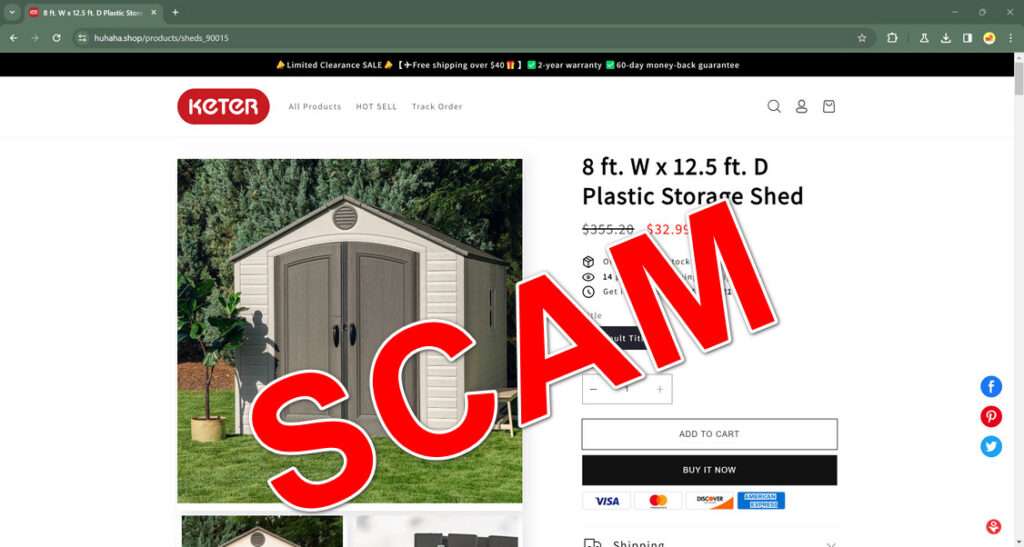
Overview of the Keter Clearance Sale Scams
The Keter clearance sale scams operate by creating fake yet convincing websites that closely mimic real online shopping sites. Keter’s trademarks, product imagery and brand design assets are used without authorization to make the scam sites appear legitimate.
Scammers purchase Facebook and Instagram ads pointing to their fraudulent sites, promising clearance discounts of up to 90% off all Keter products while supplies last. Prices are set unrealistically low in order to attract deal seekers.
When victims visit the sites and submit orders, their personal and payment data is harvested by the scammers. However, no legitimate Keter merchandise is ever shipped out. The majority of orders go completely unfulfilled, while some receive cheap imitation products.
These scams originate out of criminal cybercrime groups in China that run networks of fraudulent retail websites promoting clearance sales from major brands. Keter is just one of many brands being illegally impersonated and used to swindle consumers.
How the Fake Keter Clearance Sale Scams Work
Here is an in-depth look at how the scammers operate these fraudulent Keter clearance sale websites to deceive and defraud customers:
1. Realistic Website Design
The fake sites are elaborately designed to precisely mimic the appearance of a legitimate online retail store selling Keter products. Keter’s official brand assets and product imagery are used liberally without permission.
The site navigation will typically include categories found on Keter’s real website, and showcase Keter’s full range of outdoor storage, furniture, and other products at deep clearance prices.
Checkout processes, legal pages, shipping pages, and account registration all mirror a real shopping site to help fool victims. Sites may even list fake bad reviews to appear more legitimate.
2. Social Media Promotion
The scam websites rely heavily on sponsored posts and ads on Facebook and Instagram to drive a high volume of traffic to their sites.
These ads tout the fake clearance sales, with calls-to-action like “Going out of business!”, “Store closing sale!” and other manipulative messages intended to create urgency and pressure victims to purchase quickly.
The ads are geo-targeted and designed to reach users identified as likely consumers of Keter’s product categories based on interests and demographics. This maximizes the scam’s exposure among relevant audiences.
3. Deceitful Checkout Process
When a victim visits one of the fraudulent sites and attempts to purchase clearance items in their cart, they are taken through a deceptive but convincing checkout process.
All personal and payment information entered, including name, address, phone number and credit card details, goes directly to the scammers. The site provides order confirmations with a fake tracking number to complete the ruse.
In reality, these sites have zero inventory or shipping capabilities. But victims believe their order is processing normally as on any major retail website.
4. Failure to Ship Ordered Products
Although a confirmation with a tracking number is provided after checkout, no legitimate products ever ship out from these fraudulent clearance sale websites.
The majority of orders go completely unfulfilled, allowing the scammers to profit while victims receive nothing.
In some cases, victims may receive knock-off imitations made with poor quality materials and inferior to the advertised product specs. Or a random, cheap product unrelated to the order may ship instead.
Either way, the customer ends up scammed out of their money without receiving any authentic Keter products. The scammers pocket the payments while keeping all personal data taken from victims during checkout.
Recognizing Red Flags of the Scam
While the fake sites appear convincing, upon closer analysis there are a number of red flags that can help identify the Keter clearance sale scams:
- Extremely low prices, like 90%+ discounts that are unrealistic
- Brand new website domain registered right before launching ads
- Lack of company information or details about operations
- No customer service phone number, physical address or live support
- Privacy policies, Terms copied from other websites
- Poor grammar, typos, and other sloppy mistakes
- High-pressure tactics urging immediate purchase
- No mention of shipping rates, delivery timelines, or tracking
- Zero product reviews or questionable reviews
Spotting these warning signs helps protect consumers from getting ripped off by these sophisticated fake clearance sale scams.
Identifying This Scam on Facebook
The Keter clearance sale scam spreads on Facebook primarily through targeted sponsored ads. Here are tips for spotting this scam on Facebook:
- Scrutinize ads promoting unbelievable prices like 90% off Keter products. Legitimate retailers won’t offer such dramatic discounts.
- Check the destination URL — scam sites will have a suspicious looking domain name completely different from the real Keter site.
- Watch for missing blue verification checkmarks on pages and ads. Scams never have official verification.
- Research the ad Page’s history — fraudulent Pages were often just created recently right before launching scam ads.
- Bad grammar, typos and other sloppy mistakes in the ad or Page can signal a scam.
- Ask for feedback in comments from people who’ve used the site to see if it’s legitimate. Scammers may delete inquiries.
- Use Facebook’s reporting tools if an ad seems fraudulent so Facebook can remove confirmed scams.
Apply extra caution when clicking on retail ads in Facebook feeds. Vet deals thoroughly before providing any personal or payment information via an external site.
Actions if Scammed by a Fake Keter Website
If you placed an order on one of these fraudulent Keter clearance websites and were scammed, take these steps right away to attempt recovery:
- Immediately contact your credit card company and bank to report the charges as fraudulent. Request they reverse the charges and issue new card numbers.
- Gather all evidence related to the scam order, including emails, ads, receipts, and website screenshots. This info will help support your fraud claims.
- File complaints with the FBI’s Internet Crime Complaint Center at ic3.gov, FTC at reportfraud.ftc.gov, your state attorney general, and other authorities reporting the details of the scam website misusing Keter’s name and intellectual property.
- Contact Keter directly to notify them that scam websites are falsely claiming affiliation and misusing their brand without permission. This can help speed up scam takedown efforts.
- Monitor bank and credit accounts closely for any signs of additional misuse based on stolen data. Change passwords on any accounts that may have used the same credentials.
- Warn others in your community on neighborhood forums and social media, posting details and screenshots of the scam website to help prevent additional victims.
Avoiding E-Commerce Clearance Sale Scam Websites
All savvy online shoppers should be aware of red flags that can help detect and avoid clearance sale scam websites when looking for deals:
- Verify legitimacy before providing any personal or payment information. Search the company name along with words like “scam” or “fake” to uncover frauds.
- Be skeptical of prices that seem too good to be true, like 90% off retail value. This is a classic scam tactic.
- Check websites carefully for solid contact info, real customer reviews, effective privacy/return policies, and other signs of authenticity.
- Evaluate the website URL closely. Fraud sites typically use newly created domains often containing typos.
- Do not trust countdown timers or other high-pressure sales tactics pushing quick purchases. Scammers want victims to buy before thinking.
- Use discretion when shopping via social media ads, which are rife with scams. Clicking questionable links can lead to fraudulent sites.
Protect yourself and shop safely online by being informed, vigilant, and trusting your instincts to recognize and avoid retail website scams.
Frequently Asked Questions
Q: Is Keter really having a huge clearance sale right now?
A: No. Keter is not currently running any authorized warehouse clearances, liquidations, or blowout sales on its official websites. Any ads you see promoting clearance discounts up to 90% off are scams.
Q: How can I tell a fake Keter website from a real one?
A: Fake Keter sites have incredibly low prices, grammatical errors, no phone number, and cannot provide real tracking info. Legitimate sites are Keter.com and major retailers like HomeDepot, Lowes, Amazon.
Q: I ordered Keter products from a clearance site. How do I know if it was fraudulent?
A: If you never got a shipment, got knockoff items, or received random low-quality products, you were scammed. Also if you cannot get status updates, it’s likely fraud.
Q: What typically happens when I place an order on a scam website?
A: Most often your order is never shipped out, and you lose your money. Or you may receive cheap counterfeit items that are inferior to the real Keter products advertised.
Q: Can I get my money back if I was scammed on a fake Keter site?
A: Yes, contact your credit card company and bank immediately to report the charges as fraudulent. File disputes and chargebacks providing details to request refunds on unauthorized transactions.
Q: How can I report these fake Keter clearance sale websites?
A: Report them immediately to the FBI IC3, FTC, state attorney general, and Keter so they can pursue takedowns. Provide as many details as possible about the site.
Q: How can I spot and avoid Keter clearance sale scams online?
A: Be wary of unbelievable prices and new domains. Only shop on Keter’s real site and verified retailers. Do not provide info to unfamiliar sites. Search for scam alerts online related to unclear deals.
Conclusion
Keter is a reputable brand in plastic consumer products, making the company an attractive target for scammers running elaborate clearance sale scams. By mimicking real e-commerce sites and promoting steals and deals through social media ads, these fraudsters trick deal-seeking shoppers into purchasing.
But instead of getting real Keter merchandise at deep discounts, victims lose money and have their data compromised. These clearance sale scams rely on convincingly deceiving consumers to be profitable.
By recognizing the warning signs of fraudulent websites, shopping with caution online, and confirming deals directly with brands, consumers can avoid falling prey to scams misusing names like Keter. Being an informed shopper is the best defense against online retail frauds.








