

Lachrymaoe.shop is a fraudulent online store and must be avoided. It promotes products at steep discounts, then sends many buyers poor-quality goods unlike the advertisements or delivers nothing at all.
This article explains how the Lachrymaoe.shop scam works, which warning signs to recognize, and, most importantly, how to avoid losing money to this fraudulent site and similar stores.
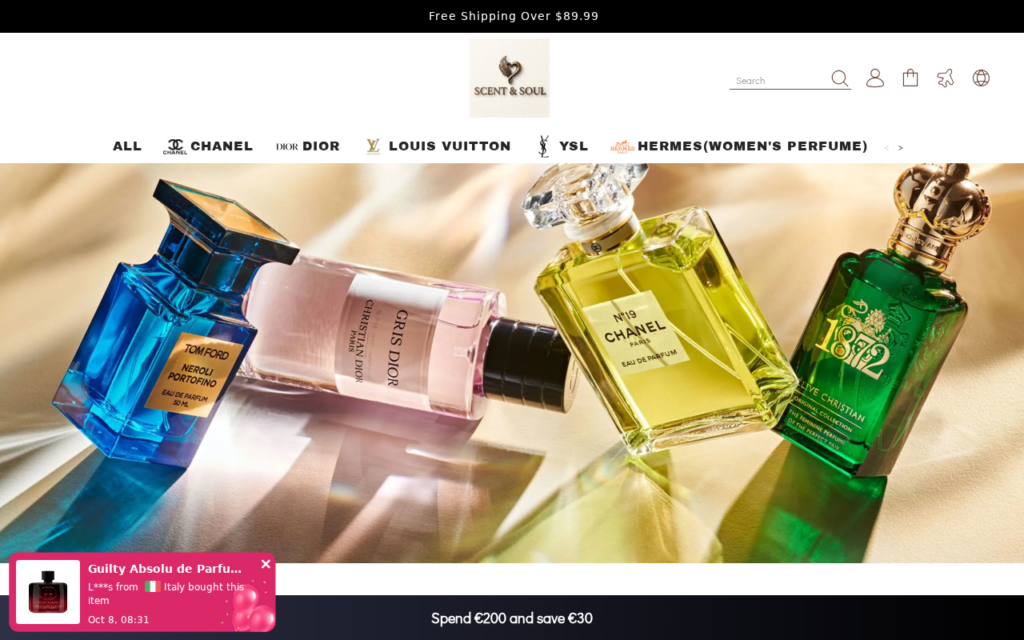
Overview
Lachrymaoe.shop looks like a real online retailer at first, advertising heavily discounted merchandise below major-brand prices. In reality, numerous scam indicators show that the store is built to pressure shoppers into ordering and surrendering payment details and personal information.
The people running Lachrymaoe.shop generally attract visitors with spam-like promotions on Facebook, Instagram, and TikTok. Their ads use impossibly low prices, manufactured urgency, and product images stolen from legitimate retailers to inspire false confidence.
Once payment is made, victims usually experience one of these results:
- Nothing is delivered: The order is never fulfilled, while any tracking supplied is worthless or cannot be trusted.
- Inferior substitutes or cheap knockoffs: A product may arrive, but its appearance, performance, fit, or materials differ from the listing.
Our review also connects Lachrymaoe.shop to a larger group of similar storefronts frequently associated with overseas fulfillment. When these operations ship anything, it is usually a cheap product unlike the advertisement, with returns made impractical or difficult. Buyers may be required to send merchandise internationally, often to China, while paying expensive postage, receiving limited tracking, and having little chance of obtaining a refund.
Several warning signs confirm that Lachrymaoe.shop does not behave like a genuine retailer:
- Policy and “legal” sections are vague, generic, or copied.
- The site supplies little or no customer-support information that can be verified.
- Business ownership is hidden or impossible to confirm.
- Promotions claiming “up to 90% off” serve as bait, not genuine inventory-clearance pricing.
- Established retailers appear to be the source of the product text and pictures.
- The brand has no believable, consistent history or presence.
Stay away from Lachrymaoe.shop. Its discounts are bait, and the dangers are clear: nothing may arrive, the goods may be low quality and unlike the ads, and returns may demand shipment to China. Its product pictures are fake, and customer service does not exist. Protect yourself by avoiding Lachrymaoe.shop and stores like it.
What We Found on Lachrymaoe.shop
The evidence confirms that Lachrymaoe.shop is a newly created fake store with the infrastructure and contact practices of a retail scam.
- Lachrymaoe.shop was registered on September 8, 2026, only 30 days before this check. Its lack of any track record shows it is a fresh replacement domain used by scammers after earlier stores are exposed.
- The MalwareTips URL scanner assigns Lachrymaoe.shop a Safety Score of 24/100 and rates it High Risk. This scanner report confirms the store is dangerous.
- Lachrymaoe.shop operates on staticassethub.com, a storefront system shared by fake shops tracked by MalwareTips. That connection places this store within a known scam network.
- The SSL certificate for Lachrymaoe.shop was issued on October 8, 2026. This recent certificate matches the store’s newly created scam infrastructure.
How the Operation Works
Knowing that Lachrymaoe.shop is a fake retailer makes its scheme simple to identify. It maintains a believable appearance just long enough to take payments, then vanishes or creates delays until victims stop trying.
1. Paid social advertising that creates false trust
The scheme generally begins with relentless ads across Facebook, Instagram, and TikTok. Polished creatives use familiar retail claims such as “Warehouse Sale,” “Limited Time,” or “Going Out of Business” to manufacture urgency and discourage scrutiny. Building a lasting brand is not the objective; rapidly sending shoppers to checkout is.
2. A storefront made to resemble a genuine retailer
An ad click opens a site resembling an ordinary ecommerce shop. Professional-looking photos, a clean layout, reviews, shipping promises, and policy pages provide familiar signs of reassurance.
Those features are commonly fabricated. Pressure devices—including countdown clocks, “low stock” notices, and “only a few left” messages—push shoppers to act without thinking carefully. The store is designed to secure purchases, not serve customers.
3. Automatic confirmations that reassure victims
Buyers ordinarily get an order-confirmation email after paying, sometimes followed by a generic “processing” notice. This crucial tactic makes it seem as though the purchase is progressing through a standard fulfillment process.
For numerous victims, that message is the final useful communication from the store.
4. Missing orders or junk products unlike the listing
At this stage, victims generally encounter one of two outcomes:
- No package arrives: Weeks go by without tracking activity, shipment confirmation, or an answer from support.
- An inferior product arrives: Sometimes a package is delivered, but its contents are obviously cheap, badly made, and different from the advertisement.
This is not an accidental fulfillment problem. It is a defining feature of retail scams: they either ship nothing or send a token product to cause confusion and make disputes harder.
5. Blocked refunds and impossible returns
Customers seeking assistance often receive silence or canned excuses such as “your order was confirmed” or “please wait longer.” Any promised refund is postponed, reduced, or tied to unreasonable return conditions.
Returns are often practically impossible because buyers must pay to ship products abroad, frequently to China, while meeting tracking rules that make a successful refund improbable.
6. New branding with the same scam formula
After complaints grow, the scammers typically change course. They register another domain, replace the store name, and recycle identical templates, advertising approaches, and product pictures. Ads begin again, targeting a new group of victims.
Red Flags at Lachrymaoe.shop
Lachrymaoe.shop displays numerous signs of a fraudulent storefront pretending to be a genuine seller. When multiple warnings below appear together, leave the website and do not proceed to checkout.
Connections to a larger scam network
Evidence surrounding Lachrymaoe.shop connects it to a broader collection of similar-looking ecommerce stores, commonly linked with China-based operations. Such networks rapidly change domains and brand identities while reusing templates and methods to steal payments from new shoppers.
Copied “legal” content that offers no protection
Pages labeled Terms of Service, Privacy Policy, and About Us commonly resemble generic text copied from elsewhere. Scam retailers paste this material to seem trustworthy, although it is generally vague, contradictory, or unenforceable. These sections are meant to lower suspicion rather than give consumers meaningful protection.
No genuine ways to contact support
Real retailers normally offer several verifiable support options, including a functioning phone number, physical location, and live chat with posted operating hours.
Lachrymaoe.shop offers no comparable accountability. Its “support” is generally limited to a generic email address and simple contact form. This is a serious warning because both can be neglected, delayed, or discarded, giving customers no effective solution for missing deliveries, incorrect goods, disputed charges, or refunds.
Hidden business ownership
Lachrymaoe.shop fails to disclose clearly who runs the company. Concealed ownership, registration information, and responsible leadership prove that the site cannot be trusted with your money or personal information.
Discounts that fail a simple reality test
Extreme price reductions are standard scam bait. Genuine companies cannot continually sell broad categories at “too good to be true” prices without offering counterfeits, sacrificing quality, or simply taking payment without delivering.
Stolen images and reused product copy
Scam stores frequently fill their product catalogs with descriptions and photos taken from established sellers. A shop without original photography, dependable specifications, and coherent branding is not a real merchant.
Fabricated or absent social proof
Authentic brands normally leave a verifiable trail through active social profiles, conversations with customers, tagged images, or natural-looking independent reviews. Lachrymaoe.shop has no genuine social presence, and its unverifiable on-site “reviews” are manufactured to create credibility.
How to Spot These Scam Websites
Fraudulent shopping websites often share common patterns that make them easier to detect once you know what to look for. Before entering personal information or making a payment, take a few minutes to check for these warning signs:
- Unrealistic prices and discounts
If a website offers products at prices far below trusted retailers, it’s often a red flag. Many of these sites advertise luxury or high-demand products at massive discounts to create a sense of urgency. A $300 product listed for $49.99 should immediately raise suspicion. - Recently registered or suspicious domain names
Many fraudulent websites operate on newly created domains that disappear after a few weeks. Look for signs like random characters in the URL, misspellings of well-known brands, or hyphenated domains.
You can check a site’s age using tools like WHOIS lookups or ScamAdviser. - Missing or vague company details
Legitimate businesses clearly display their company name, tax information, phone numbers, physical address, and return policies. Fraudulent sites often provide incomplete, fake, or no company details at all. A lack of verifiable contact information is a major warning sign. - No reliable customer service
Real businesses provide clear ways to contact support—email, phone, live chat, or physical return addresses. Fake stores often list nonfunctional contact forms, invalid phone numbers, or reply with generic automated messages. - Poor website quality and structure
Many fake stores are set up quickly with low-effort templates. Look for poor grammar, spelling errors, low-resolution product images, broken links, or missing legal pages (Terms of Service, Privacy Policy, Return Policy). A sloppy website often signals something isn’t right. - Copied product descriptions and images
Fraudulent sites often lift product listings directly from real retailers or marketplaces. If you reverse image search a product photo and find it on multiple unrelated websites, the listing is likely not original. - Lack of credible reviews or suspicious review patterns
A real store will usually have a mix of customer reviews across different platforms. Warning signs include no reviews at all, obviously fake five-star reviews, or multiple identical reviews posted on the same day. Searching “[website name] reviews” or “[website name] scam” on Google often reveals warnings from other consumers. - Unclear or unfair return and refund policies
Fake stores often use vague language around returns and refunds—or avoid the topic entirely. If you can’t easily find clear instructions for how to return an item or get a refund, proceed with caution. - Aggressive urgency and pressure tactics
Fraudulent websites commonly use fake scarcity (e.g., “Only 2 left in stock!”) or countdown timers (“Sale ends in 10 minutes!”) to push you to buy before you think it through. Legitimate stores don’t rely on fabricated urgency to make sales.
Quick Steps to Verify a Website’s Legitimacy
Before entering payment or personal details on a new shopping website, take a few simple precautions:
- Search for the store’s name along with words like “reviews” or “complaints” on Google and Trustpilot.
- Check the website’s domain registration using Whois.com.
- Use trusted tools to scan for malicious or fraudulent links:
- Malwarebytes ScamGuard – detect scams and unsafe links before they reach you on Android and iOS phone.
- Malwarebytes Browser Guard – block dangerous or fake websites on Windows and macOS browsers.
- Verify the business address on Google Maps to ensure it’s a legitimate location.
- Review the store’s accepted payment methods – credit cards and PayPal are traceable and safer than cryptocurrency or bank transfers.
- Trust your instincts; if something feels off, it’s better not to proceed.
How to Spot Similar Scams on Social Media
Many fraudulent shopping websites rely heavily on sponsored social media ads to draw in large numbers of potential buyers. These ads often promise extraordinary discounts—sometimes up to 90% off—and use emotionally charged language to push users into buying immediately.
They frequently appear on Facebook, Instagram, and TikTok, blending in with legitimate content. However, these ads follow predictable patterns that make them easier to identify once you know what to look for.
Spotting Fraudulent Facebook Ads
Facebook’s advertising platform is a favorite tool for fake online stores because of its massive reach. These ads often feature “unbelievable” offers designed to create urgency and bypass critical thinking. Warning signs include:
- Extreme, unrealistic discounts such as “90% OFF,” “Store Closing Sale,” or “Final Liquidation.” Real retailers rarely discount new products this aggressively.
- Poor grammar, awkward phrasing, or inconsistent language throughout the ad or website, indicating low-effort, mass-produced content.
- Generic stock photos or images with watermarks, suggesting the images were taken from legitimate brands or stolen from other sources.
- Recently created Facebook Pages, which is common for temporary fraudulent campaigns. Check the “Page Transparency” section to see when the page was created.
- Limited or no engagement from real customers. Authentic brands usually have reviews, comments, and visible user interaction.
If an ad raises doubts, search for reviews of the website or reverse image search the product photos to see if they’re copied from elsewhere. Never provide payment information until the site is verified.
Spotting Fraudulent Instagram Ads
Instagram is another major platform used to promote fake shopping sites through eye-catching visuals and short-lived “flash sale” captions. Warning signs to look for:
- New or disposable accounts with few posts and followers, often created just weeks or days before launching ads.
- Lack of tagged users in product posts. Legitimate stores often feature real customers, influencers, or product usage.
- Unsecured checkout pages. If the website linked in the bio does not use HTTPS, do not enter payment information.
- Fake or missing customer reviews. Fraudulent stores rarely have authentic purchase feedback.
- Unclear or restrictive return policies, often hidden or written vaguely to make refunds difficult.
When in doubt, search for independent reviews before buying, and only enter payment details on verified, secure websites.
Catching Fake TikTok Ads
TikTok is increasingly used to promote questionable shopping deals through short, persuasive videos. While many ads look polished, the same red flags apply:
- Links to unknown stores that don’t appear in search results or have no external reputation. Many of these sites are temporary and disappear after a short time.
- No verification badge on the TikTok account. While not every legitimate store is verified, the lack of a badge is one more indicator to check further.
- Aggressive countdown timers or “one-day only” promotions designed to rush decision-making.
- Lack of genuine customer reviews or real user content demonstrating the product in actual use.
- Comment sections filled with complaints or warnings from other users. This is often the first place victims speak up.
TikTok scams often rely on impulse buying. Take a moment to verify the website, read independent reviews, and use trusted browser protection before visiting external links.
What To Do If You Already Fell For the Scam
If you made a purchase or entered personal information this website, acting quickly can help you minimize financial loss, secure your accounts, and prevent further misuse of your data. Follow these steps carefully:
- Contact your bank or payment provider immediately
If you paid with a credit or debit card, call your bank’s customer service line and explain that you placed an order on a website that may be fraudulent. Request to dispute the transaction or initiate a chargeback.
If you used PayPal or another payment processor, file a dispute through their resolution center and provide order confirmations, emails, or screenshots as supporting evidence.
Fast action gives you the best chance of recovering your money and preventing additional unauthorized charges. - Freeze or replace your payment method
If your card or account details were entered on this website, it’s safest to have your bank or provider issue a replacement card. This prevents future unauthorized transactions and protects your financial accounts.
Some banks may also offer temporary holds or fraud alerts, ensuring no additional transactions can be made without your consent. - Run a personal data removal scan
Fraudulent websites often collect personal information such as names, phone numbers, addresses, and emails. This data may be shared with third parties or added to marketing and phishing lists.
A trusted service such as Malwarebytes Personal Data Remover can identify where your information is listed across data broker networks and help you request its removal. - Check your digital footprint
Even if you didn’t lose money, your personal data could already be circulating online. Running a digital footprint scan can help reveal whether your email address, phone number, or other personal information is present in leaks or broker databases.
This allows you to take proactive measures such as changing credentials, monitoring accounts, or setting up alerts before your data is misused. - Change your passwords and enable 2FA
If the same email or password used during checkout is also used on other websites or services, update those credentials immediately.
Choose strong, unique passwords and enable two-factor authentication (2FA) on all important accounts, especially your primary email, banking apps, and social media. This extra security layer makes unauthorized access significantly harder. - Scan your device for potential threats
Many fraudulent sites contain hidden tracking scripts, phishing pop-ups, or files designed to compromise your security.
Run a full system scan using a trusted security solution such as Malwarebytes Free or ESET Online Scanner to make sure your device hasn’t been exposed to malware or spyware during the visit.
If any suspicious files are found, remove them and restart your device. - Check your accounts and statements regularly
Monitor your bank and credit card statements closely for any unauthorized activity. Look for unfamiliar charges, subscription renewals, or repeated small test transactions.
Also review your email inbox and online accounts for password reset notices or sign-in alerts you didn’t initiate. Report anything unusual to your bank or account provider immediately. - Report the incident to the appropriate authorities
Reporting helps law enforcement track fraudulent websites and can support your claim if needed.- In the U.S., file a report with FTC ReportFraud.ftc.gov.
- In the EU, contact Europol or your national cybercrime unit.
- Globally, you can also submit the site to ScamAdviser to help warn other consumers.
Providing the website URL, order details, and communications increases the impact of your report.
- Save all evidence and communication
Keep copies of order confirmations, emails, payment records, chat logs, and screenshots of the website. This documentation can be crucial for supporting your chargeback request, reporting the case, or pursuing legal remedies if needed.
Store everything in one secure folder so you can easily provide it to your bank or relevant agencies. - Be cautious of follow-up contact
After incidents like this, affected individuals may receive fake refund messages, phishing emails, or phone calls pretending to offer “assistance.”
Do not click on unsolicited links, download attachments, or provide additional personal information. If you receive any message related to this website, verify its authenticity directly through your bank or official payment provider channels.
How to Avoid Online Shopping Scams
Before buying online or providing personal information, carefully examine every store. Be alert for these warning signs:
- Impossible markdowns exceeding 75% or 90% off
- Urgent promotional claims such as “going out of business”
- Email as the sole contact option, with no telephone number
- No social-media profiles or evidence of an offline presence
- A newly established website filled with seemingly copied material
- Suspicious or apparently fabricated details, including the address
Do not spend your money or time at Lachrymaoe.shop. The likely consequences are stolen personal information, unauthorized charges, or products that never arrive. Purchase only from trusted internet retailers to stay safe from scams.
Frequently Asked Questions
Is Lachrymaoe.shop a real online retailer?
Lachrymaoe.shop is a fraudulent storefront. Its impossible discounts, scarce support options—usually just email or a contact form—and methods associated with known fake retailers prove it cannot be trusted.
What occurs after ordering from Lachrymaoe.shop?
Scam-store operations like this commonly produce the following results:
- Your order never arrives
- You receive a poor-quality product unlike its listing
- A completely wrong item
- Long delays without useful tracking information or support replies
How do these scam stores look professional?
Scammers combine polished ecommerce designs with stolen merchandise photos and fake reviews to look legitimate. Every design choice builds instant confidence and rushes shoppers into checkout before they can investigate.
Why would a scam send an order confirmation?
Automatic confirmations are a standard scam tactic. They reassure customers, make transactions seem genuine, and postpone chargebacks as victims await shipment information that never arrives.
What if the delivered item differs from my order?
Handle this as fraud, not an error. Preserve proof, including pictures of the merchandise, packaging, and labels; retain screenshots of the product page; and dispute the transaction through your payment provider as “item not as described” or “merchandise counterfeit/incorrect.”
Are customers required to return items to China?
Yes, this happens often. These scams commonly do either of the following:
- Deny every refund request, or
- Promise a refund only after you pay to return the product internationally, commonly to China, under requirements designed to prevent success
This tactic is regularly used to deter refund claims.
What should I do after providing my card information?
- Immediately call your bank or card company and say that you may have bought from a fraudulent seller.
- Request information about a chargeback and ask whether your card needs to be canceled and replaced.
- Enable purchase notifications and watch the account for small test transactions.
What should I do if I used PayPal?
Start a dispute immediately. Escalate it to a claim before the deadline when necessary. Clearly describe the issue as non-delivery, an item not as described, or a deceptive merchant.
What if payment was by debit, bank transfer, or crypto?
Banks sometimes permit debit-card disputes, though protections differ. Recovering bank transfers or crypto is far more difficult. Notify your bank at once and limit further harm through account monitoring, updated passwords, and identity-protection measures.
Is my personal data in danger?
Yes. Scam stores routinely gather email addresses, telephone numbers, names, and addresses. Scammers can exploit this information for phishing, identity fraud, and additional schemes. More fraudulent messages should be expected after a purchase.
How do I recognize similar scam stores in the future?
Check for the following clues before making a purchase:
- Huge markdowns throughout numerous merchandise categories
- No telephone number or physical location, just email or a contact form
- Generic, copied policy pages
- Copied merchandise pictures paired with unclear descriptions
- No trustworthy brand history or authentic engagement with customers
- High-pressure devices such as countdown clocks and “limited stock” notices
How can I report Lachrymaoe.shop?
Report its advertisements through the service where they appeared—Facebook, Instagram, or TikTok—and notify your bank or payment service about the transaction. You can also file a complaint with consumer-protection authorities in your country, particularly after losing money or personal information.
The Bottom Line
Lachrymaoe.shop has every standard feature of a scam store: forceful social-media advertising, impossible markdowns, a polished sales-focused template, and almost no accountability because support is generally restricted to an email address and contact form.
In the best outcome, a cheap product unlike its listing arrives, followed by a deliberately futile refund process that sometimes demands costly overseas shipping, commonly to China. In the worst outcome, nothing comes, and the seller becomes unreachable after collecting payment.
Never purchase from Lachrymaoe.shop. If you have already ordered, preserve all evidence—including screenshots, emails, and receipts—then immediately notify your bank or payment provider and open a dispute as soon as eligibility begins.








