

LAYRA Bovine Colostrum is being promoted as a premium gut-health supplement that claims to reduce bloating, support immunity, improve energy, clear brain fog, and help the body feel “balanced” again.
But before ordering, buyers should look closely at the claims, the subscription model, the refund promises, and whether this is truly a unique premium formula or another aggressively marketed supplement sold through social media-style funnels.
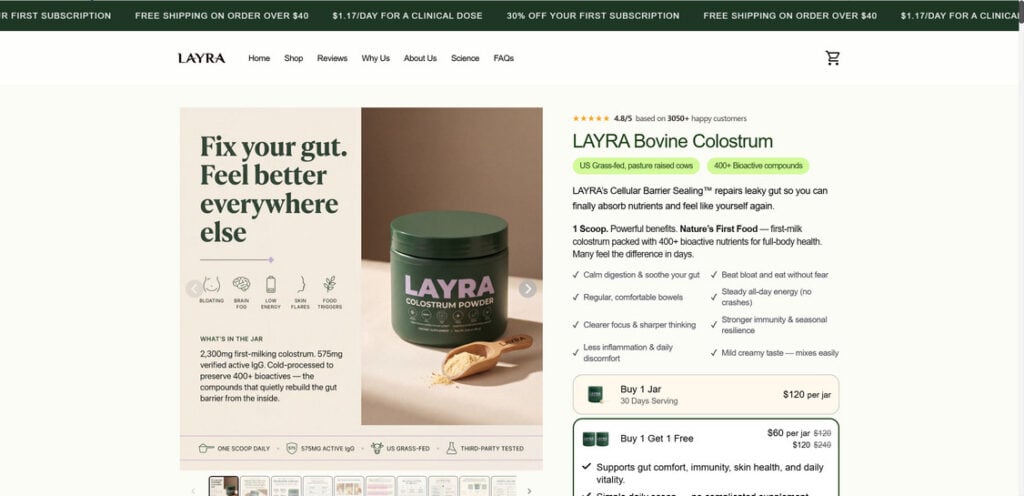
LAYRA Bovine Colostrum Overview
LAYRA Bovine Colostrum is sold through TryLayra.com as a grass-fed bovine colostrum powder. The product page claims it contains 2,300 mg of colostrum per serving, 25% IgG, and “400+ bioactive compounds.” It is marketed for digestion, bloating, gut barrier support, immunity, energy, skin, focus, inflammation, hormones, and recovery.
The page also uses strong language such as “repairs leaky gut,” “seals the gut barrier,” and “feel like yourself again.” It claims many customers notice changes within 7–14 days and shows staged benefit timelines for bloating, puffiness, energy, immunity, brain fog, and hormones.
That is where buyers should become cautious.
Bovine colostrum is a real substance. It is the first milk produced by cows after giving birth, and it contains antibodies, proteins, growth factors, and nutrients. Some research suggests bovine colostrum may have potential benefits in areas like gut barrier function, immunity, and exercise-related stress. But the evidence is not strong enough to support every broad wellness claim made in social media supplement ads.
The Mayo Clinic notes that bovine colostrum is nutrient-rich and appears safe for many people, but whether it has meaningful health benefits for humans is less certain. Cleveland Clinic similarly explains that some evidence exists for immune support, but there are not enough studies to confirm many of the popular claims.
The bigger concern with LAYRA is not just the ingredient. It is the sales model.
The site promotes subscriptions with automatic shipments every 3, 4, or 5 weeks. It says customers can cancel anytime before the next billing date, but this still creates a risk of unwanted refills if buyers do not realize they selected a subscription or forget to cancel in time
This is a common issue with modern supplement funnels. A product is advertised with dramatic health claims, customers buy quickly, and later they may discover repeat charges, refill shipments, or cancellation problems.
How the LAYRA Offer Appears to Work
1. The ads target common health frustrations
Products like LAYRA usually appeal to people dealing with bloating, fatigue, skin problems, brain fog, food sensitivities, and low energy.
These symptoms are common, frustrating, and often difficult to solve. That makes them perfect targets for supplement marketing.
LAYRA’s product page connects many of these problems to the “gut barrier,” suggesting that colostrum can fix the root cause. The page claims bloating, inflammation, energy crashes, and skin issues may improve when the gut barrier is repaired.
This kind of messaging can be persuasive, but it may oversimplify complex health problems.
Bloating and fatigue can be caused by many things, including diet, IBS, food intolerance, stress, thyroid issues, medication side effects, poor sleep, infections, inflammatory conditions, or other medical problems. A supplement ad cannot diagnose the cause.
2. The product uses clinical-sounding language
LAYRA uses phrases such as:
- “Cellular Barrier Sealing”
- “repairs leaky gut”
- “400+ bioactive compounds”
- “25% IgG”
- “third-party tested”
- “clinical dose”
- “gut barrier support”
Some of these terms may sound scientific, but buyers should separate real ingredient information from marketing language.
For example, the product may contain colostrum and IgG. That does not automatically prove it can deliver all the advertised results for every buyer.
3. The claims go far beyond basic gut support
LAYRA is not only marketed for digestion. The page also links it to:
- energy
- brain fog
- immunity
- skin clarity
- hair changes
- inflammation
- hormones
- training recovery
- food sensitivity
- morning puffiness
This broad “fix everything downstream” style of supplement marketing is a red flag.
When one product is presented as the answer for digestion, skin, immunity, energy, hormones, mood, and focus, buyers should slow down. Supplements can support health, but they rarely produce the dramatic whole-body transformation suggested by aggressive ads.
4. The subscription model creates refill risk
LAYRA openly promotes a subscription option. The site says customers can choose delivery every 3, 4, or 5 weeks and that jars ship automatically at the selected interval.
That means buyers must be careful before checkout.
The risk is that someone may believe they are placing a one-time order, but instead choose a discounted subscription. Once enrolled, they may receive repeat jars and recurring charges.
Even if a company says “cancel anytime,” customers still need to cancel before the next billing date. If they miss the deadline, another shipment may process.
5. The price is high for a supplement powder
The product page shows LAYRA Bovine Colostrum at $120 for a jar, with subscription discounts promoted elsewhere on the page.
That is a premium price.
Premium supplements are not automatically scams, but high pricing should make buyers demand strong proof. They should ask:
- Is this formula truly unique?
- Is the dose meaningfully better than cheaper alternatives?
- Are the results based on this finished product or on general colostrum research?
- Is the subscription clearly optional?
- Is the refund policy honored easily?
- Is the company transparent about manufacturing and sourcing?
6. Refund promises may not solve billing problems
LAYRA promotes a 90-day refund and says no product return is required. It also says customers can email for a refund if they do not feel a difference.
That sounds reassuring. However, buyers should still be careful.
Refund promises do not always prevent problems with:
- repeat subscription charges
- delayed cancellation
- unwanted refill shipments
- unclear checkout terms
- customer support delays
- refund exclusions
- charges processed before cancellation
The safest approach is to avoid subscription checkout unless you are fully comfortable with automatic refills.
Main Red Flags
- Strong claims around gut repair, bloating, energy, skin, immunity, and hormones.
- Uses “leaky gut” style marketing language.
- Claims many customers notice changes within 7–14 days.
- High price point compared with many basic supplements.
- Subscription/refill model with automatic shipments every 3, 4, or 5 weeks.
- Risk of unwanted refills if buyers do not cancel in time.
- Claims rely heavily on general colostrum science, not necessarily independent proof that this exact product delivers all promised benefits.
- Dietary supplements are not FDA-approved for safety and effectiveness before sale
Is LAYRA Bovine Colostrum a Scam?
LAYRA may ship a real bovine colostrum product, and bovine colostrum itself is not fake. The issue is whether the product is being marketed with exaggerated expectations and whether the subscription model creates avoidable billing risk.
A fair conclusion is this: LAYRA Bovine Colostrum appears to be a high-risk supplement offer because of its broad health claims, premium pricing, and automatic refill structure.
It may not be a “fake product” scam in the sense that buyers receive nothing. But it does show the same warning signs often seen in aggressively marketed wellness products: dramatic before-and-after claims, broad symptom targeting, subscription discounts, and strong promises that may exceed the available evidence.
What To Do If You Already Ordered
1. Check whether you selected a subscription
Look at your receipt and account page. Search for words like:
- subscription
- auto-renew
- refill
- recurring
- every 3 weeks
- every 4 weeks
- every 5 weeks
- subscribe and save
2. Cancel immediately if you do not want refills
Do not wait. Cancel before the next billing date and save screenshots of the cancellation confirmation.
3. Contact support in writing
Ask them to confirm:
- your subscription is canceled
- no future charges will occur
- no future jars will be shipped
- any unwanted refill will be refunded
4. Monitor your card
Watch your bank or credit card statement for repeat charges over the next 60 days.
5. Dispute unauthorized charges
If you are charged again after canceling, or if you believe the subscription was not clearly disclosed, contact your card issuer and file a dispute.
FAQ
What is LAYRA Bovine Colostrum?
LAYRA is a bovine colostrum powder sold as a gut-health and wellness supplement. The company claims it contains 2,300 mg of colostrum per scoop and 25% IgG.
Is bovine colostrum real?
Yes. Bovine colostrum is the first milk produced by cows after giving birth. It contains antibodies, proteins, and other nutrients.
Does LAYRA really repair leaky gut?
Be cautious with that claim. Some research suggests bovine colostrum may support gut barrier function, but broad claims about “repairing leaky gut” and improving multiple body systems should not be treated as guaranteed results.
Is LAYRA FDA approved?
No dietary supplement is FDA-approved for safety and effectiveness before being sold. The FDA states that it does not approve dietary supplements or their labeling before they reach the public.
Does LAYRA have a subscription?
Yes. The site says customers can subscribe and receive automatic shipments every 3, 4, or 5 weeks.
Can LAYRA cause unwanted refill charges?
That is a risk if a buyer selects or is enrolled in a subscription and does not cancel before the next billing date.
Is LAYRA a generic supplement from China?
The product is marketed as using U.S. grass-fed, pasture-raised cows. However, buyers should verify sourcing, manufacturing, fulfillment, and lab documents before trusting premium origin claims.
Should I buy LAYRA?
Be cautious. If you still want to try it, avoid subscription checkout, screenshot the terms, and use a payment method with buyer protection.
The Bottom Line
LAYRA Bovine Colostrum is marketed as a premium gut-health supplement with broad claims around bloating, digestion, immunity, energy, skin, brain fog, hormones, and inflammation. While bovine colostrum is a real supplement ingredient, the promises around LAYRA should be treated carefully.
The biggest risks are the aggressive health claims, high price, and automatic refill subscription model. Buyers should read the checkout page carefully, avoid subscriptions unless they truly want recurring shipments, and monitor their card for repeat charges.








