

Something unusual has been happening online that has caught the attention of many shoppers. A boutique that claims decades of history suddenly announced a dramatic closure sale filled with emotional storytelling, massive discounts, and the promise of once in a lifetime deals. At first glance, Lily’s Boutique New York looks charming and heartfelt. The products appear stylish, the story sounds genuine, and the limited time offers push customers to act fast before everything disappears.
Yet the more shoppers look, the more the pieces stop fitting together. The website feels polished, but the timing does not match the claims. The story is touching, but it mirrors other suspicious stores across the internet. The discounts seem unbelievable, and many buyers have begun to question what is really happening behind the scenes.
This guide takes a deeper look at what Lily’s Boutique New York is doing, how the setup works, how the tactics are used to lure victims, and what steps you can take if you have already been caught in the middle of it.
Scam Overview
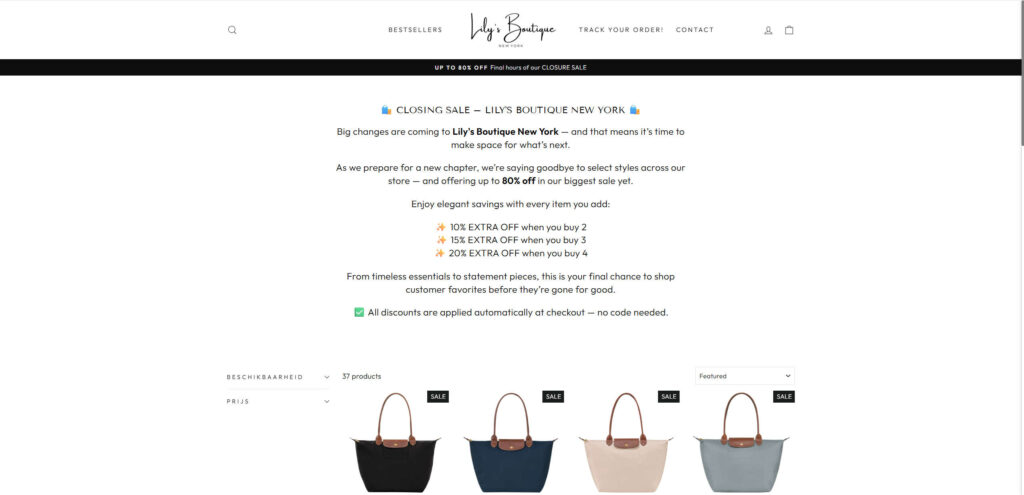
Lily’s Boutique New York presents itself as a long running, family owned shop that has supposedly operated for more than 30 years. According to the website, the owner is closing the boutique due to difficult health challenges, and the store is offering deep discounts to cover medical bills while bringing the business to a close. At first glance, this appears to be a heartfelt farewell message from a small business facing hard times.
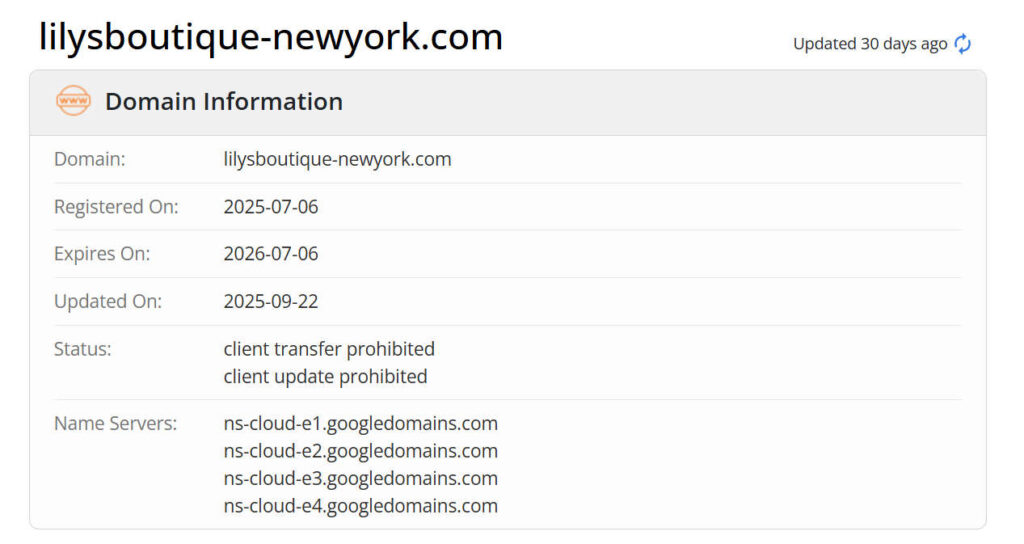
The problem begins when shoppers examine the details. The domain lilysboutique newyork dot com was registered in July 2025, only a short time before the supposed closure sale began. A store that is claimed to be over 32 years old simply cannot have a digital footprint that goes back a few months. This is the first red flag, and it is a significant one. Legitimate boutique closures often have years of online reviews, social media posts, and verifiable history. Lily’s Boutique New York has none.
Visitors immediately notice how the website leans heavily on emotion. It tells a personal story about health struggles and a lifelong passion for fashion. It expresses gratitude for customers and shares heartfelt messages about family and love. These emotional appeals exist to lower skepticism and build trust quickly. Many scam stores rely on this tactic because people are more willing to buy when they feel emotionally connected to the seller.
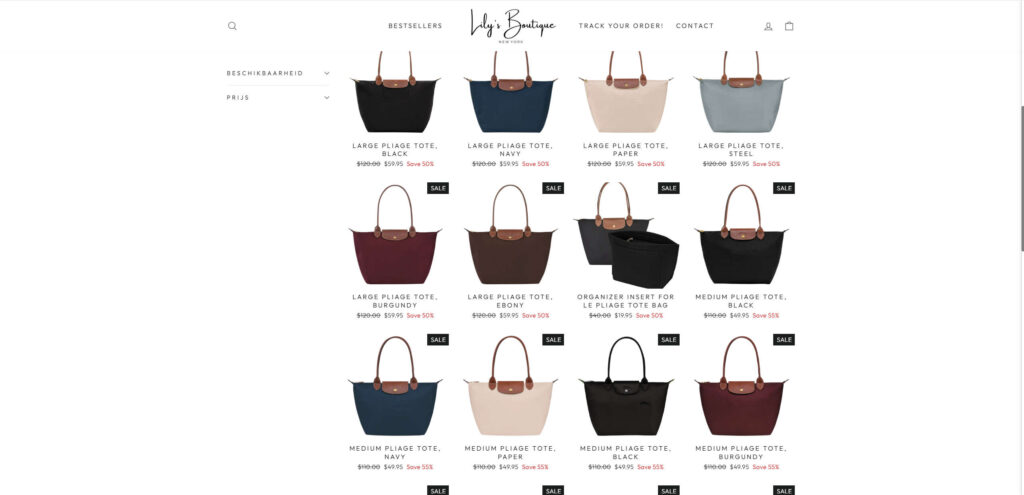
The next red flag is the sale itself. The site advertises discounts of 50% to 80% and pushes even larger savings when multiple items are added to the cart. Every item appears to be marked down, which is not normal for a legitimate final sale. Real boutiques trying to clear out inventory do not reduce prices evenly across all products. Instead, they discount items based on age, season, or demand. When everything is marked down in the exact same pattern, it signals a recycled pricing template rather than a genuine clearance strategy.
Another warning sign is the level of urgency. The site repeats messages like final closure sale, last chance, while supplies last, and final hours. These phrases are strategically placed to create pressure. The goal is to make shoppers feel like waiting will cause them to miss out. Urgency pushes buyers into impulsive decisions, and this behavior is exactly what scam operations want to trigger.
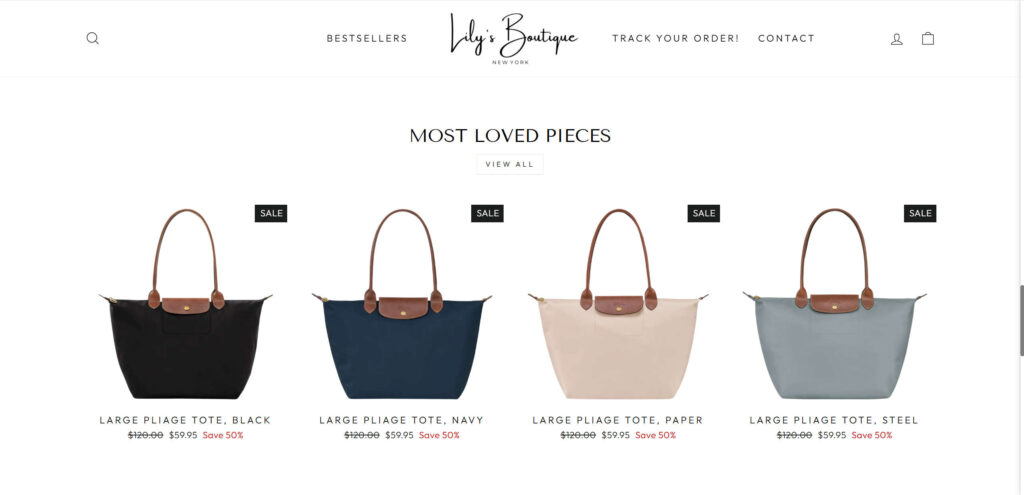
Product images are another area of concern. Many of the bags, sweaters, and cardigans appear identical to items sold on other scam websites using the same closure sale narrative. These images are often AI generated or pulled from commercial catalogs that scammers do not own. In many cases, the products that arrive are extremely low quality replicas that look nothing like the images. Some customers report receiving nothing at all.
The site uses professional looking trust badges that claim secure payments, 24/7 customer service, and a 30 day money back guarantee. These badges create a sense of legitimacy, but they are generic icons added to countless scam websites. They carry no real meaning unless the business behind them is legitimate, which Lily’s Boutique New York is not.
The contact information also raises questions. Many scam boutiques provide an email address but avoid listing a physical location or phone number. Shoppers who receive damaged or incorrect items often find that emails go unanswered or receive vague automated responses. Refunds are rarely granted. Instead, customers are told they must ship returns to a warehouse in China at their own expense, which often costs more than the product itself. This makes returns nearly impossible.
Another part of the pattern is the connection to a much larger network of retail scam sites. These sites often use the same story structure, similar product listings, identical discount patterns, and the same closure or retirement narratives. Lily’s Boutique New York fits the blueprint perfectly. This suggests it is not a genuine boutique but rather one more storefront in a broader operation that cycles through domains as buyers catch on.
Shipping practices also follow a predictable pattern. Many victims report long delays, tracking numbers that do not update, packages arriving from warehouses in China, and products that bear no resemblance to the original photos. Some packages contain cheaper substitutes that cost pennies to produce. The prices on Lily’s Boutique New York are far higher than what the items cost wholesale, which means the operation is overpriced even before quality concerns enter the picture.
Trust signals that usually help shoppers identify legitimate stores are missing. There is no independent review presence on platforms like Trustpilot. The social media links lead nowhere or do not exist. The About page contains a personal story that cannot be verified and uses generic language that appears on other scam sites. The store claims to be based in New York, yet nothing about it confirms that. The domain registration does not match the story, and the entire brand feels fabricated.
One of the strongest red flags is the use of a sudden emotional story tied to a closure sale. This has become a common tactic in online retail scams. Scammers know shoppers respond strongly to stories about health battles, retirements, family run businesses, or small shops closing due to hardship. They exploit this empathy to build trust quickly and override skepticism. Lily’s Boutique New York uses this strategy heavily.
By combining emotional storytelling, artificially inflated discounts, false urgency, misleading product photos, and unverifiable business claims, the operation appears designed to extract as many purchases as possible before shutting down and disappearing. Once complaints build up, the domain often goes offline and the same operation reappears under a new name with new branding but the exact same tactics.
The pattern is clear. Nothing about Lily’s Boutique New York aligns with what shoppers expect from a long running boutique. Instead, everything points to a store built quickly using templates, stolen or generated images, emotional marketing scripts, and aggressive discounting to lure victims. The objective is not to clear inventory from a real store but to sell cheap replicas or collect payments without fulfilling orders in a meaningful way.
The overview shows a consistent series of red flags. Each one might not be conclusive on its own, but together they paint a very clear picture of an operation built to mislead. Understanding how this pattern works helps shoppers see beyond the emotional story and recognize the warning signs before they fall into the trap.
How The Scam Works
This type of operation follows a very structured process. Each step is carefully crafted to appear trustworthy at first while guiding the shopper toward a purchase without thinking too deeply about what might be happening behind the scenes. Breaking the process down step by step reveals just how coordinated the scheme really is.
Step 1: Build a polished website quickly
Scam operators begin by creating a clean and attractive storefront. Platforms like Shopify make it easy to launch a site within hours. They choose a name that sounds elegant, classic, or boutique inspired. In this case, they selected Lily’s Boutique New York, a name that feels upscale and timeless.
They then add high quality images, many of which are copied from catalogs they do not own or generated by AI tools that create stylish but unrealistic visuals. The goal is to make everything look professional at first glance. Shoppers rarely question the authenticity of product images, especially when they seem familiar.
Step 2: Craft an emotional backstory
Most closure sale scams rely on storytelling. For Lily’s Boutique New York, the narrative claims the founder has run the boutique for more than 32 years and is closing due to health issues. This is a direct appeal to empathy. It encourages buyers to support what appears to be a small business owner facing hardship.
The story is written in a warm, personal tone. It includes gratitude, reflections on the journey, and comments about family and passion for fashion. All of this is designed to build a connection with the shopper. The operator knows many consumers want to help small businesses, especially those struggling with health challenges.
Step 3: Introduce massive discounts on every item
Once shoppers feel emotionally connected, the site presents large discounts. Every product is marked down by roughly the same percentage. Some items show discounts up to 80% and further promotions are offered when buying multiple items.
These discounts create a sense of opportunity. They also cause buyers to believe they are getting a rare deal that will disappear soon. In reality, the prices are still inflated compared to the cheap items that will be shipped from overseas.
Step 4: Add urgency to pressure fast decisions
Urgent messages appear throughout the site. Phrases like last chance, final sale, limited time, and closing forever are meant to make shoppers feel time pressure. Countdown timers are sometimes added. This is a classic psychological tactic. People tend to make faster, less rational decisions when they believe an opportunity is shrinking.
The scam relies heavily on impulse. If shoppers wait long enough to research the store, they will discover the red flags. So the operators structure the site to reduce hesitation.
Step 5: Use trust signals to create a false sense of safety
Even though the store is not legitimate, it displays trust badges that promise secure payment processing, fast shipping, 24 hour support, and a money back guarantee. These badges are simple icons and do not represent any real protections, but many shoppers interpret them as evidence that the store is real.
The site may also list business hours, customer service email addresses, and frequently asked questions to appear professional. These elements are recycled from dozens of similar scam sites.
Step 6: Process payments immediately and outsource shipping to low cost vendors
Once buyers place orders, their cards are charged immediately. The scam operation then orders extremely cheap versions of the products from mass production suppliers. These products may cost only a few dollars each.
Shipping labels often come from warehouses in China. This exposes another inconsistency. A small boutique in New York would not ship items from overseas manufacturing hubs. However, by the time shoppers notice, the purchase has already been completed.
Step 7: Deliver low quality items or nothing at all
Victims report receiving products that look nothing like what was advertised. Colors differ, materials are thin, stitching is poor, and the overall quality is far below the promised standard. Some orders never arrive. When victims contact support, they often receive polite but vague replies.
Step 8: Make refunds extremely difficult or impossible
The scam site claims to offer a 30 day money back guarantee, but once a buyer requests a return, the operator introduces obstacles. Often the buyer is instructed to ship the item to a warehouse in China at their own expense. International shipping for a small package can cost more than the original purchase.
In many cases, the customer is pressured to accept a partial refund instead. Offers of 20% or 30% are common, with claims that the buyer can keep the item. This process is designed to reduce chargebacks and prevent buyers from escalating the dispute with their bank.
Step 9: Shut down and reopen under a new name
Once enough complaints accumulate or social media posts expose the operation, the site may disappear without warning. The domain is abandoned, and a new store appears with a new name, a new emotional narrative, and the same product images.
This cycle can repeat indefinitely, allowing the operation to continue harvesting payments from new victims.
Understanding each step helps reveal how coordinated this system is. It is not a simple misunderstanding or a small business overwhelmed by orders. It is an organized pattern built specifically to extract payments while avoiding accountability.
What To Do If You Have Fallen Victim to This Scam
- Contact your bank or card issuer immediately
Explain that you purchased from an online store that appears fraudulent. Request a chargeback. Provide screenshots of the website, your order confirmation, and any tracking numbers that show delays or incorrect shipments. - Document everything
Save all emails, product photos, tracking details, and communication with the seller. This evidence strengthens your case with financial institutions. - Do not ship returns to China
Scam operations purposefully require expensive international returns. This is designed to make refunds too costly. Do not pay for overseas shipping. Instead, tell your bank the seller is engaging in deceptive return practices. - Report the website to relevant authorities
Submit reports to your local consumer protection agency, the Federal Trade Commission if in the United States, or similar bodies in other countries. This helps expose the operation. - Monitor your account for unusual activity
Scam stores sometimes misuse payment information or attempt future charges. Notify your bank to monitor for suspicious transactions. - Change your passwords if you reused them
If the email address used on the store is tied to other accounts, update passwords to reduce risk. - Install security tools
Use trusted tools like Malwarebytes, Malwarebytes Browser Guard, and AdGuard to block scam websites and malicious ads. These tools can prevent future exposure to fraudulent retail operations. - Warn others
Share your experience online to help others avoid the same trap. Many people fall victim because they believe they are the only ones seeing the warning signs. - Stay calm and persistent
Chargebacks and refund disputes can take time. Continue following up with your bank until the case is resolved.
The Bottom Line
The story behind Lily’s Boutique New York appears heartfelt and sincere, but the deeper you look, the more the elements fail to align. The domain age does not match the claimed decades of history. The emotional closure narrative mirrors dozens of other scam storefronts. The discounts follow a template used in high volume fraudulent operations. The products shown on the site bear little resemblance to what victims report receiving.
By examining the structure of the operation, it becomes clear that Lily’s Boutique New York follows a proven scam model built around emotional marketing, urgency, misleading product images, and impossible return policies. The purpose is not to clear out a real boutique but to extract as many payments as possible before complaints begin piling up.
Shoppers can protect themselves by researching stores before buying, verifying domain histories, checking for independent reviews, and using secure payment options.








