

These days, you might have seen an ad for the Little White Bear AI Plush, also branded as Poly The Polar Pal AI Plush, claiming to calm you instantly, responding to touch with soft movements powered by “AI motion sensors.” It looks mesmerizing and comforting, making you want to click “Buy Now” without thinking. But is this cuddle companion real, or just a well‑crafted illusion?
In this article, we’ll cut through the fluff. We’ll explore the Overview of the product and its marketing claims, break down How The Operation Works step-by-step, guide you on What to Do If You’ve Been Scammed, and wrap it in The Bottom Line. Let’s get started.
Overview
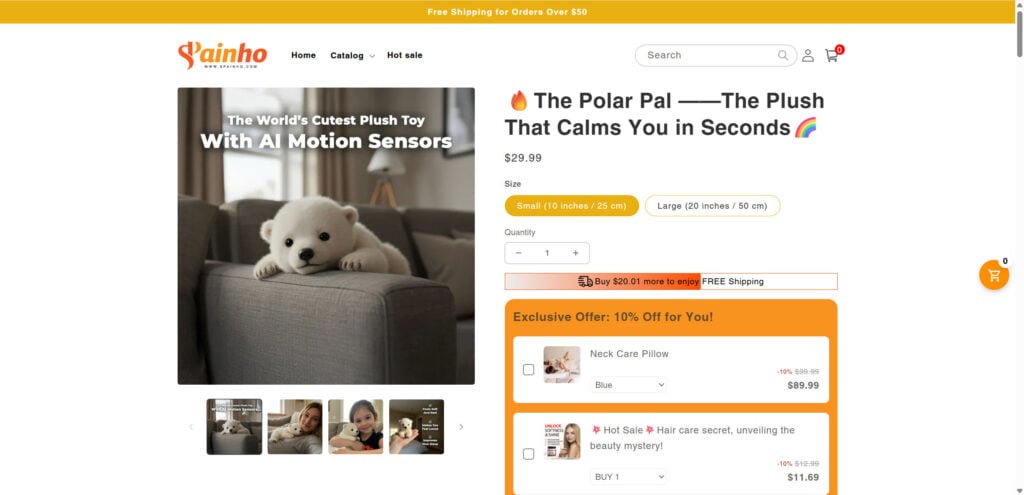
The Little White Bear AI Plush, marketed as a calming, interactive plush with AI motion sensors, is popping up in sponsored posts and social ads. According to the product pages, this plush “Calms You in Seconds” and is powered by smart sensors that make it responsive as you hold or pet it. It often appears on simple e-commerce stores, sometimes labeled “Sainho,” promoted with soothing visuals and ready-to-buy buttons.
At first glance, the concept is appealing, an adorable polar bear that responds softly to touch, offering emotional comfort through intelligent movement. That emotional angle is reinforced through copy about promoting relaxation, improving sleep, and reducing stress. The visuals feature polished renderings, and the offerings, such as sizes ranging from 25 cm to 50 cm, come with claims of gentle tactile feedback and lifelike plush texture.
However, a deeper look raises concerns. You’ll notice all product images appear too perfect, often matching AI-generated aesthetics rather than real-life photography. Video content is rare or nonexistent. Sites offer “free shipping over $50,” seemingly random bundles with unrelated items (like neck pillows or beauty products), and enticing discounts, but no verifiable proof of an active product or living customer reviews.
The few discussions online often call it a scam. Reddit users point out the suspicious patterns. One user, summarizing the tone in forums, said:
“Guaranteed it’s a scam. I saw an ad for that thing recently, too. The concept is certainly adorable as hell, but their ad is nothing but AI pandas of varying levels of life‑like. Not once does it show an ACTUAL product.”
Another viewer posted:
“My ADHD brain thought I’d found a soothing soft toy but it’s definitely a scam!!!”
Investigative videos on YouTube also expose the inconsistency between the cinematic portrayals and delivered packages, if anything arrives at all.
Meanwhile, platforms like X (formerly Twitter) and other forums question whether these plushes exist in a functional version or if they’re fabricated illusions.
At its core, the Overview reveals a product richly described with emotional and AI-driven appeal, but with no actual supporting evidence or authentic user documentation. It’s a textbook case of deceptive marketing built around impulse‑driven buys, beautiful visuals, and entirely empty promises.
How The Operation Works
Here’s a detailed, step-by-step breakdown of this plush marketing operation:
1. Creation of Viral Aesthetic
Marketers produce stunning visuals, often entirely AI-generated or heavily edited, to present the plush as lifelike, soft, and emotive. Poses, lighting, and angles are curated to maximize emotional resonance.
These visuals rarely feature real people unboxing the toy or interacting with it; they’re polished and controlled. The goal is to make viewers feel comforted at just a glance.
2. Emotional Copywriting & Soft Sci‑Fi Claims
The marketing copy uses phrases like “AI motion sensors,” “calms you in seconds,” and talks about boosting relaxation and sleep. Scientific-sounding language appeals to logic: comfort backed by tech.
Combining emotional warmth with pseudo-technical claims builds trust. “This plush is almost therapeutic” pushes the idea of emotional healing, with no substantiated evidence.
3. Fake Scarcity and Urgency
Sites include tags like “Free Shipping Over $50,” countdown timers, discount banners (“Exclusive Offer: 10% Off for You!”), and fleeting pop-ups to nudge immediate action.
These elements trigger FOMO. When paired with emotional storytelling, they significantly lower skepticism.
4. Simplified Purchase Flow
Purchase pages highlight easy checkout, with prominently placed “Add to Cart” and “Buy Now” buttons. Cross-sells appear under “Exclusive Offer,” urging higher order values.
This streamlined process removes friction and paves the way for impulse buying.
5. Order Fulfillment with Cheap or No Product
After purchase, buyers usually receive either an unrelated cheap item or nothing at all. Some may receive a generic plush that bears little resemblance to the marketed version, no AI, no sensors, just a basic stuffed toy.
6. Return Resistance
Return policies are often hidden or unfavorable, charging for return shipping, requiring proof of damage, or refusing refunds after a brief window. Customer emails frequently go unanswered.
7. Rebranding and Repeat Cycle
Once buyer complaints emerge, the site may vanish or reuse the product template under a new name. New audiences see similar ads, trailing the same manipulative playbook.
This cycle perpetuates, affecting new victims each time.
What to Do if You Have Fallen Victim
If you’ve purchased this plush and suspect a scam, here are eight clear steps to take:
- Document Everything
- Save ads, website screenshots, purchase confirmations, and tracking info.
- Photograph what you received, or didn’t receive.
- Contact the Seller
- Email your order details and photos.
- Request a full refund.
- Record all communications and dates.
- Dispute the Charge
- Contact your credit card provider or PayPal.
- Present documentation and claim misrepresentation.
- Leave Public Warnings
- Comment on the website or ad with your experience (factually).
- Share on social media, Reddit, or consumer watchdog forums.
- File a Complaint with Consumer Protection Agencies
- For U.S. buyers: send details to the FTC at ftc.gov/complaint.
- In the EU or other regions: contact your national consumer protection office.
- Report the Ad on the Platform
- Mark the ad as misleading or scam on Facebook, Instagram, or TikTok.
- Provide any details you have about your experience.
- Request Chargebacks if Needed
- If initial dispute fails, escalate within your bank or PayPal.
- Many still allow claims up to 60 days post-purchase.
- Educate Others
- Share your review on Trustpilot, Sitejabber, or product review forums.
- Use clear keywords like “Little White Bear AI Plush scam.”
Even if reclaiming your funds takes time, these steps help others avoid the same trap.
Frequently Asked Questions About the Little White Bear AI Plush Scam
What is the Little White Bear AI Plush?
The Little White Bear AI Plush, also marketed as Poly The Polar Pal AI Plush, is a plush toy promoted as an intelligent companion with built-in AI motion sensors. Advertisements claim the toy responds to touch, provides emotional comfort, and helps improve sleep. However, buyers report receiving non-functional stuffed animals or nothing at all, leading many to believe it is a scam.
Is the Little White Bear AI Plush a scam?
Yes, numerous buyer complaints and independent reviews suggest the Little White Bear AI Plush is a scam. The toy does not have any real AI features or motion capabilities as claimed. Most customers receive a regular plush toy with no interactivity, or their order never arrives. The marketing heavily relies on misleading visuals and emotional language.
How does the Little White Bear AI Plush scam work?
This operation uses AI-generated videos and emotionally appealing ad copy to sell a fake product. Buyers are shown a realistic, moving plush toy but receive a basic stuffed animal instead. Scarcity tactics, countdown timers, and fake viewer stats push people to make impulsive purchases. Once paid, customers find that the product is nothing like the advertisement.
What do customers actually receive?
Customers typically receive a basic white stuffed bear with no electronics, AI features, or interactivity. It does not blink, move, or respond to touch as advertised. In some cases, buyers report not receiving anything at all.
Where is the Little White Bear AI Plush being sold?
The plush is sold on websites like spainho.com and other Shopify-based stores. It is heavily promoted on platforms like Facebook, Instagram, and TikTok through sponsored posts and video ads. These sites often offer time-limited deals and free shipping over a certain amount to create urgency.
Are there any real reviews of the Poly The Polar Pal plush?
There are no verified reviews showing the toy working as described. Most available reviews are scripted, overly positive, or AI-generated. Independent consumer reports and Reddit threads consistently state that the product does not function and warn others to stay away.
Does the toy actually contain AI motion sensors?
No, the plush does not contain any AI or smart motion sensors. The claims made in advertisements are not backed by product specifications, user demonstrations, or real customer feedback. Buyers consistently report receiving standard stuffed animals without any interactive features.
Can I get a refund for the Little White Bear AI Plush?
Getting a refund is often difficult. The return policies on these sites are vague or designed to discourage refunds. Many customers report unresponsive customer service, delayed email replies, and being required to cover expensive international return shipping.
What should I do if I ordered and received a fake plush toy?
If you have been scammed:
- Save all purchase records, emails, and photos of what you received.
- Contact the seller and request a full refund.
- File a chargeback with your credit card company or dispute through PayPal.
- Report the scam to your local consumer protection agency or the Federal Trade Commission.
- Share your experience online to warn others.
How can I report the scam?
You can report the scam in several ways:
- File a complaint with the Federal Trade Commission (FTC) at ftc.gov/complaint.
- Report the fraudulent ad on Facebook, Instagram, or TikTok.
- Share your experience on Reddit, Trustpilot, Sitejabber, or consumer protection forums.
Why do these scams keep appearing?
These scams are part of a cycle. Once a product is exposed, the scammers often rebrand it with a new name, website, or mascot, and restart the campaign targeting new audiences. The low cost of ads and quick profits make it a repeatable business model, especially when platforms take time to remove fraudulent content.
How can I avoid falling for a plush toy scam in the future?
To avoid scams like this:
- Look for real, unedited user reviews on platforms like YouTube or Reddit.
- Be cautious of overly emotional marketing and exaggerated claims.
- Check the website’s credibility, including refund policies, company information, and contact details.
- Avoid impulse buys based on urgency tactics like countdown timers or “only X items left” notices.
- Use secure payment methods that offer buyer protection.
The Bottom Line
The Little White Bear AI Plush, also known as Poly The Polar Pal AI Plush, is highly likely a deceptive marketing scheme. The so-called AI sensors and soothing interactions rest on CGI visuals, emotionally charged language, and artificial urgency. In reality, buyers often receive basic or no plush toy, with poor recourse options.
If you’ve purchased one, act quickly using the nine-step plan above to seek refunds and warn others. And next time you see a too‑good‑to‑be‑true ad starring plush tech, take a breath, ask questions, and look for genuine customer evidence.

Join the discussion
0 commentsShare your experience or ask a question about this article.
Discussion
Start the conversation
Have a question or something useful to share? Add the first comment.