

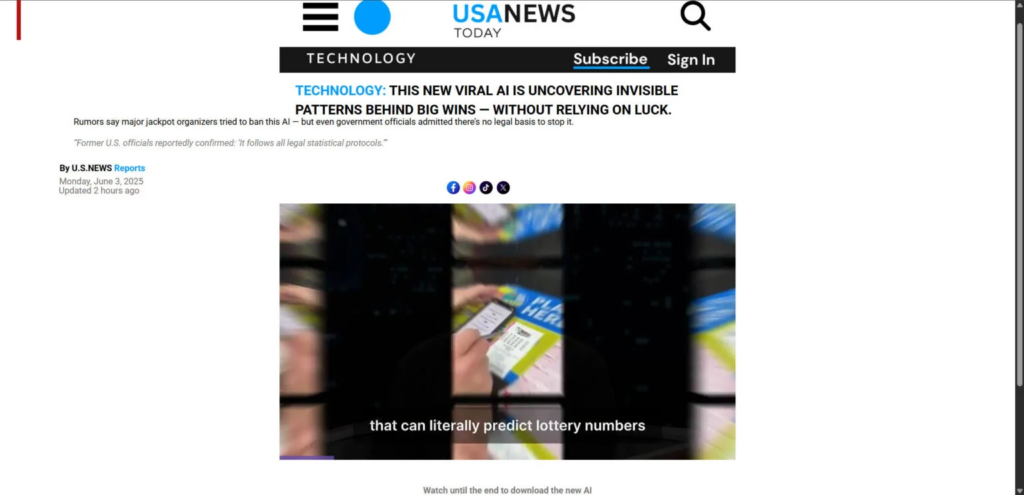
The Lotto Cash AI App is being promoted online as a smart lottery tool that can supposedly use artificial intelligence to help people choose winning numbers. Some ads make it look like a breakthrough system, a hidden lottery loophole, or even a product featured on major TV shows.
But behind the hype, the warning signs are serious. The scam is not really about helping people win the lottery. It is about using AI buzzwords, fake credibility, and financial desperation to push users toward apps, subscriptions, paid “systems,” or shady landing pages.
What Is the Lotto Cash AI App Scam?
The Lotto Cash AI App scam is a misleading online promotion that claims artificial intelligence can improve your chances of winning lottery-style games such as Powerball, Mega Millions, or other number-based drawings.
The pitch usually sounds simple:
- AI analyzes past lottery numbers.
- The app detects “hidden patterns.”
- Users receive smarter number combinations.
- These numbers supposedly increase the odds of winning.
- Some ads claim people are winning thousands or millions.
That is the hook.
The problem is that real lottery drawings are games of chance. Past numbers do not allow an app to predict future winning numbers. Lottery machines and draw systems are specifically designed to make outcomes random. No phone app, AI model, or “secret algorithm” can reliably predict the next jackpot combination.
Scammers know this, but they also know people want hope. So they build a polished story around technology, luck, and financial freedom.
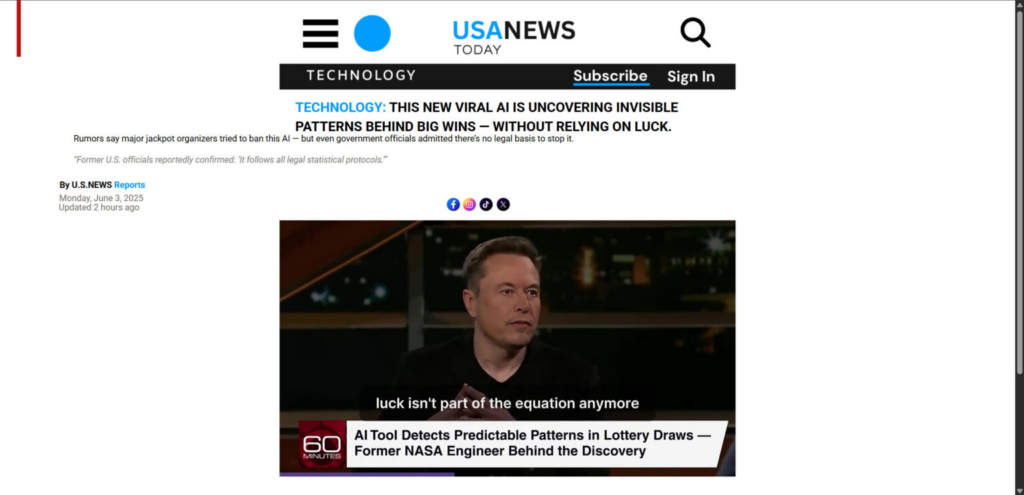
In many cases, the scam appears through social media ads, fake news-style articles, YouTube videos, sponsored posts, and landing pages that look more legitimate than they really are. Some versions use fake celebrity mentions, fake “Shark Tank” claims, or dramatic testimonials from people who supposedly used the app and suddenly won life-changing money.
The goal is to make the offer feel credible before the user has time to think clearly.
Why Lotto Cash AI Claims Are Misleading
The biggest red flag is the promise that AI can beat the lottery.
AI can analyze historical data. It can generate random number combinations. It can identify which numbers appeared more often in old drawings. But that does not mean it can predict future lottery results.
A number appearing frequently in the past does not make it more likely to appear again. A number that has not appeared recently is not “due.” These are common gambling myths.
Lottery drawings are independent events. Each draw starts fresh. The machine does not remember the last result. The balls do not know which numbers were picked last week. The odds do not improve because software rearranged the numbers.
That is why claims like these should be treated with extreme caution:
- “AI predicts winning numbers”
- “This app beats random lottery picks”
- “Guaranteed to match multiple Powerball numbers”
- “A hidden loophole lottery companies don’t want you to know”
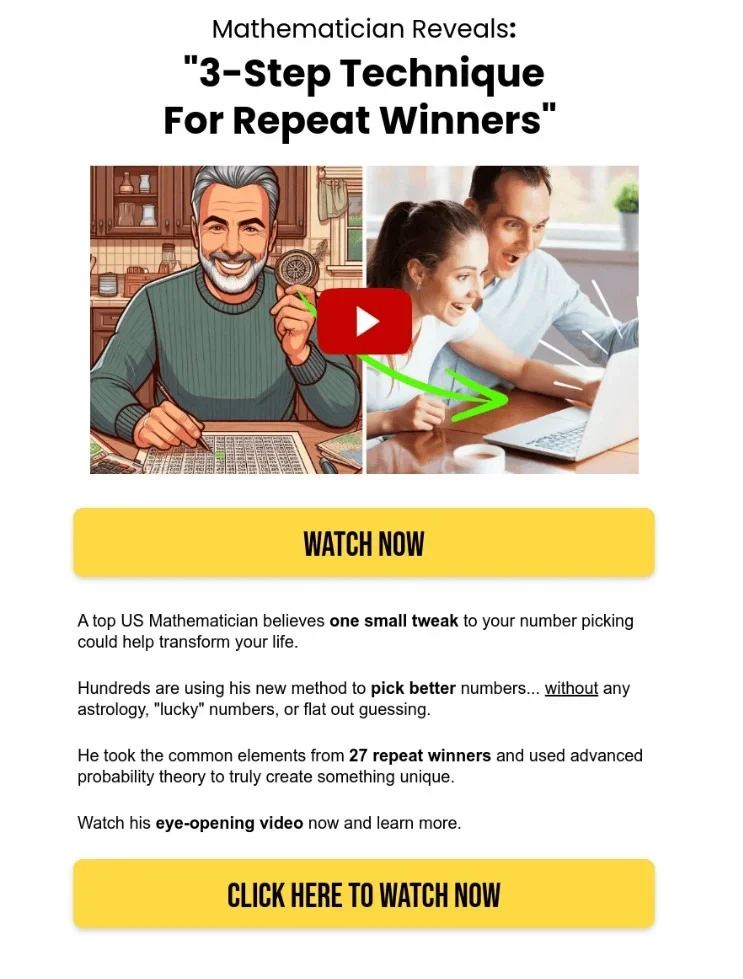
- “Former mathematician reveals secret number pattern”
- “Shark Tank investors backed this lottery AI”
- “Users are winning every week”
These phrases are designed to create excitement, not provide proof.
How the Lotto Cash AI App Scam Works
The scam usually follows a predictable funnel. The exact names, websites, and apps may change, but the structure is often the same.
1. You See a Viral Ad
The first contact is usually an ad on Facebook, Instagram, TikTok, YouTube, or a low-quality website.
The ad may show:
- A fake news segment
- A fake celebrity interview
- A “Shark Tank” style clip
- A person claiming they won using AI
- Screenshots of large lottery prizes
- A dramatic story about someone escaping debt
The ad is designed to stop scrolling. It does not lead with careful explanations. It leads with emotion.
Common hooks include:
- “This AI app is helping ordinary people win the lottery.”
- “Lottery officials are furious about this new app.”
- “A retired mathematician found a pattern in Powerball.”
- “This app predicted 4 numbers in a row.”
- “Shark Tank investors couldn’t believe it.”
These claims should immediately raise suspicion.
2. The Ad Sends You to a Landing Page
After clicking, users are often sent to a sales page that looks like a news article, product review, or urgent announcement.
The page may include:
- Fake testimonials
- Fake screenshots
- Fake countdown timers
- Fake “limited access” warnings
- Stock photos of happy winners
- Claims of media coverage
- Long explanations about AI, statistics, and lottery patterns
The page may avoid giving clear company information. It may not show a real business address, real ownership details, or verifiable contact information.
This is intentional. The page is built to sell the dream quickly, not to stand up to scrutiny.
3. The Scam Uses “AI” as a Trust Shortcut
The word “AI” is powerful because it sounds modern, advanced, and technical. Scammers use it to make old gambling claims feel new.
Instead of saying “buy these lucky numbers,” they say:
- “AI-powered prediction”
- “Machine learning number analysis”
- “Statistical lottery optimizer”
- “Big data lottery engine”
- “Smart number generator”
- “Predictive jackpot technology”
Most people do not have time to evaluate whether the technology actually works. The language alone makes the offer feel more legitimate.
But generating numbers with AI is not the same as improving lottery odds.
4. You Are Asked to Download an App or Pay for Access
The next step may be an app download, subscription signup, or one-time payment.
Some versions may advertise a free app but later push in-app purchases, premium plans, or monthly subscriptions. Other versions may sell a “lottery system” for a fixed price, sometimes around $197 or another psychologically chosen amount.
The payment may be framed as:
- Lifetime access
- A premium AI upgrade
- A special lottery prediction system
- A limited-time discount
- A members-only number formula
- A VIP jackpot strategy
The user feels they are buying an advantage. In reality, they may only receive random numbers, generic tips, or recycled “strategies” that do not change the odds.
5. The Results Do Not Match the Hype
After paying, users may discover that the app or system does very little.
It may simply generate number combinations. It may ask a few questions and then produce “personalized” numbers. It may show charts based on past lottery drawings. It may claim to analyze frequency, hot numbers, cold numbers, or “probability clusters.”
But none of this guarantees better results.
Even if the app includes disclaimers saying it is for entertainment only, the advertising may have already created a misleading impression. That gap between the promotional hype and the actual product is where many people feel deceived.
6. Users May Face Subscription or Refund Problems
Another risk is billing.
Some users may sign up for a trial and later discover recurring charges. Others may find the cancellation process confusing. Some landing pages may route users through third-party payment processors, making refunds harder.
Possible issues include:
- Unexpected monthly subscriptions
- Difficulty finding cancellation options
- Upsells after the first payment
- Multiple charges for related products
- Poor customer support
- Refund requests being ignored or delayed
This is why users should be careful before entering card details into any lottery prediction app or website.
The “Shark Tank” and Celebrity Endorsement Red Flag
One of the most common tricks in these scams is fake endorsement marketing.
Scammers may claim Lotto Cash AI was featured on “Shark Tank,” used by celebrities, promoted by famous entrepreneurs, or praised by lottery experts. Some ads may use edited videos, AI-generated voices, or fake article layouts to make the claim look real.
This tactic works because people trust familiar names. If a celebrity, TV show, or public figure appears to support something, users are more likely to believe it.
But scammers often use these names without permission.
Be skeptical if you see claims involving:
- Shark Tank
- Elon Musk
- Mark Cuban
- MrBeast
- Dwayne Johnson
- Kevin O’Leary
- Lottery officials
- Famous mathematicians
- Local news anchors
Before believing any endorsement, search for it on the official website or verified social media account of the person or show. If the only evidence is a random ad, low-quality article, or video with a suspicious voiceover, assume it is fake.
Can AI Really Predict Lottery Numbers?
No app can reliably predict lottery numbers.
AI can process data, but lottery outcomes are not controlled by hidden patterns that can be decoded from previous results. In legitimate lottery games, each drawing is designed to be random. The odds are built into the game structure.
For example, in major lottery games, the jackpot odds are extremely low. An app can generate a combination, but it cannot make that combination meaningfully more likely to win.
This is the core truth scammers avoid:
AI can pick numbers.
AI cannot change the odds.
There is a huge difference between entertainment and prediction. A number generator may be fun for people who do not want to choose numbers manually. But once it is marketed as a way to beat the lottery, predict results, or create regular winnings, the claim becomes misleading.
Warning Signs of a Lotto Cash AI Scam
Be careful if you see any of these red flags:
Unrealistic Winning Claims
Any app that suggests you can regularly win lottery prizes using AI should be treated with suspicion.
Examples:
- “Win every week”
- “Match 4 numbers guaranteed”
- “Beat Powerball”
- “Crack the lottery code”
- “Turn $5 into thousands”
- “AI knows the next numbers”
Real lottery games do not work that way.
Fake Scarcity
Scam pages often pressure users with urgency.
Examples:
- “Only 100 spots left”
- “Access closes tonight”
- “Lottery officials may ban this soon”
- “This loophole will be removed”
- “Download before it disappears”
This pressure is meant to stop users from researching the offer.
Fake Reviews
Many scam funnels use testimonials that cannot be verified.
Look for signs such as:
- Generic first names
- Stock-looking profile photos
- No links to real social profiles
- Overly dramatic success stories
- Screenshots that could be edited
- Repeated wording across different websites
If every review sounds like a sales pitch, that is a warning sign.
No Clear Company Information
A legitimate company should be transparent.
Be cautious if the website lacks:
- A real business name
- A physical address
- Clear support information
- Terms of service
- Privacy policy
- Refund policy
- App ownership details
Scam pages often hide who is actually behind the offer.
Complicated Billing
Avoid entering payment details if the pricing is unclear.
Watch for:
- Free trials that become paid plans
- Subscription terms hidden in small print
- Upsells after checkout
- Add-ons automatically selected
- Confusing cancellation instructions
- No clear refund process
A lottery app should not need aggressive billing tricks.
Is the Lotto Cash AI App Legit or a Scam?
The safest answer is this:
Any version of Lotto Cash AI that claims to predict winning lottery numbers, guarantee prizes, beat Powerball, exploit a lottery loophole, or produce regular winnings should be considered misleading and potentially scammy.
There may be apps that describe themselves as entertainment-based number generators. A basic number generator is not automatically a scam if it is honest about what it does and clearly says it cannot predict or guarantee lottery results.
The problem begins when marketing crosses the line from entertainment into false hope.
If the promotion says or implies that AI can give you a real winning advantage, be very careful.
What To Do If You Downloaded Lotto Cash AI
If you only downloaded the app and did not pay, delete it if you no longer trust it. Also check what permissions it requested.
If you entered payment information, take these steps:
1. Check for Subscriptions
On iPhone:
- Open Settings
- Tap your Apple ID
- Tap Subscriptions
- Look for any Lotto Cash AI or lottery-related subscription
- Cancel anything you do not recognize or no longer want
On Android:
- Open Google Play
- Tap your profile icon
- Tap Payments & subscriptions
- Tap Subscriptions
- Cancel suspicious subscriptions
2. Review Your Bank or Card Statement
Look for:
- Unknown charges
- Repeated monthly billing
- Charges from unfamiliar company names
- Small test charges
- Multiple payments linked to the same offer
If you see anything suspicious, contact your bank or card provider quickly.
3. Request a Refund
If you paid through the Apple App Store or Google Play, use their official refund request process. If you paid through a website, contact the payment processor or your card issuer.
Do not rely only on the seller’s support email if they are ignoring you.
4. Change Passwords If You Created an Account
If you reused a password, change it immediately on any other accounts where it was used.
Use a unique password for each account. A password manager can help.
5. Watch for Follow-Up Scams
After interacting with a lottery scam, you may receive more offers.
Scammers may contact you with:
- Fake refund help
- Fake prize notifications
- Recovery scams
- More lottery systems
- Investment offers
- “Guaranteed income” apps
Do not pay anyone who claims they can recover your money for an upfront fee.
What To Do If You Already Paid
If you paid for Lotto Cash AI or a related lottery prediction program, act quickly.
Contact Your Payment Provider
Explain that you believe the product was promoted with misleading claims. Ask about chargeback or dispute options.
Cancel the Subscription
Do this through the official platform where the subscription was started. Deleting the app does not always cancel billing.
Save Evidence
Keep screenshots of:
- The ad
- The landing page
- The checkout page
- The promised results
- Receipts
- Emails
- Subscription terms
- Refund conversations
This evidence can help with disputes.
Report the Scam
You can report lottery and prize scams to consumer protection agencies, app stores, social media platforms, and payment processors.
Reporting helps platforms identify repeat offenders and remove deceptive ads faster.
How To Avoid AI Lottery Scams
Use these rules before trusting any lottery app:
- Do not believe guaranteed winning claims.
- Do not trust fake celebrity ads.
- Do not pay to “increase your odds.”
- Do not enter payment details on unknown landing pages.
- Read subscription terms carefully.
- Check independent reviews outside the seller’s website.
- Avoid apps that hide behind vague company information.
- Remember that lottery outcomes are random.
- Treat AI number generators as entertainment only.
A legitimate app should be honest, boring, and clear. It should not promise a financial breakthrough.
The Bottom Line
The Lotto Cash AI App scam uses one of the oldest gambling promises in a new package: the idea that someone has found a secret way to beat the lottery.
This time, the secret is supposedly artificial intelligence.
But AI does not change lottery odds. It cannot guarantee jackpot numbers. It cannot turn random drawings into predictable income. Any ad that suggests otherwise is using hype, not evidence.
If you see Lotto Cash AI promoted through fake Shark Tank clips, celebrity-style ads, lottery loophole claims, or promises of regular winnings, treat it as a major red flag. At best, you may get a simple number generator. At worst, you may be pulled into recurring charges, upsells, fake refund traps, or more scam offers.
Use lottery apps only for entertainment, never as a financial strategy. If someone says you can pay for better odds or guaranteed lottery results, walk away.

Join the discussion
0 commentsShare your experience or ask a question about this article.
Discussion
Start the conversation
Have a question or something useful to share? Add the first comment.