

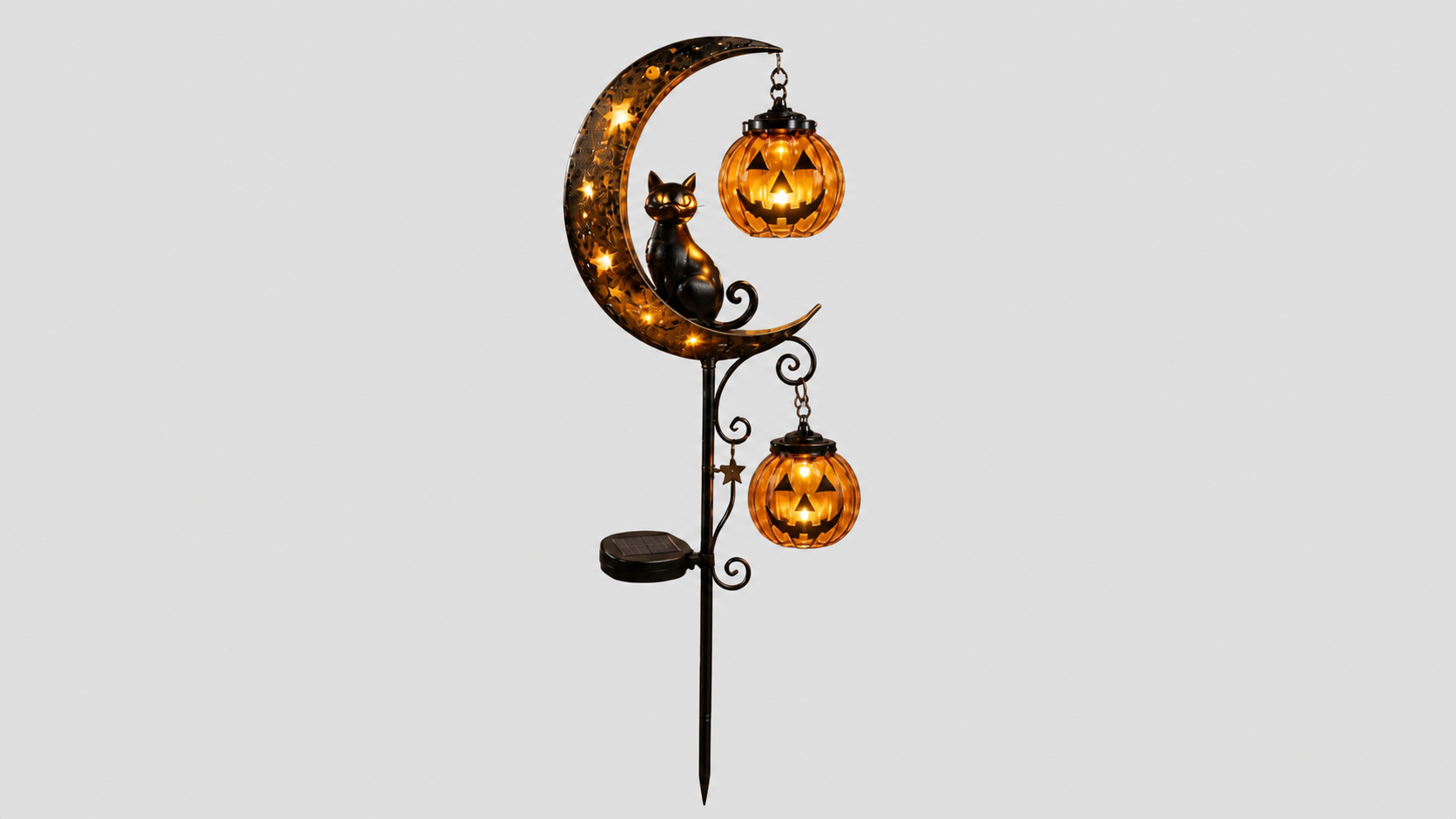
A glowing black cat, crescent moon, and pumpkin lantern make an appealing Halloween decoration. The advertisement also makes the buying decision feel unusually urgent.
LunaLayering deserves a closer look before checkout. Its product trail, changing promises, and store policies reveal details a cheerful sales page does not emphasize.
Overview
The decoration appears to be a widely resold product
LunaLayering advertises a solar garden stake showing a black cat, crescent moon, stars, and a hanging pumpkin lantern.
The inspected page priced one light at $36.99, reduced from $72.99, while bundles promised savings reaching 20%.
Very similar lights appear through unrelated sellers, including marketplace listings and separate storefronts using closely matching pictures, measurements, and descriptions.
The store provides policies, but they conflict in important places
Different LunaLayering pages promise easy 30-day returns, 90-day free returns, and a 90-day guarantee for items damaged during normal use.
Another policy says non-faulty items are not refunded, while the standalone return page discusses refunds for merchandise returned in new condition.
Those statements are difficult to reconcile. Buyers should obtain written confirmation of the rules applying to this exact item before paying.
The legal and operational picture remains unusually thin
The terms name SilkOcean Networks LLC and list a suite-style Wyoming address. They also contain broken wording about ownership and refer to United Kingdom law.
No prominent customer-service telephone number appears. Support is routed mainly through support@lunalayering.com and a website form.
This does not prove that every order will fail. It leaves fewer reliable paths when delivery, quality, cancellation, or reimbursement becomes disputed.
- The domain began building a public history only recently.
- The sale page claims a 49% reduction and displays urgency language.
- Similar products appear under several unrelated store names.
- Return periods and eligibility rules vary across the website.
- Some policy language discusses shoes, sizing, labels, and unworn goods.
- The advertised business identity is difficult to connect with manufacturing or fulfillment.
Our finding is caution, not certainty. LunaLayering is an operating Shopify storefront, but its claims and policies require more verification than the product page suggests.
What LunaLayering Is Advertising
The listing describes a solar-powered outdoor light that charges in daylight and illuminates automatically after dark.
It presents six visual variants, including pumpkins, a witch, a skeleton, and a ghost. The black-cat version is central to the advertising.
The page describes metal and plastic construction, a height of about 33.46 inches, and a warm orange glow.
Those specifications sound precise. However, the listing does not prominently identify the factory, product model, battery capacity, solar-panel rating, or replaceable component details.
The page says thousands of happy customers rated the item 4.9 out of 5. We did not find a transparent explanation of review collection.
A rating displayed by the seller should not be treated like an independently audited marketplace history.
The listing also labels the offer sold out while still presenting bundle controls and an add-to-cart route. That inconsistent status weakens the urgency message.
Seasonal products can sell quickly. A permanent-looking sale banner or contradictory stock status does not establish genuine scarcity.
Why the Product Trail Matters
The same general black-cat and pumpkin-moon design appears through Walmart marketplace sellers, Etsy listings, and independent stores using different brand names.
Prices vary considerably. We found closely matching versions advertised below LunaLayering’s claimed original price.
That pattern strongly suggests a generic or wholesale product being resold, rather than a unique LunaLayering creation.
Reselling is not inherently fraudulent. Many legitimate businesses buy from wholesalers and add service, quality control, warranties, or faster local delivery.
The concern begins when marketing implies exclusivity, craftsmanship, or extraordinary savings without explaining the product’s ordinary supply-chain history.
A crossed-out price proves only what the seller placed on the page. It does not establish a verified previous selling price.
Compare photographs carefully. Identical scratches, star placement, shadows, and decorative arrangements can reveal reused supplier imagery.
Also compare dimensions and material descriptions. Repeated phrasing across unrelated stores often points toward the same wholesale listing.
Marketplaces can offer stronger dispute systems, visible seller histories, and clearer delivery estimates, although marketplace protection is never automatic.
If an identical item costs less elsewhere, the LunaLayering price should buy measurable service. That service should be documented, not assumed.
How the LunaLayering Sales Funnel Creates Buyer Risk
Step 1: A seasonal social advertisement creates desire
The promotion reaches shoppers as Halloween approaches, when people are actively searching for memorable decorations and feel limited by the calendar.
A polished nighttime picture makes the warm pumpkin glow appear richer than an ordinary product photo might show.
The viewer imagines the finished yard before checking the store. That emotional picture becomes the advertisement’s first advantage.
Step 2: A large discount turns browsing into urgency
The page presents a 49% reduction and an early-bird sale, encouraging the visitor to believe waiting means losing an exceptional price.
Sale labels focus attention on the difference between $72.99 and $36.99, rather than the item’s value across competing sellers.
When the reference price is not supported by price history, the saving may be marketing arithmetic rather than a genuine bargain.
Step 3: Ratings and guarantees quiet reasonable doubts
The page pairs a 4.9 rating with thousands of happy customers, worldwide shipping, tracking, encryption claims, and a money-back promise.
Each badge answers a predictable concern. Together, they create reassurance before the shopper studies who operates the store.
On-site ratings remain seller-controlled unless the page explains where reviews came from and how purchases were verified.
Step 4: Bundles increase the amount committed
Bundle choices offer 10%, 15%, or 20% savings. The visitor may move from wanting one decoration to ordering several.
That raises the total exposed to delivery or quality problems. It also creates more items to return at the buyer’s expense.
A larger discount should not substitute for testing one product or verifying the seller’s support response.
Step 5: Generic fulfillment becomes visible after payment
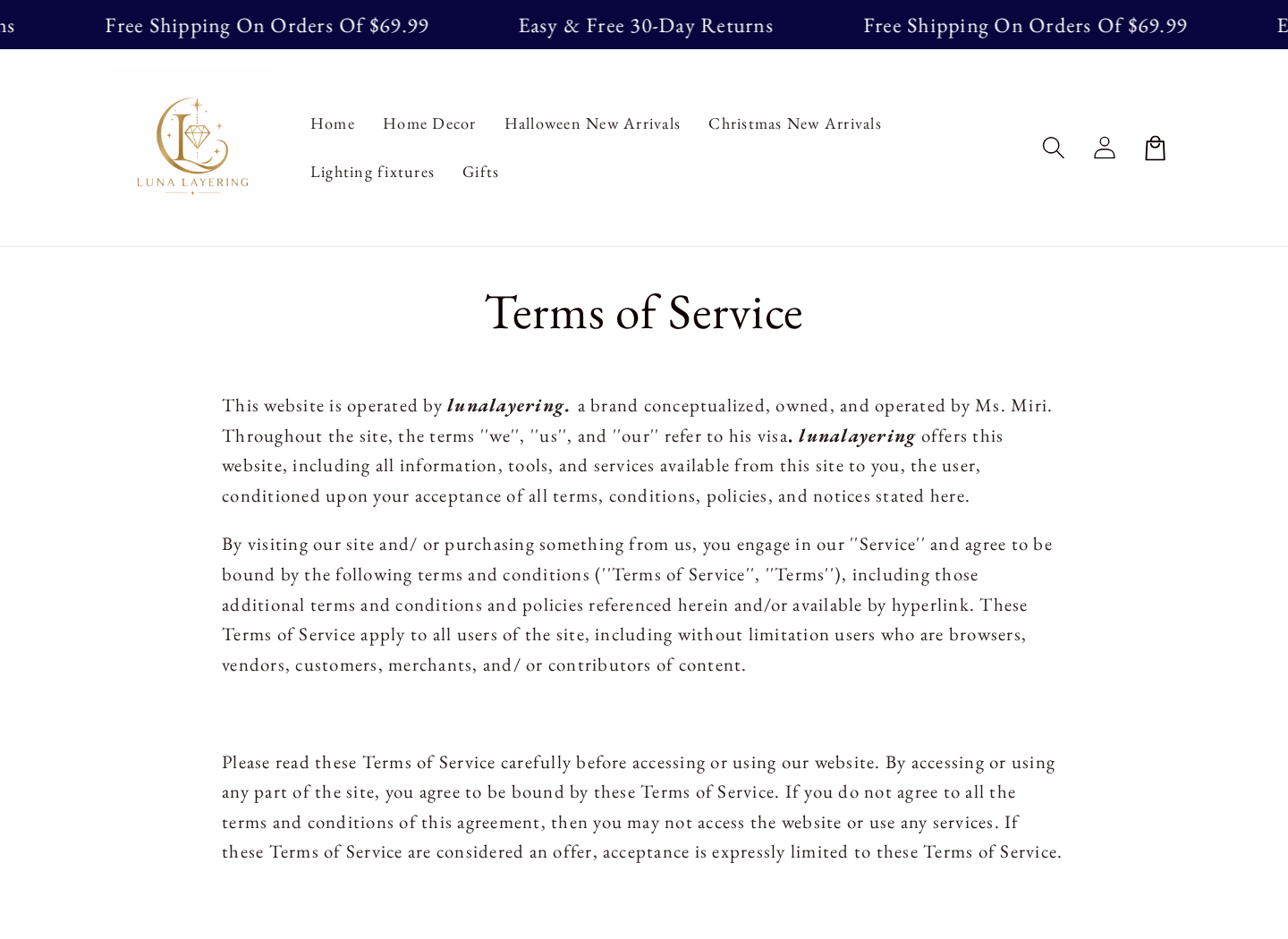
The store says processing may take three to five business days, followed by another five to seven business days for delivery.
Other policy text mentions 7 to 15 business days and customs. Such wording is compatible with outsourced or cross-border fulfillment.
The package may therefore arrive from a warehouse unrelated to the company address shown in the terms.
Step 6: The received item may not match the advertisement
Generic seasonal lights can differ in size, brightness, material thickness, paint quality, weather resistance, and charging performance.
A dramatic dusk photograph does not establish real-world brightness. Camera exposure and digital enhancement can make small LEDs appear much stronger.
If the product is disappointing rather than visibly broken, the buyer enters the website’s least clear refund area.
Step 7: Conflicting policies complicate the remedy
One LunaLayering page advertises easy free returns. Another says customers bear return postage. Another says non-faulty items receive no refund.
Several paragraphs discuss shoes, labels, unworn items, and size exchanges, even though the store now emphasizes decorations.
When support controls authorization and the return address, unclear wording can delay a claim until deadlines pass.
Policy Contradictions Buyers Should Notice
The homepage has displayed an easy 30-day return promise. Other banners have referred to 90-day free returns.
The product page says damaged items may receive replacement or refund within 90 days of normal use.
That is not the same as accepting a return because the light is dim, smaller than expected, or no longer wanted.
The combined shipping-and-returns page says returns are accepted within 30 days for most goods in new condition.
Later, the same page says non-faulty items are not refunded. Both statements cannot guide a buyer cleanly.
The standalone return policy says refunds exclude original outbound shipping and return postage.
The cancellation policy allows a full refund within 24 hours, then adds a 10% fee before shipment.
Once an order ships, cancellation requests are rejected and the customer must use the return process.
Save the exact policy pages on purchase day. Online wording can change, and the buyer needs evidence of the terms originally presented.
Company, Address, and Fulfillment Checks
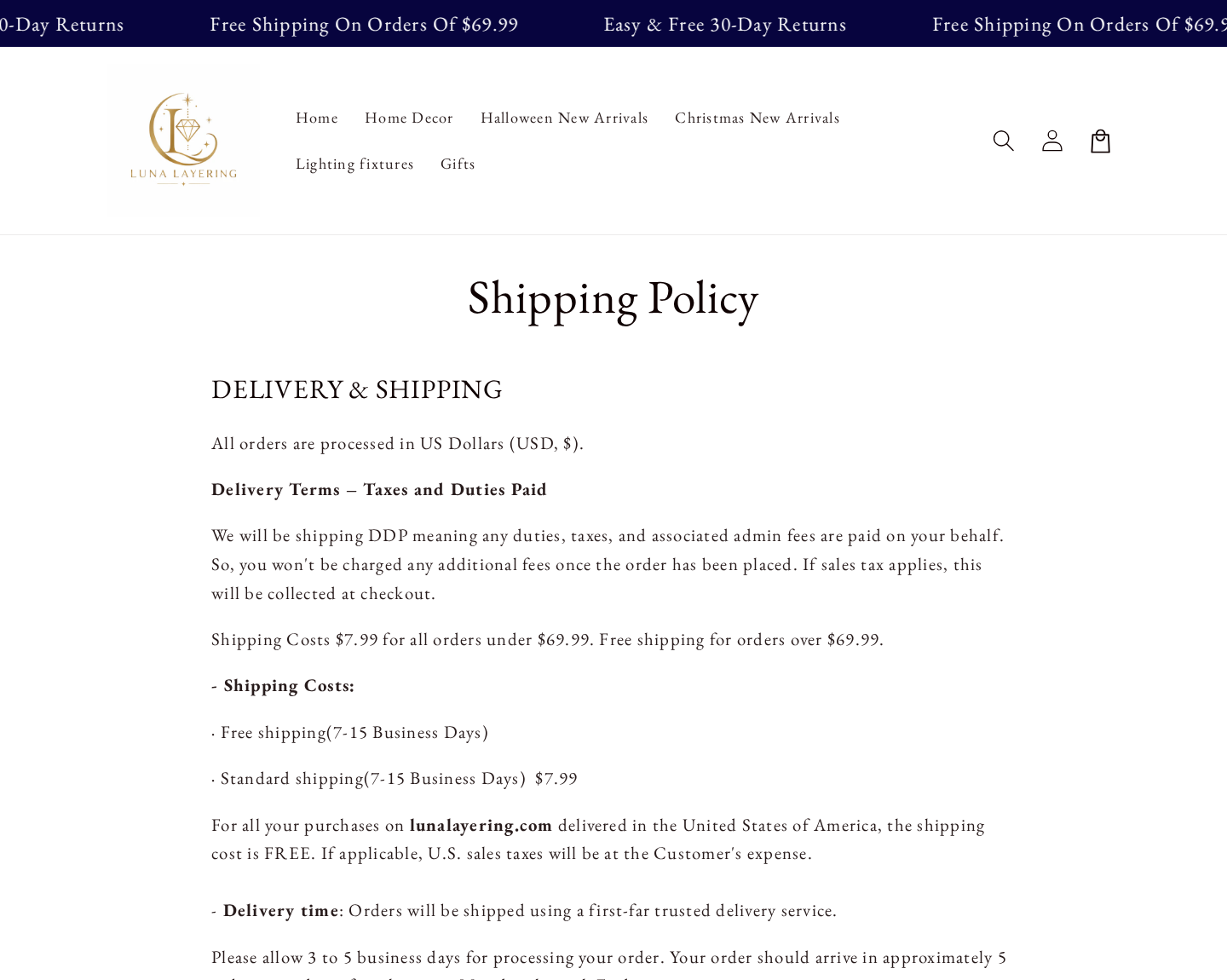
The terms name SilkOcean Networks LLC
The contact section lists SilkOcean Networks LLC at 312 W 2nd St, Unit A816, Casper, Wyoming 82601.
That address should match the legal seller on the receipt, card descriptor, privacy notice, and any return authorization.
The page does not explain whether SilkOcean designs products, owns inventory, operates support, or merely provides an administrative identity.
The ownership sentence is visibly broken
The terms say LunaLayering is conceptualized and operated by “Ms. Miri,” then abruptly state that “we” and “our” refer to “his visa.”
This looks like unedited template material or a failed rewrite. Legal terms should identify the contracting party unambiguously.
Careless policy text does not prove theft. It shows that the store published important conditions without adequate quality control.
The displayed address is not a proven warehouse
A suite or unit address can serve as a registered-agent or mail-forwarding location. It does not demonstrate inventory, staff, or manufacturing.
The site does not tell buyers to return the garden light directly to the Wyoming address.
Never mail a return there without written authorization. An unapproved package can be rejected or disconnected from the order.
Support lacks a prominent telephone route
The practical contact method is support@lunalayering.com, alongside a web form that requests a name, email, telephone number, and message.
Before purchasing, ask where this specific light ships from and where a change-of-mind return must go.
If support avoids both questions, the advertised 24/7 assistance offers little reassurance.
Could the Product Images Be AI-Generated?
Some promotional scenes look unusually polished, and shoppers may reasonably wonder whether artificial intelligence was involved.
A single image rarely proves AI generation. Compression, compositing, aggressive editing, and copied supplier renders can create similar artifacts.
The safer finding is that an attractive scene does not independently prove the physical item’s scale, brightness, or construction.
Check whether the moon’s bars connect logically, whether shadows match the lantern, and whether repeated details change between variants.
Reverse-search the photograph. Finding the same image under several names weakens any claim that it documents LunaLayering’s exclusive product.
Ask the seller for an ordinary daylight photograph showing the complete item beside a ruler, packaging label, and solar-panel specification.
A genuine seller should answer practical questions without relying solely on stylized promotional scenes.
How to Buy This Kind of Decoration More Safely
Start with the exact measurements. Thirty-three inches sounds substantial, but much of that height may be a thin ground stake.
Ask whether the battery is replaceable and what weather rating applies. “Outdoor ready” is less useful than a documented IP rating.
Compare one-item totals, including delivery and taxes. Do not compare only crossed-out prices or bundle savings.
Prefer a card or payment service with a clear dispute process. Avoid bank transfer, cryptocurrency, or gift-card payment.
Check recent independent reviews for delivery, not merely comments about how attractive the advertisement looks.
Save screenshots of stock claims, delivery dates, dimensions, materials, warranties, and the order total.
Use a unique password if creating an account. Marketing stores do not need a password reused from email or banking.
Do not let seasonal timing defeat comparison shopping. A decoration arriving after Halloween has limited practical value.
What to Do if LunaLayering Will Not Honor Its Return Promise
- Preserve the offer. Save the product page, advertised dimensions, sale price, delivery estimate, policies, order confirmation, tracking, and all support messages.
- Request cancellation immediately. Email support within 24 hours when possible. State the order number and request written confirmation of a full cancellation.
- Document the delivered item. Photograph the unopened package, shipping label, contents, measurements, damage, and nighttime brightness before changing or discarding anything.
- Use the published return process. Obtain authorization and the correct address first. Use tracked postage and retain the receipt until reimbursement clears.
- Escalate the payment dispute. Tell the issuer precisely whether goods were missing, materially misdescribed, damaged, duplicated, or refused under the advertised policy.
- Secure exposed accounts. Change any reused password. Run Malwarebytes if the ad caused a download, extension installation, or suspicious browser redirection.
- Block the advertising path. AdGuard can reduce malicious ads and tracking redirects, although it cannot verify a retailer or guarantee refunds.
- Report deceptive claims. Send organized evidence to the advertising platform and relevant consumer authority. Include dates, merchant names, totals, and policy contradictions.
Frequently Asked Questions
Is LunaLayering definitely a scam?
The light may arrive, but that does not clear the seller. Fake-looking discounts, generic sourcing, thin company details, and contradictory return rules create substantial risk.
Is the solar black cat light unique to LunaLayering?
No evidence reviewed establishes exclusivity. Closely matching products and imagery appear through unrelated stores and marketplace sellers.
Is the advertised 49% discount genuine?
The page displays that reduction, but we found no independent price history proving $72.99 was a normal sustained selling price.
Does LunaLayering offer 30-day or 90-day returns?
Its pages use both periods and differing eligibility language. Buyers should ask support to confirm the exact written rule covering their order.
Who does the website identify as the company?
The terms list SilkOcean Networks LLC and a Casper, Wyoming address. They do not clearly connect that location with warehousing or manufacturing.
What is the safest payment method?
Use a credit card or protected payment service, preserve every checkout record, and avoid payment methods offering little practical dispute protection.
The Bottom Line
LunaLayering appears to sell an ordinary generic light through a much more impressive story. Delivery alone would not validate the discount, images, or quality claims.
The contradictory return rules and weak corporate traceability are enough reason to avoid the store. The same decoration is safer through an established marketplace seller.

Join the discussion
0 commentsShare your experience or ask a question about this article.
Discussion
Start the conversation
Have a question or something useful to share? Add the first comment.