

Lungvita Drops are marketed as a “natural respiratory solution” that promises clearer breathing, reduced mucus, and long-term lung support using herbal ingredients.
On the surface, it looks like a wellness product.
But once you break down the claims, structure, and marketing style, a very different picture starts to emerge.
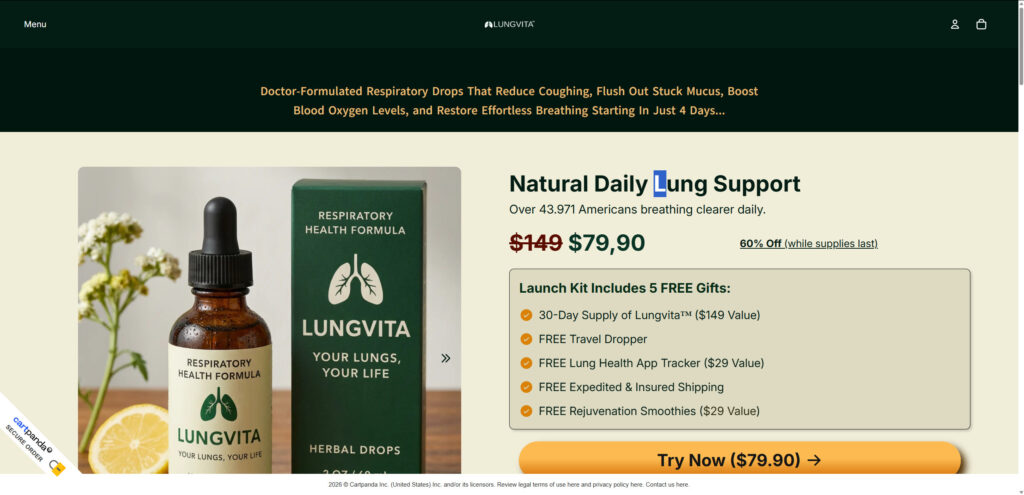
Overview
Lungvita follows a very familiar supplement funnel, one that has been repeatedly used to sell “miracle” health products online.
What Lungvita claims
- Clears mucus from the lungs
- Improves breathing quickly
- Supports long-term lung function
- Works even for smokers or people with respiratory issues
The website leans heavily on emotional messaging like:
- “Breathe easier again”
- “Feel your lungs open up”
- “Reset your respiratory system”
What Lungvita actually is
- A liquid herbal supplement
- A mix of common plant extracts (like ginger, thyme, licorice root, etc.)
- Not a medical treatment
- Not approved as a drug
Even the site itself admits:
- It is not a replacement for inhalers or medical treatment
That alone contradicts the aggressive marketing angle.
How This Operation Works
This is not just about one product. It’s a pattern.
Step 1: Emotional Hook
The product targets people who:
- Struggle with breathing issues
- Have a history of smoking
- Are worried about lung health
It promises:
- Fast relief
- Natural healing
- A “reset” of your lungs
Step 2: Overpromised Results
The website suggests:
- Rapid improvements in breathing
- Noticeable effects in days
- Long-term transformation
But there is:
- No clinical proof presented
- No published medical studies
- No regulatory approval
This is a major gap.
Step 3: Testimonials Over Evidence
The page is filled with:
- “Verified buyer” stories
- Dramatic transformations
- Life-changing claims
Examples include users saying their breathing improved in just days
These are:
- Not independently verified
- Not medical evidence
- Standard marketing assets
Step 4: Authority Illusion
The product uses language like:
- “Clinically dosed”
- “Targets root cause”
- “Lab tested”
But:
- No verifiable studies are linked
- No medical institutions are cited
This creates perceived credibility without proof
Step 5: High Price for a Basic Formula
- ~$79 per bottle
- Ingredients are common herbal extracts
Similar herbal blends exist widely and cheaply.
You are paying for:
- Branding
- Marketing
- Funnel design
The Biggest Red Flag
1. “Lung Detox” Claims
Any product claiming to:
- “Clean your lungs”
- “Remove toxins”
- “Reset your respiratory system”
is immediately questionable.
The lungs already have natural cleaning mechanisms.
No supplement can “flush” them.
2. Targets Medical Conditions Indirectly
The product references:
- COPD
- Asthma
- Long COVID
But avoids explicitly claiming treatment.
This is a common tactic to:
- Attract vulnerable users
- Avoid legal liability
3. No Regulatory Approval
Health authorities warn that:
- Unapproved supplements are not evaluated for safety or effectiveness
That means:
- No guarantee it works
- No guarantee it’s safe
4. Generic Ingredient Strategy
The formula includes:
- Herbs commonly found in teas and remedies
While some ingredients (like mullein) are popular:
- Evidence is inconsistent
- Effects vary widely
- Some users report no benefit or even side effects
5. Recycled Marketing Pattern
This exact structure is used in:
- Weight loss drops
- “Blood sugar” supplements
- Detox teas
- “Fat-burning” tonics
Different product.
Same playbook.
What You’re Really Getting
Best-case scenario
- Mild soothing effect
- Slight relief (similar to herbal tea)
Most likely scenario
- No noticeable change
- Temporary placebo effect
Worst-case scenario
- Wasted money
- Delayed real medical treatment
- Possible side effects or interactions
Real Risk Most People Ignore
The biggest issue is not just losing money.
It’s this:
People delay proper medical care.
When someone believes:
- “This will fix my breathing”
- “I don’t need my inhaler anymore”
That can be dangerous.
Even Lungvita admits it should not replace medical treatment
Is Lungvita a Scam?
Technically
- It is a real product
- It contains real ingredients
Practically
- Claims are exaggerated
- Evidence is lacking
- Marketing is misleading
Most accurate classification
A heavily overhyped supplement sold through aggressive marketing
Should You Buy It?
No, if your goal is:
- Real lung improvement
- Treatment for respiratory conditions
- Proven results
Consider instead
- Medical consultation
- Evidence-based treatments
- Lifestyle changes (smoking cessation, air quality, etc.)
What To Do If You Already Bought It
If you already ordered Lungvita Drops, the priority is to protect your health, your money, and your ability to dispute the purchase if needed. Do not wait to “see what happens” for too long. These products are often sold with strong promises and limited accountability, so it is better to act early.
Monitor for side effects
Even if a product is marketed as “natural,” that does not mean it is risk-free.
Watch for:
- stomach upset
- nausea
- diarrhea
- dizziness
- rash or itching
- coughing or throat irritation after taking it
- any unusual change after starting the drops
This is especially important if you:
- take prescription medication
- have asthma, COPD, allergies, or other respiratory conditions
- are pregnant or breastfeeding
- have liver, kidney, or heart issues
If you notice side effects:
- stop using the product
- take photos of the bottle and label
- write down when the symptoms started
- contact a medical professional if symptoms are significant or do not improve
If you have severe symptoms such as shortness of breath, swelling, chest pain, or signs of an allergic reaction, seek urgent medical care.
Do not replace prescribed treatments
This is one of the biggest risks with products like Lungvita.
Do not:
- stop using your inhaler
- stop your asthma or COPD medication
- reduce prescribed treatment because the drops claim to “clear the lungs”
- rely on the product instead of medical advice
A supplement like this is not a substitute for:
- inhalers
- nebulizers
- antibiotics when prescribed
- steroid treatment
- medical evaluation for lung symptoms
If you already reduced or stopped prescribed treatment because of the product’s claims, contact your doctor and get back on a proper treatment plan. Do not gamble with breathing problems.
Request a refund if dissatisfied
If the product does not match the claims, start the refund process as soon as possible.
Do this immediately:
- find the order confirmation email
- read the refund and return policy
- check the deadline for complaints or returns
- contact support in writing, not just through a form if possible
When you contact them:
- state your order number
- say clearly that you want a refund
- explain that the product did not perform as advertised
- ask for the exact return instructions and refund timeline
Keep your message short and direct.
Example:
I am requesting a refund for order #[number]. The product did not perform as advertised. Please provide the return instructions and confirm the refund process in writing.
Do not wait weeks if the seller is stalling. Many of these stores rely on delay tactics until the refund window closes.
Keep documentation of claims
This is critical if you need to dispute the charge with your bank or card provider.
Save:
- screenshots of the product page
- screenshots of any claims about breathing, lung cleansing, mucus removal, or rapid results
- screenshots of testimonials and guarantees
- a copy of the refund policy
- your order confirmation
- shipping confirmation and tracking
- all emails between you and the seller
Also keep:
- photos of the product you received
- photos of the packaging and ingredient label
- notes about whether it matched the advertising
This documentation can help show:
- the claims you were promised
- whether the product was misleading
- whether the seller ignored your refund request
Watch your payment method closely
After buying from stores like this, monitor your card or account for:
- duplicate charges
- unexpected rebills
- extra charges after shipment
- foreign transaction activity
If you see anything suspicious:
- contact your bank immediately
- lock or replace the card if necessary
- ask about a charge dispute
Compare what arrived with what was advertised
When the bottle arrives, check:
- ingredient list
- bottle size
- serving count
- usage directions
- warnings
- country of origin if shown
Look for differences between:
- what the website promised
- what the label actually says
If the marketing suggested dramatic lung benefits but the label looks like a generic herbal supplement with vague wording, that strengthens your case that the product was oversold.
Do not keep taking it just because you paid for it
A lot of people fall into this trap.
They think:
- “I already bought it, so I might as well finish it”
- “Maybe it needs more time”
- “I don’t want to waste the money”
That thinking can lead to bigger problems, especially if:
- it is not helping
- it is causing side effects
- it is delaying proper care
If it is not working or you feel worse, stop.
The Bottom Line
Lungvita Drops are not a breakthrough.
They are a standard herbal supplement wrapped in high-impact marketing.
The promise is powerful:
- Clean lungs
- Easy breathing
- Fast results
But the reality is simple:
There is no scientific shortcut to lung health in a dropper bottle.








