

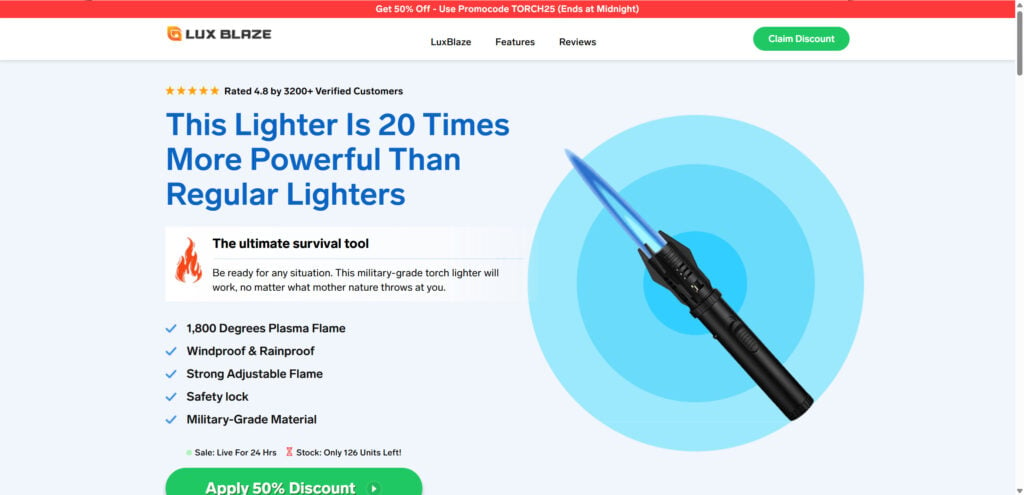
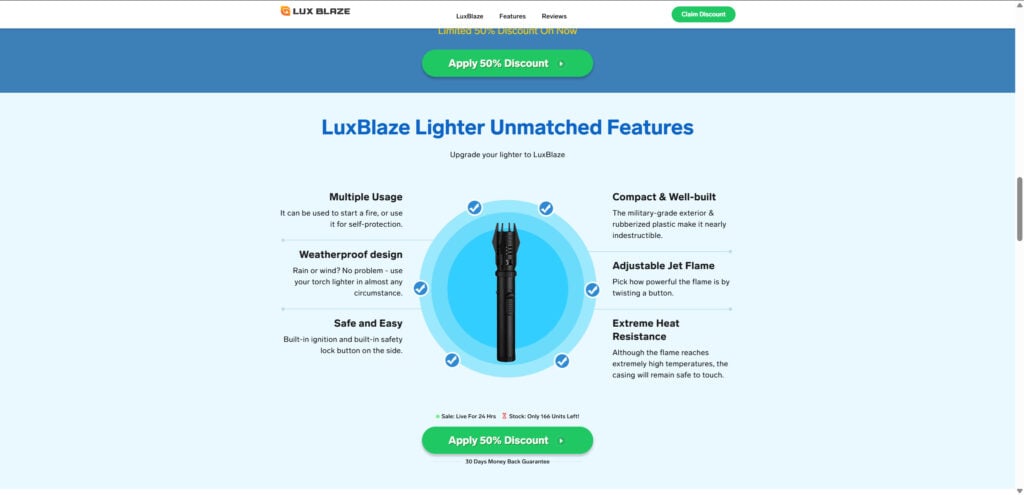
The LuxBlaze Lighter is marketed as a “military-grade survival tool” with a powerful flame, extreme durability, and all-weather performance. The landing page is designed to impress fast: bold claims, dramatic visuals, countdown timers, and heavy discounts.
But once you look beyond the marketing, this is not a premium survival product. It follows the same pattern seen across many viral gadget dropshipping operations.
Overview
At first glance, LuxBlaze looks like a high-end outdoor tool.
What the website claims
- “20 times more powerful than regular lighters”
- “1,800-degree plasma flame”
- “military-grade material”
- windproof and rainproof performance
- “ultimate survival tool”
- “4.8 rating from 3,200+ customers”
These claims are designed to position it as something revolutionary.
What it actually is
Multiple analyses show that:
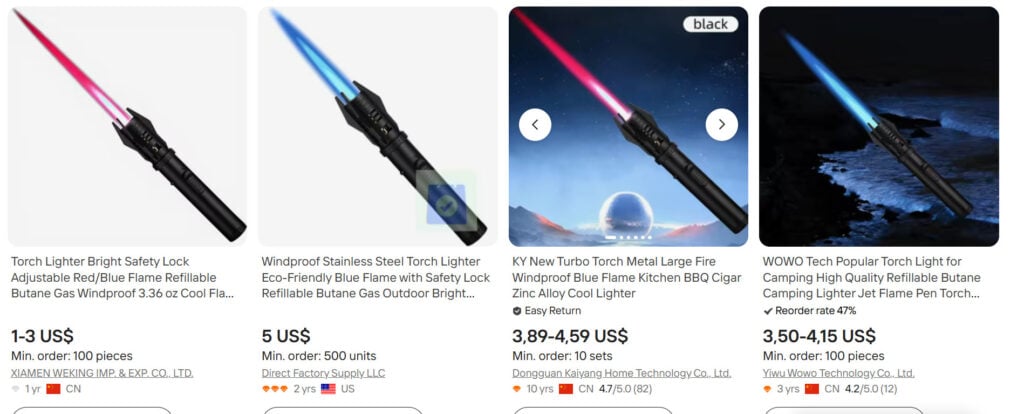
- it is a generic butane torch lighter
- identical models are sold in bulk for a few dollars
- the branding is layered on top of a mass-produced product
- the retail price is heavily inflated
This is a textbook example of a high-margin dropshipping gadget.
Major Red Flags
1. Identical product sold for $2–$5
The same lighter design appears on wholesale marketplaces:
- bulk price: ~$2–$4 per unit
- generic names like “jet torch lighter” or “BBQ lighter”
- mass-produced in Chinese factories
LuxBlaze sells it for ~$40 after “discount.”
That is not branding. That is markup.
2. “Plasma” claim is misleading
The site uses terms like:
- “plasma flame”
- “advanced technology”
But:
- real plasma lighters use electric arcs
- this product is a standard butane torch
- visible flame + refill system confirms that
This is marketing language, not real technology.
3. Fake urgency and fake discounts
The site constantly shows:
- “50% OFF ends today”
- countdown timers
- “only 126 units left”
- repeated “last chance” messages
These are classic pressure tactics.
They reset frequently and are not real scarcity signals.
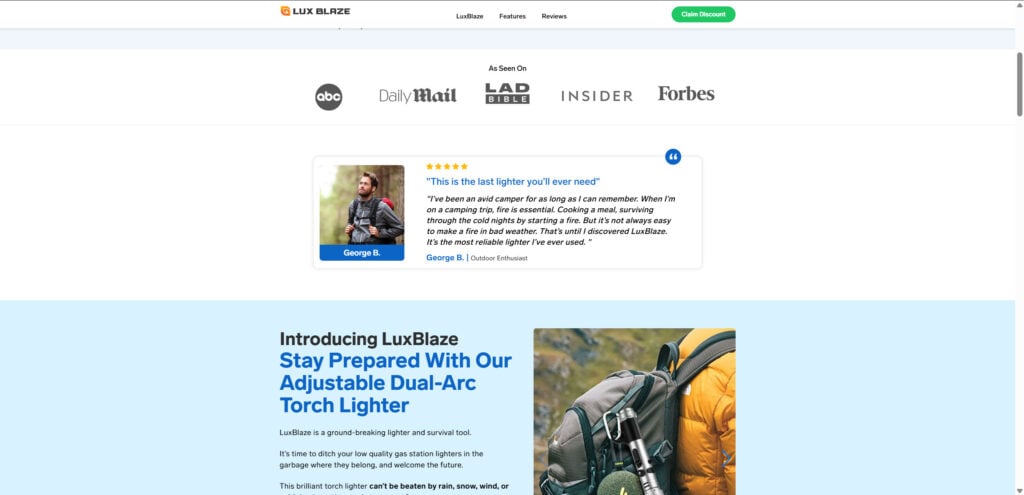
4. “As seen on” logos are not verified
The page displays logos like:
- ABC
- Daily Mail
- Forbes
- Insider
There is no proof these outlets featured the product.
This tactic is commonly used to:
- create false authority
- build instant trust
- increase conversion rates
5. AI-generated or stock testimonials
Customer reviews on the page:
- use generic names like “George B.”
- include stock-style profile photos
- follow identical formatting patterns
There is no verifiable link to real customers.
This strongly suggests:
- staged testimonials
- or AI-generated marketing content
6. Affiliate disclaimer exposes the real structure
At the bottom of the site:
- it states they are not the manufacturer
- purchases may redirect to another seller
- they earn commissions from sales
This confirms:
- LuxBlaze is not a product brand
- it is part of an affiliate-driven funnel
7. Dropshipping pattern confirmed
Community discussions on our forums describe it clearly:
“They simply order from AliExpress and charge 10x the price.”
This aligns with:
- identical product sourcing
- inflated pricing
- weak after-sales support
How the Operation Works
This is a standard viral gadget model.
Step 1: Source a cheap product
- Buy generic torch lighter for $2–$4
Step 2: Rebrand it
- Add name “LuxBlaze”
- create “military-grade” positioning
- claim advanced technology
Step 3: Build a high-conversion landing page
- emotional survival messaging
- fake urgency
- large discounts
- social proof inflation
Step 4: Run ads
- Facebook / TikTok / Instagram
- outdoor and survival angles
- viral-style video content (often AI-enhanced)
Step 5: Fulfill orders from overseas
- long shipping times possible
- inconsistent quality control
Step 6: Handle complaints poorly
- difficult refunds
- return shipping to China
- high friction support
Customer Experience Risks
Product quality inconsistency
- may work fine
- may feel cheap compared to ads
Receiving multiple units
Some buyers report:
- receiving extra units
- upsells or bundles applied automatically
Returns are difficult
- often require shipping back to China
- shipping cost can exceed product value
- refund process can be slow or denied
Support issues
- delayed responses
- generic replies
- unclear responsibility (affiliate vs seller)
Safety Concerns
LuxBlaze claims:
- extreme heat
- safe casing
- all-weather use
But:
- no certifications shown (CE, UL, etc.)
- generic butane torches can be dangerous
- no proof of “military-grade” standards
This matters because:
- it is a high-heat device
- misuse or poor build quality can cause injury
Is It a Scam or Legit?
The reality
- The product exists
- Some units will work
But the operation shows strong warning signs:
- inflated pricing
- misleading claims
- fake authority signals
- questionable reviews
- difficult refunds
Final verdict
High-risk dropshipping product.
Not a pure “you get nothing” scam
But absolutely not what the marketing suggests
Should You Buy It?
Reasons to avoid
- extreme markup vs actual value
- exaggerated performance claims
- fake trust signals
- refund difficulty
- unclear seller responsibility
If you still want a torch lighter
You are better off:
- buying from known brands
- checking verified retailers
- avoiding single-product landing pages
What To Do If You Already Ordered
1. Document everything
Save:
- product page claims
- discount banners
- checkout confirmation
- shipping details
2. Inspect immediately
Check:
- build quality
- flame consistency
- whether it matches ads
3. Request refund early
Do not wait:
- contact support quickly
- ask for written confirmation
4. Prepare for resistance
If they:
- delay replies
- require expensive returns
then escalate
5. File a chargeback if needed
Use:
- credit card protection
- PayPal dispute system
Reason:
- product not as described
Bottom Line
LuxBlaze looks impressive in ads.
In reality:
- it is a generic $2–$5 torch lighter
- sold with premium storytelling
- backed by aggressive marketing tactics
The biggest risk is not that you receive nothing. The risk is paying 10–20× more for a product that is nowhere near what the ads promise.
Frequently Asked Questions
Is the LuxBlaze Lighter a scam?
The lighter itself appears to be a real product, so this does not look like a pure fake-item scam where nothing exists. The bigger issue is that it appears to be a generic dropshipped torch lighter sold with exaggerated marketing, inflated pricing, and questionable trust signals.
Is LuxBlaze really 20 times more powerful than regular lighters?
There is no credible evidence shown on the sales page to support that claim. It reads like marketing language designed to make a standard torch lighter sound much more advanced than it really is.
Is the LuxBlaze Lighter actually a plasma lighter?
It does not appear to be a true plasma lighter. The product shown looks like a butane torch lighter with a visible jet flame, not an electric arc-style plasma lighter. Calling it “plasma” appears to be part of the marketing.
Is LuxBlaze military grade?
There is no proof on the site that the lighter meets any real military standard. “Military-grade” is often used in ads as a buzzword, not as a verified certification.
Can the LuxBlaze Lighter really burn through metal?
That claim should be treated with skepticism. Even if the torch flame is hot, the sales language clearly exaggerates the performance. This is a pocket torch lighter, not an industrial cutting tool.
Is LuxBlaze sold on multiple websites?
Yes. Products like this are often sold across multiple domains under different names or slightly different branding. That is a common sign of a dropshipping-style operation rather than a genuine standalone brand.
Is the LuxBlaze Lighter just a cheap generic product?
It appears very similar to generic refillable torch lighters sold on wholesale marketplaces for a few dollars each. The evidence suggests buyers are paying a large markup for branding and advertising rather than unique quality or technology.
Why is LuxBlaze so expensive compared to similar lighters?
Because the product appears to be marketed through a high-margin dropshipping funnel. The low wholesale cost and high retail price create room for aggressive advertising, affiliate payouts, and steep discounts that still leave a large profit margin.
Are the “As Seen On” logos on the LuxBlaze website real?
There is no visible proof that outlets like Forbes, Insider, ABC, or Daily Mail actually featured the product. In many cases, these logos are used to create authority even when no real coverage exists.
Are the LuxBlaze reviews real?
That is difficult to verify. The reviews shown on the site use generic names, polished testimonials, and stock-style presentation. That does not prove they are fake, but it does give buyers a reason to be cautious.
Does LuxBlaze use AI-generated images or videos?
It appears to rely on heavily polished promotional content, and some of the visuals may be AI-generated or enhanced. That matters because these types of images can make a cheap product look much more premium than it really is.
Can I return the LuxBlaze Lighter if I’m unhappy?
In theory, the site advertises a money-back guarantee. In practice, the problem with stores like this is that returns may require shipping the product back to China, which can cost so much that returning it becomes unrealistic.
Why do some buyers say they received more units than they ordered?
That can happen with confusing bundle offers, upsells, or checkout structures that make buyers think they selected one item when they actually approved multiple units. It can also happen when stores push quantity deals aggressively.
Is LuxBlaze good for camping or survival use?
A generic torch lighter may work for lighting fires, candles, grills, or camp stoves. The issue is not that the product can never work. The issue is that LuxBlaze presents it like a premium survival-grade tool when it appears to be a common low-cost torch lighter.
Should I buy the LuxBlaze Lighter?
If you want a simple torch lighter, there are safer options from known brands and reputable retailers. The LuxBlaze offer raises too many concerns about pricing, claims, returns, and overall transparency to recommend it with confidence.









Here is a message I sent to “unbindgear”
(Your ad stated that:)
The Features That Make LuxBlaze Unstoppable
attached_powerbank.jpg
🔥 Ion Pulse Technology – The 1,800-degree plasma flame ignites anything instantly.
🔥 Cuts Through Metal – Powerful enough to cut through metal in seconds.
🔥 Windproof & Waterproof – Works in extreme conditions, even after being fully submerged in water.
🔥 Military-Grade Durability – Designed for harsh environments and built to last a lifetime.
🔥 Eco-Friendly – No toxic gases, no refills, no harmful chemicals.
🔥 100% Electric – USB rechargeable with up to 300 uses per charge.
This isn’t just a lighter—it’s a tool you can rely on anytime, anywhere.
*********************************************************************************************
I’d call that statement: bovine %%%%%%%%% (means: edited from this message).
The trouble is that bovine %%%%%%%%% has value as fertilizer.
Your ad has no value AT ALL.
The butane gas lighters you sent me have a very short use period. They use a lot of BUTANE GAS.
You %%%% %% %%.
I %%%% liars.
Take me off your email list and be grateful I have not made a big, PUBLIC stink over your false advertising. [I wrote this when I changed my mind]
Your other products look too cheap and stupid to even try.
-Ron
That reply of yours deserves an answer, so here it is point by point. A 1,800-degree “plasma” arc from a device that size cannot cut metal – an electric arc lighter delivers a tiny amount of energy at very high local temperature, enough to light a cigarette or a wick and nothing more. Fully submersible and then immediately functional is not compatible with an exposed electrode and a lithium cell. “Military-grade” has no defined meaning and appears in these ads precisely because it can’t be tested. What you actually bought is a generic arc lighter sold under a rotating set of brand names, marked up ten to twenty times. Send your message to your card issuer as well as the seller, and dispute it as not as described – the ad copy you quoted is your evidence.