

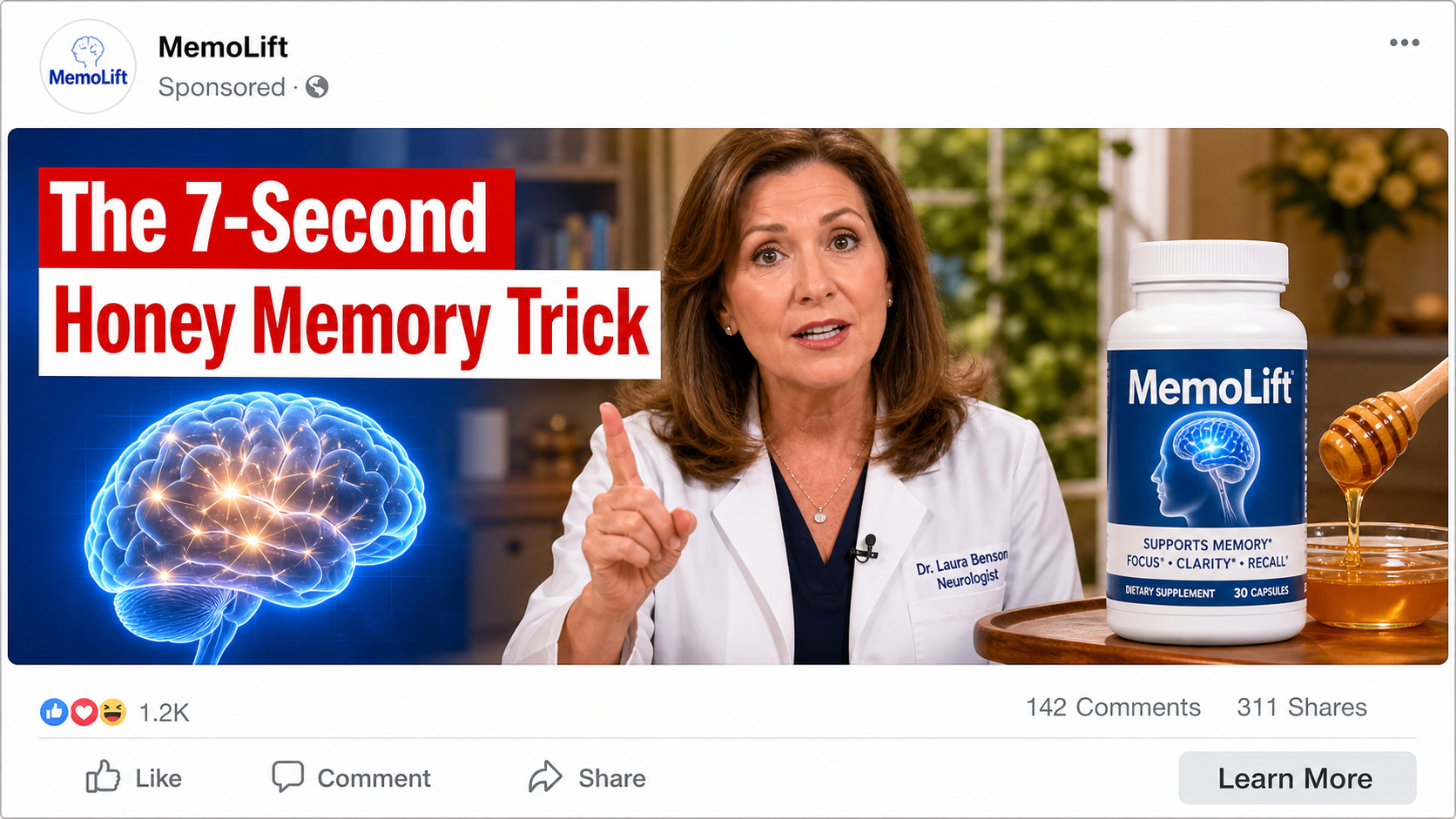
A reassuring doctor says a spoonful of honey can reverse memory loss. The presentation mentions Alzheimer’s disease, respected specialists, and a discovery that families supposedly were never meant to hear.
The presentation looks personal and urgent, as if one short video could answer questions that doctors and families have struggled with for years. It asks the viewer to keep watching before revealing the supposed discovery.
We investigated the endorsements, product pages, ingredients, domain history, checkout destination, prices, guarantee, missing company information, and the medical risks behind the offer.
Overview
What MemoLift Claims to Do
MemoLift is marketed as a cognitive support supplement for memory, focus, mental clarity, energy, mood, and age-related brain health. The page names ingredients such as bacopa, ginkgo, Huperzine A, St. John’s wort, and acetyl-L-carnitine.
The sales copy displays a starting price of $49 per bottle and pushes multi-bottle packages. It also uses “Made in the USA,” “all natural,” and “FDA approved facility” badges.
The formal disclaimer says the product is not intended to diagnose, treat, cure, or prevent disease. That conflicts with advertising that frames MemoLift as an answer to Alzheimer’s disease or dementia.
The Order Button Does Not Sell MemoLift
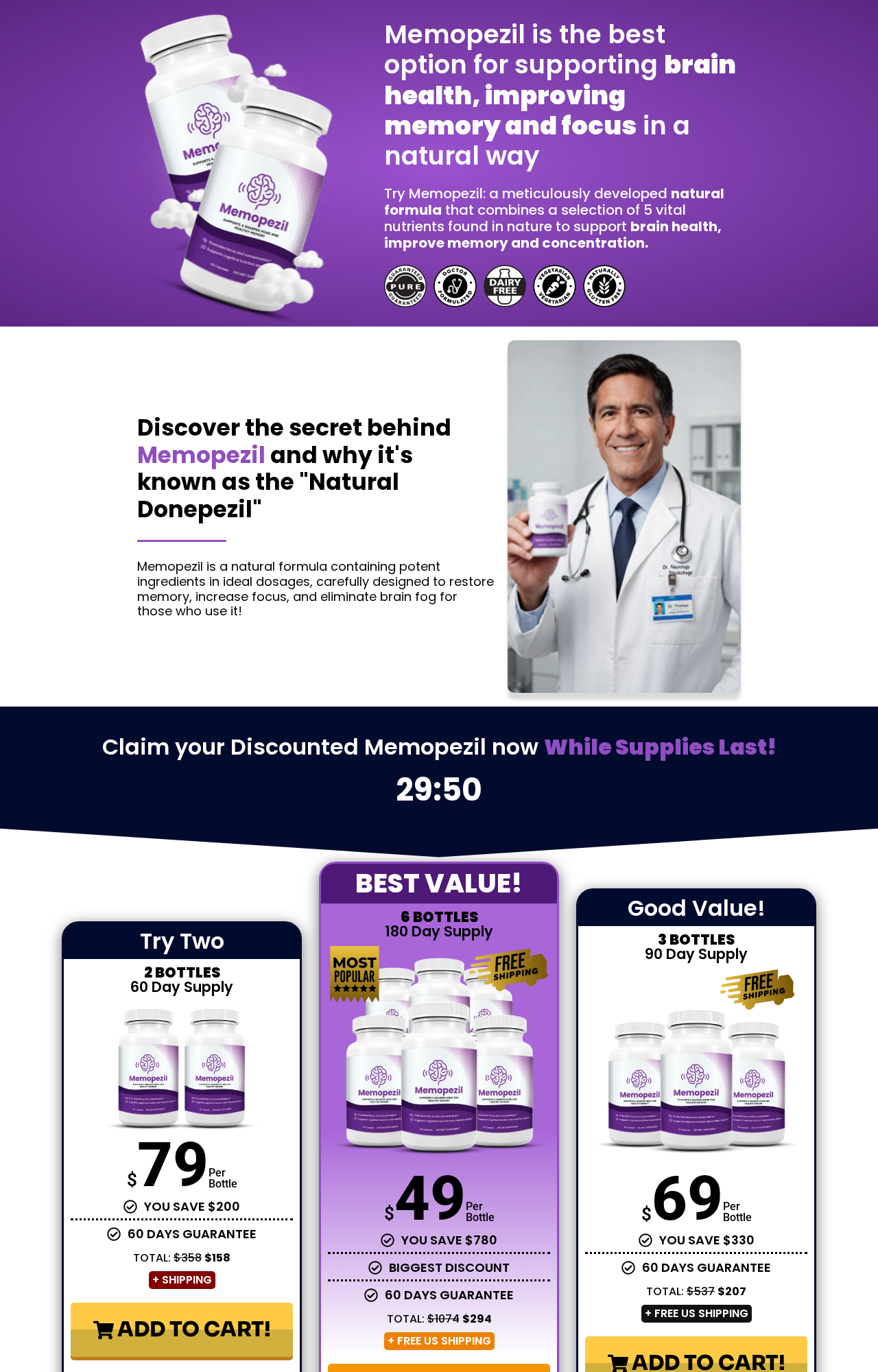
The most important finding is visible at the bottom of memo-lift.com. Its main call-to-action says the visitor is saving on MemoLift, but the link points to realmemopezil.com.
Memopezil is a different supplement name already used in similar Bill Gates, honey, and Alzheimer’s cure funnels. The destination shows how quickly the bottle can rotate while the emotional story remains the same.
A shopper who believes the page is the official MemoLift store may not notice the brand switch until checkout, confirmation, or delivery.
Our MemoLift Verdict
We recommend avoiding the MemoLift offer. The fake endorsements, unsupported Alzheimer’s cure narrative, anonymous sales page, inconsistent guarantee language, and redirect to another product make the funnel untrustworthy.
We did not find evidence that every bottle using the MemoLift name is counterfeit or that every order automatically renews. The problem is that the page does not give buyers a stable, verifiable path from advertised product to legal seller and checkout.
The main warning signs are:
- Unauthorized doctor and celebrity names are used to sell a memory product.
- A honey recipe promise becomes a supplement pitch.
- The page implies benefits for dementia and cognitive decline.
- The MemoLift order button redirects to Memopezil.
- The site does not clearly identify a legal company, address, or support phone.
- The privacy and terms links use malformed backslash URLs.
- The guarantee is described as both 60 days and 180 days.
- No clinical trial of the finished MemoLift formula was located.
The Fake Honey Recipe and Alzheimer’s Cure Story
Doctors Are Added Without Verifiable Endorsements
The campaign has used names associated with health and longevity, including Dr. Sanjay Gupta, Dr. Peter Attia, Dr. Oz, Dr. Phil, Dr. Jennifer Ashton, Dr. Eric Berg, and Dr. William Li.
We found no verified endorsement of MemoLift from those people. A face, voice, or name inside a sales video can be copied, edited, or generated without permission.
Real commercial relationships normally appear in a public statement, verified social account, or transparent advertisement. The MemoLift funnel provides no such confirmation.
The Honey Recipe Keeps Families Watching
Honey feels familiar and harmless. When the script links it with memory recovery, viewers may believe they are about to receive a free household remedy rather than a commercial pitch.
The presentation delays the promised details while describing families devastated by memory loss. That emotional pacing makes the final product seem like relief from fear, guilt, and helplessness.
No honey recipe has been proven to reverse Alzheimer’s disease. The promise functions as a marketing hook, not a treatment plan.
A Supplement Cannot Be Presented as a Dementia Cure
Alzheimer’s disease is a progressive brain disorder that requires professional evaluation. Memory changes can also have other causes, including medication effects, depression, sleep problems, vitamin deficiencies, thyroid disease, infection, and stroke.
The National Institute on Aging says no vitamin or supplement has been proven to prevent Alzheimer’s disease. A page cannot bridge that evidence gap with testimonials and badges.
Anyone experiencing new confusion, rapid decline, or difficulty managing daily life should be medically assessed rather than routed into a long supplement video.
The MemoLift Website Shows Signs of a Rotating Funnel
MemoLift Becomes Memopezil at the Purchase Step
The memo-lift.com page repeatedly describes MemoLift, shows MemoLift images, and invites buyers to save $180. The final link points to realmemopezil.com rather than a MemoLift checkout.
This is not a harmless typo in a footer. The call-to-action is the point where the visitor is expected to become a paying customer.
The switch supports a broader pattern in memory-supplement funnels: the celebrity, honey, and cure script stays recognizable while the destination brand changes.
The “Official” Label Does Not Prove Official Status
Several domains can call themselves the official MemoLift site. One formerly indexed domain, memolift.net, now returns an error page, while memo-lift.com remains accessible.
Public domain records show memo-lift.com was registered in May 2026. A recent registration is not proof of fraud, but it gives the site little operating history.
An official claim should be supported by a named company, consistent checkout, accessible policies, stable support, and a label that identifies the distributor.
The Guarantee Changes From 60 to 180 Days
The page headline and guarantee section repeatedly promise 60 days. Another FAQ on the indexed MemoLift material describes a 180-day guarantee.
A refund promise should not change within the same marketing ecosystem. The difference affects how long the buyer has to act and what bottles must be returned.
The policy that matters is the one attached to the actual merchant at checkout. Save it before payment because the affiliate page may not control the refund.
How the MemoLift Memory Supplement Scam Works
Step 1: The Ad Targets Fear of Memory Loss
The campaign reaches older adults and family members worried about forgetfulness, dementia, or losing independence.
It promises an answer that feels faster and more hopeful than a medical appointment.
Step 2: Familiar Doctors Create Borrowed Trust
Recognizable physicians and television personalities appear to explain or endorse the discovery.
Their identities are used without a verifiable commercial relationship.
Step 3: A Honey Recipe Makes the Cure Feel Simple
The story claims an everyday ingredient can address the hidden cause of cognitive decline.
A complex neurological condition is reduced to one memorable ritual that anyone can supposedly perform at home.
Step 4: The Video Delays the Promised Recipe
Personal stories, warnings about mainstream treatment, and scientific-sounding explanations keep the viewer watching.
The longer the viewer stays, the more likely the final purchase feels like the conclusion of an investigation rather than an advertisement.
Step 5: The Free Discovery Becomes MemoLift
The campaign shifts from kitchen honey to a proprietary capsule blend. Testimonials and scarcity messages appear near the package options.
No finished-product trial is provided to support the Alzheimer’s cure expectation created earlier.
Step 6: The Order Link Changes the Brand
The MemoLift call-to-action sends the visitor toward Memopezil. A buyer may proceed because the story and bottle category feel similar even though the name changed.
This makes the merchant, product, and refund terms harder to identify later.
Step 7: Billing and Returns Depend on a Different Seller
The affiliate page may advertise one guarantee, while the actual retailer controls the transaction and return process.
If a refill or upsell appears, only the final checkout and receipt can show whether it was authorized.
Company, Address, and Fulfillment Checks
The MemoLift Page Does Not Name the Legal Seller
The page uses the MemoLift brand and generic copyright language but does not clearly identify a registered company responsible for the offer.
The order link points to a Memopezil domain, making it even less clear whether the MemoLift page is a brand owner, affiliate, or recycled marketing site.
No Verifiable Headquarters or Return Address Is Prominent
A buyer should be able to find a company name, physical address, support email, phone number, and return policy before paying. Those details are not presented clearly on the MemoLift page reviewed.
An address later supplied by a checkout may be a fulfillment or returns warehouse. It should not be described as a factory or headquarters without proof.
Support Could Disappear With the Domain
The formerly indexed memolift.net now produces an error, and memo-lift.com contains malformed policy URLs. That leaves buyers dependent on the retailer behind the destination checkout.
Test support before ordering. If an email, phone number, and legal entity cannot be confirmed, a money-back badge offers little practical protection.
The Manufacturer and Supply Chain Are Not Disclosed Clearly
The page uses USA and facility badges but does not clearly name the manufacturer, importer, or lot-specific testing laboratory.
This does not prove that MemoLift was manufactured in China or contains unsafe ingredients. It means the supply chain cannot be verified. Ask for the complete label, factory identity, lot number, allergens, and certificate of analysis.
Check the bottle against the order record when it arrives. The company name, serving size, ingredient amounts, warning panel, and distributor address should match what was shown before payment.
If the package carries a different product name or lacks a usable lot number, photograph every side before opening it. Contact the merchant in writing and ask for an explanation before taking the capsules.

Ingredients and Health Risks
The Page Lists Ingredients With Real Drug Interactions
MemoLift marketing names St. John’s wort, ginkgo, Huperzine A, bacopa, and acetyl-L-carnitine. These are not inert decorations simply because they are described as natural.
NCCIH warns that St. John’s wort can interact in dangerous ways with many medicines. It can reduce the effect of some drugs and increase serious serotonin-related effects when combined with certain antidepressants.
Individual Ingredient Research Does Not Prove MemoLift
Studies involving bacopa, ginkgo, or another ingredient may use a standardized extract and a known dose. The MemoLift sales page does not provide enough finished-product evidence to transfer those results directly to the bottle.
A testimonial about sharper memory cannot establish that the product prevented or treated dementia.
“FDA Approved Facility” Is Misleading Language
Dietary supplements generally are not FDA approved for effectiveness before sale. A facility can be registered and inspected without the FDA approving the formula or its claims.
The badge should not be read as government confirmation that MemoLift improves memory or treats disease.
What to Do if You Have Fallen Victim to This Scam
- Save the original advertisement. Record the doctor names, honey recipe, Alzheimer’s claims, URL, package price, and every page before the checkout.
- Check what product was actually ordered. Compare MemoLift, Memopezil, the receipt, bottle, shipment label, and card descriptor. Document any mismatch.
- Identify the real merchant. Ask the card issuer for merchant contact data if the receipt is unclear. The affiliate page may not control refunds.
- Cancel all future billing in writing. State that no subscription, refill, or telephone upsell is authorized. Request dated confirmation.
- Request return instructions promptly. Ask which bottles must be sent back and where. Do not use an address copied from a different memory supplement.
- Use tracked shipping. Photograph the products, parcel, and label. Keep proof of delivery until the refund posts.
- Dispute deceptive or unauthorized charges. Give the bank the product switch, fake endorsement, checkout, refund request, and amount charged.
- Review the ingredients medically. Contact a pharmacist or doctor before taking the product, especially if the label lists St. John’s wort or you use antidepressants, blood thinners, or other prescriptions.
- Report the campaign. Send fake celebrity ads to the platform and FTC. Report serious supplement reactions to the FDA.
- Secure the device. Use Malwarebytes after suspicious downloads or persistent pop-ups. AdGuard can help block deceptive ads, trackers, and repeated redirects.
Frequently Asked Questions
Is MemoLift a real supplement?
MemoLift is advertised as a physical cognitive supplement. The sales path is unreliable because its order button redirects to a different product called Memopezil.
Do doctors endorse MemoLift?
We found no verified endorsement from the doctors named in the campaign. Their appearances or names should be treated as unauthorized marketing.
Can MemoLift reverse Alzheimer’s disease?
No. We found no clinical evidence that the finished MemoLift formula reverses Alzheimer’s disease or dementia. No supplement has been proven to prevent Alzheimer’s in people.
Why does MemoLift redirect to Memopezil?
The page appears to function as an affiliate or rotating marketing page. The redirect shows that the destination bottle can change while the memory-cure story stays similar.
Is MemoLift a subscription?
The MemoLift page does not provide enough reliable checkout information to confirm automatic refills. Inspect the Memopezil destination and final authorization carefully before paying.
Is MemoLift safe with medication?
That cannot be assumed. The page lists ingredients with meaningful interaction risks, especially St. John’s wort. Show the exact bottle label to a pharmacist or doctor.
The Bottom Line
MemoLift is promoted through an emotionally manipulative Alzheimer’s cure story that borrows famous doctors and a fake honey recipe. The order button then changes the product to Memopezil.
That brand switch, weak company transparency, inconsistent guarantee, and unsupported medical claims make the offer one to avoid. Families worried about memory loss deserve a real evaluation, not a rotating supplement funnel.








