

A polished video appears to show Melania Trump revealing the private weight loss method behind a dramatic transformation. The clip calls it “homemade retatrutide” and promises the kind of result normally associated with prescription treatment.
The presentation moves quickly between famous faces, television-style footage, before-and-after images, and confident medical explanations. It feels like a major story that somehow escaped ordinary news coverage.
This investigation follows that story from the AI-generated endorsement to the supplement checkout and explains the warning signs hidden along the way.

Overview
The campaign invents a celebrity weight loss confession
The ad presents Melania Trump as the public face of a weight loss movement sometimes called “Make America Skinny Again.” It implies that she used a private formula, then decided to reveal it after established medical or commercial interests tried to keep it quiet.
We found no credible evidence that Melania Trump endorsed the advertised protocol or the supplements sold through it. The campaign relies on manipulated imagery, artificial speech, and pages designed to resemble familiar social media or news formats.
“Homemade retatrutide” is a marketing contradiction
Retatrutide is the name associated with a complex pharmaceutical compound studied under controlled medical research. It is not a kitchen recipe, spice mixture, or combination of ordinary supplement ingredients that consumers can reproduce at home.
The phrase is effective because it joins two ideas people want to believe: the power of a modern weight loss drug and the simplicity of an inexpensive home remedy. The ad never demonstrates that the supplement has the same composition, action, dose, or evidence.
The story ends at a rotating supplement offer
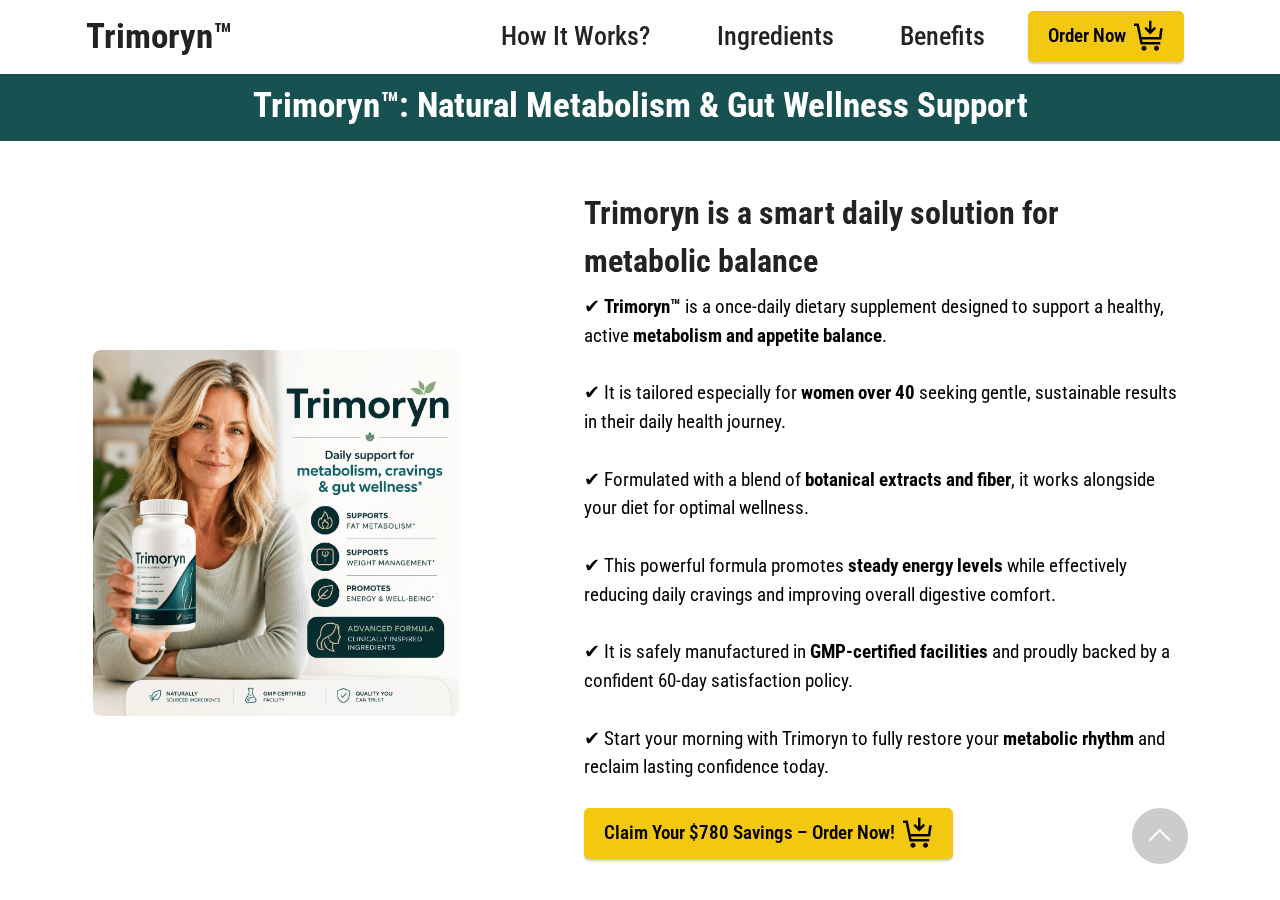
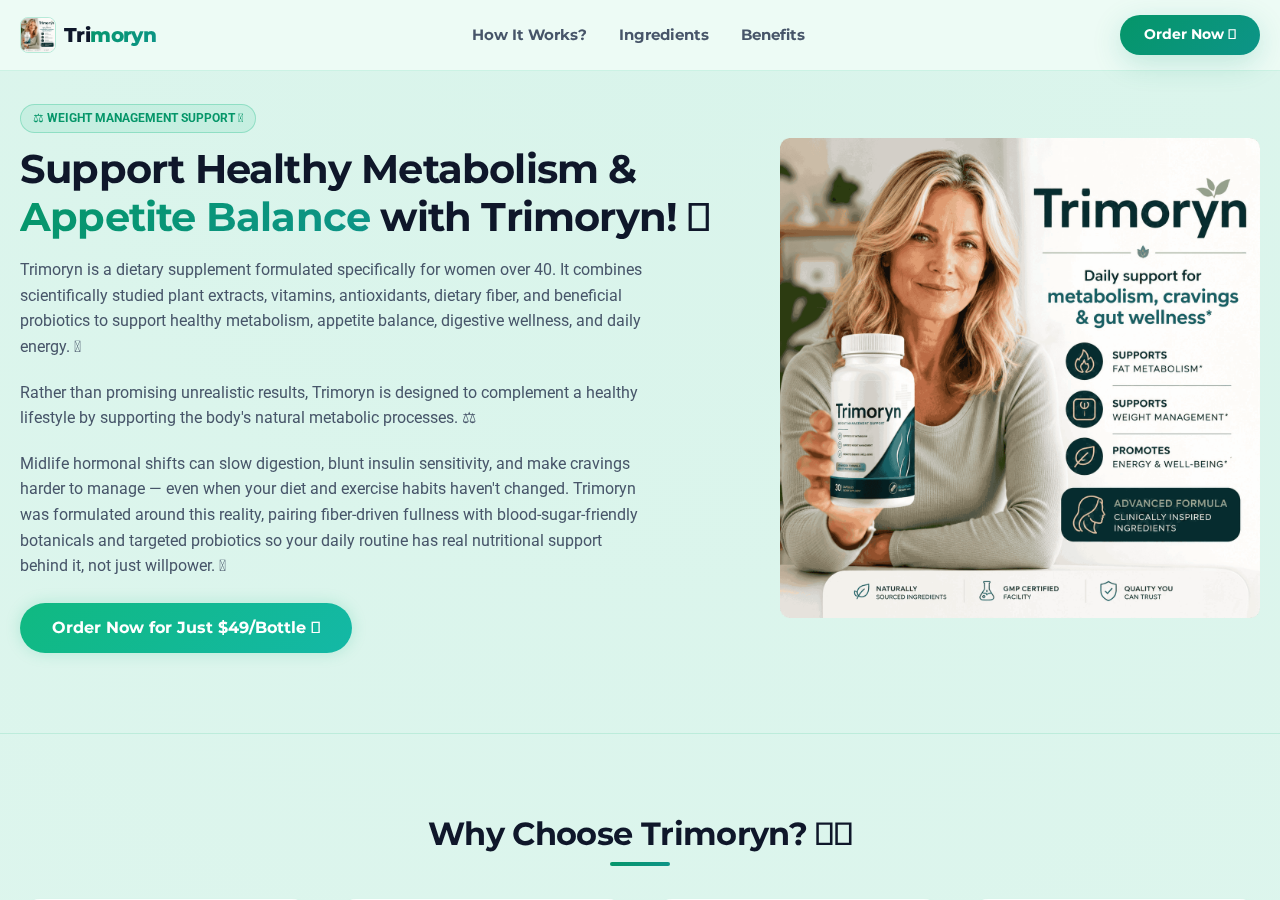
Trimoryn has been one of the products attached to this sales funnel. Its visible product pages describe a dietary supplement for metabolism, appetite balance, digestive wellness, and energy, which is not the same as a homemade version of a pharmaceutical drug.
The seller can change the bottle, domain, or formula while keeping the celebrity story. That is why the title of this investigation focuses on the fake endorsement and “homemade retatrutide” claim rather than one temporary product name.
- AI-generated or edited celebrity footage creates a false endorsement.
- Before-and-after images are presented without reliable context.
- A pharmaceutical name gives an ordinary supplement story more authority.
- Fake social posts and news-like pages create the appearance of independent coverage.
- Multi-bottle pricing encourages a large commitment before the claims are verified.
The “Make America Skinny Again” Story
The campaign borrows the rhythm of political branding to make a weight loss ad feel like a cultural event. A slogan is easier to remember than a product name, and it can survive when a seller moves to another domain or bottle.
Viewers may see Donald and Melania Trump placed into a story about a private transformation and a formula the public was not supposed to know. Other versions add Adele, Queen Latifah, Kathy Bates, Melissa McCarthy, Anderson Cooper, Dr. Sanjay Gupta, or Jake Tapper.
The number of recognizable people is not proof. It is a distribution strategy. Different faces allow advertisers to target different audiences while all roads lead toward the same type of sales page.
Some pages imitate a Facebook post or a television segment, including reaction counts, comments, playback controls, and headlines. Those elements can be built into any webpage. They do not establish that Facebook, CNN, a celebrity, or a physician published the material.
Why the fake confession works
Weight loss is personal, and people naturally pay attention to a public figure who appears to speak candidly about it. A confession also avoids the tone of a traditional commercial. The viewer feels invited into a private conversation.
The script usually includes embarrassment, frustration, criticism from the public, and a turning point. That emotional arc gives the product reveal more impact than a simple list of ingredients could achieve.
Why the name “retatrutide” is inserted
Most consumers cannot evaluate peptide chemistry or clinical trial design. They may still recognize retatrutide as a serious-sounding weight loss term mentioned in the media.
The ad exploits that familiarity. It encourages viewers to transfer expectations from pharmaceutical research to a supplement without proving any meaningful connection between them.
The Product Page Tells a Different Story
The Trimoryn pages we reviewed did not present an injectable medicine or a homemade drug. They described a once-daily dietary supplement aimed at women over 40 and used broad phrases such as metabolism support, appetite balance, gut wellness, energy, and cravings.
One offer displayed a six-bottle price of $294, or $49 per bottle. Two bottles were shown at $158 and three at $207. The largest package therefore created the lowest displayed unit price while requiring the highest immediate payment.
The page also used familiar reassurance signals, including a 60-day satisfaction policy, GMP-related language, natural ingredient claims, and photographs of a woman holding the bottle.
These details should be evaluated separately from the AI ad. A guarantee does not prove the celebrity endorsement. A manufacturing claim does not turn a supplement into retatrutide. A lifestyle photo does not demonstrate typical weight loss.
Fake Reviews and News-Like Promotion Extend the Illusion
A suspicious campaign rarely depends on one video. It creates an entire search environment so that a person who checks the claim encounters more pages repeating the same conclusion.
We observed review-style pages that copied the appearance of established consumer platforms, affiliate videos framed as independent investigations, and sponsored promotional releases distributed through recognizable publisher networks.
A sponsored release can appear on a well-known domain without the newsroom independently testing or endorsing the product. The disclosure, author information, and original source matter more than the logo around the page.
Search redirects can add another layer. A user clicks what looks like a video or result, passes through a cloud-hosted redirect, and lands on a sales page. Each step makes the route harder to recognize and easier to replace.
Before-and-after photos can be manipulated or misattributed
A transformation image does not show what caused a person’s appearance to change. Lighting, angle, clothing, editing, time, illness, medication, diet, and many other factors can produce a dramatic comparison.
In this campaign, reverse-image checks found Melania Trump photographs reused or altered in ways that did not establish supplement use. The ad supplies the causal story after the fact.
Comments can be part of the landing page
Rows of enthusiastic comments can be hard-coded into a webpage. Names, profile photos, timestamps, likes, and reply buttons can all be decorative rather than connected to a live social network.
Try clicking a profile, sorting the comments, or opening the supposed post through the platform itself. If the interaction works only inside the sales page, treat it as advertising copy.
What Real Weight Loss Evidence Looks Like
Credible weight loss claims identify the intervention, dose, study population, duration, comparison group, side effects, average result, and limitations. They do not rely on one celebrity transformation or a secret that supposedly works for everyone.
The FTC has repeatedly warned about weight loss advertising built around fake news pages, altered images, and promises of effortless or exceptionally rapid results. Claims that a product causes major weight loss without changes to diet or activity require especially strong evidence.
Dietary supplements are not approved by the FDA before marketing as treatments for obesity. A label disclaimer does not erase misleading claims made earlier in a video, particularly when the video is the reason a person reaches the checkout.
Anyone considering weight loss treatment should discuss goals, medical history, medications, and realistic options with a licensed clinician. Products that affect appetite, blood sugar, blood pressure, or digestion can interact with existing conditions and treatments.
How the Scam Works
Step 1: A short AI ad stops the scroll
The campaign begins on Facebook, Instagram, TikTok, YouTube, or another ad network. It uses a recognizable face, a surprising body transformation, and a phrase such as “homemade retatrutide.”
The first few seconds are optimized for attention, not explanation. The viewer is told that the full story may be removed, which encourages an immediate click.
Step 2: Fabricated dialogue creates an endorsement
Artificial voice and lip movement make it appear that Melania Trump or another public figure personally used the method. Cutaway footage and subtitles hide imperfections in the generated audio.
The ad may also splice real footage into invented narration. A real clip does not make the added words authentic.
Step 3: A fake social post or news page supplies borrowed trust
The click leads to a page styled like Facebook, CNN, a television interview, or a health report. Familiar colors and layout encourage the viewer to treat the page as editorial content.
Look at the actual domain in the address bar. A news logo inside the page does not mean the page belongs to that organization.
Step 4: The story turns ordinary frustration into a conspiracy
The presentation says diets failed because the real metabolic switch was hidden. Doctors, drug companies, or media organizations are cast as opponents trying to suppress the discovery.
This narrative makes contradictory evidence feel like confirmation. If an expert says the claim is unsupported, the ad can tell viewers that the expert is part of the cover-up.
Step 5: “Homemade retatrutide” becomes a supplement
After a long explanation, the promised recipe is packaged into capsules or drops. The product has no demonstrated equivalence to the pharmaceutical compound whose name attracted the viewer.
The bottle is the commercial endpoint, not proof that the preceding celebrity and medical story was true.
Step 6: Bundles and guarantees increase the order value
The checkout highlights the six-bottle option, a large claimed discount, free shipping, and a guarantee. Buyers are encouraged to purchase months of supply before trying the product.
The Trimoryn pages we reviewed stated that orders were one-time purchases. We found no evidence to claim every order includes a subscription. Buyers should still reject preselected add-ons and read the exact checkout terms.
Step 7: The funnel is recycled with a new product
When complaints, ad enforcement, or domain reputation make one offer less useful, the advertiser can swap in another supplement. The public figure and breakthrough story continue attracting clicks.
This is why a story-first warning remains useful. The scam is the fabricated endorsement and unsupported medical bridge, not only the current label.
Company, Address, and Fulfillment Checks
Look past the product name on the bottle
Trimoryn appeared across several similar domains with spelling variations. A buyer should identify the exact domain that accepted the order and the legal entity listed on its terms and receipt.
Lookalike sites can have different policies. Information copied from one should not be assumed to govern another.
A payment retailer is not automatically the manufacturer
Some offers route payment through BuyGoods. A retailer can process the transaction and manage support without being the company that formulated or manufactured the supplement.
Ask the seller to name each responsible party clearly. If the answer changes between the page, receipt, and support response, preserve the inconsistency.
Addresses and phone numbers must connect to the exact offer
A consumer report associated the campaign with a Delaware phone number, but a reported number is not proof that it is an official support line. Use contact details from the checkout agreement and confirmation email.
Search the address. It may be a virtual mailbox, registered-agent suite, fulfillment center, or unrelated location. None of those proves where the product was made or tested.
Vague labels and unreachable support are deal breakers
Do not buy if the seller will not provide a complete Supplement Facts panel, ingredient amounts, warnings, manufacturer or distributor identity, and a usable return procedure.
Mass fulfillment can place a real bottle in the mail while support remains distant and the endorsement remains fabricated. A product’s physical existence does not validate the story used to sell it.
What to Do if You Have Fallen Victim to This Scam
- Preserve the fake endorsement. Save the video, URL, subtitles, fake social post, news-like page, product offer, receipt, and checkout terms. Record the celebrity names and exact health promises.
- Do not replace medical care with the supplement. Speak with a licensed clinician before changing prescription treatment or using an unfamiliar formula, especially if you have diabetes, heart disease, high blood pressure, or take multiple medications.
- Check the amount and billing type. Compare the receipt with the package you selected. Confirm whether the purchase is one-time and whether any coaching, membership, warranty, or additional shipment was added.
- Request cancellation and a refund promptly. Contact the seller in writing before the guarantee deadline. Ask for return authorization and the correct address, then keep tracked-shipping evidence.
- Contact the payment provider if support fails. Explain that the purchase was induced by a fabricated celebrity endorsement or materially misleading claim. Provide screenshots and your refund correspondence.
- Monitor future transactions. Report any charge you did not authorize. Ask the issuer whether it should block the merchant or replace the card, and confirm how recurring payment updater services are handled.
- Secure reused credentials. Change any password reused on the sales site. Run Malwarebytes if the page persuaded you to download a report, app, extension, or video software. Do not install files to view a supplement presentation.
- Block repeat ad funnels. AdGuard can reduce intrusive ads, trackers, and redirect chains commonly used by these campaigns. It cannot confirm whether a weight loss claim is medically valid.
- Report the advertisement. Report it to the platform, the FTC, and the FDA when health-fraud claims are involved. Select the option for impersonation or manipulated media when available.
Frequently Asked Questions
Did Melania Trump endorse homemade retatrutide?
We found no credible evidence that she endorsed the advertised method or Trimoryn. The campaign uses manipulated media and invented promotional context.
Can retatrutide be made at home?
No ordinary kitchen recipe or supplement blend should be treated as a homemade version of a complex pharmaceutical compound. The phrase is marketing language, not evidence of chemical or medical equivalence.
Is Trimoryn the only product used in this scam?
No. A deceptive advertising story can redirect to different supplements over time. Trimoryn is one documented example, not the permanent identity of the campaign.
Does Trimoryn use automatic billing?
The product pages we reviewed described one-time purchases, so we cannot state that every order is a subscription. Always verify the final order summary and save the terms that applied to your transaction.
Are testimonials and before-and-after images reliable proof?
No. They do not establish typical results or causation, and they may be edited, misattributed, AI-generated, or presented without medical context.
How can I verify a celebrity health endorsement?
Look for the same statement on the person’s verified website or social account and in credible independent reporting. Do not rely on a video embedded only inside an advertisement or unfamiliar domain.
The Bottom Line
The Melania Trump weight loss AI scam turns a fabricated celebrity confession into a bridge between pharmaceutical expectations and an ordinary supplement checkout. The slogan, product, and domain may change, but the deception remains recognizable.
If a social video promises “homemade retatrutide,” pause before clicking. Verify the speaker, inspect the domain, separate the product’s real label from the ad’s dramatic claims, and never commit to months of supply because an AI-generated celebrity appears to recommend it.








