

Have you seen those persistent ads claiming a “Japanese Pink Salt recipe” can help you drop over 50 pounds in just two short weeks—with no workouts, no calorie tracking, and no restrictive diet—just four kitchen ingredients? If you’ve been online recently, chances are you’ve encountered them more than once. These ads are compelling, colorful, and offer a promise that seems to defy everything we know about health and biology.
They say this ancient secret from Japan is finally being “exposed” and that it works better than modern medical treatments like Ozempic or Mounjaro. With statements like these, it’s no wonder so many people are curious—or even convinced.
So I decided to dig deeper. I clicked the links, watched the videos, and followed the trail.
What I discovered wasn’t a miracle elixir. It was an intricately woven scam—a masterclass in manipulation—that preys on people’s insecurities and hopes for a better, healthier life. In this article, you’ll learn the full mechanics of this scam, why it’s harmful, and how you can protect yourself and others from falling into the same trap.
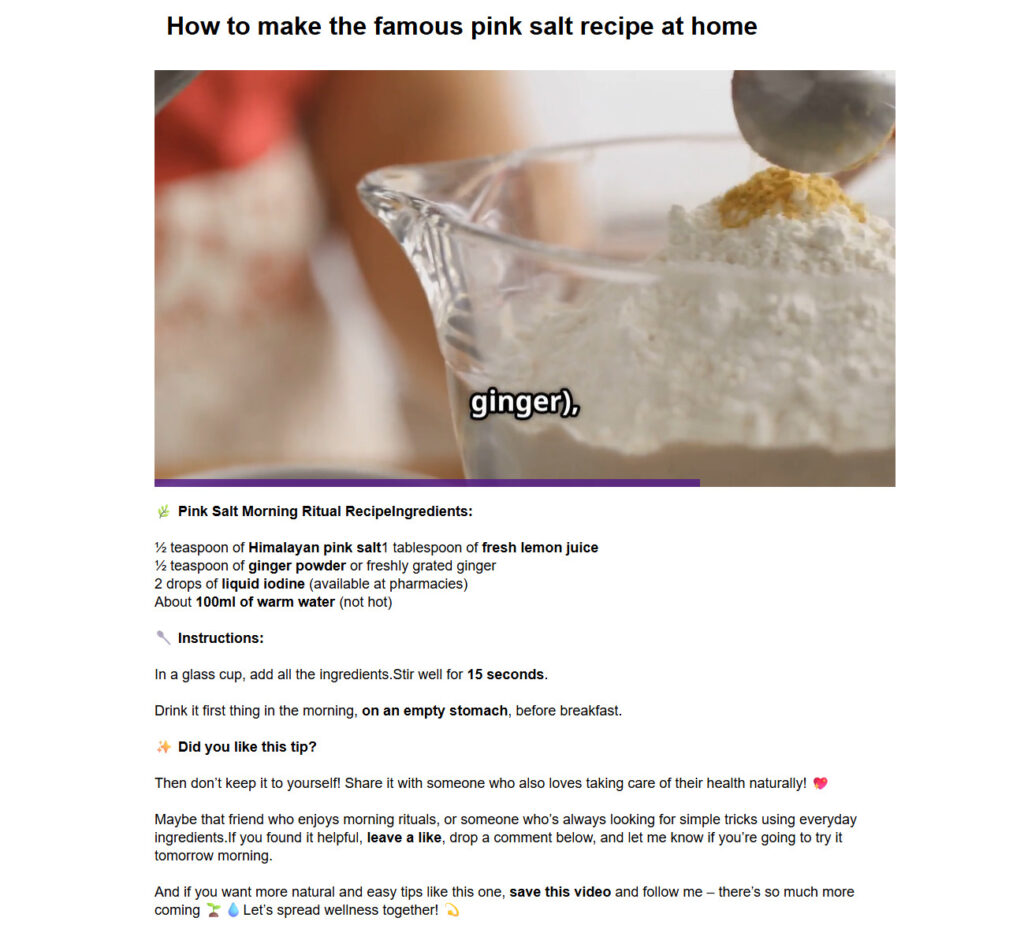
Scam Overview
The so-called “Japanese Pink Salt” trick is a widespread internet weight loss scam. It’s aggressively promoted through social media ads, deceptive landing pages, fake reviews, and YouTube videos. On the surface, it looks innocent: a recipe using a few kitchen staples that allegedly triggers rapid weight loss. But once you engage, you’re pulled into a cycle of manipulation and misinformation.
What These Ads Claim
They promise dramatic results—lose 50 pounds in 2 weeks, burn 3.3 pounds of fat overnight, and detox your entire system without lifting a finger. According to the ads, this trick is rooted in ancient Eastern medicine and has been “rediscovered” by modern science. Some variations claim it’s been used by monks in Okinawa, while others point to Japanese centenarians who owe their slim figures and longevity to this pink salt ritual.

Common Elements of the Scam
- False Medical Claims: They say the trick regulates hormones like cortisol, shrinks fat cells, and balances insulin levels. However, no real medical studies or peer-reviewed research back these claims.
- Exaggerated Testimonials: Ads include people claiming they lost 20–60 pounds without effort. But these testimonials are often fake or use paid actors and stock photos.
- Name-Dropping and Fabricated Credibility: Mentions of Harvard, Oxford, or features on The Today Show are sprinkled throughout the content, trying to lend an aura of legitimacy. In reality, no such endorsements exist.
- Emotional Triggers: Many videos open with a relatable story—a mom struggling with postpartum weight, a man ignored by his spouse, or someone facing a health crisis. The goal is to make the viewer think, “That could be me.”
- The Vanishing Recipe: Ironically, even though the entire premise revolves around a simple homemade recipe, it’s never clearly revealed. The ads are just bait to funnel you into a sales process.
- Switch to a Supplement: Instead of giving you the recipe, the page ultimately pitches a supplement, sometimes under the guise of being a “refined version” of the recipe. The products vary—Alpha Choose, Burn Jaro, GlycoShield, GlycoShizen—but they all promise miraculous results.
- Suspicious Products: These supplements have vague or missing ingredient labels, no clinical backing, and are often shipped from unverifiable locations. Customer support is minimal, and there’s no reliable refund process.
- Hidden Subscriptions: Even more alarming, many victims report being charged repeatedly every month after making a one-time purchase. These “continuity programs” are hidden in fine print or not disclosed at all.
- Target Audience Vulnerability: This scam is particularly dangerous because it targets people who are most desperate—those with chronic health problems, emotional eating issues, or who have failed with traditional diets.
Ultimately, the Japanese Pink Salt trick isn’t a trick at all. It’s an entry point to exploit trust, health insecurities, and financial vulnerability.
How the Scam Works
Step 1: The Enticing Ad
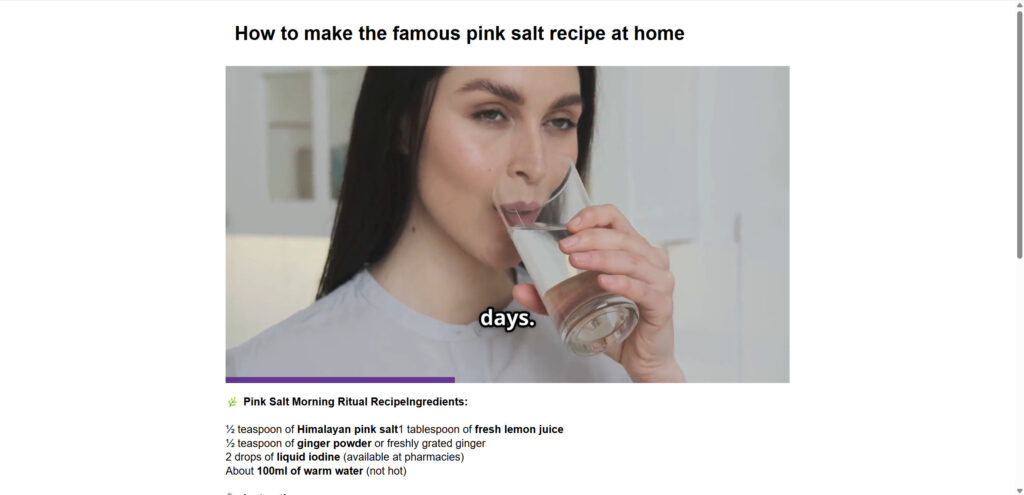
You’re scrolling through Instagram, Facebook, or YouTube when you come across a post featuring a short video. A person is shown pouring pink powder into a glass of water, often accompanied by soothing music and text that reads:
“This Japanese weight loss drink changed my life. No gym, no diet, just one minute each morning.”
The message is simple: one action, big results.
Step 2: The Click Funnel Begins
Clicking the ad takes you to a page that mimics a blog or news website. Sometimes it features a fake interview, a breaking news story, or a personal success diary. You’re told there’s a short video that will reveal the exact recipe—but you must watch the whole thing.
Step 3: Emotional Storytelling
The video begins with a deeply emotional backstory. You hear about a mother battling obesity after childbirth, or a man on the brink of diabetes. They find this “forbidden” pink salt ritual through a mysterious doctor or herbalist.
The video goes on for 30–60 minutes, continually building emotional investment and delaying the actual reveal.
Step 4: Psychological Hooks and Delay Tactics
The creators use known psychological tricks:
- Curiosity gaps (“You won’t believe what happened next…”)
- Fear-based statements (“Big Pharma doesn’t want you to know this…”)
- Urgency (“This video will disappear soon!”)
All these tactics are designed to keep you engaged.
Step 5: The Fake Reveal and Bait-and-Switch
Finally, just when you expect to see the recipe, the narrator claims that the pink salt method is too complex or that people don’t follow it properly. Fortunately, they say, a special supplement has been created to do the same thing faster and easier.
The real goal is now clear: sell you something.
Step 6: Urgent Call to Action
You’re pushed to buy the product immediately:
- A countdown timer appears.
- Bonuses are offered if you act now.
- Messages like “Only 6 bottles left” or “Last day for this price!” appear.
This artificial urgency rushes people into buying without proper research.
Step 7: Financial Consequences
Once purchased, the problems begin:
- You may receive a low-quality product or nothing at all.
- Your card might be charged again next month.
- Refunds are denied or impossible to obtain.
- The company may go dark or change names.
In many cases, your personal and payment information could also be sold to third parties.
What to Do if You Have Fallen Victim to This Scam
- Cancel All Future Payments
- Immediately contact your credit card provider or bank.
- Dispute the charges and request a new card if necessary.
- Cancel any subscriptions you may have unknowingly enrolled in.
- Report the Scam
- File a report with the Federal Trade Commission (FTC).
- Report to the Better Business Bureau (BBB).
- Use national fraud watchdog sites like Scamwatch (AU), Action Fraud (UK), or Econsumer.gov (international).
- Request a Refund
- If you paid by credit card or PayPal, initiate a chargeback or file a dispute.
- Save all email confirmations, receipts, and screenshots of the ads or product pages.
- Warn Others
- Leave reviews on product pages, Reddit forums, and scam awareness communities.
- Share your experience on social media to raise awareness.
- Secure Your Identity
- Monitor your bank accounts and credit report for unusual activity.
- Consider placing a fraud alert or credit freeze if you believe your identity was compromised.
- Stay Informed
- Educate yourself about digital scams and common marketing traps.
- Follow trusted consumer protection organizations for updates on new scams.
Frequently Asked Questions (FAQ)
What is the Japanese Pink Salt Recipe?
The “Japanese Pink Salt Recipe” is a fabricated weight loss claim circulating in online ads and videos. It typically refers to a concoction of Himalayan pink salt, lemon juice, ginger, iodine, and warm water. The recipe is presented as a traditional Japanese remedy that can allegedly help users lose extreme amounts of weight quickly and effortlessly. However, there is no scientific evidence supporting these claims, and it is commonly used as a bait in online scams.
Is there any scientific evidence that pink salt helps with weight loss?
No. There is no credible scientific research proving that pink salt, whether consumed alone or with other ingredients, causes significant or sustained weight loss. While pink salt contains trace minerals, its nutritional and metabolic effects are minimal and do not contribute to fat burning or rapid weight loss.
Why do these scams use the word “Japanese”?
Using the word “Japanese” adds an exotic and traditional allure that makes the trick sound ancient, holistic, and trustworthy. Scammers often rely on cultural stereotypes and mystique to create the impression of authenticity, even when there is no actual connection to Japan, Japanese medicine, or traditions.
What happens if I click on one of these ads?
Clicking on these ads usually leads you to a fake video presentation that drags on for 30 to 60 minutes, promising to reveal the recipe. These videos are filled with emotional stories, misleading health claims, and fabricated endorsements. Ultimately, they try to sell you an unverified supplement rather than providing any recipe.
What kinds of supplements are being sold through these scams?
Scammers often push products like Alpha Choose, Burn Jaro, GlycoShield, GlycoShizen, or similar supplements. These products are marketed as quick fat burners or metabolic boosters, but they typically lack transparent ingredient lists, clinical studies, or FDA approval. Some may even contain undisclosed substances or be linked to hidden subscription fees.
Are these supplements safe?
There’s no way to guarantee the safety of these supplements. Most of them are not regulated, do not undergo third-party testing, and have no verifiable clinical data to support their claims. Some users have reported adverse reactions, while others never receive the product at all. Always consult a healthcare professional before using any supplement, especially those sold through deceptive advertising.
Can I actually lose weight with pink salt and lemon juice?
Drinking warm water with lemon and salt may have mild digestive benefits, but it won’t lead to rapid or significant weight loss. Real, sustainable weight loss requires a combination of a balanced diet, regular exercise, and consistent lifestyle changes. Any claim suggesting drastic results from a simple mixture should be treated with skepticism.
How do I know if I’ve been scammed?
If you purchased a supplement and were later charged multiple times, never received the product, or were promised a recipe that was never delivered, you were likely scammed. Other signs include vague contact information, unresponsive customer service, and fine print indicating recurring charges.
What should I do if I already bought one of these products?
You should:
- Contact your bank or credit card provider to cancel any future charges.
- Request a chargeback if the product was misrepresented or never delivered.
- Report the scam to your country’s consumer protection agency.
- Monitor your financial accounts and consider a credit freeze if you suspect identity theft.
Why do people fall for this scam?
These scams exploit emotional vulnerabilities, such as body image insecurities or frustration from failed diets. The marketing is carefully designed to appear scientific and trustworthy, using fake testimonials, pseudoscience, and urgency tactics. When someone is desperately looking for a solution, even an illogical promise can seem convincing.
Has this scam been reported by authorities?
Yes, multiple variations of similar weight loss scams have been flagged by organizations like the Federal Trade Commission (FTC), Better Business Bureau (BBB), and international consumer watchdogs. However, since scammers constantly change product names, websites, and ad formats, it’s difficult to permanently shut them down.
How can I avoid scams like this in the future?
- Be skeptical of any ad promising extreme results with minimal effort.
- Avoid buying from unknown brands advertised via clickbait videos.
- Check for real customer reviews from reputable sources.
- Research any supplement before purchase—especially if there’s no ingredient list.
- Never trust health claims without supporting clinical evidence or clear disclosures.
The Bottom Line
The Japanese Pink Salt weight loss recipe is not a miracle. It is a scam dressed in appealing marketing and fabricated science. It exploits people looking for genuine solutions and traps them in a cycle of emotional manipulation, financial loss, and false hope.
If you come across an ad promising unbelievable results with zero effort—especially from a “secret recipe”—step back and ask questions. Always research before you click, and never hand over your payment information without knowing exactly what you’re getting.
Scammers count on your trust. Don’t give it away so easily.








