

A new text scam is targeting drivers about unpaid Michigan tolls that require urgent handling. But watch out – this is a ruse aiming to steal your personal information and drain your bank accounts.
Don’t become a victim of this trickery. Read on to uncover how this deception works, spot the warning signs to avoid it, and most importantly, protect your identity and hard-earned money.
This extensive guide will equip you with the awareness needed to outsmart scammers posing as Michigan Toll Services. We’ll explore exact techniques they use to carry out this scam against unsuspecting consumers, and provide actionable steps to safeguard yourself.
Learn why you must stay vigilant about any calls, emails, or texts demanding immediate payment for supposed financial obligations. Don’t fall for the deception – here’s what you need to know.
Overview of the Michigan Toll Services Scam
Many Michigan drivers have recently received misleading text messages falsely claiming their vehicle has unpaid toll fees pending with Michigan Toll Services. These texts convey urgency, warning recipients they must pay immediately to avoid additional late fees being added.
However, it is crucial to understand these are scams. The texts do not come from the real Michigan Toll Services. Any links, phone numbers, or payment instructions included are completely fraudulent, designed exclusively to steal your personal and financial information.
Sadly, this scam has already deceived many innocent Michigan drivers who didn’t realize the toll notices were fake. The texts appear convincingly real upon first glance. The scammers utilize the Michigan Toll Services name, official branding elements, and language intended to create fear around legal consequences or financial penalties related to the made-up unpaid tolls. This tricks unsuspecting people into thinking the messages are legitimate.
In reality, once individuals provide their private data and credit card info, the criminals steal it to commit identity theft, drain bank accounts, and leave victims with a lengthy process to undo the damage. Many only discover they were scammed after noticing fraudulent charges and activity indicating their identities were compromised.
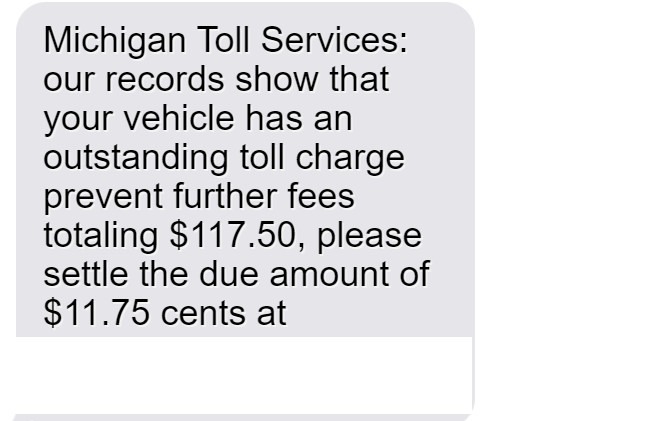
Here’s an example of the misleading texts you may receive:
“Michigan Toll Services: our records show that your vehicle has an outstanding toll charge prevent further fees totaling $117.50, please settle the due amount of $11.75 cents at https://sunspasstollsservices.com ”
This urgent call-to-action is intended to trick you into thinking immediate payment is required. But the scammers are just trying to deceive you into providing your details.
The website URL will mimic the real Michigan Toll Services site, but goes to a fraudulent payment portal completely controlled by scammers. Any information entered will be stolen and used illegally.
Unfortunately, toll bill scams like this one have been surging nationwide as well, frequently targeting drivers in New York, New Jersey, Ohio, Florida, Texas, Indiana, California, and more. Scammers know car owners want to avoid legal trouble, financial fees, or damage to their credit, so they leverage urgency and threats related to supposed unpaid tolls.
Be vigilant about any questionable texts demanding prompt payment for toll fees. Look for indicators like poor grammar, low fee amounts, threats of penalties, and requests for unnecessary personal information as red flags.
Protect yourself by never providing your details through random communications. Verify any bills are legitimate directly through official channels before taking action. Avoid being tricked by staying informed about the deceptive techniques scammers use against unsuspecting drivers. Don’t become their next victim.
How Scammers Carry Out the Michigan Toll Services Scam
Here is an in-depth, step-by-step explanation of how scammers execute this toll invoice trickery:
Step 1: You Receive the Deceptive Text
You’ll receive a text message stating:
“Michigan Toll Services: our records show that your vehicle has an outstanding toll charge prevent further fees totaling $117.50, please settle the due amount of $11.75 cents at https://sunspasstollsservices.com”
The text appears credible, mentioning Michigan Toll Services and claiming urgent payment is required. But it’s completely fabricated.
Step 2: You Visit the Fake Website
Wanting to promptly settle what appears to be a real bill, most people will click the link to https://sunspasstollsservices.com.
But in reality, this website is a complete scam created to mimic a legitimate payment portal. It is controlled entirely by criminals seeking your personal information.
Step 3: You Enter Your Personal and Payment Information
On the site, you’ll be prompted to enter various personal details including full name, driver’s license number, phone number, email address, home address and date of birth.
You’ll also be asked to submit credit card information such as card number, expiry date, and CVV code supposedly to pay the fake toll fees.
Step 4: Your Information is Stolen
As soon as you submit it, the scammers will steal all the personal and financial details you entered on the fraudulent website. They can then use it to commit identity theft, access your accounts online, and make unauthorized credit card charges in your name.
Step 5: You Suffer Financial Loss and Identity Theft
As a result, you may experience stolen money, fraudulent charges on your card statements, damage to your credit reports, inability to access your own accounts, and the major hassle of extensive identity theft recovery.
5 Telltale Signs That Expose These Michigan Toll Scam Texts
While these texts look convincing on the surface, there are red flags you can watch for:
- You don’t recognize the phone number – Legitimate contacts will come from a recognized number.
- Threats of legal action or fees – Official companies won’t threaten you randomly for money.
- Unusually low toll amount – Most real unpaid toll charges greatly exceed $10-20.
- Request for unnecessary personal information – Legitimate toll companies already have your vehicle details.
- Website URL looks suspicious – Scam sites mimic real websites but the URL is slightly off.
Being aware of these signs helps you identify and avoid providing your information in response to deceptive scam texts. Don’t fall victim to scammers.
What to Do if You Already Provided Your Information
If you entered any personal or financial details, take these steps immediately:
- Contact your bank and credit card company if you shared payment information. They can freeze your card, refund fraudulent charges, and send a new card number.
- Place an initial 90-day fraud alert on your credit reports and review for any suspicious activity.
- Reset all account passwords that may be compromised if you entered your email or phone number. Enable two-factor authentication where possible.
- Consider signing up for identity theft protection services that actively monitor your credit and personal info across the web.
- Report the scam to the FTC to join tracking and prevention efforts. Warn others in your community about the Michigan Toll Services scam texts.
- Block the phone number that sent the scam text to prevent further messages, but keep a copy of the text as evidence first.
Protect Yourself from Toll and Fee Scams
Here are tips to avoid falling victim:
- Be suspicious of any texts claiming you owe money, especially from unknown numbers. Verify bills directly with the company.
- Double check website URLs for any subtle differences from the real site, like extra letters or misspellings.
- Never provide personal or financial information through random texts, calls, or emails. Only submit it through official company websites and portals after verifying legitimacy.
- Contact toll operators using official contact information from their real website if you have questions about possible unpaid toll notices. Don’t rely on inbound calls or texts.
- Legitimate toll companies allow you to link bank accounts to automatically pay bills instead of demanding credit card information directly.
Stay vigilant against inbound texts pressuring urgent payment of toll bills. Verify any notices directly with the official toll operator to avoid tricks. Protect your hard-earned money and personal data from scammers.
FAQ: How to Identify and Avoid the Michigan Toll Services Scam Text
1. I received a text about unpaid Michigan tolls. Is it real?
No, this is most likely the scam. Never provide personal or payment information in response to these random texts, as they aim to steal your details.
2. How can I tell if a Michigan toll text is fake?
Watch for:
- You don’t recognize the sender phone number.
- There are typos, grammar errors, or threats of fees/action.
- The toll amount seems unusually low.
- It asks for unnecessary personal information.
- The website URL looks suspicious.
3. What happens if I enter my information?
Scammers will steal your personal and financial details to commit identity theft and drain your bank accounts through credit card fraud.
4. I entered my information. What should I do now?
Immediately contact your bank if you shared payment details. Also place fraud alerts on your credit, monitor your credit reports for suspicious activity, change account passwords, and consider enrolling in identity theft protection services.
5. How can I stop these scam texts?
Block the sender’s number through your smartphone’s call/text blocking settings. But keep copies of the messages as evidence before blocking.
6. Does Michigan Toll Services operate tolls across the entire state?
No. Michigan does not have toll roads statewide. There are just a few limited toll bridges and tunnels around Detroit and Windsor. Any texts about Michigan tolls from random numbers should be considered highly suspicious.
7. How can I safely pay a real Michigan toll bill?
If you confirm you actually owe legitimate tolls, pay through the official Michigan Toll Services website’s portal or mail a check. Never settle supposed bills through random texts or calls.
8. Where should I report Michigan toll scams?
Contact the Michigan Department of Transportation (MDOT), Michigan Attorney General, Federal Trade Commission (FTC) and your phone carrier.
9. What happens if I ignore a real Michigan toll bill?
You could face additional fees and penalties, but first verify if any notices are real or scam texts by contacting MDOT directly. Never assume texts are legitimate.
The Bottom Line
The Michigan Toll Services scam text aims to expose innocent consumers to fraud by falsely claiming urgent outstanding toll fees. Use caution with threatening payment demands over text and confirm bills directly with toll agencies before providing information or payment. Don’t become another victim.

Join the discussion
0 commentsShare your experience or ask a question about this article.
Discussion
Start the conversation
Have a question or something useful to share? Add the first comment.