


The letter reads like a personal note from someone accustomed to giving money away. It says more about the sender’s life than about why you were chosen.
Then it tells you who to contact. That small handoff deserves more attention than the impressive name at the top.
Overview
An unsolicited gift letter using a real person’s name
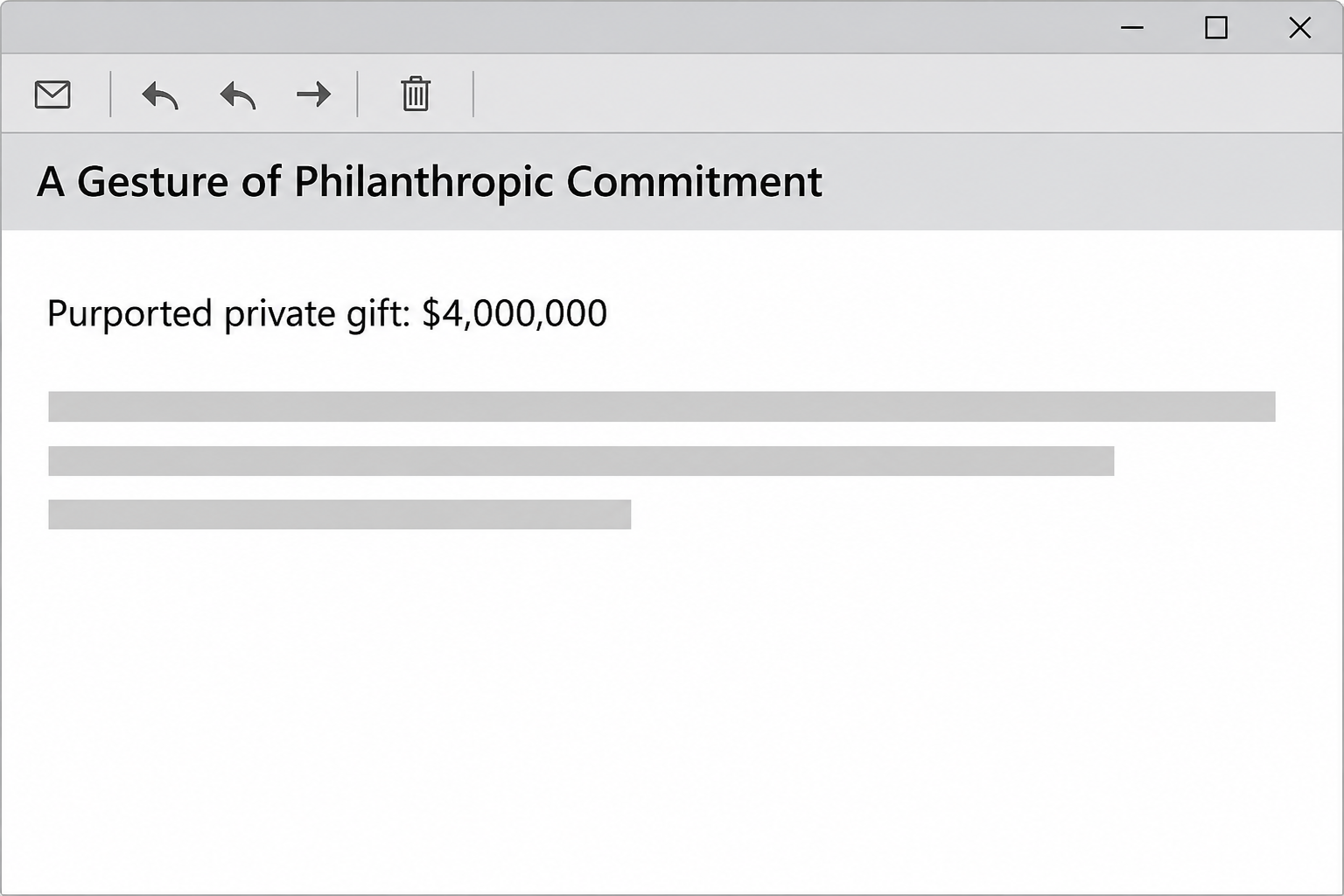
The “A Gesture of Philanthropic Commitment” email claimed to come from Dr. Miriam Adelson and offered the reader a personal gift of $4,000,000.
It described a private effort to recognize people who show integrity and could contribute to their communities. There was no established application connecting the recipient to that effort.
The sender asked the reader to contact a supposed legal representative with a full name and preferred way to get in touch. The evidence shows the request, not a payout.
This is a warning about an email impersonation. It does not accuse Adelson, her family, or any legitimate foundation of contacting recipients or participating in the scheme.
The biography is not a verification method
The message used recognizable biographical material to sound credible. It even invited readers to verify the sender by looking at purported press coverage of the real person’s philanthropy.
Looking up a public biography answers whether someone exists. It cannot establish that they wrote a particular email, appointed the reply contact, or selected you for a private award.
That distinction is the central warning. Scammers can borrow true background information while inventing everything that matters about a transaction.
Read independently located information for what it can actually tell you. News about a public figure making donations cannot authenticate a new program described only in your inbox.
The only action requested was to start a conversation
The specimen did not need a payment form. It directed the recipient to a separate private mailbox, with a request for just enough information to continue the exchange.
There was no documented follow-up request for an exact fee. Advance-fee demands and more detailed identity requests are risks in this type of scheme, not observed developments in the specimen.
Ask these questions before replying to any letter that makes a similar offer:
- What independently confirmed program says you are eligible?
- How could the sender have selected you without an application or prior relationship?
- Can the organization verify both the offer and the supposed representative through a known channel?
- Are you being asked to create a private correspondence before you can verify the basic facts?
The sender’s emphasis on goodwill does not answer any of those questions. It makes the offer sound generous, but it does not make it traceable.
How the Miriam Adelson Gift Email Scam Works
Step 1: The email sounds like a note from a person, not a form letter
Instead of issuing a formal grant notice, the message introduces itself through family history, professional background, and a tradition of philanthropy. Those choices give it a personal tone.
That voice gives the recipient a story to respond to. A personal thank-you may feel more natural than asking to see written program terms.
The message does not explain which organization gathered information about the recipient, what application was reviewed, or how anyone decided the recipient met the stated criteria.
If you have done community work, this kind of language can still feel specific. Integrity and potential are broad compliments that can describe many people without identifying any of them.
Step 2: The public name makes independent searching feel like confirmation
The letter’s references encourage you to check whether the person has a philanthropic history. Many readers stop once they find broadly consistent news or a professional biography.
What they have confirmed is the identity being borrowed. That is not the same as confirming the sender or the particular $4,000,000 gift described in the message.
Search for the actual initiative instead of the public figure’s name alone. A result about an unrelated donation or an old award does not establish that this offer exists.
If a letter mentions a specific institution, use contact information you found independently. Do not assume an address printed in an unsolicited note belongs to that institution.
Step 3: A supposed representative takes over
The next step is mundane: send an acceptance to a person presented as the sender’s legal representative, adding your name and a contact method.
That handoff separates the person whose reputation persuaded you from the person you will actually communicate with. You are asked to trust the second because you recognized the first.
The inbox in the sample was not independently established as a channel for a real program. A separate reply address is particularly worth noticing when the sender claims personal authority.
You do not need to contact the person to learn whether they sound convincing. A separate conversation cannot prove they represent a benefactor who never contacted you independently.
Step 4: A basic reply can open a more detailed exchange
A name and preferred contact method are less sensitive than a bank login. That makes the first request seem harmless, especially if the recipient believes the sum is genuine.
But replying tells the sender that the offer has your attention and gives them a way to continue privately. Any new requests deserve to be judged on their own.
A later correspondent could ask for an identity document, bank details, or an ostensible legal cost. No such follow-up is necessary to recognize the warning signs already in the original.
If the tone becomes more formal, the documents still need outside verification. A letterhead, invoice, or attachment from the same contact is not a second independent source.
Step 5: Protect yourself before a promised gift becomes a cost
If someone says they need a fee before sending the gift, do not pay. Changing the label to legal review or processing does not establish that a real award exists.
In other scams, a check comes with instructions to send part of it elsewhere. The FTC’s fake-check guidance explains why a bank balance cannot verify the check.
No check was documented in the evidence for this email. That warning applies if a later correspondent actually sends one or asks you to forward any of the money.
Do not believe a promise that your payment will be deducted from a future award. First establish that a program and an actual award exist.
What to Do if You Have Fallen Victim to This Scam
-
Save the message and stop responding. Keep the displayed sender and the reply address, since these are not necessarily the same thing.
If you moved the conversation to text or a messaging app, retain the original thread where possible. Save screenshots without forwarding unneeded personal records to other people.
-
If you only sent an acceptance, watch the channel you offered. You might receive another email, a text, or a call naming the gift or the supposed representative.
Do not follow instructions to move to a new app or confirm your details. Block the contact through the service if unwanted follow-up begins.
Tell other people at the address you gave about the message if they might answer a call or pass along a request on your behalf.
-
If you sent documents, identify what was exposed. A scanned ID, payment-card photo, and bank statement create different risks, so make a private list before contacting support.
When appropriate, contact the document issuer or your local identity-fraud service. U.S. readers can use IdentityTheft.gov to get guidance specific to the information shared.
Check whether a bank statement or account screenshot exposed information you did not mean to send. Report that detail to the relevant institution rather than guessing what was visible.
-
If you paid or deposited a suspicious check, contact your bank now. Explain the full sequence, including any money you sent afterward and how it was paid.
Ask the payment provider about stopping or disputing the transaction. Preserve the actual payment confirmation and any correspondence that explains why the payment was requested.
If a check appears in your available balance, do not treat that as permission to move the money. Tell the bank why you believe the deposit is suspicious.
-
Report the email without repeating its claims as fact. Use your email provider’s reporting feature and include the right details for your local fraud service.
The FTC’s advice for people who have been scammed gives U.S. readers options depending on how they paid or what information they shared.
Describe it as impersonation when warning friends or colleagues. There is no need to publicly name a supposed intermediary or share anyone’s personal contact details.
-
If you want to verify a charitable opportunity, start over independently. Set the email aside and find the organization through records you already trust.
Ask about the named initiative and whether it offers individual awards at all. Never use a reply from the sender as proof that an outside organization confirmed the program.
How to Verify a Private Grant or Donation Offer
Separate the questions you are asking. Is the person real, is the program real, and did the program legitimately contact you? Each question needs its own evidence.
A real foundation may have public records and past recipients. Those facts do not show that it offers private gifts to people on email lists.
Likewise, a genuine published grant may be limited to specific organizations or work. Compare the criteria to the offer instead of trusting an impressive amount.
Ask how applicants normally enter the process and how award notices are delivered. If you get an answer through an independently located office, compare it with the instructions you received.
A legitimate opportunity is not harmed by basic verification. There is no reason to send your documents or cover a processing charge merely to find out who is asking.
What a biography can actually confirm
The Adelson Family Foundation’s leadership page identifies Miriam Adelson and describes her professional background. It is a useful source about the person, not verification of a private transaction.
If an email tries to make the story feel personal, compare where the information came from. Details already available to any reader show no relationship with the message’s recipient.
For instance, a real medical qualification says nothing about who controls a reply mailbox. Check claims about an appointed representative separately from a claim about the benefactor’s profession.
A recipient does not have to prove the letter is forged before declining it. The person asking for another step should establish the basic facts first.
If someone else received the same letter
Relatives sometimes bring a promising letter to someone who is comfortable reading financial documents. Start by asking what, if anything, they have already sent or agreed to.
It helps to point out a concrete gap rather than argue about whether a person is generous. Here, the letter does not connect the recipient to a verified award process.
Check whether the recipient accepted the offer using a personal or work address. A workplace address warrants telling internal support if any business information was shared or files were opened.
If multiple people received the same wording, do not circulate the full messages in a group chat. Preserve the originals privately for reporting and summarize the warning without reply addresses.
Do not promise that every later caller is connected to the first email. Judge whether the person knows nonpublic facts and report each apparent incident to the relevant service.
A family member can help contact the bank or an official support line. They do not need a copy of any identity document to organize that conversation.
Frequently Asked Questions
Did Miriam Adelson send the $4,000,000 email?
The documented message claimed her identity without authenticating it. The warning concerns that use of her name, not an allegation that she or her family sent it.
Does real philanthropy make a private message trustworthy?
Public giving can explain why a name sounds believable. You still need independent confirmation that the specific program, the supposed representative, and this award notice are genuine.
Is “A Gesture of Philanthropic Commitment” always a scam subject?
Not every message using those words is the same. The subject matters in combination with the unsolicited $4,000,000 gift and the instruction to contact a private intermediary.
What if the representative sends a letter on legal stationery?
Verify the person and the assignment outside the exchange. Professional-looking stationery is not evidence that a lawyer acted for the named benefactor or that any payment is owed.
Did the email ask for money right away?
The sample asked for a name and contact method. It did not establish a fee, which would be a possible later demand rather than a recorded event.
Do I need to reset all my passwords if I replied?
A simple reply does not show that a password was exposed. Secure any account for which you disclosed credentials, and focus other precautions on the information you actually sent.
The Bottom Line
Do not accept the $4,000,000 gift through the address in this email. A recognizable public figure and an apparent legal handoff do not establish an award.
If you responded, stop there and protect what you disclosed. If you sent money or received a suspicious check, talk to your bank before doing anything else.

Join the discussion
0 commentsShare your experience or ask a question about this article.
Community experiences
Did this happen to you?
Your experience could help someone recognize the same scam. Submit a private report for our team to review.
I experienced this tooReports are reviewed before publication. Sharing publicly is always your choice.
Discussion
Start the conversation
Have a question or something useful to share? Add the first comment.