


The trader seems successful before he says anything about investing. His social media shows expensive cars and vacations, and someone you know can arrange an introduction.
Then come the account statements and an offer to put your money to work. Cory Kromray’s case shows why those details deserve separate questions.
Overview
A social media success story became an investment pitch
Cory Kromray portrayed himself online as a successful trader across stocks, cryptocurrency, and foreign exchange. He used a conspicuous lifestyle to reinforce that identity.
The case has been reported under the Driven Trading name. The independently established conduct concerns Kromray’s false promises, personal use of investor money, and fictitious statements.
That distinction keeps the accusation attached to the proven case. A similar business name or another trader’s photograph doesn’t establish involvement.
The criminal outcome confirms deliberate deception
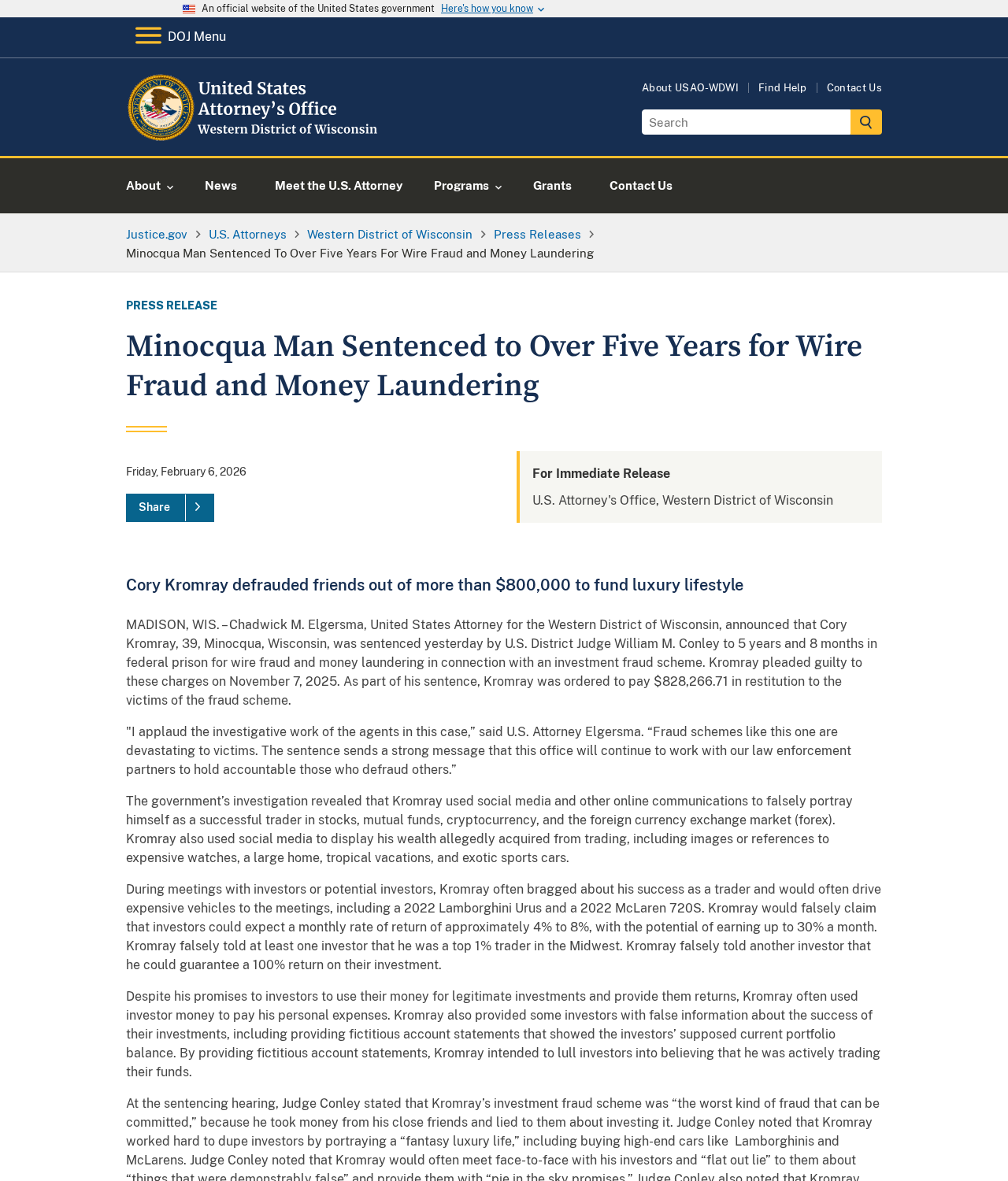
According to the Justice Department’s February 2026 announcement, Kromray received five years and eight months in federal prison for wire fraud and money laundering.
The court ordered $828,266.71 in restitution. Prosecutors described investors being misled about trading performance while their money paid personal expenses.
These findings go beyond an aggressive sales pitch or a bad market call. Investors were given a false explanation of what happened to their funds.
The useful lesson concerns evidence behind the lifestyle
An impressive car can demonstrate access to an impressive car. It cannot show that a trader earned legitimate profits, holds your assets, or can honor a guarantee.
- Identify who holds the investment funds independently of whoever is selling the opportunity.
- Check the professional’s identity and relevant registration through official directories before transferring money.
- Distinguish statements issued by an independent custodian from documents supplied only by the promoter.
- Keep real transfer records and promised terms when assessing a suspected investment fraud.
When the Sales Pitch Arrives Before the Financial Evidence
The photos do part of the persuasion before a conversation begins. A holiday, watch, or sports car can make someone seem financially accomplished and professionally credible.
There is nothing inherently fraudulent about displaying wealth. The problem begins when that display substitutes for evidence about an investment you are being asked to fund.
Ask what the picture proves about your proposed transaction. It doesn’t identify the brokerage, show a verified return history, or explain your rights if something goes wrong.
Kromray’s case involved personal relationships as well as online promotion. Meeting a trader in person may reduce anxiety while leaving those financial questions unanswered.
Friends can feel uncomfortable demanding documentation from each other. That hesitation gives a trusted acquaintance an advantage an unknown advertiser would never receive.
A useful boundary is to treat the investment as an investment even when the introduction comes through friendship. Written information protects the relationship as well as the money.
If the seller treats ordinary checks as disloyalty, pause the transaction. Your obligation to understand where savings will go doesn’t disappear because someone feels offended.
How the Cory Kromray Investment Scam Works
Step 1: An online trading identity creates the first impression
Prosecutors described Kromray using social media and other online communications to present himself as a successful trader. Expensive possessions helped make that story tangible.
The practical effect was to connect visible consumption with supposed financial skill. Potential investors could imagine the displayed lifestyle coming from the same method being offered.
However, spending and earning are different activities. A purchase can be funded by borrowing, other income, or someone else’s money without demonstrating successful trading.
For an investor, the relevant evidence is therefore account performance and custody, not the seller’s surroundings. Photos should never carry that burden.
Step 2: Personal meetings turn familiarity into financial trust
The official account describes meetings where Kromray arrived in expensive vehicles and boasted about his trading. The online image carried into an ordinary face-to-face conversation.
A personal encounter can make a transaction feel safer because the seller seems reachable. Yet knowing someone’s identity doesn’t establish that the proposed investment is genuine.
Use the meeting to obtain precise information: the legal party receiving funds, the account arrangement, the stated strategy, and the independent provider issuing records.
If those details remain vague while the lifestyle story grows more elaborate, you still don’t have the information needed to commit savings.
Step 3: Attractive return claims lower resistance to handing over money
The Justice Department described promised monthly returns of approximately 4% to 8%, with the potential for much higher gains. Kromray also made a false guarantee.
A monthly percentage can sound smaller than its repeated effect. For illustration, $10,000 growing by 4% monthly becomes approximately $16,010 after twelve months.
At 8% monthly, the same hypothetical amount exceeds $25,000. Those calculations explain the scale of the pitch; they aren’t forecasts or attainable-return recommendations.
Ask how losses would affect the account and who bears them. A guarantee requires an identifiable, credible source of repayment rather than confidence from the speaker.
Step 4: Fictitious statements make the promised activity appear real
Kromray supplied some investors with fictitious account statements showing supposed portfolio balances. Prosecutors said those documents helped maintain the belief that funds were being actively traded.
A statement may look specific because it contains balances and dates. Specificity makes a document persuasive, but it doesn’t establish who produced the numbers.
When an independent financial institution holds your investment, obtain records through that institution’s verified channel. Don’t rely exclusively on a file forwarded by the person soliciting money.
For pooled investments, the arrangement may differ, but the need for independent verification remains. Ask a qualified adviser to examine documents you don’t understand.
Step 5: Personal spending is hidden behind the investment story
The criminal case established that investor money was often spent on Kromray’s personal expenses. The money’s actual use differed from the explanation investors received.
This is why a falling balance alone isn’t the key issue. Legitimate trading can lose money; deception about custody, use, and statements creates a different problem.
Once that distinction becomes apparent, stop treating the situation as a performance disagreement. Preserve what was promised and compare it with the actual transfer records.
The Person, Trading Name, and Repayment Obligation
The conviction concerns Cory Kromray’s conduct
The official announcement identifies Kromray and the offenses resulting in his sentence. It provides firmer evidence than a complaint about an unnamed online investment account.
Keep identification precise when reporting the case. Don’t extend the finding to unrelated businesses, every person in a social network, or every investment someone mentioned.
Driven Trading is a reporting connection, not a shortcut around the evidence
BehindMLM’s report connects Kromray’s proceedings with Driven Trading. The DOJ account independently establishes the investment fraud and financial harm described here.
Anyone checking their own records should look at names on agreements and transfers. A trading label alone may not identify the account that received funds.
The restitution order specifies a debt to victims
The $828,266.71 restitution amount is an order to repay harm recognized in the case. It doesn’t establish that the entire amount has already been collected.
For someone awaiting money, that difference matters more than the prison term. Ask the responsible victim assistance office about your particular record and available updates.
Recovery questions belong with verified case contacts
Use the official U.S. Attorney’s Office announcement to find the responsible office. Obtain current contact information independently rather than trusting a message quoting the restitution total.
Never assume a private caller controls court-ordered funds. Request an explanation of their role and verify it before disclosing documents or discussing a fee.
What to Ask Before Trusting Another Trading Offer
Checking registration is useful, but it requires an identity match. A real professional’s name can be copied, and a genuine firm can be impersonated.
Search FINRA BrokerCheck and the Investment Adviser Public Disclosure database where relevant. Match the person, firm, contact details, and service being offered.
A directory record isn’t a guarantee against losses. It helps determine whether the claimed professional identity and regulatory history correspond to the offer.
Next, ask where the money will be held and how you can independently confirm that arrangement. A promoter’s personal account deserves an explanation before a transfer.
Understand the proposed authority over your money. Managing assets, selling a pooled investment, offering education, and discussing markets are different activities with different obligations.
Ask who produces the performance history and whether returns include fees and losing periods. A selected winning screenshot cannot answer those questions.
Finally, have someone independent examine the documents before you commit. The person checking the offer should have no financial incentive to help the seller close it.
What to Do if You Have Fallen Victim to This Scam
If you still have statements supplied by the trader, save original attachments rather than only photographs. The original correspondence establishes the context of each document.
Note who sent each statement, when it arrived, and what explanation accompanied it. This helps distinguish a document you received from a calculation you made later.
Compare its reporting period with your bank’s transfer dates. A statement can claim a portfolio balance without showing when your money reached the purported investment.
Do not alter the attachment to correct a suspicious figure. Make a separate note explaining the discrepancy and preserve the file exactly as received.
If several people invested together, keep their records separate. One person’s withdrawal or agreement may not establish what another person paid or was promised.
When discussing the situation with family, use the proven facts and your own transactions. Repeating unrelated rumors can distract from information investigators can actually use.
A clear chronology is often easier to evaluate than a large unsorted collection of screenshots. Keep the underlying files, then summarize the sequence on a separate page.
-
End any new funding arrangement connected to the fraudulent pitch. Don’t send an additional contribution to preserve a supposed balance or prove continued commitment.
If a payment has not completed, alert your bank promptly. Describe the deception accurately and ask about the options available for that transfer.
-
Collect statements directly from the institution you used to send money. Record dates, amounts, recipient names, and any reference numbers identifying the transfers.
Where cash was involved, preserve contemporary receipts and messages. Explain gaps honestly rather than creating a replacement record that looks like an original document.
-
Save the promised return terms, agreements, promotional messages, and portfolio statements you received. Keep the original files and their surrounding correspondence together.
A fabricated statement can still be valuable evidence of what you were told. Label it as a document supplied by the promoter.
-
Contact the responsible U.S. Attorney’s Office through its official website for victim assistance information. Ask how to verify your information and receive relevant case updates.
Don’t assume that posting publicly, contacting another investor, or filing a general complaint automatically registers you for every applicable victim process.
-
Review whether anyone still has access to your financial accounts. Remove unauthorized access and discuss exposed account details directly with the institution involved.
If you merely transferred investment funds, don’t assume your computer was infected. Respond to the exposure that actually happened rather than purchasing unrelated cleanup services.
-
Keep a separate record of any recovery approach that follows. Note the sender, claimed employer, promised outcome, requested information, and proposed payment destination.
The FBI’s cryptocurrency recovery warning explains how supposed legal services can exploit earlier victims. A familiar case name doesn’t authenticate a new contact.
-
Discuss significant financial or legal consequences with an independently chosen qualified professional. That includes debt incurred to invest and questions about your own documentation.
Don’t rely on the original promoter to explain your available remedies. Their earlier relationship with you doesn’t replace independent advice after proven deception.
Frequently Asked Questions
Is the Cory Kromray case a confirmed investment scam?
Kromray pleaded guilty and received a federal prison sentence for wire fraud and money laundering. The case establishes deliberate deception rather than ordinary trading losses.
Does an expensive lifestyle prove someone is a successful trader?
It shows consumption, not the source of the money. Investment performance needs records that can be checked independently of photographs or personal claims.
Were the portfolio statements reliable evidence of actual investments?
Prosecutors described fictitious statements supplied to some investors. A document’s appearance cannot establish that its balances correspond to assets held at an independent institution.
What does the $828,266.71 restitution order mean?
It requires repayment of the amount ordered in the criminal case. The order itself doesn’t mean victims have already received that money.
Can a friend’s recommendation replace financial checks?
A friend can introduce you to someone while being mistaken about their activities. Verify identity, custody, documents, and relevant registration before committing funds.
Should I respond to someone offering an immediate court payout?
Verify the contact through the responsible official office first. Don’t send money or sensitive records merely because the message correctly describes the criminal case.
The Bottom Line
Don’t send money through the Cory Kromray investment pitch. The proven fraud used an impressive lifestyle and false statements to disguise what happened to investor funds.
If you invested, preserve the original promises and actual transfers, then contact verified victim assistance channels. A restitution headline is a reason to check the process, not pay another intermediary.

Reviews & discussion
0 commentsShare a firsthand experience, or ask a question.
Community reviews
Cory Kromray
Moderated reader experiences, not an editorial verdict.
Start the conversation
Have a question or something useful to share? Add the first comment.