


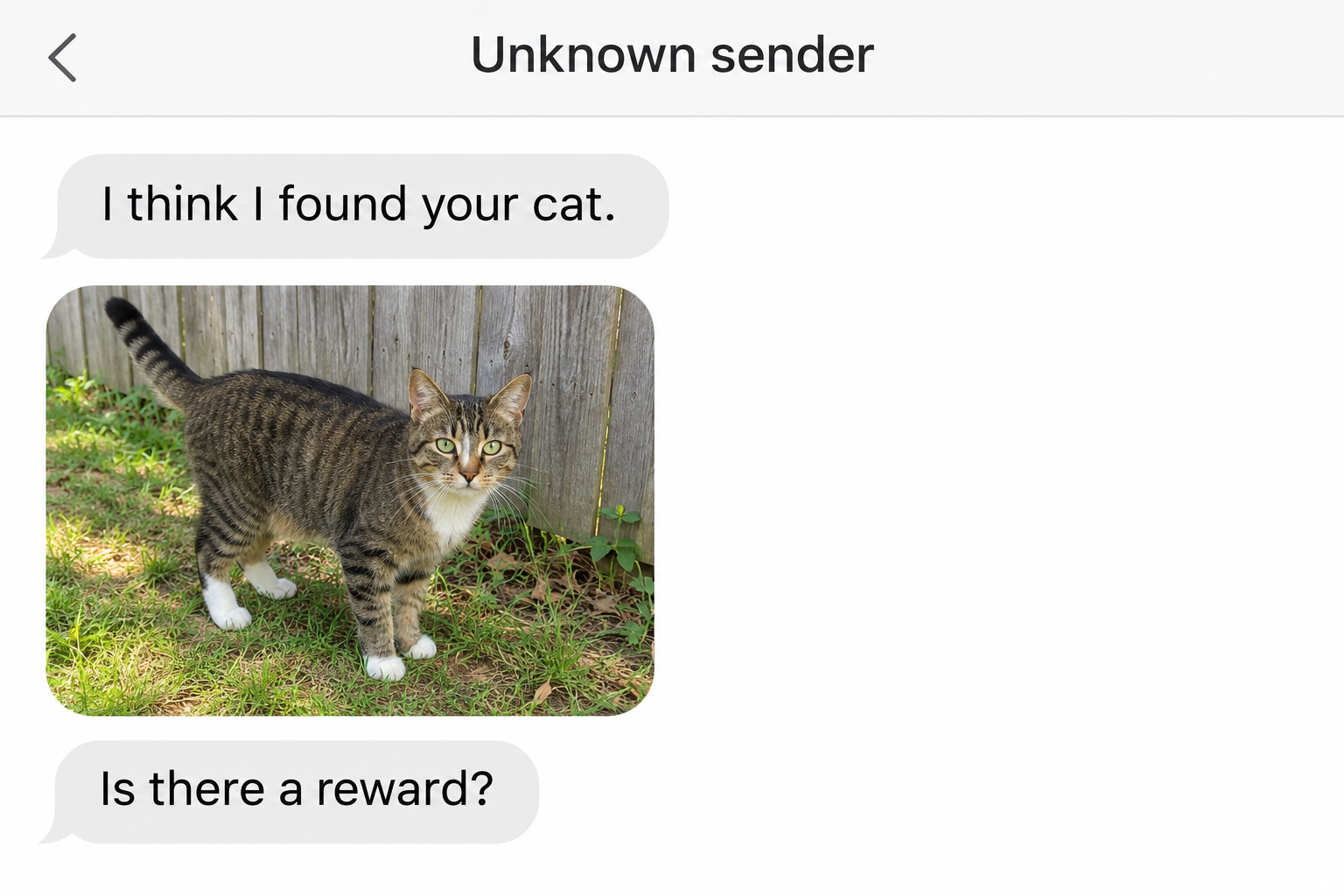
Someone finally replies to your missing-cat post. They send a photo of a cat by a garden fence, and you recognize the white paws immediately.
Then the person asks about a reward. You want to know where to go, but the conversation isn’t moving toward a reunion.
Overview
A photo can look right without proving the pet was found
The missing pet photo scam starts with a claim that someone found your animal. The stranger sends an image and asks for a reward before the handover.
In the UK cases reported by BBC News, owners received convincing images of missing cats. Supposed finders asked for money or gift cards, and some made threats.
An image made or altered with AI can resemble the cat from your original appeal without showing a real sighting. A reused photograph can mislead you too.
The cat in the illustration is fictional. The point isn’t that you can spot a fake from one photograph, but that a photograph alone can’t establish custody.
This is not the same as a genuine sighting or search service
A neighbor may send a blurry picture and a location because they saw an animal run under a car. They aren’t necessarily claiming they can return it.
Someone may have found a stray without knowing whose pet it is. A vet, rescue, or shelter can often help check the animal’s identity if it can be safely handled.
The scam aims for a different outcome. The sender wants you to pay before you can establish whether they have the animal or can arrange a legitimate handover.
A missing pet notice should still bring in tips. You need a way to verify them, not a rule that makes you stop listening to everyone.
What to pay attention to in a reply
- A stranger insists on payment before a sighting can be confirmed or a handover arranged.
- The sender knows only details you already published and keeps changing where or how you can meet.
- A neutral check becomes an argument, a gift card demand, or a threat to harm your pet.
None of this requires you to diagnose whether a picture was created by AI. Decide what you can confirm without sending money, codes, or your address.
Why the Photo Is So Persuasive When You’re Searching
After several days of checking gardens and calling shelters, your first instinct is to look for what matches. The white paws match, so your attention shifts toward getting there.
That reaction makes sense when you’re looking for a pet. It doesn’t mean you have to accept the sender’s explanation of when or where the picture was taken.
Try retracing how much of the reply is information you already made public. If the photo shows only the pet’s published markings, the sender hasn’t confirmed anything new.
Stephanie Young agreed to meet someone who claimed to have found her cat Buddy. The person didn’t turn up and asked for Apple gift cards instead.
There’s no need to know which tool was used to make a particular picture. The thing you’re trying to establish is whether that person actually has your cat.
Don’t take a stranger’s threat as proof of possession, either. If there’s a credible risk to you or the animal, save the details and contact police.
How the Missing Pet Photo Scam Works
Step 1: The sender finds a public missing pet appeal
You share an appeal with neighbors or a local lost-and-found group. A picture, a rough search area, and a way to reach you are enough to invite replies.
Genuine tips can arrive through the same channel as fraudulent ones. A useful contact asks what you want them to do about a sighting, rather than setting payment terms.
A reply can call your pet by name without knowing anything about where it is. Compare the details in the reply with the details anyone could see in your post.
There’s nothing wrong with posting an appeal. Choose which details will help someone recognize the animal and keep some information back for a later identity check.
Step 2: A plausible image arrives as supposed proof
The photo seems to show your pet in a new location. It may look more convincing than a simple message because it gives you something to recognize.
Recognizing a coat pattern isn’t the same as knowing where the photo came from. A picture can be made or altered to match features visible in your appeal.
Even an entirely authentic picture could show a different animal with a similar coat. The visible resemblance and the claim that someone has your pet are different pieces of evidence.
You can ask when the sighting happened and who can confirm it, but don’t feed the sender additional details just because their picture is close.
Step 3: The conversation moves from the sighting to a reward
Once the sender sees that you believe the photo, the focus shifts to what you’ll pay. They may say they won’t show you the animal until the reward arrives.
Sometimes the first mention of a reward sounds casual. The danger becomes clear when the person won’t agree to any independent confirmation before you pay.
In the reported UK examples, demands included Apple gift cards. Paying a reward you offered is not the same thing as sending gift card codes to an unverified stranger.
Don’t send a smaller amount to make the situation feel safer. It won’t confirm the person has your pet, and it can leave you exposed to further demands.
Step 4: A promised handover falls through or comes with new terms
A sender could agree to meet but stop cooperating when you actually ask where to go. The offer of a meeting is not confirmation that one will happen.
If a finder can’t move a scared animal, they may still be able to describe its location or talk to an independent local organization. Don’t ask them to catch it.
A scammer may instead insist you complete a payment before they will give a location. Stop treating that promise as a reliable update to your search.
This is a good time to bring in a friend who isn’t reading in the same rush. They can help separate what the message shows from what it claims.
Step 5: Some senders switch from hope to threats
In some reports, questioning the photo or refusing to pay led to threats that the animal would be sold or harmed. The messages were meant to frighten the owners.
Arguing about whether the sender really has the cat can keep you in a stressful conversation without making you any safer. Save the messages instead of debating the threat.
If a threat names a real address or there’s an immediate safety concern, get police advice. Don’t go alone to a place the person has picked.
Continue looking for your pet through separate channels. A fake message can cost precious time even if you never share money or any payment details.
How to Check a Missing Pet Sighting Safely
Find out whether they saw the animal or actually have it
A sighting and a pickup need different follow-up. A date, street, and direction of travel are useful even if nobody managed to bring the animal inside.
If the animal was seen loose, pass the information to the people already helping with your search. Don’t publish a stranger’s exact address as if it were confirmed.
If someone says they have the pet, ask whether a local vet or shelter can check. Call the organization yourself, using the number it publishes.
Use information that wasn’t in the original appeal
Instead of describing every marking again, ask the person what they noticed. A private detail can support identification, but a guess is still not a safe basis for payment.
A live look may add context, but it isn’t a substitute for checking through a vet, shelter, or rescue when that option is available.
For a chipped pet, tell the chip registry that it’s missing and check the contact details on file. Don’t hand the chip record to an unknown sender.
Cats Protection’s missing cat guide covers contacting your chip provider, local vets, and rescues. These checks can move the search forward even while the stranger’s claim remains unverified.
Make any handover about the animal, not the payment
You can say that you’ll discuss the reward after the pet is identified. Don’t pay to receive an address, unlock a photo, or reserve a handover slot.
Where practical, arrange the handover through a staffed venue that agrees to help, and bring someone with you. Don’t arrange a meeting at all if there are threats.
Use a private conversation for genuine handover details once the finder is verified. You don’t need to share where you live with everyone who contacts you.
Keep Your Notice Useful Without Publishing Everything
If you’ve posted your full address or the animal’s complete records, edit that post where you can. Keep the general area and an appropriate way to reach you.
Pass a recent photo and any special care needs directly to the vet or rescue handling the case. That helps them without giving every group member those details.
If your post has been shared widely, ask the group administrator to replace it with the current version. An edit to your own post won’t reach every copy.
Keep a simple list of sightings with dates and locations. Separate anything confirmed by a second person or organization from claims you still need to check.
When a new tip comes in, add it to the list before deciding what to do. A dramatic message isn’t necessarily the best lead to follow first.
What to Do if You Have Fallen Victim to This Scam
-
Pause the conversation and keep the original messages.
Save the photo and the surrounding chat, including timestamps, payment requests, and account identifiers. A screenshot of the pet alone doesn’t show what the sender asked you to do.
Keep the chat somewhere safe before blocking. Don’t include card details or unredacted personal information if you warn your local group about the account.
-
If you shared gift card codes, call the issuer.
Tell them the code was obtained through a missing pet scam. Keep the packaging and receipt if you still have them, and ask if anything remains on the card.
Ask whether the issuer has a fraud reporting or reimbursement process. There is no guarantee of a refund, and the person who took the code can’t arrange one.
-
If you paid another way, contact the company that sent it.
Report the exact payment promptly and ask about a dispute, hold, or recall. The available options depend on what kind of payment it was.
Give the provider the real sequence of events. Say what the sender promised and what you received rather than describing an authorized payment as one you never made.
-
If you shared your home address, take the threat seriously.
Tell someone in your household what happened, and don’t invite the sender over or agree to meet them. Preserve any threat that mentions your location.
If there is immediate danger, contact local emergency services. For a non-emergency threat, report it through local police channels and ask about the safest next step.
-
Report the fraud without taking down your entire appeal.
Report the sender to the messaging or social platform and tell the group moderator if the contact started there. This can warn others without ending your search.
In the UK, follow the Report Fraud reporting guidance for your location. For immediate threats, don’t use a web report as a substitute for getting help.
-
Put your energy back into the real search.
Ask someone you trust to review new replies while you check with vets and rescues. If a stranger claims to be recovering your lost payment, don’t pay them.
Update your appeal if you need a different contact method. Keep one or two identifying details private and note that rewards are only discussed after a verified reunion.
Frequently Asked Questions
How can I tell if a missing pet photo is AI-generated?
A convincing image can be hard to judge by eye. Use checks that establish whether the sender has the animal, such as confirmation through a vet or shelter.
Is the sender real if they know my pet’s name?
They may have read your notice or seen someone share it. Ask yourself which details they know that weren’t in any public version of the appeal.
Should I take down a missing pet notice?
You can leave it up and change how people reach you. Remove needless personal information and ask moderators to help filter suspicious replies if the group allows it.
What if someone asks for a small deposit to bring my pet back?
Don’t send money before confirming that your pet was found. A small advance can lead to more demands without bringing you any closer to your animal.
Will a reverse image search settle it?
A match may show that the picture was reused. Getting no match doesn’t prove the photo is real, recent, or taken by the person who sent it.
What if the sender says my pet will be hurt?
Save the threat, stop negotiating, and ask police for advice. If you or someone else is in immediate danger, contact local emergency services rather than going to meet the sender.
The Bottom Line
Don’t pay for a missing pet based on a photo or a promise. Verify the sighting or arrange a safe, independent identity check before discussing any reward.
If you already paid, contact the payment provider and save the chat. Keep your real search going through shelters, vets, your chip registry, and people you trust.

Join the discussion
0 commentsShare your experience or ask a question about this article.
Community experiences
Did this happen to you?
Your experience could help someone recognize the same scam. Submit a private report for our team to review.
I experienced this tooReports are reviewed before publication. Sharing publicly is always your choice.
Discussion
Start the conversation
Have a question or something useful to share? Add the first comment.