

A new wave of scams has emerged on Facebook promising huge discounts on Nike products through a so-called “Lucky Clearance Carnival” event. These ads entice users with unbelievable deals, claiming to offer Nike shoes and apparel at up to 90% off. However, clicking these ads and providing your information will only lead to fraudulent charges and potential identity theft. This “Lucky Clearance Carnival” is just a scam designed to trick unsuspecting Nike fans out of their money.
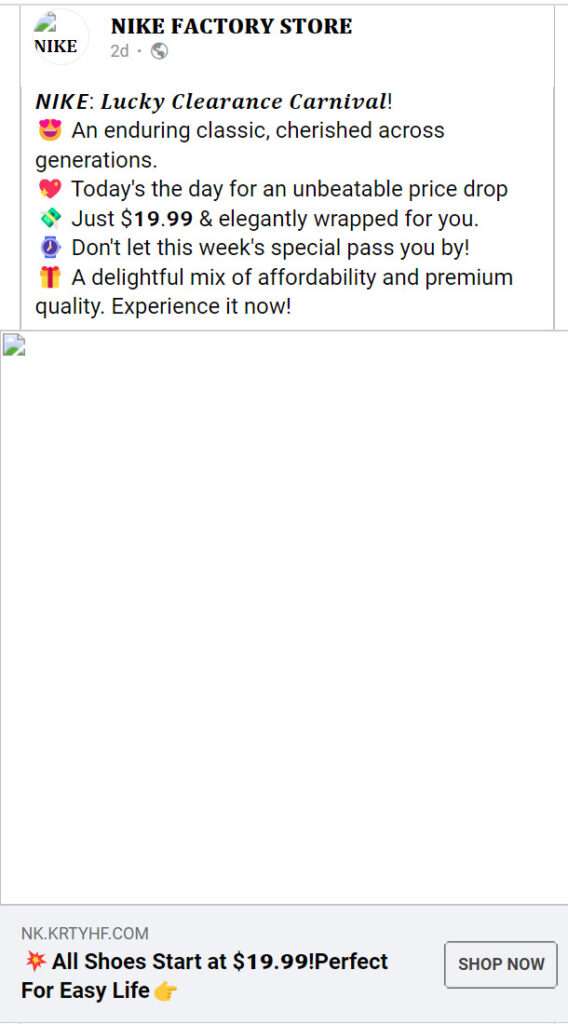
Overview of the Nike Lucky Clearance Carnival Scam
This scam operates by running misleading Facebook ads that mimic official Nike marketing campaigns. The ads tout a “Lucky Clearance Carnival” with insane deals on Nike shoes, clothing, and accessories. Prices of $20, $30, and $40 are advertised for items typically costing $150 or more retail.
These compelling ads drive traffic to sophisticated fake e-commerce sites that further promise steep discounts for the clearance “carnival”. The sites request credit card and personal information upfront to process orders. However, no products are ever shipped out. The scammers disappear with users’ payment details and other sensitive data.
By frequently changing domains and identities, these fraudsters evade detection. They leverage Facebook’s enormous reach and interest-based ad targeting to display their scam ads to millions of users potentially interested in Nike products. Even just a small conversion rate still equals huge profits for the scammers with massive volumes of impressions.
Their ads are carefully designed to seem credible, featuring Nike’s trademarks, logos, and imagery. At quick glance, average Facebook users likely have no idea they’re being targeted for fraud. Let’s explore the deceptive details enabling this scam to succeed at scale…
How the Nike Lucky Clearance Carnival Scam Works
The criminals behind this scam have devised a cunning system to extract users’ money and information. Here is an outline of how the fraud is perpetrated:
1. Bait Customers with Misleading Facebook Ads
First, eye-catching ads are created promoting the fake Nike Lucky Clearance Carnival. Nike branding is splashed prominently to seem official. Ridiculously low prices like “$30 Nike Shoes” are touted along with claims of “80% Off Everything” or similar messaging.
These ads target users who have engaged with Nike content previously or have interests related to sneakers, sports, and fitness. Facebook’s detailed profiling data enables the scam ads to hone in on those most susceptible.
2. Drive Traffic to Elaborate Fake Websites
When users click on the ads, they are funneled to sophisticated fake e-commerce websites dressed up to look like Nike outlets. Prices continue to seem totally unrealistic, with shoes, clothes, and gear advertised at up to 90% off.
The sites feature Nike’s logos, visuals, and branding throughout. Hundreds of products are listed at the deep discounts. The sites even mimic top navigation, product organization, and other elements of real Nike sites.
3. Collect Financial and Personal Information
To complete checkout for the clearance deals, the sites require users to enter credit card, billing, and sometimes shipping information. Additional data like phone numbers may also be requested under the guise of order processing and delivery.
No mention is made of the incredible discount amounts or validity of the “Lucky Carnival”. The goal is simply to gather as much personal and financial data as possible before the user catches on.
4. Disappear Without Fulfilling Orders
With credit card details successfully extracted, the scammers never ship out any products. The clearance carnival was a total farce. Any customer service channels provided route to dead ends, either disconnected numbers or more scammy websites.
Users are left confused when the unrealistic deals inevitably never arrive. Meanwhile, the crooks have already extracted payment info and disappeared to set up shop under a new domain.
5. Repeat the Process Again and Again
By vanishing quickly and resurfacing under new websites, ads, and accounts frequently, the scammers can repeat this process endlessly bilking Facebook users out of money.
Even if some victims recognize the scam, the criminals simply rebrand, replicate their advertising strategy, and continue duping the unwary who are drawn in by the promises of clearance sales.
So in summary, this scam leverages Facebook’s enormous reach and advanced targeting tools to display fraudulent ads en masse to unwitting users. They operate fake e-commerce sites that seem legitimate in order to steal financial information under the pretense of deeply discounted Nike sales.
What to Do If You Are Victimized by This Scam
If you fell for the tempting ads and provided your information to a website promoting the fake Nike Lucky Clearance Carnival, here are the important next steps:
1. Contact Your Bank and Credit Card Companies
Immediately call the fraud departments for any bank and credit card accounts linked to purchases made. Report the charges as fraudulent and request replacement cards/account numbers to prevent further misuse.
Provide as many details as possible – website, purchase date, etc. Look for confirmation emails that include evidence. Your bank can attempt to stop payments before processing. Under the Fair Credit Billing Act, you have protections for disputing scam credit charges.
2. Monitor Your Credit Reports
Potential identity theft associated with sharing personal information is also a threat. Visit AnnualCreditReport.com to check for any unfamiliar accounts or inquiries on your Equifax, Experian and TransUnion credit reports.
Place 90-day fraud alerts requiring creditors to verify your identity when opening new accounts. Continually monitor your reports over the next year for any signs of misuse. Extended 7-year fraud alerts can also be placed if identity theft is confirmed from this scam.
3. Reset Any Reused Passwords
If you utilized the same password entered on the scam website for any other important accounts, change your credentials immediately. Email, social media, financial accounts, and shopping profiles could now be vulnerable. Avoid reusing passwords whenever possible.
Enable two-factor authentication for an added account security layer. Use a password manager to store unique, complex passwords if necessary.
4. Report the Scam to Authorities
To try preventing further victims, report as many details as possible to authorities:
- FTC: ftc.gov/complaint
- Facebook security team
- Instagram: facebook.com/help/instagram/contact/606967319425038
- IC3: ic3.gov
- Better Business Bureau: bbb.org
- Nike: reportaproblem.apple.com
Include screenshots, website names, purchase receipts, and any other evidence available. The more proof provided, the better chance of shutting down these scam accounts and websites.
5. Learn to Identify Similar Scams
Use this costly experience to remain vigilant against other potential online scams moving forward. Stay skeptical of deals that seem too good to be true, especially on social media.
Research unfamiliar websites thoroughly and read reviews before providing payment information. Stick to well-known, reputable retailers operating secure sites. Don’t believe urgent calls to action or unrealistic offers – if your gut says it’s a scam, listen.
How to Identify and Avoid the Nike Lucky Clearance Carnival Scam
Here are some telltale warning signs that can help Facebook users identify and avoid falling victim to the “Lucky Clearance Carnival” scam:
Analyze Facebook Ad Details
- Prices like “$25 Nike Shoes” or “90% Off” indicate a fraudulent ad. Nike does not offer such extreme discounts.
- Poor grammar/spelling mistakes may signal foreign scammers.
- No verified checkmark appears on the ad account name – Nike’s pages are authenticated.
- Comments may call out the scam, though criminals often delete them.
- Look for odd URLs with tracking links instead of clean Nike domains.
Research The Website Thoroughly
- Search for reviews of unfamiliar sellers – scams should be exposed.
- Reverse image search product photos, which are often stolen from authentic sites.
- Check domain registration details – recently registered, private, or foreign domains are risky.
- Verify a valid physical address, working customer service number, and professional social media pages.
- Search the company name for real registration records, licenses, and certifications.
Exercise Caution When Entering Information
- Verify site security like “https” URLs and lock icons before submitting data. “http” means info can be intercepted.
- Never provide financial or personal information without fully vetting the company first.
- Stick to widely known retailers you trust versus unfamiliar sites with unrealistic discounts.
- Use credit cards over debit cards to allow for better fraud protections and chargeback dispute options.
Trust Your Instincts
If an offer seems unrealistic or fake, don’t ignore your common sense no matter how appealing the deals. It’s always best to avoid the risk rather than lose money and personal data to scams. Saving a little money is not worth that trouble and victimization.
Frequently Asked Questions
What is the Nike Lucky Clearance Carnival scam?
This scam involves fake Facebook ads promoting a bogus Nike “Lucky Clearance Carnival” event offering shoes and apparel at unrealistically huge discounts, like 90% off. The ads direct users to fake websites that collect financial and personal information under the pretense of huge sales. However, no products are ever shipped.
How does this Nike clearance scam work?
Scammers first bait users with Facebook ads touting the fake carnival deals. The compelling ads drive traffic to sophisticated scam sites that mimic Nike outlets. These sites request credit cards and other personal data to process orders. But the scammers disappear with users’ information without fulfilling orders.
What are some red flags to watch for?
Warning signs include unrealistic low prices like $25 shoes, poor grammar in ads, no verification check on ad accounts, recently registered scam website domains, lack of valid contact info, missing security features on sites, etc.
What should I do if I already entered my information?
Immediately contact your bank and credit card company to report fraudulent charges. Put fraud alerts on your credit reports and monitor for any suspicious activity indicating potential identity theft. Change any account passwords that may have been compromised. Report details to the FTC, Facebook, and others.
How can I avoid falling for these scams?
Carefully scrutinize discounts that seem too good to be true and research unfamiliar sellers thoroughly. Verify site security before entering info and stick to well-known retailers. Don’t provide unnecessary personal data. Use credit cards over debit cards when shopping online. Follow your instincts.
Can I report these scams? Will actions be taken?
Yes, you should report these scams by submitting details to the FTC, Facebook, IC3, BBB, etc. Reporting the domains and accounts helps get them removed. However, the criminals typically recreate the scam with new identities, so continual vigilance is required.
Where can I safely buy authentic Nike products online?
Only purchase Nike products through Nike’s official website, mobile app, or major authorized retailers like Foot Locker, Dick’s, Champs Sports, and department stores. Always verify seller legitimacy and site security.
Conclusion
In summary, the “Nike Lucky Clearance Carnival” scam is preying on unsuspecting Facebook users with its deceptive ads mimicking real Nike sales events. Scammers operate elaborate fake websites to secure users’ financial and personal information under the false pretense of clearance discounts.
Once payments and data are extracted, they disappear without sending any products, leaving victims confused and compromised. With frequently changing domains and identities, they repeat this process endlessly and evade accountability.
Avoid falling into this trap by watching for warning signs like unrealistic prices, unverified ads, and sketchy website details. Never provide information without thoroughly vetting unfamiliar sellers first. Prioritize your security over the allure of bogus deals that seem too good to be true. Stay vigilant for similar scams aiming to take advantage of social media users through manipulation.

Join the discussion
0 commentsShare your experience or ask a question about this article.
Discussion
Start the conversation
Have a question or something useful to share? Add the first comment.