

Supplements that promise to improve gut health and restore energy are everywhere, but very few generate as much buzz as Nutralis Black Walnut Wormwood Parasite Cleanse. Marketed as a natural solution to bloating, fatigue, sugar cravings, and even skin problems, this liquid supplement claims to target parasites at every stage of life and reset digestion from the inside out. The question is, does it live up to its promises, or is it just another cleverly marketed product with exaggerated claims? Let’s dig deep and uncover whether Nutralis Parasite Cleanse is worth your money.
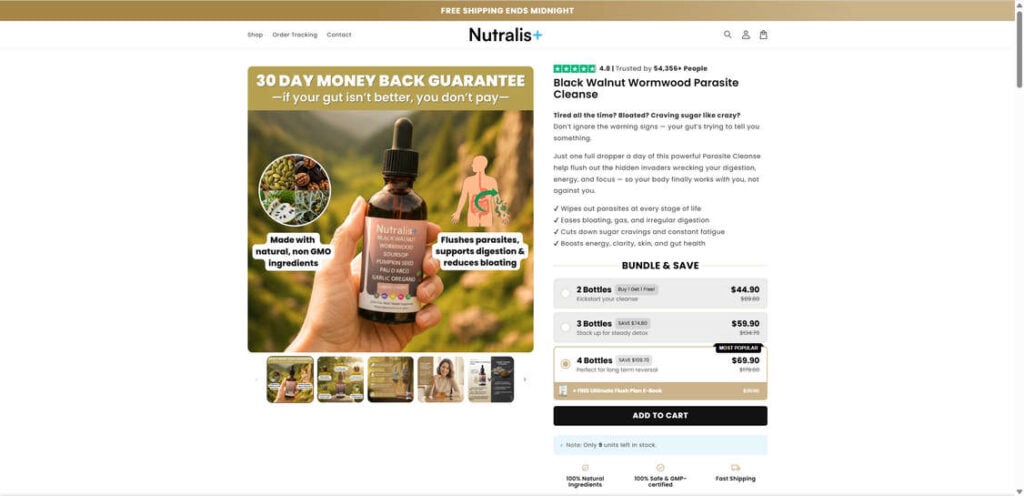
Overview of Nutralis Parasite Cleanse
Nutralis markets its Black Walnut Wormwood Parasite Cleanse as a daily liquid formula that supports digestion, boosts energy, reduces bloating, and eliminates parasites. The official website showcases sleek packaging, persuasive testimonials, and a 30-day money-back guarantee designed to instill consumer confidence. However, looking closer at the details reveals a more complicated picture.
Product Claims
The product claims to:
- Wipe out parasites at every stage of their lifecycle.
- Reduce bloating, gas, and irregular digestion.
- Cut sugar cravings and restore mental clarity.
- Improve sleep, skin health, and overall vitality.
These are bold promises, especially since they imply rapid and wide-ranging health improvements that typically require significant medical interventions or lifestyle changes.
Key Ingredients
The supplement lists ingredients like:
- Black Walnut Hull: Traditionally believed to kill parasites.
- Wormwood: Claimed to paralyze and flush out worms.
- Pumpkin Seed: Said to neutralize eggs and halt parasite reproduction.
- Clove and Garlic: Marketed as natural cleansers to destroy eggs and bacteria.
- Pau d’Arco: Used in herbal medicine for fungal and yeast issues.
- Soursop: Promoted as an immune booster and bloating reducer.
- Oregano, Turmeric, and Red Clover: Claimed to calm inflammation and detoxify.
While these ingredients have historical use in folk remedies, there is no clinical evidence proving they collectively eradicate parasites in humans. Most scientific studies on these herbs are either limited, done in vitro (lab settings), or inconclusive.
Red Flags
Several warning signs raise questions about the product’s legitimacy:
- Unrealistic timelines – The website claims users may feel results within hours, which is not scientifically realistic for parasite elimination.
- No clinical studies – There are no peer-reviewed studies validating the specific formula’s effectiveness.
- FDA disclaimer – The company acknowledges that the supplement is not evaluated or approved by the FDA.
- Questionable contact details – Only an email is provided. No phone number or verified physical address is listed.
- Newly registered website – The domain was created in July 2025, making the brand very new with no established track record.
- Customer complaints – Reviews on platforms like Trustpilot mention misleading refund policies, partial refunds, and poor customer service.
- Misleading marketing – Ads have surfaced with AI-generated celebrity endorsements, which are fake and deceptive.
- Shipping discrepancies – Although advertised as “made in the USA,” many buyers report packages shipping from China.
Consumer Feedback
On Trustpilot and social media, mixed reviews dominate. Some buyers report mild digestive improvements, which could be placebo or dietary changes coinciding with supplement use. Others complain about side effects such as nausea, stomach cramps, or no results at all. A recurring theme in complaints is difficulty obtaining refunds despite the “30-day money-back guarantee.”
Safety Concerns
Because the product is a supplement, it bypasses rigorous FDA drug testing. This means:
- Quality control may vary.
- Ingredient sourcing is unclear.
- Potential contamination or incorrect dosages are possible.
For individuals with pre-existing health conditions, interactions with medications, or sensitive digestion, using such unverified supplements can be risky.
The Marketing Strategy
Nutralis employs aggressive sales tactics including:
- Urgency-driven offers: “Only 8 units left in stock” and “Free shipping ends at midnight” are classic scarcity tactics.
- Testimonials and before/after promises: Often vague and unverified.
- Comparisons with other products: Claiming competitors don’t target parasites at every stage, without scientific backing.
Summary of Overview
Nutralis Parasite Cleanse may seem appealing due to its natural ingredient list and broad health claims. However, the lack of transparency, scientific evidence, and credible business practices suggests caution. It is not inherently proven dangerous, but it is not a guaranteed safe or effective treatment for parasites or gut issues either.
How the Operation Works
Understanding how Nutralis markets and sells its Parasite Cleanse is essential. The operation is designed to maximize trust while minimizing accountability. Here’s a step-by-step breakdown:
Step 1: Problem Amplification
The website and ads emphasize common health problems like bloating, fatigue, brain fog, and sugar cravings. These are universal issues that many people experience. By framing them as symptoms of parasites, the company convinces potential buyers that they may be unknowingly infested.
Step 2: Emotional Triggers
Phrases like “parasites silently hijack your body” and “your gut is under attack” are meant to scare customers into urgency. This strategy works by making people feel vulnerable and desperate for quick solutions.
Step 3: Miracle Solution Presentation
After creating fear, Nutralis introduces its supplement as the simple, all-in-one solution. The product is described as natural, effective, fast-acting, and superior to conventional treatments.
Step 4: Overpromising Results
The marketing highlights immediate results: less bloating within hours, better sleep in days, and total body reset within weeks. These claims are unrealistic and unsupported.
Step 5: Social Proof & Fake Endorsements
To build trust, the brand claims that 54,000+ people have used the product. It also leverages reviews, but some appear templated or potentially fabricated. AI-generated celebrity endorsements further mislead consumers.
Step 6: Urgency & Scarcity
The checkout page uses timers and limited stock notifications. “Only 8 units left” or “offer expires tonight” creates fear of missing out (FOMO), pushing consumers to buy immediately.
Step 7: The Money-Back Guarantee Illusion
The company advertises a “30-day money-back guarantee.” However, many customers report difficulties in getting full refunds. Partial refunds or complicated return processes reduce accountability while giving the illusion of security.
Step 8: Fulfillment & Shipping Issues
Although marketed as a U.S.-made supplement, many customers note that their packages ship from China. This discrepancy raises concerns about the true source of manufacturing and product authenticity.
Step 9: Continuous Upselling
The website pushes bundle deals (buy 3, get 1 free). These encourage customers to spend more upfront. The “most popular” and “best value” labels exploit psychological pricing tactics.
Step 10: Customer Retention & Reputation Management
Instead of addressing complaints transparently, Nutralis appears to rely on aggressive marketing to bring in new buyers rather than fostering long-term trust. The cycle continues by targeting new customers while unresolved complaints accumulate.
Summary of Operation
The business model is less about scientifically validated health benefits and more about emotional marketing and sales tactics. By targeting widespread health issues, amplifying fear, and promising miracle solutions, Nutralis builds a persuasive but questionable sales funnel.
What To Do If You Have Fallen Victim
If you already purchased Nutralis Parasite Cleanse and feel misled, here are actionable steps:
- Stop Using the Product Immediately
- If you experience side effects such as nausea, cramping, or allergic reactions, discontinue use and consult a healthcare professional.
- Contact Customer Support in Writing
- Use the provided email to request a refund. Keep detailed records of your communication including dates, names, and responses.
- File a Dispute with Your Bank or Credit Card Company
- If the company refuses to honor its money-back guarantee, you can initiate a chargeback. Provide documentation such as receipts, screenshots of the guarantee, and email exchanges.
- Report to Consumer Protection Agencies
- File a complaint with organizations like the Federal Trade Commission (FTC) or Better Business Bureau (BBB). These reports help track patterns of fraudulent behavior.
- Warn Others Online
- Share your experience on platforms like Trustpilot, Reddit, or Facebook groups to prevent others from falling for similar marketing tactics.
- Consult a Doctor
- If you believe the supplement caused harm, seek medical advice immediately. Bring the product packaging and ingredient list to your appointment.
- Check for Recurring Charges
- Some supplement companies enroll customers in auto-billing programs. Monitor your bank statements closely and cancel any unauthorized charges.
- Consider Safer Alternatives
- If you genuinely struggle with digestive health, consult a licensed healthcare provider. Evidence-based treatments, dietary adjustments, and medically approved probiotics may be safer and more effective options.
The Bottom Line
Nutralis Black Walnut Wormwood Parasite Cleanse is marketed as a natural cure-all for bloating, fatigue, sugar cravings, and poor digestion. While it contains herbs traditionally used in folk medicine, there is no scientific proof that it eliminates parasites or delivers the sweeping benefits it promises. The product raises red flags including a lack of clinical validation, misleading marketing, poor refund practices, and questionable sourcing.
If you’re considering buying Nutralis Parasite Cleanse, proceed with extreme caution. At best, it may provide minor digestive relief for some individuals. At worst, it could waste your money, create health risks, and entangle you in refund disputes. The safest approach is to consult a healthcare provider for evidence-based treatments and avoid supplements that rely more on hype than science.
Your gut health is too important to gamble on unverified products. Always research thoroughly, question bold marketing claims, and put your trust in solutions backed by real medical expertise.








