

Imagine you’re going about your day when you receive a text message that looks like it’s from the Ohio Turnpike. The message claims you have an unpaid toll balance and threatens you with hefty late fees if you don’t pay up immediately. Your first instinct might be to panic, thinking you’ve accidentally missed a payment. But before you click on any links or provide personal information, take a moment to consider whether this message is legitimate.
Spoiler alert: it’s not. In fact, you’ve just encountered the Ohio Turnpike Unpaid Toll Text Scam, a sneaky attempt by scammers to trick you into revealing sensitive data. In today’s digital world, scams like this are becoming increasingly common, and it’s more important than ever to stay informed and protect yourself.
That’s where this article comes in. We’ll take an in-depth look at the Ohio Turnpike Unpaid Toll Text Scam, breaking down how it works, what red flags to watch out for, and what steps you can take if you’ve fallen victim. By the end, you’ll be better equipped to spot and avoid this scam – and others like it. So, let’s dive in and learn how to keep your personal information safe from scammers.
Scam Overview
The Ohio Turnpike Toll Text Scam is an intricate phishing scheme designed to deceive individuals by sending fraudulent text messages that claim the recipient has an outstanding toll balance on the Ohio Turnpike. These messages often masquerade as official communications from the Ohio Turnpike and Infrastructure Commission or similar entities, lending an air of credibility to the scam.
The scam messages typically include specific details, such as the alleged unpaid toll amount, which usually ranges from $7.79 to $9.75. To create a false sense of urgency and pressure the recipient into acting quickly, the scammers often threaten substantial late fees or additional charges, sometimes as high as $77.90, if the purported debt is not settled promptly.
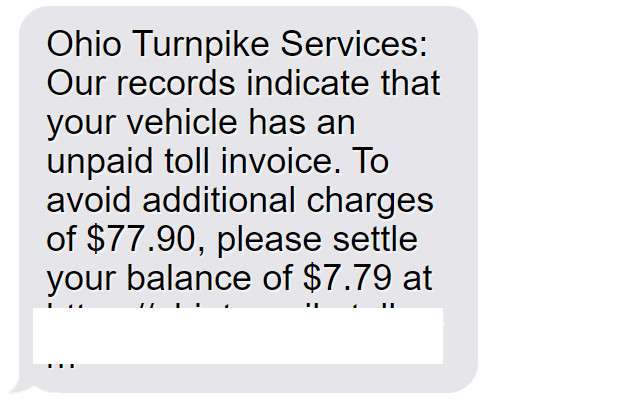
Here are some examples of the scam messages:
“Ohio Turnpike Services: Our records indicate that your vehicle has an unpaid toll invoice. To avoid additional charges of $77.90, please settle your balance of $7.79 at ‘https://ohioturnpiketoll.com”
To further deceive the recipient, the scammers often include a link to a fraudulent website within the text message. This website is meticulously crafted to closely resemble the official Ohio Turnpike website (https://www.ohioturnpike.org/), complete with similar branding, logos, and color schemes. However, the scam website’s URL is usually a slight variation, such as “ohioturnpiketoll.com” or “ohioturnpikepay.com,” making it challenging for unsuspecting individuals to differentiate between the legitimate and fraudulent sites.
The scammers’ ultimate goal is to manipulate recipients into clicking on the provided link and entering their sensitive personal and financial information on the fake website. This information may include the victim’s full name, address, phone number, email address, and credit card details (card number, expiration date, and CVV). By using precise figures and creating a false sense of urgency, scammers aim to pressure recipients into believing the message is genuine and acting quickly without verifying its authenticity.
These fraudulent messages are designed to exploit the trust people have in legitimate toll collection systems, such as E-ZPass or the Ohio Turnpike’s online payment portal. By impersonating these official entities, scammers catch victims off guard and manipulate them into revealing sensitive information. The scam messages are sent indiscriminately, targeting both individuals who have recently used the Ohio Turnpike and those who have not, increasing the scammers’ chances of successfully deceiving their victims.
The consequences of falling for the Ohio Turnpike Toll Text Scam can be severe. Victims may only realize they’ve been scammed when they notice unauthorized charges on their credit card statements or receive alerts about suspicious activity on their accounts. By then, the scammers have already stolen their sensitive information, potentially leading to identity theft and financial fraud.
To protect yourself from this scam, always be cautious when receiving unsolicited text messages claiming you owe money. Verify any alleged toll balances directly with the official Ohio Turnpike website (https://www.ohioturnpike.org/) or by contacting their customer service at 1-440-971-2222. Never click on links or provide personal information in response to suspicious messages, and be wary of any website that asks for sensitive data, especially if you accessed it through an unexpected text message.
How the Scam Works
The Ohio Turnpike Toll Text Scam is a meticulously planned, multi-step process designed to trick victims into revealing their sensitive personal and financial information. Let’s take a detailed look at how this scam typically unfolds:
Step 1: The Initial Contact
The scam begins when an individual receives an unsolicited text message claiming to be from the “Ohio Turnpike” or a similar entity. The message states that the recipient’s vehicle has been recorded using the Ohio Turnpike and that they have an unpaid toll balance. The text includes a specific amount, usually ranging from $7.79 to $9.75, and threatens the recipient with excessive late fees or additional charges if they don’t settle the balance immediately.
Step 2: Creating a False Sense of Urgency
The scammers carefully craft their messages to create a sense of urgency, pressuring the recipient to act quickly without taking the time to verify the message’s legitimacy. By threatening substantial late fees or additional charges, often as high as $77.90, they aim to induce panic and fear, hoping that the victim will click on the provided link without hesitation.
Step 3: Directing Victims to a Fake Website
The text message includes a link that the victim is instructed to visit to settle their alleged unpaid toll balance. This link leads to a fraudulent website, such as “ohioturnpiketoll.com” or “ohioturnpikepay.com,” meticulously designed to mimic the appearance and functionality of the official Ohio Turnpike website (https://www.ohioturnpike.org/). The fake site often incorporates convincing branding elements, logos, and color schemes to further deceive the victim into believing they are interacting with a legitimate toll collection service.
Step 4: Harvesting Personal and Financial Information
Once the victim lands on the scam website, they are prompted to enter a wide range of sensitive personal and financial information to resolve the supposed unpaid toll. This typically includes their full name, address, phone number, email address, and credit card details (card number, expiration date, and CVV). The scammers’ goal is to collect as much valuable information as possible.
Step 5: Exploiting the Stolen Data
After the victim submits their personal and financial information, the scammers have everything they need to engage in identity theft and financial fraud. They may use the stolen credit card details to make unauthorized purchases, open new accounts in the victim’s name, or sell the information on the dark web to other criminals who may use it for various malicious purposes.
Step 6: Covering Their Tracks
To avoid raising suspicion and maintain the appearance of legitimacy, the scammers may redirect the victim to the official Ohio Turnpike website after they submit their information. This tactic helps minimize the chances of the victim realizing they’ve been scammed and makes it more difficult for authorities to trace the scammers’ activities.
By understanding the step-by-step process of the Ohio Turnpike Toll Text Scam, you can better protect yourself and others from falling victim to these deceptive tactics. Always be cautious of unsolicited messages, verify the legitimacy of any alleged toll balances directly with the official Ohio Turnpike website or customer service, and never provide sensitive information in response to suspicious requests.
What to Do If You’ve Fallen Victim to This Scam
If you suspect that you have fallen victim to the Ohio Turnpike Toll Text Scam, it’s crucial to act quickly to minimize the potential damage to your finances and identity. Follow these important steps:
- Contact your credit card issuer immediately: Inform them that you’ve been a victim of a scam and that any charges related to the fraudulent website are unauthorized. Request that your card be canceled and a new one issued to prevent further misuse.
- Report the scam to the Federal Trade Commission (FTC): File a complaint with the FTC at ftc.gov/complaint, providing as much information about the scam as possible, including the text message, website URL, and any personal information you may have disclosed. Your report will help the FTC investigate and potentially prosecute the scammers behind the scheme.
- Notify the Ohio Turnpike and Infrastructure Commission: Contact the Ohio Turnpike’s customer service at 1-440-971-2222 to report the scam and verify that you do not have any outstanding toll balances. They can also provide guidance on additional steps you may need to take to protect your account and information.
- Place a fraud alert with the three major credit bureaus: Contact Equifax, Experian, and TransUnion to place a fraud alert on your credit report. This alert will notify you of any attempts to open new accounts in your name or make changes to your existing accounts, helping you detect any suspicious activity early on.
- Change your passwords: If you used the same password on the fraudulent website as you do for other online accounts, change those passwords immediately. This will prevent the scammers from gaining access to your sensitive information across multiple platforms.
- Monitor your accounts closely: Regularly review your credit card statements and bank account transactions for any suspicious activity or unauthorized charges. If you spot anything unusual, report it to your financial institution immediately to dispute the charges and prevent further damage.
- Consider placing a credit freeze: A credit freeze prevents anyone from opening new accounts in your name. While it may involve a small fee and require temporary lifting when you need to apply for credit, it provides an extra layer of protection against identity theft and financial fraud.
- Stay vigilant against future scams: Be cautious of any unsolicited messages or emails asking for personal information or payment. Always verify the legitimacy of such requests by contacting the organization directly through their official channels, such as their website or customer service number.
By following these steps, you can help minimize the impact of the Ohio Turnpike Toll Text Scam and protect yourself from further harm. Remember, acting swiftly and reporting the scam to the proper authorities is crucial in preventing scammers from victimizing others in the future.
Frequently Asked Questions about the Ohio Turnpike Unpaid Toll Text Scam
Q1: What is the Ohio Turnpike Unpaid Toll Text Scam?
A: The Ohio Turnpike Unpaid Toll Text Scam is a phishing scam where fraudsters send deceptive text messages claiming that the recipient has an unpaid toll balance on the Ohio Turnpike. The messages often include a specific amount, such as $9.75 or $7.79, and threaten the recipient with excessive late fees or additional charges if they don’t pay immediately. The goal is to trick people into clicking on a link in the message and entering their personal and financial information on a fake website designed to look like the official Ohio Turnpike site.
Q2: How can I spot a fake Ohio Turnpike Unpaid Toll text message?
A: Watch out for these red flags to identify a fraudulent text message:
- Unsolicited messages claiming you have an unpaid toll balance
- A sense of urgency, like threats of high late fees if you don’t pay right away
- Unusual links that don’t match the official Ohio Turnpike website (ohioturnpike.org)
- Poor grammar, misspellings, or odd phrasing in the message
- Requests for sensitive personal or financial info via text
Q3: What should I do if I get a suspicious text about an unpaid Ohio Turnpike toll?
A: If you receive a questionable text claiming you owe an Ohio Turnpike toll, take these steps:
- Don’t click any links or provide personal info in response to the message
- Check for any real unpaid tolls directly on the official Ohio Turnpike site (ohioturnpike.org) or by calling their customer service at 440-971-2222
- Report the scam text to the FTC at ftc.gov/complaint to help warn others
- Delete the suspicious text so you don’t accidentally click the links later
Q4: What info are the Ohio Turnpike toll scammers trying to get?
A: The scammers behind this con want to trick victims into giving up sensitive data like:
- Full name
- Home address
- Phone number
- Email address
- Credit card number, expiration date, and CVV code
They may use this stolen info for identity theft, online fraud, or to sell on the dark web to other criminals.
Q5: Help! I think I fell for the scam. What should I do now?
A: If you believe you’ve given info to the Ohio Turnpike Unpaid Toll scammers, act fast with these steps:
- Call your credit card company right away to report any fraudulent charges and request a new card
- Alert the FTC of the scam at ftc.gov/complaint
- Place a fraud alert with the credit bureaus (Equifax, Experian, TransUnion)
- Change your passwords on any accounts that may be compromised
- Closely watch your accounts for suspicious activity and consider a credit freeze for extra security
Q6: How can I protect myself from the Ohio Turnpike toll scam and similar cons?
A: Shield yourself from this scam and other phishing attempts with these tips:
- Be suspicious of unexpected messages claiming you owe money, especially if they pressure you to act fast
- Always check alleged toll balances on the official turnpike site or by contacting them directly
- Never click links or share personal info from questionable messages
- Keep your devices secure with updated anti-malware software and avoid unfamiliar sites that ask for sensitive data
- Regularly check your financial statements and credit reports for odd activity
- Spread the word to family and friends about new scam tactics so you can all stay safe from digital deception
The Bottom Line
The Ohio Turnpike Toll Text Scam is a stark reminder of the importance of remaining vigilant in our increasingly digital world. As scammers continue to develop more sophisticated tactics to deceive unsuspecting individuals, it’s essential to be cautious when receiving unsolicited messages claiming you owe money. Always take the time to verify the legitimacy of such requests by contacting the organization directly through their official channels.
If you do fall victim to this scam, remember that you’re not alone, and there are steps you can take to minimize the damage and protect yourself from further harm. By acting quickly, reporting the scam to the proper authorities, and staying informed about the latest scam tactics, you can help prevent scammers from victimizing others in the future.
Ultimately, the best defense against the Ohio Turnpike Toll Text Scam and similar phishing attempts is a combination of awareness, caution, and decisive action when necessary. By staying informed and proactive, you can safeguard your personal and financial information from those who seek to exploit it for their own gain.

Join the discussion
0 commentsShare your experience or ask a question about this article.
Discussion
Start the conversation
Have a question or something useful to share? Add the first comment.