

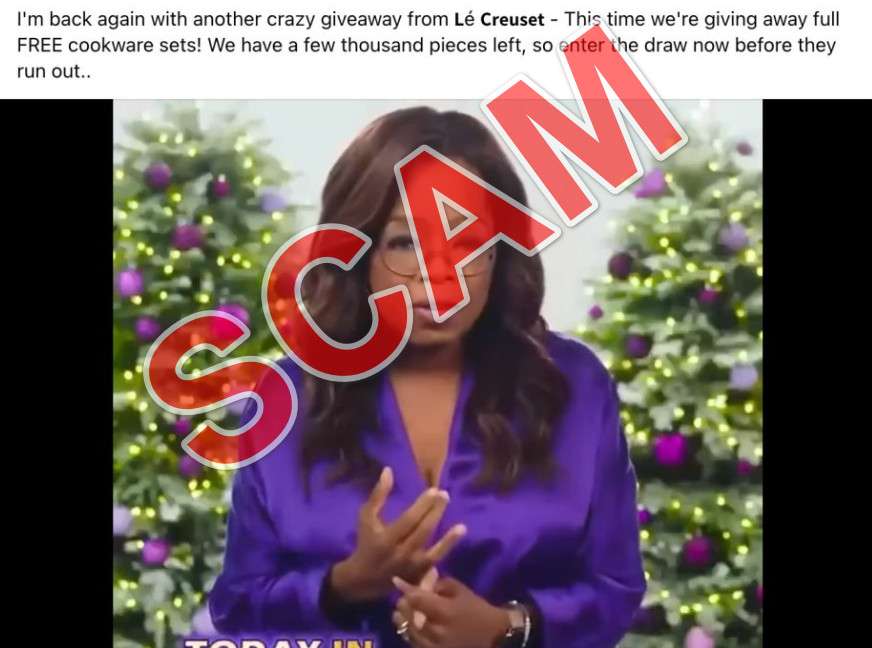
A new scam flooding social media platforms like Facebook, Instagram and TikTok is duping consumers by fraudulently claiming Oprah Winfrey is gifting Le Creuset cookware sets. Using deepfake videos and Oprah’s image without consent, these deceptive sponsored posts bait potential victims into clicking, believing they could win free expensive cookware. However, the phony giveaways instead enroll them into costly monthly subscription services exceeding $100 without approval.
This comprehensive guide will uncover how this celebrity-imposter scam operates, analyze the psychological tricks employed, and provide advice on how to best protect yourself. We will examine the scam’s processes step-by-step, highlight red flags, outline damage control steps for victims, and emphasize the importance of awareness regarding these underhanded schemes.
Scam Overview
The Oprah Winfrey Le Creuset giveaway scams infiltrating social media platforms utilize sophisticated deception to defraud consumers. Masquerading as charitable holiday promotions endorsed by beloved TV icon Oprah, these fraudulent advertisements bait recipients with luxury Le Creuset cookware prize opportunities. However, unbeknownst to unsuspecting participants, entering transports them into subscription service snares carrying exorbitant recurring fees exceeding $100 monthly.
Masterfully designed psychological manipulation fuels this scandalous deceit. Scammers fabricate legitimacy using Oprah Winfrey’s identity, media footage, images, and fabricated celebrity endorsement claims without her permission. This faux credibility disguises ulterior motives while influential social media algorithms disseminate ads.
Once lured into clicking these compelling promotions, users undergo gradual collection of personal information and payment data through phishing techniques. Eventually victims face demands to enroll in useless monthly memberships in order to finalize contest participation and claim the advertised free cookware.
Buried terms reveal monthly fees from $99 up to $299 for subscriptions to unneeded, unusable services like self-help eBook databases or suspicious travel clubs. However, primed to win luxury Le Creuset cookware for free from their beloved Oprah, most unwittingly submit payment information without proper examination of sketchy subscription enrollment mandates.
Victims only uncover the disturbing truths after the initial $119 monthly membership charges transform into repeat $299 monthly billing cycles without consent. Attempts to cancel cascade into frustrating battles against obscure companies intentionally utilizing confusing cancellation policies and unresponsive customer service. Fixated on profits, these fraudsters continue billing illegally for unused subscriptions while dodging consumer complaints.
This article will uncover the devious processes scammers use in perpetrating gross acts of fraud against innocent social media users. We will provide advice to help citizens protect themselves and mitigate damages should they fall prey. By raising awareness of how these underhanded schemes exploit admired celebrities and human emotional biases, we aim to disable these contemptible scams stealing hard-earned money based on deception.
How the Oprah Le Creuset Holiday Giveaway Scam Works
The Oprah Winfrey Le Creuset giveaway scam achieves success by emotionally manipulating consumers through social media platforms like Instagram, Facebook and TikTok. In reality, it sets a trap to steal financial information and enroll victims in costly monthly subscription services without consent. Here’s an in-depth analysis of how this devious scam progresses.
Step 1: The Bait – Celebrity Sponsored Social Media Ads
Starting in late October, sponsored social media advertisements appear promoting Oprah gifting Le Creuset cookware sets for the holidays. The ads contain video footage of a woman eerily resembling Oprah suggesting viewers could win free Dutch ovens or entire cookware sets worth over $500.
The woman, an Oprah impersonator, directly addresses audiences saying, “I’m back again with another insane giveaway just in time for the holidays!” Other images show the faux Oprah posing with Le Creuset products. The high perceived value of the luxury cookware triggers intense interest.
Step 2: The Hook – Landing Pages with Celebrity Images
Clicking these social media ads leads to third-party landing pages plastered in Oprah’s image along with holiday décor visuals. Rotating announcements generate urgency about extremely limited supply with almost no inventory remaining.
These landing pages remain vague about sponsor details, lacking contact information or credentials. However, the Oprah branding successfully suggests a legitimate celebrity-backed giveaway.
Step 3: Phishing for Data – Survey Questions
To enter the contest for free Le Creuset, the site prompts visitors to complete short surveys about holiday shopping habits and preferences. However, the questions gradually become more intrusive requesting email addresses, phone numbers, and other harvestable personal data.
Duped by the celebrity endorsement and motivated by the luxury cookware set, visitors often hand over information without contemplating risks or questioning sketchy bits.
Step 4: The Catch – Terms Reveal Subscription Fees
After spending 10-15 minutes submitting survey responses, the website reveals eligibility to win additional prizes like free cruises or vacations. However, fine print terms disclose mandatory enrollment in costly monthly subscription services as prerequisites to receive the Oprah-gifted cookware and bonus prizes.
Hidden in tiny text, these monthly subscriptions range from $99 to $299 per month for unneeded or unusable things like self-help eBook access or sketchy discount travel clubs. However, visitors remain fixated on the tantalizing Le Creuset and trip giveaways rather than questioning shady terms and conditions.
Step 5: The Trap – Submitting Payment Information
To finalize contest registration, the website requires visitors to input credit/debit card information to cover initial subscription enrollment fees averaging $119. Desperate to score the luxury Le Creuset cookware from Oprah before supplies disappear, most victims hastily submit payment data without proper scrutiny.
In their minds, a measly $119 seems reasonable to potentially win a $500 cookware set plus free cruises from their favorite celebrity. However, little do they know the true financial damages or ongoing subscription costs ahead.
Step 6: The Sting – Repeated Unauthorized Billing
Within a month, victims report renewed charges from $99 to $299 appearing on their accounts without consent from vague companies referencing prior purchases and subscription plans. Furious and alarmed, they investigate only to discover non-cancellable monthly subscriptions resulting from fine print terms buried in the fake celebrity giveaway’s entry process.
By the time victims realize the truth, schemers have already scored ill-gotten profits and moved onto new targets. Victims face months to years trying unsuccessfully to halt recurring monthly bills for unused services.
What to Do If You Are a Victim
If you uncover you’ve been scammed by the deceptive social media Oprah Le Creuset giveaway ads, immediately take the following actions to halt damages:
1. Contact Banks and Creditors
Notify your bank and credit card companies right away, requesting to close compromised accounts. Financial institutions can assist with fraud disputes, transaction blocking, and new account numbers to prevent recurring monthly subscription charges.
2. Audit Personal Information
Review data you submitted to giveaway surveys including email addresses, phone numbers, and other personal info. Notify authorities about any disclosures that could enable identity theft by taking preventative monitoring steps.
3. Call and Email Companies Charging Fees
Though extremely difficult, attempt contacting all companies charging you unwanted fees to cancel services and subscriptions. Prepare for potential battles requiring legal demands to halt billing due to confusing cancellation policies and non-responsive customer service departments.
4. Dispute with Payment Processors
Another cancellation route involves contesting payments through Visa, Mastercard, American Express, Discover or digital wallets like Apple Pay used to enroll in bogus subscriptions. Explain these are fraudulent charges from a social scam. Provide relevant transaction details.
5. Submit Complaints
File detailed complaints outlining your experience getting defrauded with the FTC, state attorney general, and BBB to establish cases against offender networks and support related disputes.
6. Warn Others
Post warnings across social channels about fake Oprah giveaways. Share images of fraudulent ads along with website and phone number details so others can recognize criminal red flags. Report fake accounts to social media security teams.
7. Seek Legal Action
For substantial financial or privacy-related injuries, consulting attorneys regarding legal remedies including the Restore Online Shoppers Confidence Act and social platform terms violations helps strengthen cases. Laws increasingly protect consumers from these celebrity-imposter scams.
How to Spot This Scam
With duplicitous schemers constantly finding new ways to exploit celebrities and other public figures through fraudulent social media promotions, distinguishing legitimate contests from scams proves challenging. Apply the following tips to recognize telltale warning signs of the deceptive Oprah Winfrey Le Creuset cookware giveaway scam spreading across platforms like Facebook, Instagram and TikTok:
Unofficial Accounts or Odd Usernames
Scrutinize the actual social media account source when assessing giveaway legitimacy. Fake accounts imitating Oprah often contain typos like “OprahWinfery” or feature unofficial fan page names instead of her verified handle. Most scams stem from obscure accounts unrelated to official celebrities rather than blue checkmark verified presences.
Grammatical Errors and Sketchy Contact Info
Inspect language used in giveaway promotions also. As many scammers originate overseas, poor grammar, spelling mistakes and other linguistic indicators should raise suspicions. Additionally, fraudulent contests typically lack sponsor website links, postal addresses or ways to directly contact sponsors with questions.
Pressuring Text and Imagery
Scam posts often utilize urgent messaging insisting extremely limited supply and dwindling inventory to pressure viewers into hastily entering without proper scrutiny of terms. Baiting audiences with tantalizing photos of luxury products or free vacation promises also helps override logic to tap psychological triggers compelling clicks first, questions later.
Overly Intrusive Survey Questions
Entry requirements gathering expansive personal details through surveys or questionnaires should also elevate concern. While basic info provides contest validity, be wary of increasingly sensitive and irrelevant inquires obviously phishing for email addresses, phone numbers and financial background used for nefarious reasons later.
Burying IMPORTANT Terms and Conditions
The most critical indicator involves obscure terms and conditions disclosing mandatory subscription services bundled with the giveaway, especially fine print confirmation screens when submitting payment data that indicate large looming charges exceeding the advertised fee. Trendy products given away for free or cheap shipping costs still equal scams when additional services get undisclosed or misrepresented during entry processes.
Stay vigilant for these red flags and trust instincts if something feels suspicious. Report uncertain promotions directly to social platforms immediately as well to expedite removal before tricking other victims.
Frequently Asked Questions
What is the Oprah Winfrey Le Creuset giveaway scam?
This is a fraudulent social media scheme mainly active on Facebook, Instagram and TikTok using Oprah Winfrey’s image and video footage without her permission. Scammers create sponsored ads and fake accounts promoting a non-existent contest where Oprah gifts luxury Le Creuset cookware sets to random users who enter. However, clicking entry links leads to phishing sites stealing personal information and payment data to enroll victims in costly monthly subscription services exceeding $100 without approval.
How do scammers make the giveaway appear real in ads?
Scammers use actual video footage and images of Oprah Winfrey along with deepfake technology to fabricate endorsement claims in ads. An Oprah impersonator also directly addresses viewers saying things like “I’m back again with another insane giveaway just in time for the holidays!” This faux celebrity endorsement successfully convinces many users the contest is legitimate.
What information do scammers gather through giveaway entry?
After clicking social media ads, users get redirected to phishing sites full of surveys asking for email addresses, phone numbers, shopping preferences and other data. Gradually questions become more intrusive gathering info used to enroll victims in unwanted subscriptions down the line or possibly steal identities.
What do the subscriptions being signed up for without consent consist of?
The monthly subscriptions secretly signed up using victims’ payment info include memberships to things like self-help eBook libraries, questionable travel clubs promising insider deals, and other unnecessary or unusable services. Monthly fees for these subscriptions range from $99 up to $299 billed repeatedly without approval.
How much money can victims lose in this scam overall?
Initially, credit cards get charged average fees of $119 to enroll in secret monthly subscriptions. However, victims end up with reoccurring monthly subscription fees ranging from $99 to $299 spanning months or years if undetected. Total damages can exceed $1,000 – $3,000 over time plus risk of identity theft.
What steps should you take if you discover you got scammed?
Immediately contact banks to close compromised accounts and block further subscription charges/transactions. File disputes and fraud complaints with financial institutions, credit companies and consumer protection bureaus like the FTC. Monitor personal data shared with scammers and be aware of identity theft threats going forward. Warn others about the scam by reporting fake social media accounts also.
How do I avoid falling for celebrity giveaway scams on social media?
Apply extra scrutiny towards social media giveaways, especially from celebrities. Look for verified account checkmarks and be wary of typos, grammatical errors or slight username alterations which signal frauds. Do not click links or share personal data before thoroughly investigating contest promoters, sponsors and terms and conditions with transparency regarding how entries get judged. If you spot suspicious red flags, report the accounts or ads directly to social platforms so security teams can remove scams promptly. Exercise extreme caution entering any promotion connected to submitting payment details also.
The Bottom Line
In closing, the Oprah Winfrey Le Creuset giveaway scams on social platforms like Instagram, Facebook and TikTok exploit familiar emotional manipulation, baiting victims with celebrity endorsements and luxury products before trapping them into recurring monthly subscription fees exceeding $100.
By dissecting this fraud’s devious processes, we illuminate the scandalous inner workings fueling immense consumer harm. Please share this article widely to minimize how many more well-intentioned folks fall prey to this contemptible deceit. United awareness remains our best armor against predatory social scammers.

Join the discussion
0 commentsShare your experience or ask a question about this article.
Discussion
Start the conversation
Have a question or something useful to share? Add the first comment.