

Have you received an email claiming your password was obtained through a legitimate website, leading to your device being infected with malware? This type of email is a scam designed to extort money from victims through threats and deception.
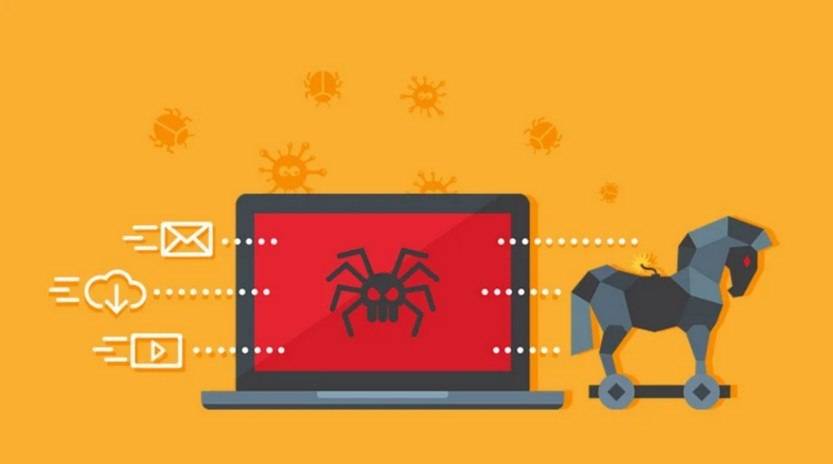
Overview of the Scam
The “Password Was Compromised Through A Legitimate Website” email scam is a form of sextortion scam that has recently emerged. It starts with an email containing fake claims that the recipient’s password was acquired through a legitimate website. Supposedly, this allowed the sender to infect the victim’s device with malware and spyware to access their microphone, camera, and personal data.
The email states that compromising the password led to a successful malware attack on the recipient’s system. It installed a backdoor virus granting access to all the device’s contents and control over the microphone and camera.
While not directly stated, the email implies that explicit videos and photos of the victim were recorded and compiled into an “archive.” It threatens to leak the indecent content unless the demanded ransom is paid.
This gives the false impression that the recipient’s intimate activities were observed and documented. The extortion fee is usually requested in Bitcoin, a cryptocurrency offering increased anonymity.
Breakdown of the Scam Email Components
Here are the key components contained in a typical “Password Was Compromised” sextortion scam email:
- Subject Line – Usually urgent titles like “Warning” or “Important” to entice opening.
- Backstory – Claims the recipient’s password was obtained through a legitimate site.
- Malware Attack Story – States this password access enabled a malware attack on the victim’s device.
- Webcam/Microphone Access – Says malware provided access to microphone, camera, and personal data.
- Implicit Blackmail – Suggests inappropriate videos/images were recorded and archived.
- Ransom Demand – Demands payment, usually $500-$1000 in Bitcoin, to avoid data leaks.
- Threats – Threatens to release intimate content if payment isn’t received in 1-2 days.
- Fake Technical Jargon – Uses made-up hacker terms like “backdoor virus” to seem credible.
- Sense of Urgency – Short deadline given to pay the ransom and avoid assumed leaks.
Goals of the Scammers
The primary objectives behind this scam include:
- Extorting Money – Defraud victims out of ransom payments by exploiting fear/embarrassment.
- Installing Malware – Trick users into downloading malware by posing as legitimate notifications.
- Harvesting Personal Data – Attempt to collect personal information like passwords through phishing techniques.
- Damaging Reputations – Threaten to harm victims’ reputations by releasing fabricated explicit content.
This scam combines social engineering manipulation with technological deception for maximum psychological impact. The extortion targets basic human emotions like fear and shame.
Here is how the “Password Was Compromised Through A Legitimate Website” email scam looks:
Subject: Careful, it’s important
Hi.
I have very bad news for you. Unfortunately, your private data was compromised.Your password was compromised through a legitimate website, and that led to events that I will explain to you now.
Using your password, our team gained access to your email. We analyzed all data and after going through found a vector for an attack.
That attack was a success. The result was that your machine was infected with a virus/backdoor. Our team uses individual approach to every victim, our success rate is very high.We have gained access to the data, but the most interesting part that we are able to control your webcam and microphone.
And you are correct. We have a nice archive with exploding video content.
It’s all good, but we are here to make money. So if you don’t want those videos to be leaked, please follow the instructions.You pay $750 USD, and there will be nothing to worry about. No chats, no photos, nothing. Every single file will be deleted and virus removed from your machine
Use Bitcoin to make the transfer. Wallet address is 1J7RYCYp8D7zYoAAR4HQDXujaRU6D9tDbf , it’s unique and we will know that you made the payment immediately.
You have 2 days to make the transfer, that’s reasonable.
Take care.
How the Scam Works
The “Password Was Compromised” sextortion scam operates through a sequence of deceptive techniques to defraud and extort money from victims. Here is a step-by-step breakdown of how this scam works:
1. Obtaining Email Addresses
The first step for scammers is compiling a list of target email addresses. These are gathered through illegal data dumps, malware infections, phishing and more. The broader the recipient pool, the higher chance of snaring victims.
2. Crafting Deceptive Emails
Scammers put significant effort into making the email content seem convincing. The backstory about a compromised password aims to seem plausible, as do the technical explanations of malware infections.
Including the victim’s password in the email often lends credibility since it implies their account was hacked. But in reality, these are typically passwords leaked online previously.
3. Executing Mass Spamming
The crafted scam emails are then distributed en masse to the compiled list of recipients. Mass spamming enables scammers to reach thousands of potential victims rapidly.
Email distribution methods like botnets and spoofed addresses help evade anti-spam filters. This facilitates delivery to inboxes rather than spam folders.
4. Sit Back and Wait
After blasting out the emails, scammers simply monitor the provided Bitcoin wallet addresses for any ransom payments. The broader the recipient pool, the more likely some will become convinced and pay up.
5. Follow-up Extortion
If the initial email doesn’t prompt a payment, scammers might send follow-up threatening messages. These emphasize the impending consequences if the ransom isn’t paid immediately.
6. Transfer and Withdrawal
Once ransom money lands in the provided Bitcoin wallet, the scammers swiftly transfer it elsewhere and eventually withdraw it into normal cash. This rapid laundering makes reversing transactions nearly impossible.
7. Damage Control
For recipients submitting payments, scammers generally cease all contact after withdrawing the funds. Those who don’t pay may have their email addresses sold to other scammers to endure recurring sextortion attacks.
This sequence demonstrates how the “Password Was Compromised” scam strategically exploits human psychology and technological tools to defraud at scale. Awareness of the techniques is key to recognizing and avoiding it.
What to Do If You Are Targeted
If you receive the “Password Was Compromised Through A Legitimate Website” sextortion email or any similar scam message, stay calm and take the following actions:
Do Not Panic
The email is meant to instill fear and urgency to pay without thinking. But rest assured, the claims of malware infections, extortion archives and imminent data leaks are completely fabricated. There is no reason to panic or act hastily.
Do Not Reply
Replying will simply confirm your email address is active. Instead, ignore and delete the message then block the sender. Do not try reasoning with scammers or asking questions, as this achieves nothing constructive.
Do Not Pay the Ransom
No matter how convincing or threatening the email seems, never pay the ransom demand. Doing so will likely spur repeat extortion attempts while funding criminal enterprises.
Run a Malware Scan
Run a scan with updated antivirus software as a precaution, even though infections claims are fake. This can identify any actual malware picked up from other sources.
Change Online Passwords
Consider changing passwords for online accounts, particularly any reused on multiple sites. Use unique, complex passwords for each account and enable two-factor authentication where possible.
Contact the Website
If the email references a legitimate website from which your password was allegedly obtained, contact the site to make them aware of potential vulnerabilities being exploited.
Report the Email
Forward the scam email to the Anti-Phishing Working Group at phish@apwg.org and to the Federal Trade Commission at spam@uce.gov. Report it as phishing to your email provider.
Monitor Accounts
Keep closer watch on online accounts named in the scam message for any suspicious activity. Review credit card and bank statements for unknown charges.
Warn Contacts
Let colleagues, friends and family know about this scam if you think they could also be targeted. Share awareness to prevent them from being deceived.
Remaining calm and avoiding reactionary decisions denies scammers the satisfaction of profiting off the scam. Take smart steps to actively protect yourself instead.
Is Your Device Infected? Run a Free Malware Scan
Slow performance, constant pop-ups, or strange behavior? These are classic signs of a malware infection. The fastest way to find out is to scan your device with Malwarebytes Free — one of the most trusted malware removal tools available.
The free version detects and removes the most common threats, including:
- Adware — the cause of those annoying pop-ups
- Browser hijackers — unwanted redirects and changed homepages
- Trojans and spyware — hidden programs stealing your data
- Potentially unwanted programs (PUPs) — software you never asked for
👉 Select your device below — Windows, Mac, or Android — then follow the simple steps to download Malwarebytes, scan your system, and remove any threats it finds. The scan usually takes 5 to 20 minutes.
Run a Malware Scan with Malwarebytes for Windows
Malwarebytes is one of the most popular and trusted anti-malware tools for Windows — and it’s completely free for removing infections. It catches threats that many antivirus programs miss, including adware, browser hijackers, and trojans. Follow the steps below to scan and clean your PC in just a few minutes.
Download Malwarebytes
Click the button below to download the latest version of Malwarebytes for Windows from the official source. The free version is all you need — it will scan your computer and remove adware, browser hijackers, and other malicious software at no cost.
Download MalwarebytesOfficial installer for Windows 11 and 10. Your download starts right away.Want real-time protection? See Malwarebytes Premium Malwarebytes Free for WindowsScans and removes malware at no cost
-
Install Malwarebytes
When the download finishes, open your Downloads folder and double-click the MBSetup file. If Windows shows a User Account Control pop-up, click “Yes” to allow the installation.
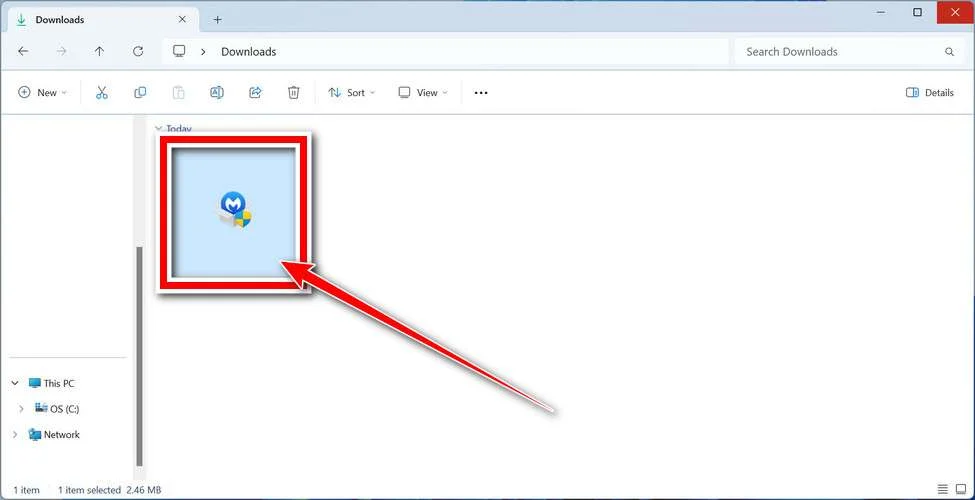
Follow the On-Screen Prompts to Install Malwarebytes
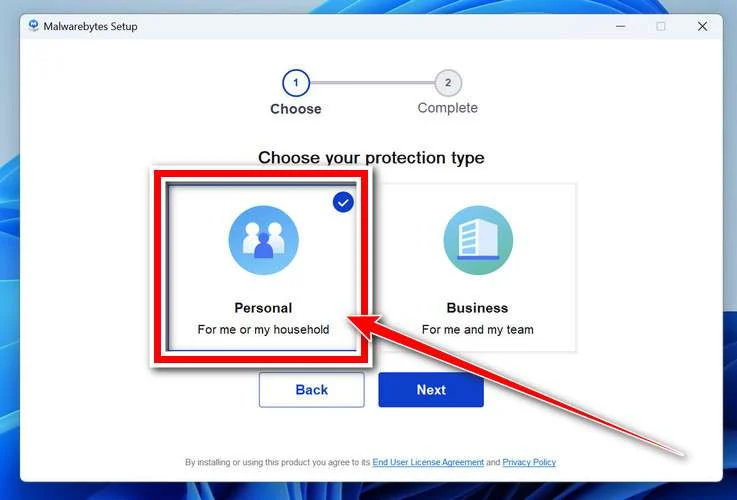
The setup wizard will walk you through a few quick screens:
-
Choose where you’re installing the program — “Personal Computer” or “Work Computer” — then click Next.
-
Malwarebytes will now install on your device. This usually takes under a minute.

-
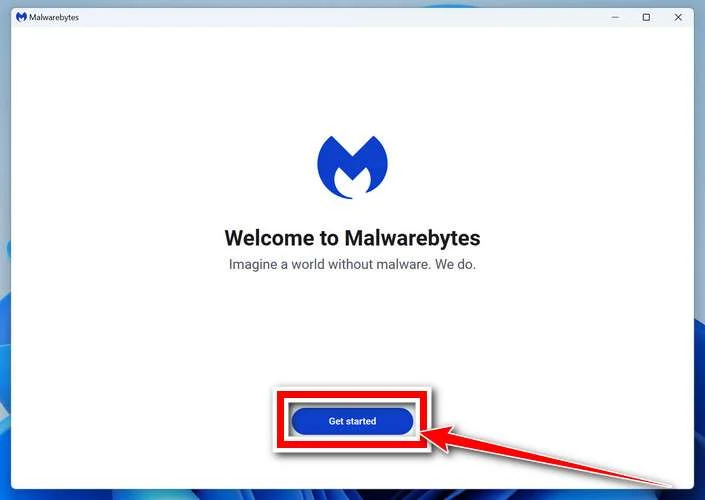
When installation is complete, the “Welcome to Malwarebytes” screen will open automatically.
-
On the final screen, click Open Malwarebytes to launch the program.

-
Enable “Scan for Rootkits”
Before scanning, turn on rootkit detection so Malwarebytes can find even the most hidden threats. Click the Settings gear icon on the left side of the screen.
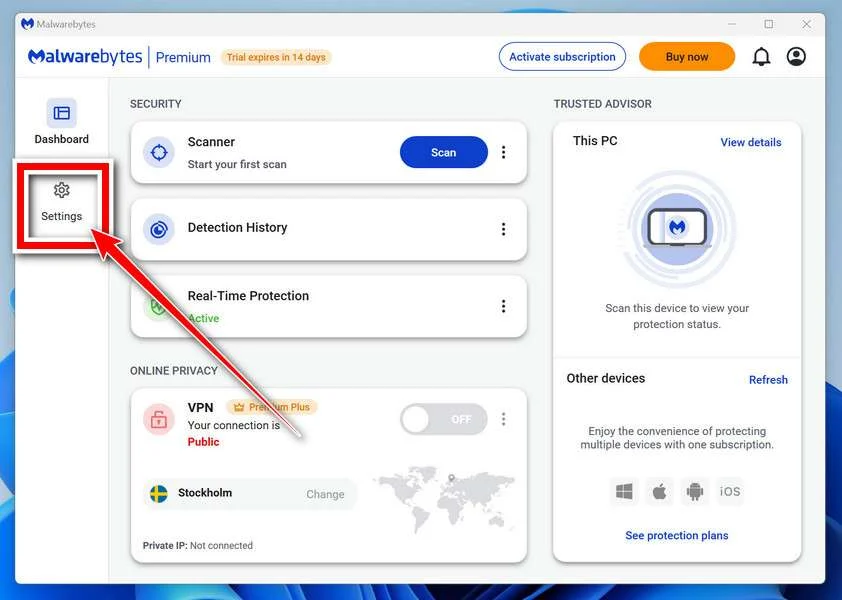
In the settings menu, find “Scan for rootkits” and click the toggle so it turns blue.

Done? Click “Dashboard” in the left pane to return to the main screen.
Start the Scan
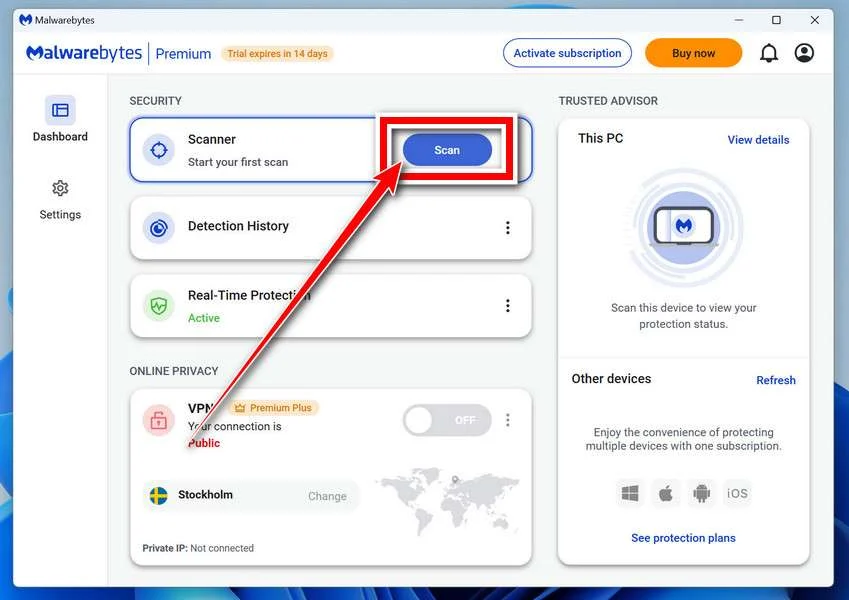
Click the blue Scan button. Malwarebytes will automatically update its virus database and start checking your computer for malware.
-
Wait for the Scan to Finish
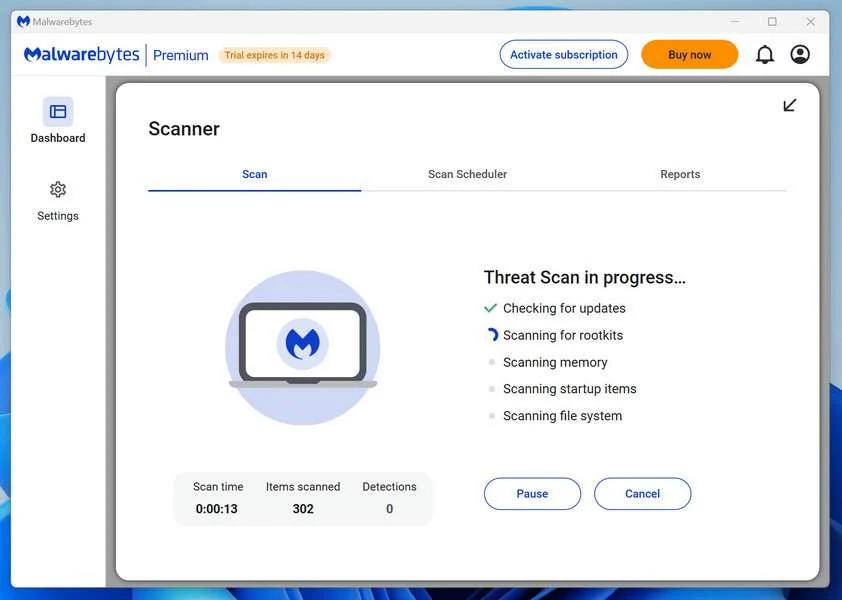
The scan checks your entire system for browser hijackers and other malicious programs, so it can take 5 to 20 minutes depending on your computer. Feel free to do something else — just check back occasionally to see the progress.
-
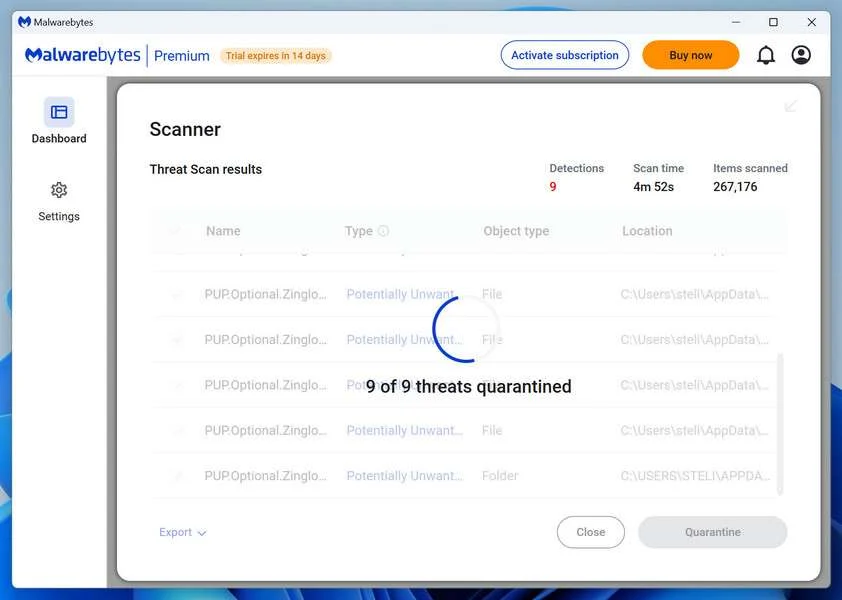
Quarantine the Detected Threats
When the scan is done, you’ll see a list of everything Malwarebytes found — malware, adware, and potentially unwanted programs. Click the “Quarantine” button to remove all of them at once.
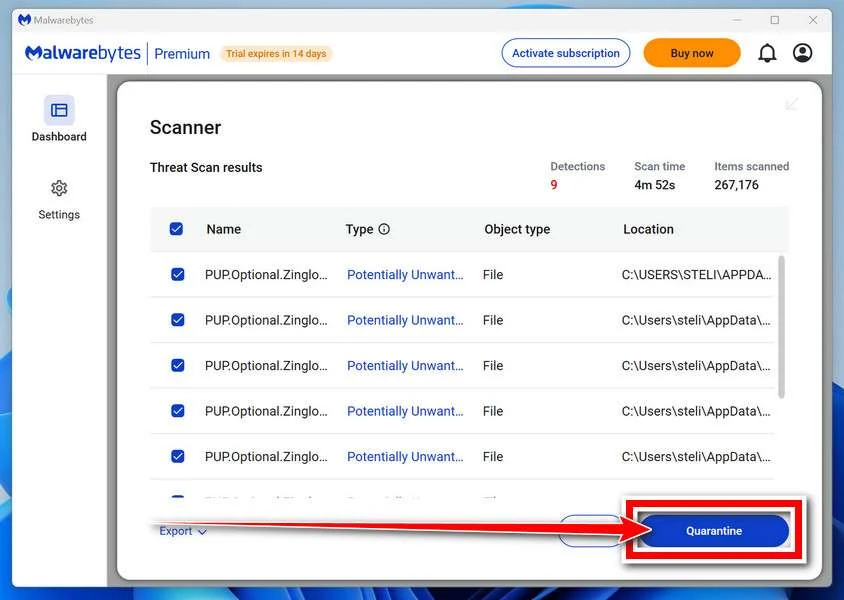
Malwarebytes will now remove the malicious files and registry entries and move them safely into quarantine.
-
Restart Your Computer
Some threats can only be fully removed after a reboot. If Malwarebytes asks you to restart, click Yes. Once you’re logged back in, Malwarebytes has finished removing the threats it found.
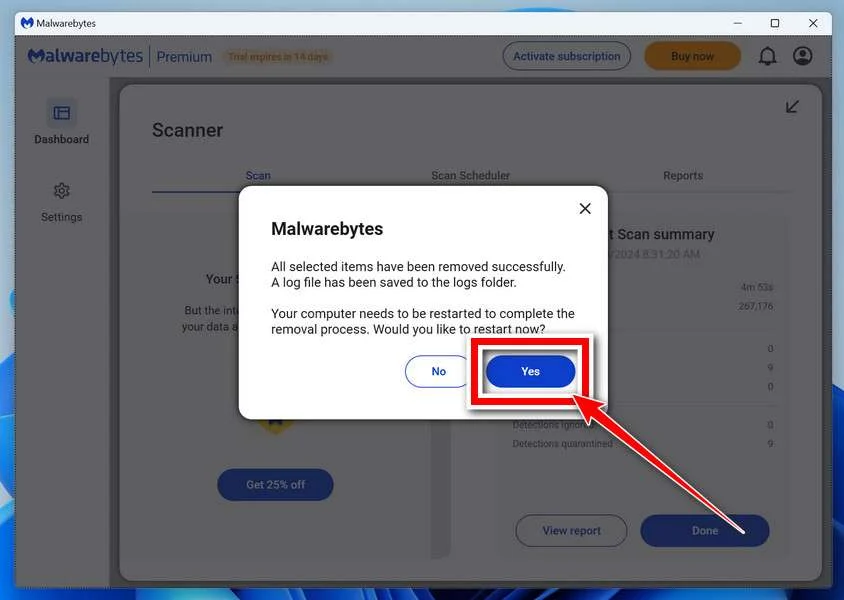
That’s it — your Windows PC is now clean of trojans, adware, and other malware, and should be back to running smoothly.
If you are still having problems with your computer after completing these instructions, then please follow one of the steps:
- Run a computer scan with ESET Online Scanner
- Ask for help in our Windows Malware Removal Help & Support forum.
Run a Malware Scan with Malwarebytes for Mac
Malwarebytes for Mac is a free on-demand scanner that removes the malware other security software tends to miss — adware, browser hijackers, and unwanted programs included. Cleaning an infected Mac with Malwarebytes has always been completely free, and it’s our go-to recommendation. Follow the steps below to scan and clean your Mac in just a few minutes.
-
Download Malwarebytes for Mac
Click the button below to download the latest version of Malwarebytes for Mac.
Download MalwarebytesOfficial installer for macOS. Your download starts right away.Want real-time protection? See Malwarebytes PremiumMalwarebytes Free for MacScans and removes malware at no cost -
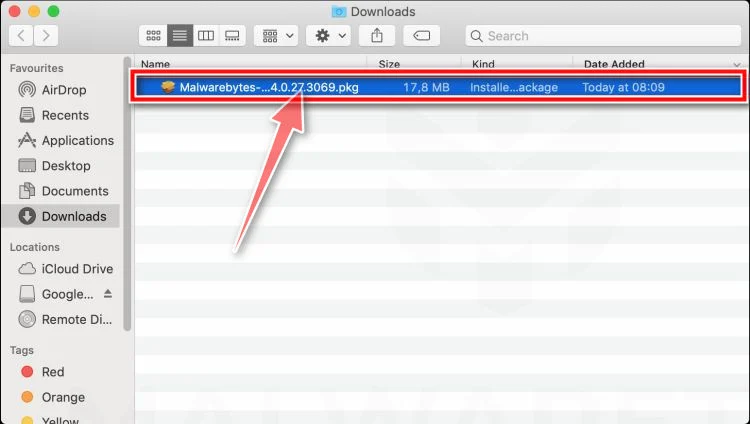
Open the Malwarebytes setup file
When the download finishes, open your Downloads folder and double-click the setup file to begin the installation.
-
Follow the On-Screen Prompts to Install Malwarebytes
The Malwarebytes for Mac Installer will guide you through a few quick screens. Click “Continue” and keep following the prompts until the installation completes.
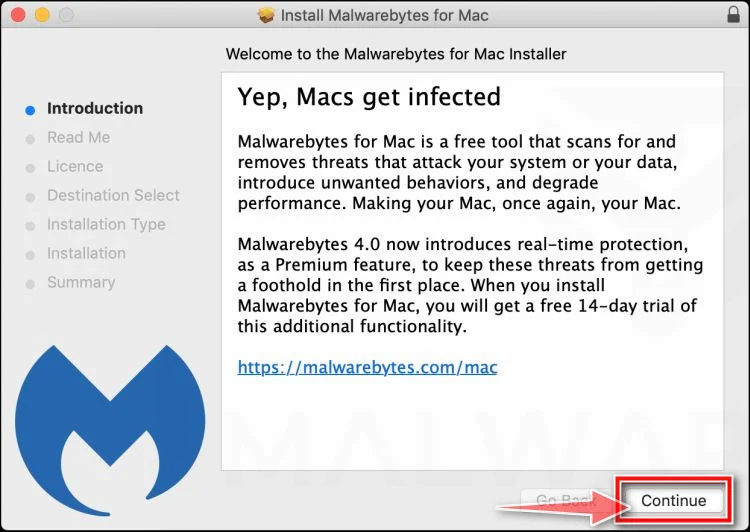
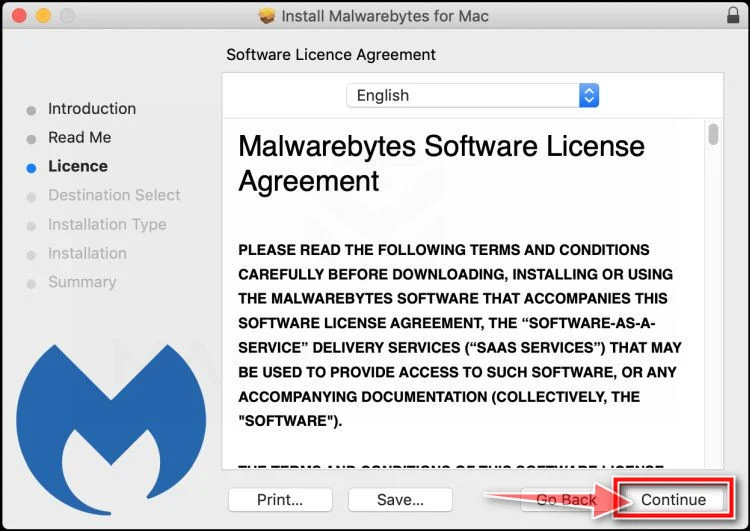
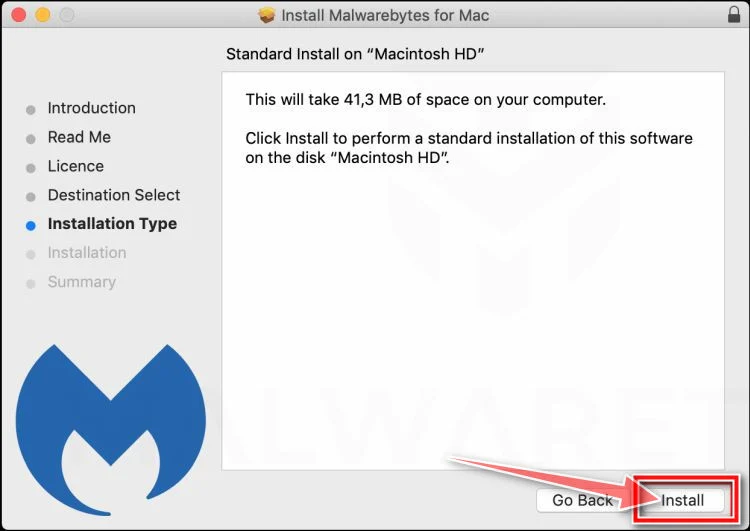
When the installation is complete, Malwarebytes opens to the Welcome to Malwarebytes screen. Click “Get started“.
-
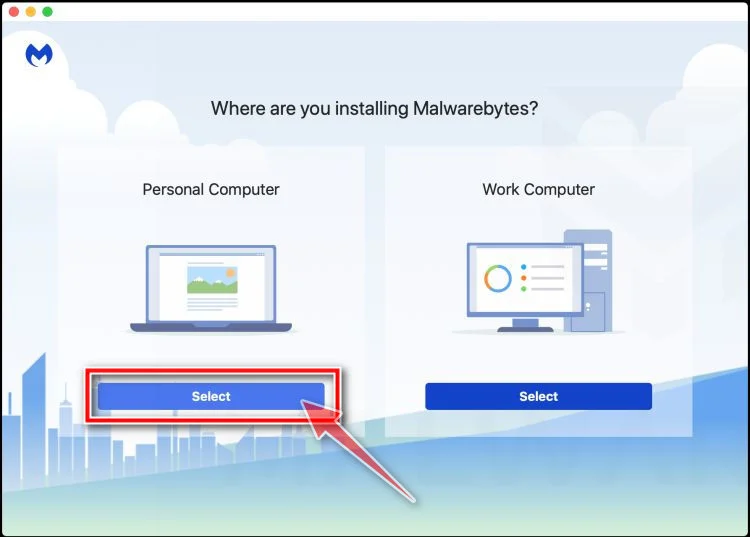
Select “Personal Computer” or “Work Computer”
Malwarebytes will ask what type of computer you’re installing it on. Click either Personal Computer or Work Computer, whichever applies.
-
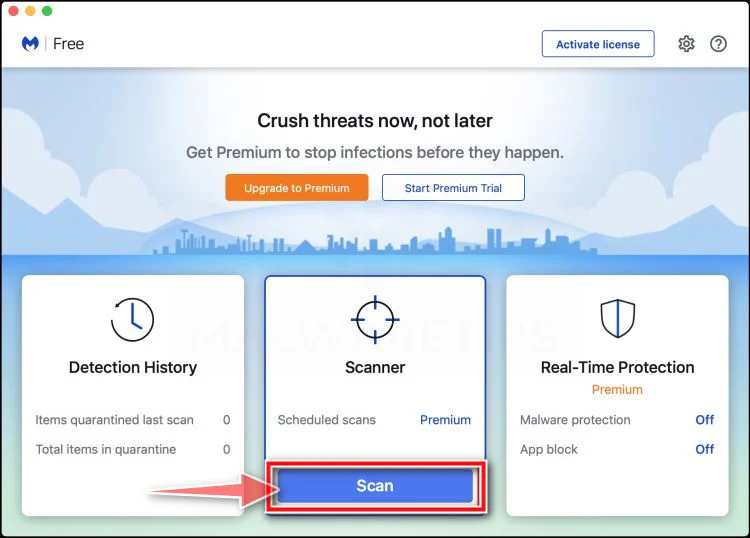
Start the Scan
Click the “Scan” button. Malwarebytes will automatically update its detection database and begin checking your Mac for malware.
-
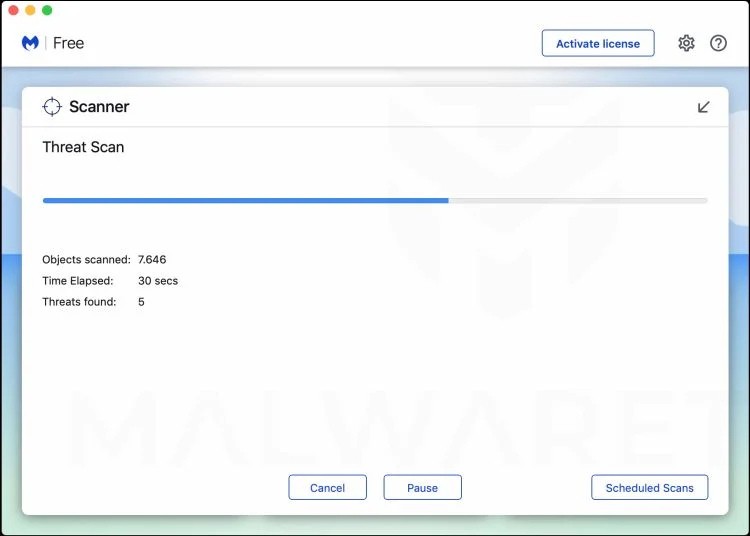
Wait for the Scan to Finish
Malwarebytes will scan your Mac for adware, browser hijackers, and other malicious programs. This can take a few minutes, so feel free to do something else — just check back occasionally to see the progress.
-
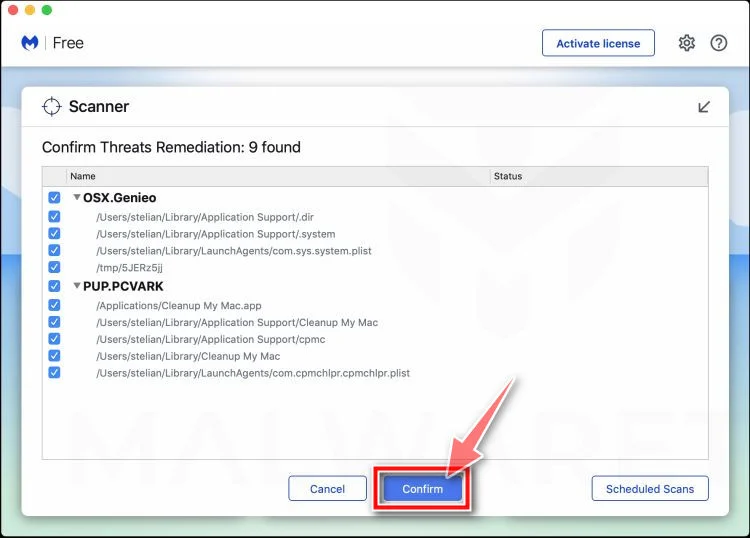
Quarantine the Detected Threats
When the scan is done, you’ll see a list of everything Malwarebytes found. Click the “Quarantine” button to remove all the threats at once.
-
Restart Your Mac
Malwarebytes will now remove all the malicious files it found. Some threats can only be fully removed after a reboot — if Malwarebytes asks you to restart, allow it. Once you’re logged back in, your Mac is clean.
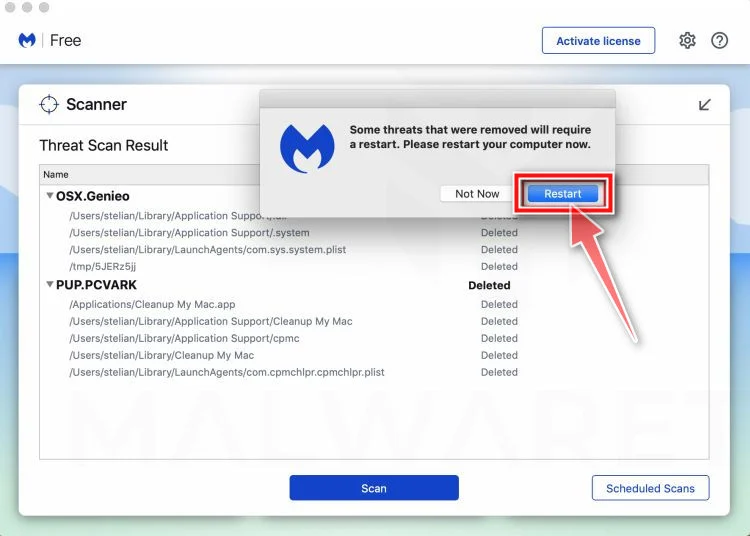
That’s it — your Mac is now free of adware, rogue browser extensions, and other potentially harmful software.
If you are still experiencing problems while trying to remove a malicious program from your computer, please ask for help in our Mac Malware Removal Help & Support forum.
Run a Malware Scan with Malwarebytes for Android
Malwarebytes for Android automatically detects and removes dangerous threats like malware and ransomware so you don’t have to worry about your most-used device being compromised. Aggressive detection of adware and potentially unwanted programs keeps your Android phone or tablet running smooth.
-
Download Malwarebytes for Android.
You can download Malwarebytes for Android by clicking the link below.
Get Malwarebytes for AndroidOpens Google Play in a new tab.Want real-time protection? See Malwarebytes Premium for AndroidMalwarebytes for AndroidScans your phone and removes malware at no cost -
Install Malwarebytes for Android on your phone.
In the Google Play Store, tap “Install” to install Malwarebytes for Android on your device.

When the installation process has finished, tap “Open” to begin using Malwarebytes for Android. You can also open Malwarebytes by tapping on its icon in your phone menu or home screen.

-
Follow the on-screen prompts to complete the setup process
When Malwarebytes will open, you will see the Malwarebytes Setup Wizard which will guide you through a series of permissions and other setup options.
This is the first of two screens that explain the difference between the Premium and Free versions. Swipe this screen to continue.
Tap on “Got it” to proceed to the next step.
Malwarebytes for Android will now ask for a set of permissions that are required to scan your device and protect it from malware. Tap on “Give permission” to continue.
Tap on “Allow” to permit Malwarebytes to access the files on your phone.
-
Update database and run a scan with Malwarebytes for Android
You will now be prompted to update the Malwarebytes database and run a full system scan.

Click on “Update database” to update the Malwarebytes for Android definitions to the latest version, then click on “Run full scan” to perform a system scan.

-
Wait for the Malwarebytes scan to complete.
Malwarebytes will now start scanning your phone for adware and other malicious apps. This process can take a few minutes, so we suggest you do something else and periodically check on the status of the scan to see when it is finished.

-
Click on “Remove Selected”.
When the scan has been completed, you will be presented with a screen showing the malware infections that Malwarebytes for Android has detected. To remove the malicious apps that Malwarebytes has found, tap on the “Remove Selected” button.

-
Restart your phone.
Malwarebytes for Android will now remove all the malicious apps that it has found. To complete the malware removal process, Malwarebytes may ask you to restart your device.
That’s it — your Android phone is now clean — no more malicious apps, adware, or browser redirects.
If you are still having problems with your phone after completing these instructions, then please follow one of the steps:
- Restore your phone to factory settings by going to Settings > General management > Reset > Factory data reset.
- Ask for help in our Mobile Malware Removal Help & Support forum.
Stay Protected: Block Ads and Malicious Sites
Now that your device is clean, keep it that way. Most infections start with a malicious ad or a fake download button — so blocking them at the source is your best defense.
We recommend AdGuard, which blocks malicious ads, phishing pages, and dangerous redirects before they can reach you.
👉 Download AdGuard and browse safely
Frequently Asked Questions
What is the “Password Was Compromised” email scam?
This is a type of sextortion scam where recipients are sent an email claiming their password was obtained from a website, leading to malware infections and recordings of explicit videos through their webcam. The email threatens to leak the supposed videos unless a ransom is paid.
Is my device really infected with malware?
No, the claims of malware infections enabling access to your microphone and camera are completely fabricated in this scam. It is just a tactic to scare recipients.
Were inappropriate videos actually recorded of me?
No, the scammers do not really have any intimate videos or recordings of you. This is just implied as leverage for extortion.
Should I pay the ransom?
No, you should never pay the demanded ransom. It will likely lead to more extortion attempts, and there is no actual evidence to eliminate by paying.
How did the scammers get my password?
They most likely did not. Scammers use passwords leaked in previous breaches to give the illusion of having “hacked” your account, when the passwords are actually publicly available.
Can this email really infect my device?
Simply opening or reading the email will not infect your device with malware. Scammers may include malware download links, so don’t click anything within the email.
How can I protect myself from this scam?
Use unique passwords on all accounts, enable two-factor authentication, run antivirus software, and be cautious of any unsolicited emails demanding money. Never pay ransoms to scammers.
What should I do if I receive this email?
Do not reply to the email, pay the ransom or click any links. Report the scam to anti-phishing groups, forward it to your email provider, and delete it. You can also warn your contacts about the scam tactic.
Conclusion
The “Password Was Compromised Through A Legitimate Website” email scam displays the deceptive creativity of cybercriminals. It combines technical jargon, personal information and implicit threats to trick victims into paying ransoms out of fear and uncertainty.
Recognizing the underlying template and psychology illuminates that the claims are completely fabricated. There is no malware infection, no inappropriate videos being recorded and no reason to pay. Simply deleting the message thwarts the scam entirely.
This scam reminds us that human emotions like fear and embarrassment can easily overpower rational thinking. That is why we must remain vigilant for online extortion attempts aimed at exploiting those feelings. Developing awareness of common scam tactics allows identifying and responding appropriately to fraudulent messages.
With scam methods constantly evolving, continued education is essential. Pay attention to cybercrime alerts, implement robust security protections and think twice before trusting any unsolicited messages. Staying informed and proactive are the keys to protecting oneself and halting extortion scams in their tracks.

Join the discussion
0 commentsShare your experience or ask a question about this article.
Discussion
Start the conversation
Have a question or something useful to share? Add the first comment.