

PayPal has become one of the most widely used online payment platforms, with millions of users worldwide trusting it to securely manage their financial transactions. However, as with any major financial service, PayPal also faces sophisticated scammers looking to exploit users through deceptive tactics and social engineering. One such prevalent scam involves fraudulent emails purporting to be from PayPal and warning recipients about an unauthorized transaction on their account.
This article will provide an in-depth explainer on how the “PayPal Unauthorized Transaction” phishing scam operates, insights into the scammers’ tactics, tips to identify and avoid falling victim, and most importantly, guidance on what to do if you received such an email or already shared personal information.
Overview of the Scam
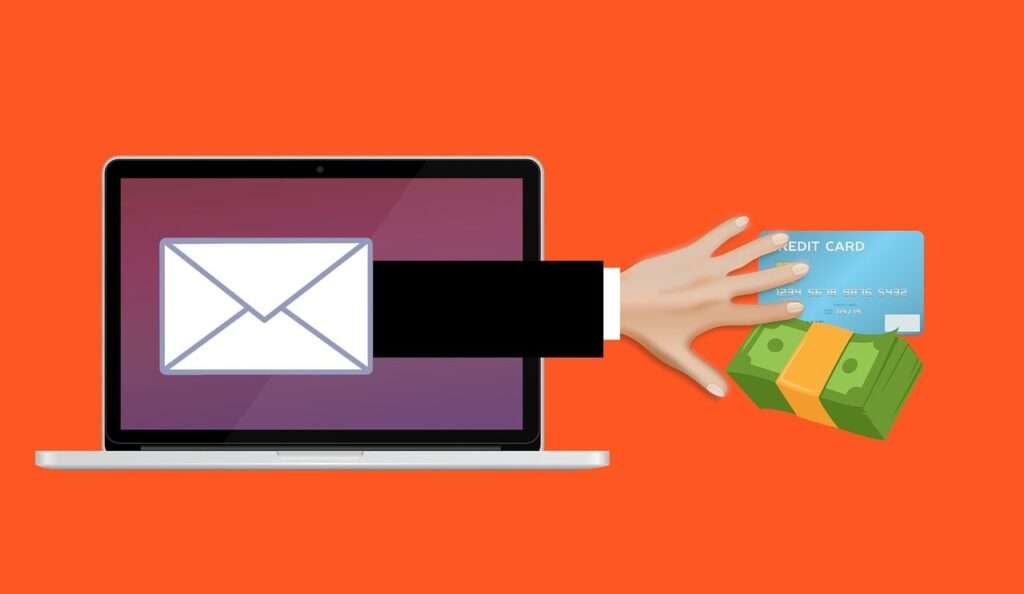
The scam email in question follows a similar template, informing recipients that an unauthorized iPhone purchase for several hundred dollars was made from their PayPal account. It instructs them to call the listed customer support numbers urgently to cancel the order and secure their account.
Of course, both the transaction and customer support numbers are completely fabricated. The email is not from PayPal but scammers impersonating the company. Their aim is to trick recipients into calling the number and then exploiting various social engineering techniques to obtain login credentials or enough personal information to access their PayPal account and funds.
Some key traits that distinguish this scam email from legitimate PayPal communications:
- Sender email does not come from an official PayPal domain
- Grammatical errors and stylistic inconsistencies
- Suspicious links unrelated to PayPal in the email footer or body
- Unusual formatting and design compared to PayPal’s official templates
- Request for sensitive information over phone, which PayPal would never do
Once recipients call the number, the scammers posing as PayPal support often utilize clever psychological tactics to gradually gain their trust and extract login details, account numbers, Social Security Number, credit card info, or online banking credentials.
These details then enable them to steal funds, make unauthorized transactions, or sell the information on the dark web. According to the FBI’s Internet Crime Complaint Center (IC3), PayPal and other online payment scams resulted in losses of over $58 million in 2020 alone, indicating the scale and risk this presents.
How the Scam Works
Now that we understand the basic premise, let’s explore how the scammers carry out this scam step-by-step to successfully deceive PayPal users:
Obtaining Recipient Email Addresses
The first step for the scammers is getting a large number of email addresses to send the phishing scam messages to. Some of the ways they gather these include:
- Purchasing email lists on the dark web: There are sellers offering millions of email addresses, often harvested from past data breaches, account takeovers, and malware infections.
- Phishing botnets: These infect thousands of computers and quietly collect email contacts and other information to build mailing lists.
- Email appending services: These add email addresses to existing lead lists by matching names and profiles.
- Social engineering sites: Scammers create fake transaction and social sites to get users to input their email and details, which are then added to scam lists.
So by using various methods, the scammers are able to put together massive mailing lists of potential victims for targeting.
Crafting Deceptive Emails
The content of the email is designed to cause alarm and urgency to trick users into calling the number:
- Sender details: The “From” name is listed as PayPal to mimic a notice from their security team. The sender email uses strings like “protection@account-paypal” instead of an official domain.
- Logos and branding: PayPal’s logo banner and trademark fonts are copied to further legitimize the email.
- Transaction details: A specific high-value unauthorized iPhone purchase is described to trigger recipient concern. Fake order and transaction IDs are provided.
- Call for urgent action: Emphatic language clearly tells the user to call the provided number immediately to cancel the order and secure their account.
- Customer support numbers: Two US numbers are listed as PayPal support with assurances they will help resolve the issue. In reality, both go to scammer call centers.
- Footer links: Additional misleading links are included, usually unrelated to PayPal, which serve to track email open rates.
Once the deceitful email is crafted, often with stolen PayPal branding, it is ready to be blasted out to the compiled list of target recipients.
Call Center Social Engineering
When recipients call the fake customer support numbers, the scam enters its final stage through sophisticated social engineering tactics. The goals of the call center scammers are:
- Gaining trust: They pose as PayPal support agents and provide fake names. They express concern about unauthorized activity and claim they are there to help protect the user’s account.
- Extracting information: Through strategic conversation, they get users to voluntarily reveal account details, credit card info, online banking credentials, SSNs, and ultimately email and password access.
- Installing malware: They may send links to fake account management portals which contain malware to infect the user’s device and steal stored information.
- Completing transactions: With enough data, they can transfer funds from PayPal and connected financial accounts or make direct purchases.
Some specific techniques the call center scammers use include:
- Urgency and fear: They emphasize that immediate action is needed to cancel orders and secure accounts. The threat of losing money pressures users.
- Chatting: Friendly small talk helps build rapport before shifting the conversation towards obtaining sensitive info.
- Confidence: Scammers sound professional and make liberal use of technical and financial jargon.
- Reassurance: They claim any information provided is strictly between the user and PayPal for resolving the issue.
- Verification: They confirm user details like SSNs under the guise of identity verification before taking over accounts.
- Cleanup: Any installed malware is removed, and scammers may even apologize and direct victims to reset passwords, too late by then.
Even savvy internet users can get deceived by these tactics which play on emotions like fear and urgency. The scammers leverage the inherent trust people have in widely used brands like PayPal to lower their guard. Once critical account access and financial data is handed over, recipients find themselves the victims of full-fledged identity theft and account takeover fraud.
What to Do If You Have Fallen Victim
If you receive an email like this purportedly from PayPal regarding an unauthorized transaction, or have been tricked into calling the number and providing personal information, here are the vital steps to take immediately:
1. Contact PayPal
- Call PayPal’s real customer service hotline at 1-844-2929 or log into your account via their official website.
- Explain you received a fraudulent email and unauthorized access may have been gained to your account. Request that they lock the account immediately to prevent further abuse.
2. Review Account Activity
- Closely monitor your PayPal account and connected payment sources like bank accounts and credit cards for any signs of unauthorized transactions.
- Watch for transfers, balance withdrawals, or purchases you did not make. Document any suspicious activity.
3. Reset Passwords
- Once your account is locked, promptly reset your PayPal password to prevent the scammers from further access.
- Additionally change passwords on associated financial accounts like bank accounts or PayPal-linked credit cards as a security precaution.
- Avoid reusing old passwords going forward when you change them.
4. Contact Banks/Credit Card Companies
- Notify your bank and credit card provider if you disclosed related account details over the call.
- Ask them to tighten security, monitor for fraud, reissue cards, and revert unauthorized transactions if caught early enough.
5. Place Fraud Alert
- Contact one of the three credit bureaus to place an initial 90-day fraud alert if critical identity information like SSN or account numbers were compromised.
- This obligates the other bureaus to also monitor your credit for any suspicious activity.
6. Report to Authorities
- File a complaint with the FTC regarding the PayPal phishing scam at ReportFraud.ftc.gov.
- Additionally contact the FBI Internet Crime Complaint Center at IC3.gov and your local authorities to report the scam. Provide any details on the scammers in your report.
7. Scan Devices
- Run anti-virus scans on your computers and devices used to contact the scammers or click any of their email links to detect and remove malware.
- A compromised device means your data is still at risk even with changed account passwords.
Quick action to lock down accounts and report the scam limits the damage from such social engineering frauds. But preventing becoming a victim in the first place is obviously the ideal outcome.
How to Spot and Avoid the Scam
Here are some tips to identify and avoid falling for this PayPal unauthorized transaction phishing scam:
Analyze Email Sender Details
- Verify that the sender email is from an official “@paypal.com” address. Scammers often use lookalike domains.
- Watch for spelling discrepancies in the sender name like “PayPa1” and grammar issues which signal phishing attempts.
Check Hyperlinks
- Don’t click on any links in the body or footer of the email without first hovering over them to preview the URLs.
- Scam links often contain misspelled or completely unrelated domains instead of “paypal.com”.
Contact PayPal Directly
- Go to PayPal’s website or use their official app to view any account notifications. An unauthorized transaction would be properly reported here.
- Call PayPal’s published customer support line at 1-844-2929 to confirm any emailed notices you received.
Never Call Provided Numbers
- Legitimate companies don’t ask customers to call unverified phone numbers from random emails for support.
- Calling the number provides scammers direct access to you for extracting sensitive information via social engineering.
Avoid Sharing Account Details
- Never share your PayPal password, online banking logins, full credit card data, SSNs, or other sensitive details over calls, emails, texts, or web forms.
- Real customer support would never request or need this information from you.
Use Strong Passwords
- Always use randomly generated strong, unique passwords for PayPal and connected financial accounts.
- Password reuse allows scammers to access multiple accounts if one is compromised.
- Use a password manager if needed to keep track of different passwords.
Install Security Software
- Maintain active and updated antivirus software, firewalls, spam filters, and anti-phishing extensions or browser protections.
- This provides multiple layers of defense against phishing links, caller ID spoofing, and malware.
Staying vigilant against common telltale signs of phishing and social engineering scams remains your best protection against online fraud. Limit any personal information shared outside of trusted sites or calls you initiated to vendors directly.
If you do receive a suspicious contact, report it to the legitimate company, ignore the provided phone numbers, and reset your account passwords as a precaution.
Is Your Device Infected? Run a Free Malware Scan
Slow performance, constant pop-ups, or strange behavior? These are classic signs of a malware infection. The fastest way to find out is to scan your device with Malwarebytes Free — one of the most trusted malware removal tools available.
The free version detects and removes the most common threats, including:
- Adware — the cause of those annoying pop-ups
- Browser hijackers — unwanted redirects and changed homepages
- Trojans and spyware — hidden programs stealing your data
- Potentially unwanted programs (PUPs) — software you never asked for
👉 Select your device below — Windows, Mac, or Android — then follow the simple steps to download Malwarebytes, scan your system, and remove any threats it finds. The scan usually takes 5 to 20 minutes.
Run a Malware Scan with Malwarebytes for Windows
Malwarebytes is one of the most popular and trusted anti-malware tools for Windows — and it’s completely free for removing infections. It catches threats that many antivirus programs miss, including adware, browser hijackers, and trojans. Follow the steps below to scan and clean your PC in just a few minutes.
Download Malwarebytes
Click the button below to download the latest version of Malwarebytes for Windows from the official source. The free version is all you need — it will scan your computer and remove adware, browser hijackers, and other malicious software at no cost.
Download MalwarebytesOfficial installer for Windows 11 and 10. Your download starts right away.Want real-time protection? See Malwarebytes Premium Malwarebytes Free for WindowsScans and removes malware at no cost
-
Install Malwarebytes
When the download finishes, open your Downloads folder and double-click the MBSetup file. If Windows shows a User Account Control pop-up, click “Yes” to allow the installation.
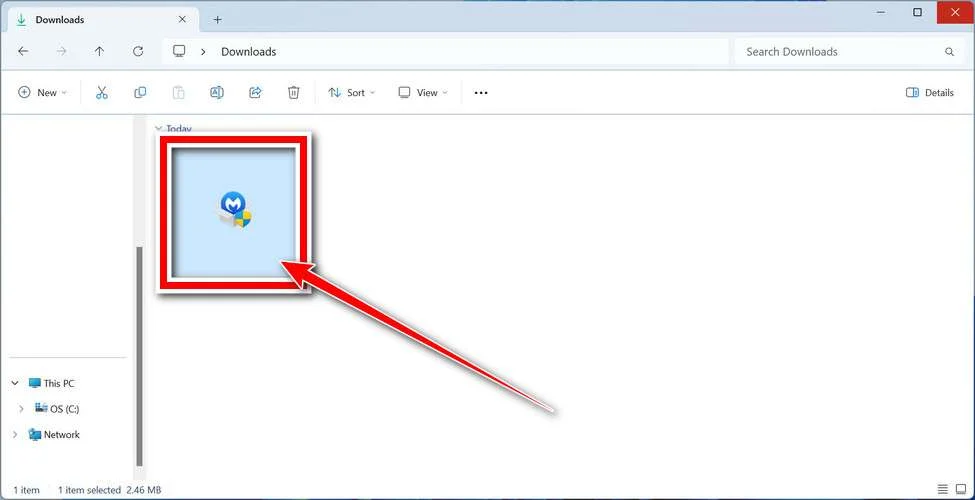
Follow the On-Screen Prompts to Install Malwarebytes
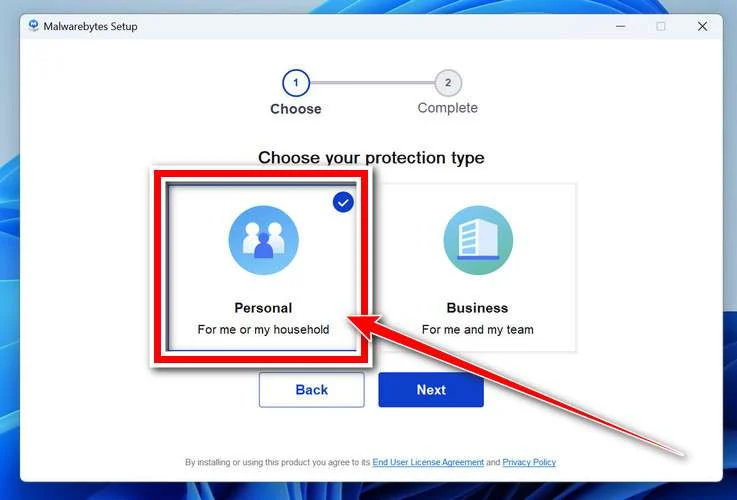
The setup wizard will walk you through a few quick screens:
-
Choose where you’re installing the program — “Personal Computer” or “Work Computer” — then click Next.
-
Malwarebytes will now install on your device. This usually takes under a minute.

-
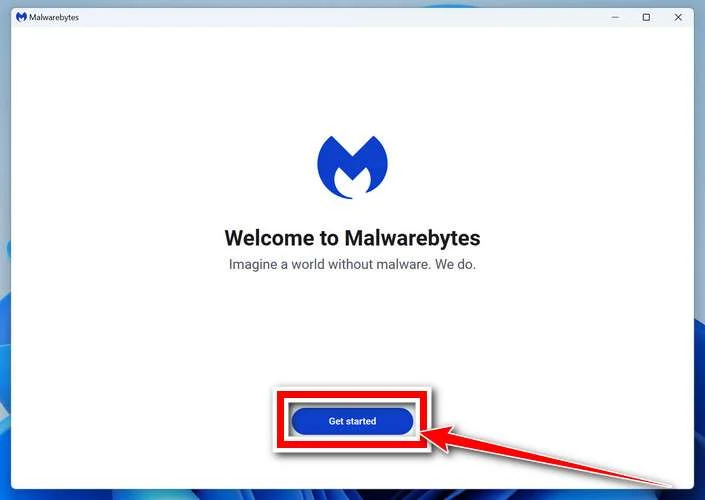
When installation is complete, the “Welcome to Malwarebytes” screen will open automatically.
-
On the final screen, click Open Malwarebytes to launch the program.

-
Enable “Scan for Rootkits”
Before scanning, turn on rootkit detection so Malwarebytes can find even the most hidden threats. Click the Settings gear icon on the left side of the screen.
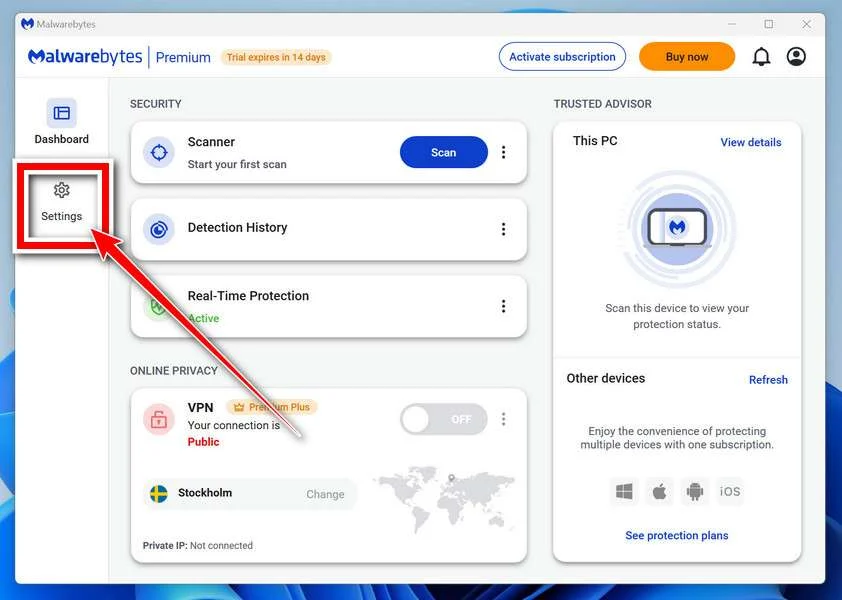
In the settings menu, find “Scan for rootkits” and click the toggle so it turns blue.

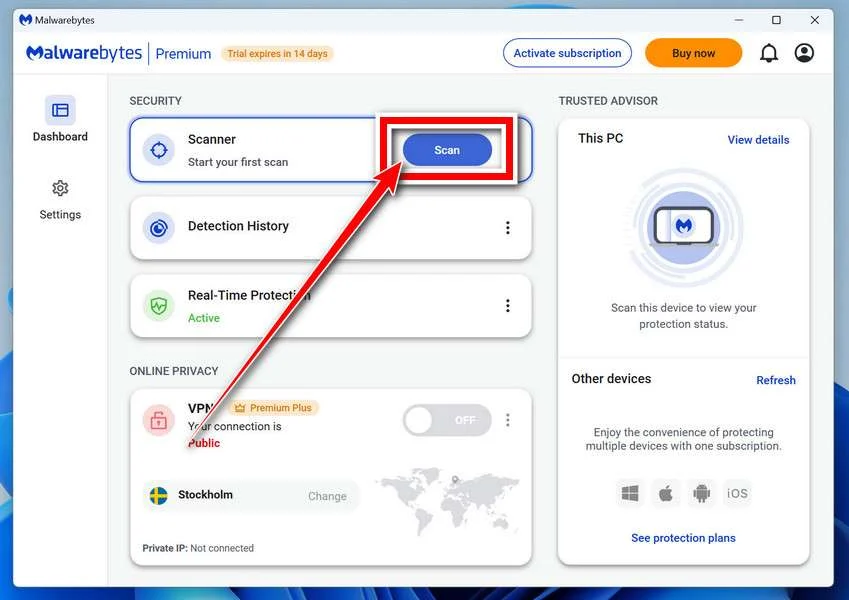
Done? Click “Dashboard” in the left pane to return to the main screen.
Start the Scan
Click the blue Scan button. Malwarebytes will automatically update its virus database and start checking your computer for malware.
-
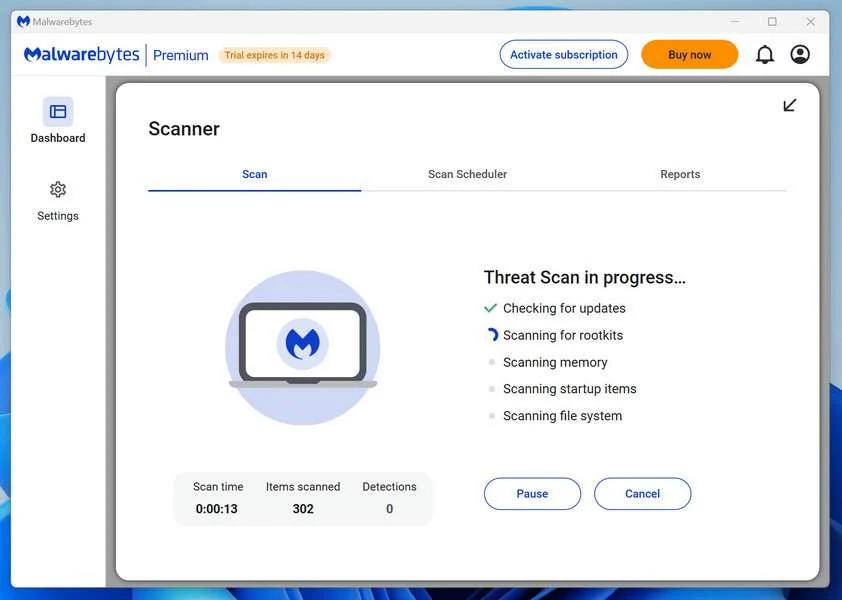
Wait for the Scan to Finish
The scan checks your entire system for browser hijackers and other malicious programs, so it can take 5 to 20 minutes depending on your computer. Feel free to do something else — just check back occasionally to see the progress.
-
Quarantine the Detected Threats
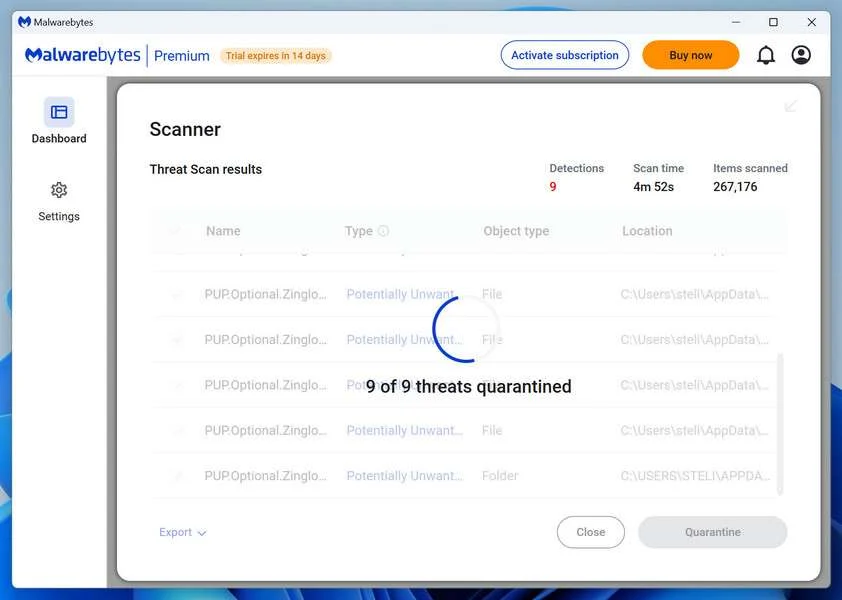
When the scan is done, you’ll see a list of everything Malwarebytes found — malware, adware, and potentially unwanted programs. Click the “Quarantine” button to remove all of them at once.
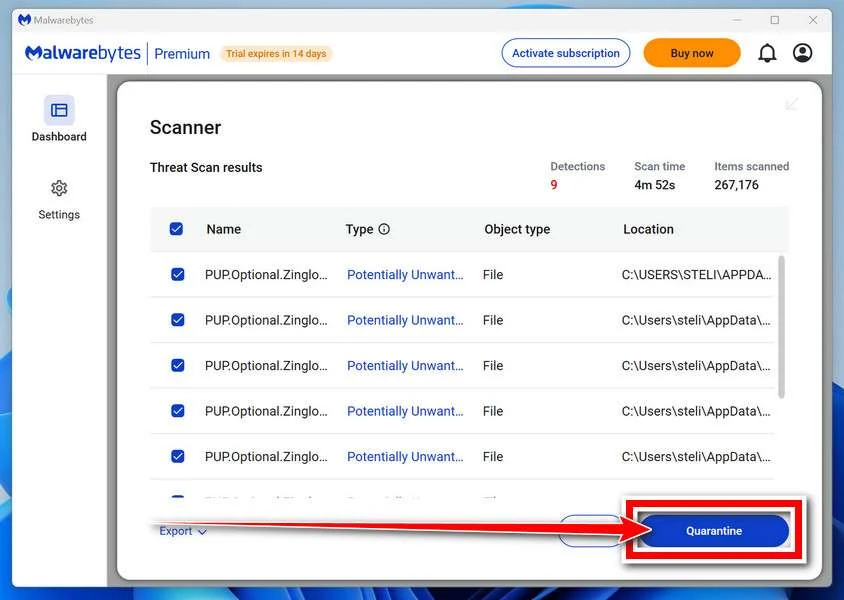
Malwarebytes will now remove the malicious files and registry entries and move them safely into quarantine.
-
Restart Your Computer
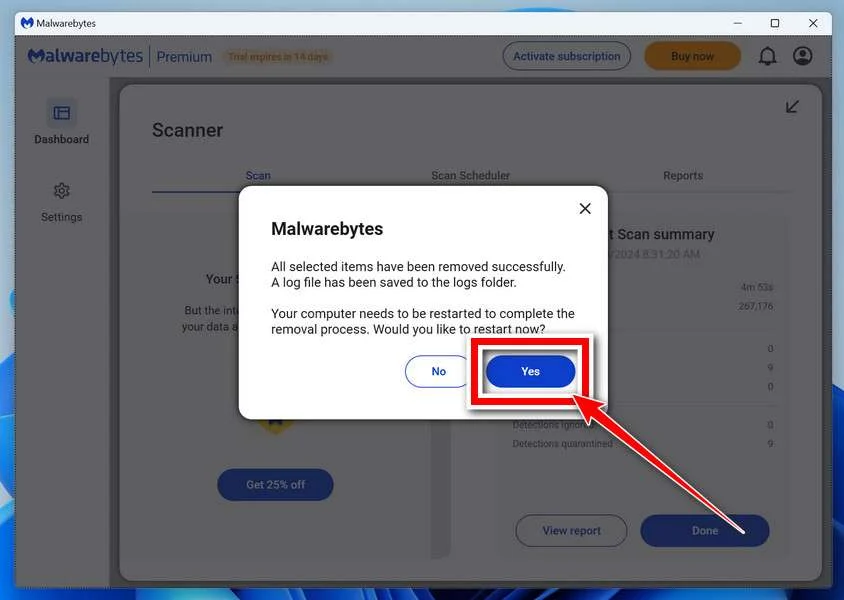
Some threats can only be fully removed after a reboot. If Malwarebytes asks you to restart, click Yes. Once you’re logged back in, Malwarebytes has finished removing the threats it found.
That’s it — your Windows PC is now clean of trojans, adware, and other malware, and should be back to running smoothly.
If you are still having problems with your computer after completing these instructions, then please follow one of the steps:
- Run a computer scan with ESET Online Scanner
- Ask for help in our Windows Malware Removal Help & Support forum.
Run a Malware Scan with Malwarebytes for Mac
Malwarebytes for Mac is a free on-demand scanner that removes the malware other security software tends to miss — adware, browser hijackers, and unwanted programs included. Cleaning an infected Mac with Malwarebytes has always been completely free, and it’s our go-to recommendation. Follow the steps below to scan and clean your Mac in just a few minutes.
-
Download Malwarebytes for Mac
Click the button below to download the latest version of Malwarebytes for Mac.
Download MalwarebytesOfficial installer for macOS. Your download starts right away.Want real-time protection? See Malwarebytes PremiumMalwarebytes Free for MacScans and removes malware at no cost -
Open the Malwarebytes setup file
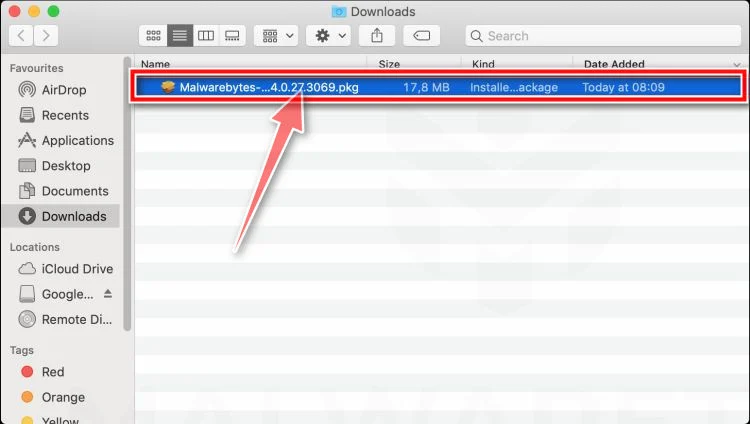
When the download finishes, open your Downloads folder and double-click the setup file to begin the installation.
-
Follow the On-Screen Prompts to Install Malwarebytes
The Malwarebytes for Mac Installer will guide you through a few quick screens. Click “Continue” and keep following the prompts until the installation completes.
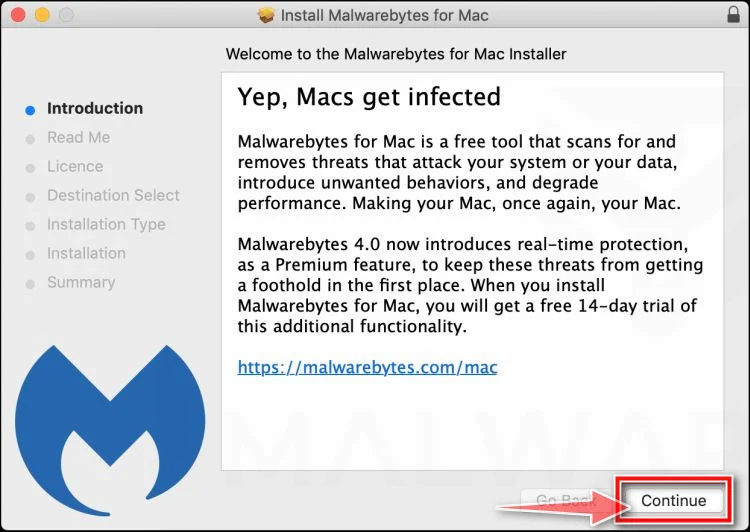
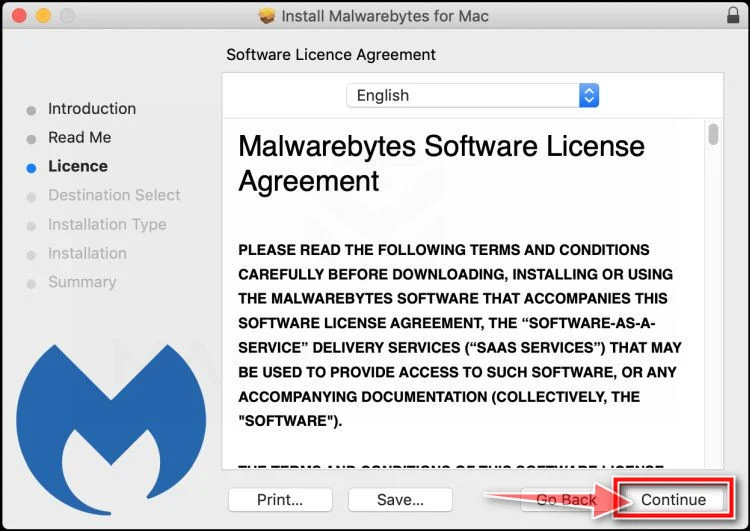
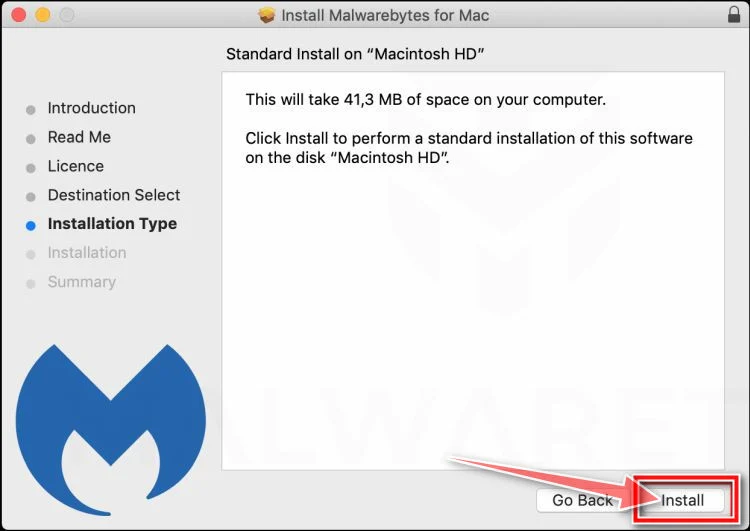
When the installation is complete, Malwarebytes opens to the Welcome to Malwarebytes screen. Click “Get started“.
-
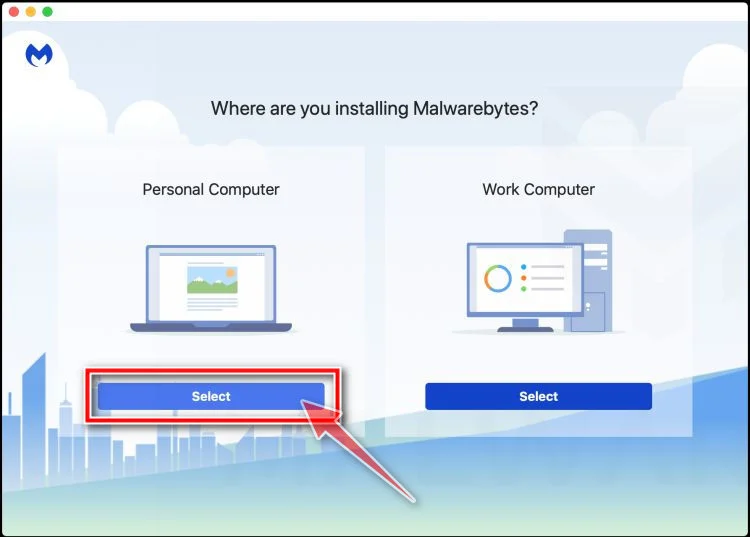
Select “Personal Computer” or “Work Computer”
Malwarebytes will ask what type of computer you’re installing it on. Click either Personal Computer or Work Computer, whichever applies.
-
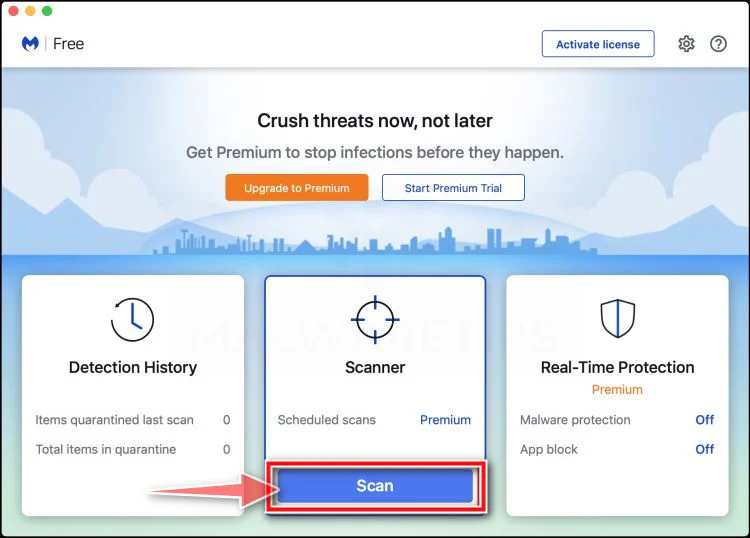
Start the Scan
Click the “Scan” button. Malwarebytes will automatically update its detection database and begin checking your Mac for malware.
-
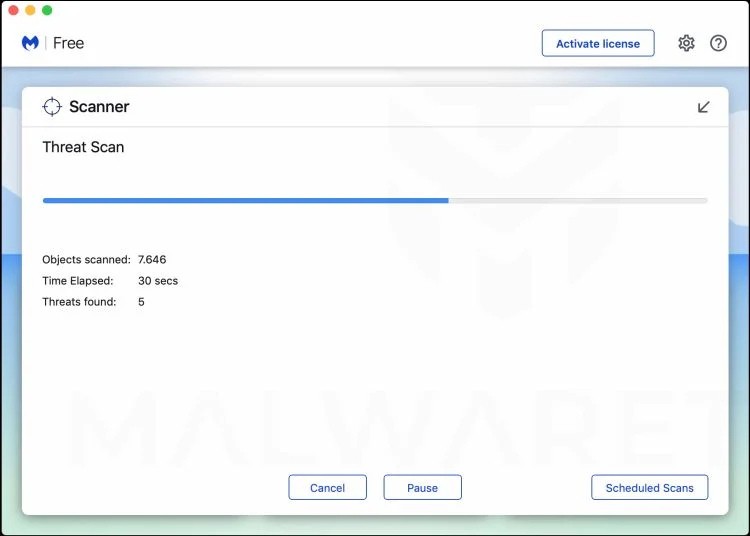
Wait for the Scan to Finish
Malwarebytes will scan your Mac for adware, browser hijackers, and other malicious programs. This can take a few minutes, so feel free to do something else — just check back occasionally to see the progress.
-
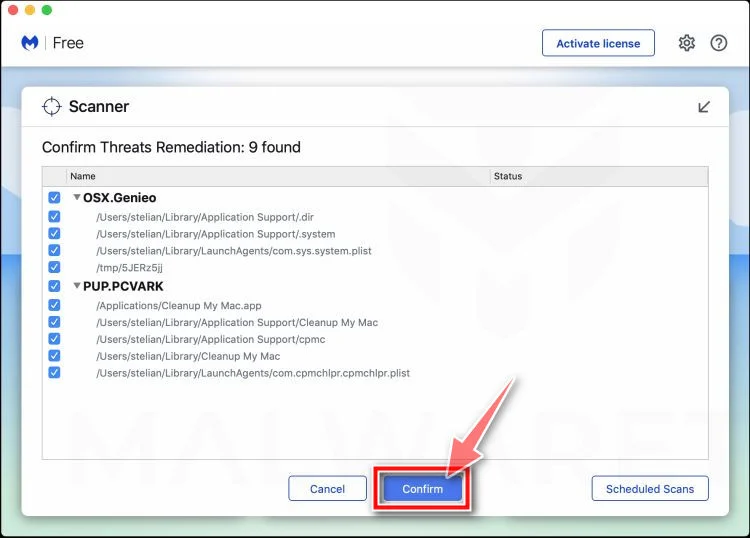
Quarantine the Detected Threats
When the scan is done, you’ll see a list of everything Malwarebytes found. Click the “Quarantine” button to remove all the threats at once.
-
Restart Your Mac
Malwarebytes will now remove all the malicious files it found. Some threats can only be fully removed after a reboot — if Malwarebytes asks you to restart, allow it. Once you’re logged back in, your Mac is clean.
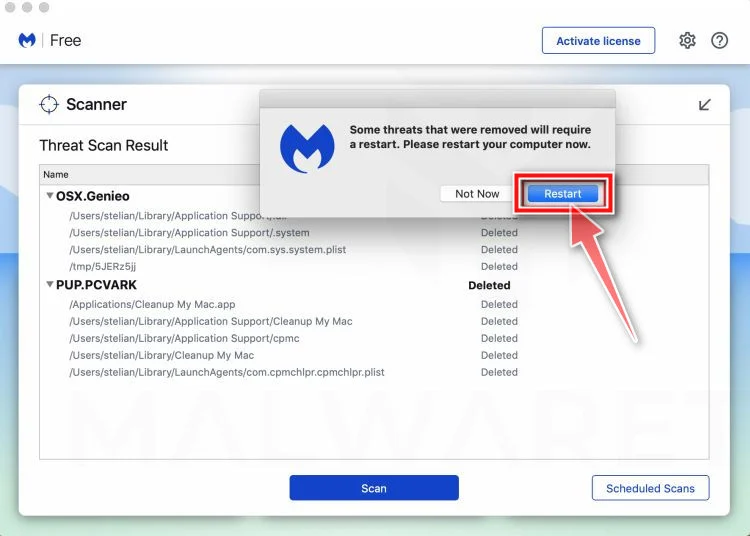
That’s it — your Mac is now free of adware, rogue browser extensions, and other potentially harmful software.
If you are still experiencing problems while trying to remove a malicious program from your computer, please ask for help in our Mac Malware Removal Help & Support forum.
Run a Malware Scan with Malwarebytes for Android
Malwarebytes for Android automatically detects and removes dangerous threats like malware and ransomware so you don’t have to worry about your most-used device being compromised. Aggressive detection of adware and potentially unwanted programs keeps your Android phone or tablet running smooth.
-
Download Malwarebytes for Android.
You can download Malwarebytes for Android by clicking the link below.
Get Malwarebytes for AndroidOpens Google Play in a new tab.Want real-time protection? See Malwarebytes Premium for AndroidMalwarebytes for AndroidScans your phone and removes malware at no cost -
Install Malwarebytes for Android on your phone.
In the Google Play Store, tap “Install” to install Malwarebytes for Android on your device.

When the installation process has finished, tap “Open” to begin using Malwarebytes for Android. You can also open Malwarebytes by tapping on its icon in your phone menu or home screen.

-
Follow the on-screen prompts to complete the setup process
When Malwarebytes will open, you will see the Malwarebytes Setup Wizard which will guide you through a series of permissions and other setup options.
This is the first of two screens that explain the difference between the Premium and Free versions. Swipe this screen to continue.
Tap on “Got it” to proceed to the next step.
Malwarebytes for Android will now ask for a set of permissions that are required to scan your device and protect it from malware. Tap on “Give permission” to continue.
Tap on “Allow” to permit Malwarebytes to access the files on your phone.
-
Update database and run a scan with Malwarebytes for Android
You will now be prompted to update the Malwarebytes database and run a full system scan.

Click on “Update database” to update the Malwarebytes for Android definitions to the latest version, then click on “Run full scan” to perform a system scan.

-
Wait for the Malwarebytes scan to complete.
Malwarebytes will now start scanning your phone for adware and other malicious apps. This process can take a few minutes, so we suggest you do something else and periodically check on the status of the scan to see when it is finished.

-
Click on “Remove Selected”.
When the scan has been completed, you will be presented with a screen showing the malware infections that Malwarebytes for Android has detected. To remove the malicious apps that Malwarebytes has found, tap on the “Remove Selected” button.

-
Restart your phone.
Malwarebytes for Android will now remove all the malicious apps that it has found. To complete the malware removal process, Malwarebytes may ask you to restart your device.
That’s it — your Android phone is now clean — no more malicious apps, adware, or browser redirects.
If you are still having problems with your phone after completing these instructions, then please follow one of the steps:
- Restore your phone to factory settings by going to Settings > General management > Reset > Factory data reset.
- Ask for help in our Mobile Malware Removal Help & Support forum.
Stay Protected: Block Ads and Malicious Sites
Now that your device is clean, keep it that way. Most infections start with a malicious ad or a fake download button — so blocking them at the source is your best defense.
We recommend AdGuard, which blocks malicious ads, phishing pages, and dangerous redirects before they can reach you.
👉 Download AdGuard and browse safely
Frequently Asked Questions
What is the PayPal unauthorized transaction scam?
This is a phishing scam where recipients receive a fraudulent email claiming an unauthorized transaction was made from their PayPal account. The email instructs them to call a provided customer support number urgently to cancel the order. The numbers actually connect to scammers who use social engineering to extract account details and steal funds.
How do I know if I received the scam email?
Warning signs include an unknown sender address, grammatical errors, fake PayPal branding, urgent requests to call, threats of account suspension, and unfamiliar links in the email. Legitimate PayPal notifications come from an official “@paypal.com” address.
What information do the scammers attempt to get?
By posing as PayPal support, the scammers try to trick callers into revealing their PayPal password, credit card numbers, bank account and routing details, SSN, answers to security questions, and other sensitive account access credentials.
What should I do if I called the number on the email?
Immediately contact PayPal to lock your account. Monitor financial statements and passwords closely for fraudulent activity. Report the scam to authorities to aid investigations. And scan your devices for potential malware. Even if no action occurred yet, scammers may have enough data to eventually access your accounts.
Can PayPal fully reverse any unauthorized transactions?
If reported quickly, PayPal can halt pending transfers and refund completed payments from your balance or linked cards. The quicker unauthorized activity is reported, the more likely the transactions can be stopped or reserved. But recovery options decrease over time.
Should I avoid calling any numbers provided in unexpected emails?
Yes, calls give scammers direct access to you. You should never call unverified numbers in emails claiming to be from financial companies. Instead contact the organization directly through their official website or customer support lines to check on any emailed notices.
How can I protect myself from this scam?
Watch for deceptive emails, use strong unique passwords, install security software, avoid calling or sharing sensitive data, and report any phishing attempts. Limiting the personal details provided to unsolicited contacts limits your exposure to such scams.
Let me know if you would like me to expand or clarify any part of this FAQ!
The Bottom Line
The PayPal unauthorized transaction scam poses a serious threat to victims due to effective social engineering strategies that extract account credentials and personal data from callers. Preventing your email from being on scam lists, identifying deceptive messages, and avoiding calling or sharing information limits your exposure.
If you unfortunately did fall victim after receiving an email and calling, quickly contact PayPal to lock your account, monitor financial statements, reset passwords, report the fraud to authorities, and scan devices. PayPal’s strong security features can limit unauthorized activity if reported fast enough.
Stay vigilant for common phishing tactics and treat any unexpected calls or emails requesting private data as extremely suspicious. Following best practices greatly reduces the chances of having your accounts compromised or losing funds to such scams. Yet despite one’s best efforts, these threats continue evolving, so maintaining awareness and caution when contacted about account issues is essential.

Join the discussion
0 commentsShare your experience or ask a question about this article.
Discussion
Start the conversation
Have a question or something useful to share? Add the first comment.