

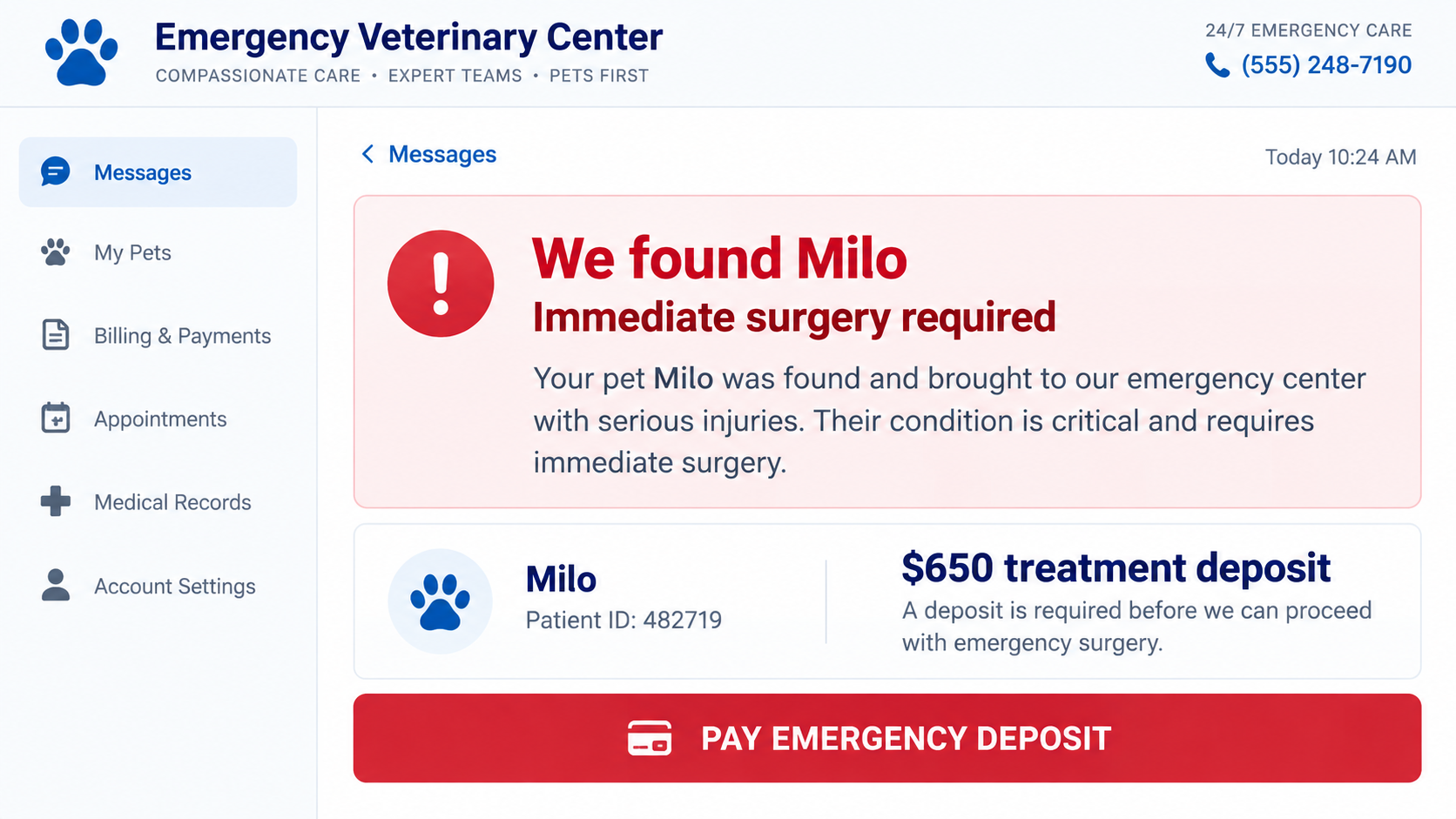
A stranger says your missing dog has been found but needs emergency surgery. A breeder offers the perfect puppy for a small deposit. A message says your pet’s microchip registration is about to expire.
Each story reaches the same vulnerable place: the fear of losing an animal you love. Pet-care scammers use that emotion to rush people into paying before they can verify who is really asking.
Overview
Pet-care scams come in several forms
Some criminals contact owners who posted about a lost animal and pretend to be a veterinarian, shelter, police officer, or helpful finder. Others advertise puppies, kittens, birds, or exotic pets that do not exist.
Related schemes impersonate microchip registries, veterinary portals, animal charities, or pet-insurance providers. The details change, but every version uses trust and urgency to obtain money or private information.
Emotion replaces normal verification
A pet emergency feels too important to delay. Scammers claim an injured animal cannot receive treatment until a deposit is paid, or that a desirable puppy will go to another buyer unless money is sent immediately.
The Federal Trade Commission warns that criminals may use stolen, manipulated, or AI-generated pet images and videos. A convincing picture is not proof that the caller has your animal or that an advertised pet exists.
Payments are routed through methods with weak recovery
Victims may be pushed toward gift cards, payment apps, wire transfers, cryptocurrency, or “friends and family” transactions. Those methods reduce the protections available with a normal credit-card purchase.
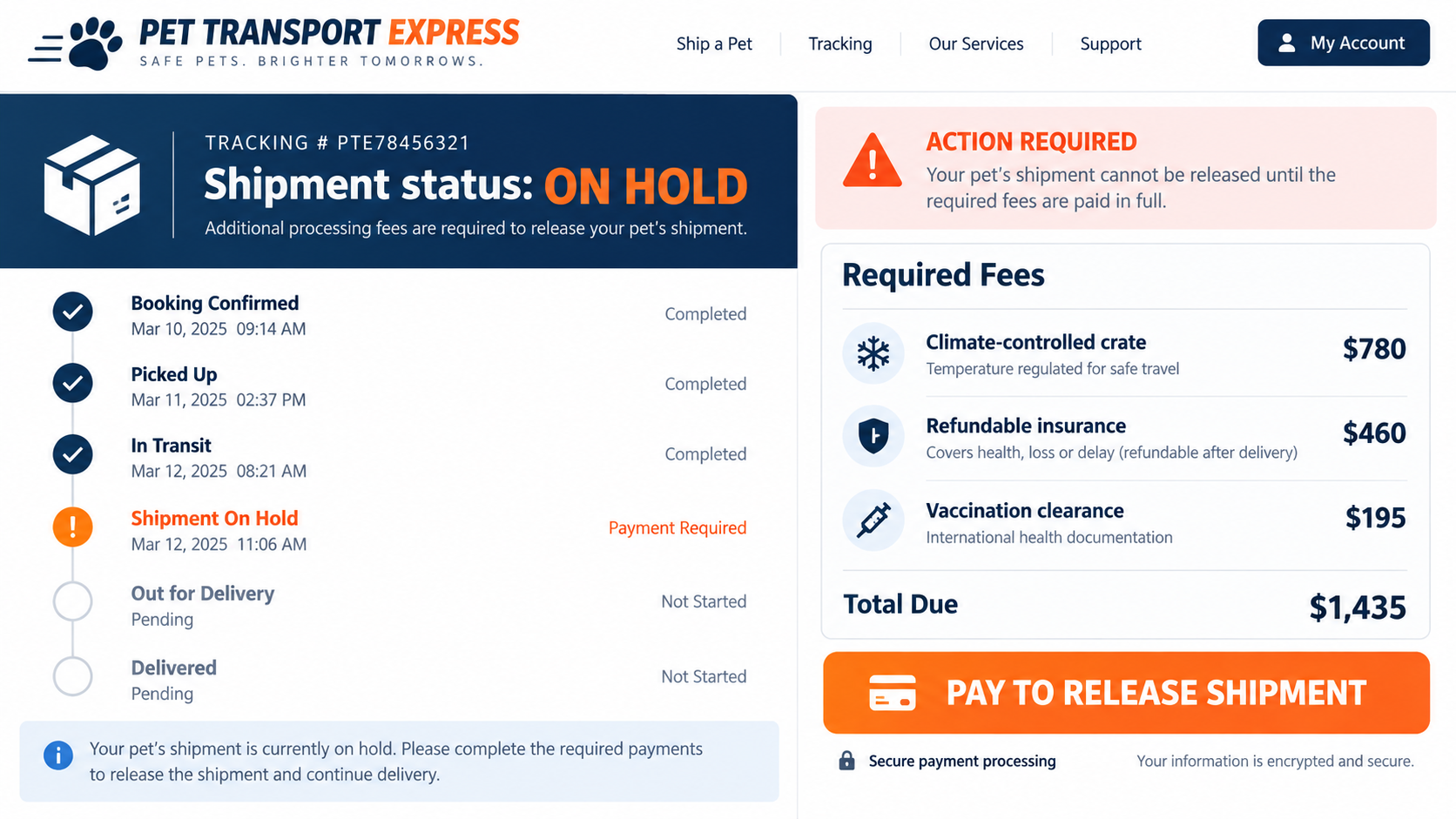
Once the first payment is made, new charges can appear for surgery, transport insurance, a climate-controlled crate, vaccination, quarantine, registration, or delivery.
- A caller claims to have found an injured missing pet.
- A fake breeder advertises an animal using stolen images.
- A supposed shipper invents insurance and crate fees.
- A microchip or vet message links to a phishing page.
- A fake shelter or charity asks for urgent donations.
- Payment is demanded before independent verification is allowed.
The Most Common Pet-Care Scam Stories
The lost-pet emergency scam begins with information the owner published. A phone number, pet name, breed, photo, and last-known location can be enough for a criminal to create a believable call.
The scammer says the animal was hit by a car or brought to a clinic. They may play clinic sounds, send a manipulated image, or mention details copied from the owner’s post.
The fake breeder scam uses attractive photos and a professional-looking website. The animal is offered below the normal price, sometimes with a touching explanation about relocation, family illness, or an unexpected litter.
After the deposit, a second person posing as a delivery company requests transport insurance, a special crate, permits, vaccines, or a refundable security payment. There is always another obstacle because no animal is being shipped.
Microchip renewal messages claim the registration has expired or the animal will no longer be identifiable. The linked page asks for contact details and card information, even though the recipient has not verified the registry.
Fake veterinary reminders say an appointment, prescription, or portal account needs confirmation. A copied clinic logo and familiar pet name can make the message feel personal.
Donation scams impersonate shelters, rescues, and animal hospitals. Stolen photographs of injured animals are paired with urgent fundraising stories and a personal payment handle.
Miracle-treatment marketing is another danger. An advertisement claims a supplement or household remedy can cure a serious condition, pushing the owner to buy immediately and potentially delay proper veterinary care.
How Pet-Care Scams Work
Step 1: Criminals find a worried or hopeful pet owner
They monitor lost-pet groups, marketplace listings, breed communities, rescue pages, and public social-media profiles. An owner who is actively searching or planning an adoption is already emotionally engaged.
Public details help the approach feel specific. The scammer can repeat the animal’s name, color, neighborhood, medical condition, or distinctive markings without ever seeing it.
Step 2: A credible role is chosen
The caller becomes a veterinarian, shelter employee, police officer, breeder, courier, registry agent, or charity organizer. The role explains why they have information and why money is supposedly needed.
Websites, email addresses, caller ID, invoices, and staff names can all be copied from real organizations. The presence of accurate public information does not prove the contact came from that organization.
Step 3: Emotion and urgency narrow the victim’s choices
An injured pet needs surgery now. A puppy has several interested buyers. A microchip expires tonight. The animal will miss a flight unless insurance is paid within an hour.
The deadline discourages an independent phone call or video visit. The scammer may become angry or guilt the victim for “wasting time” when questions are asked.
Step 4: An irreversible payment is requested
Gift cards, wire transfers, cryptocurrency, payment apps, and person-to-person transfers are common. The recipient may be an individual whose name has no connection to the clinic, breeder, or shelter.
A fraudulent website may accept a card, but that does not make the transaction safe. The form can steal the card details and then claim payment failed.
Step 5: New problems create additional fees
After the first payment, the animal suddenly needs more treatment, a transport permit, quarantine, insurance, food, or a special carrier. Each charge is framed as the final barrier.
Victims who have already paid may continue because walking away feels like abandoning the pet or losing the original deposit.
Step 6: The scammer disappears or returns under a new identity
When no more money is available, contact stops. The website, phone number, and social profile may vanish while the same images reappear under a new name.
Later, another person may offer a refund, claim the pet was seized, or request identity documents for an investigation. That follow-up can be a second scam.
How to Verify a Pet Emergency Before Paying
Ask the caller which clinic, shelter, or police department has the animal. End the call and find the organization’s official phone number yourself. Do not use a number supplied in the message.
Request a live video call showing the animal and a current detail chosen by you. A prerecorded clip or photo cannot answer a spontaneous request.
Ask for a description that was not included in the public post. Avoid revealing the answer while asking. A genuine finder should be able to describe a hidden marking, collar detail, or behavior.
Never assume a caller has your pet simply because they know its name. Lost-pet posts often provide everything a scammer needs to imitate a credible finder.
If treatment is genuinely underway, call the clinic directly and ask to pay its billing department through its established system. A legitimate clinic should not require gift cards or cryptocurrency sent to a stranger.
Tell local shelters and animal-control offices that the pet is missing. They may be able to confirm whether an animal matching the description was admitted.
Do not let a caller prevent you from involving another person. Put a trusted friend on the call or ask them to verify the clinic while you continue searching.
Be cautious with alleged law enforcement. Caller ID can be spoofed. Use the agency’s published non-emergency number and ask whether the named officer and case exist.
For a microchip message, locate the registry information in the original paperwork or ask the veterinarian who implanted the chip. Open the registry site independently.
If a person truly found the pet, arrange a safe meeting at a veterinary clinic, shelter, or police location. Do not send a reward in advance.
How to Avoid Fake Breeders and Pet Sellers
Start locally when possible. The FTC recommends using established shelters, rescues, and breeders that allow an in-person or live video visit.
Search the seller’s name, phone number, email, website, and image alongside terms such as scam, complaint, and review. Look beyond testimonials hosted on the seller’s own site.
Run reverse-image searches on every animal photo. The same puppy appearing on unrelated sites, in different cities, or under different names is strong evidence of a copied listing.
Ask for a live video showing the exact animal responding to a current request, such as placing a handwritten date beside the enclosure. AI and edited media mean video alone is not perfect, but a seller who refuses all live verification is unsafe.
Check registration claims directly with the named kennel or breed organization. A logo and certificate number can be copied or invented.
Do not pay before reviewing a written agreement that identifies the seller, animal, health history, refund terms, and pickup arrangements. Compare the seller’s legal name with the payment recipient.
Reject a courier that appears only after the deposit. Contact the shipping company through its official site and verify the tracking, route, and policies.
Normal pet transport has real costs, but surprise requests for “refundable” crate deposits, temperature insurance, or city permits are classic escalation tactics.
Use a credit card when a legitimate purchase is appropriate because it usually offers stronger dispute options than wire, crypto, gift card, or friends-and-family payment.
Do not let a low price override the cost of safe verification. A seller who refuses an in-person visit, live conversation, and traceable payment is not offering a bargain.
Company, Address, and Fulfillment Checks
Confirm the clinic, shelter, or registry independently
Find the official website and phone number yourself. Ask the organization whether it has your pet, sent the message, or uses the payment method requested.
For microchips, use the registry information from the implantation record or veterinarian rather than the link in an unsolicited renewal notice.
Verify the breeder or seller’s real identity
Match the name, address, registration, and payment account. A professional website is not enough when the person behind it cannot be verified.
Check whether the address is a residence connected to the seller, a copied business, an empty lot, or a location that has no animals.
Inspect the payment recipient and invoice
A clinic bill should be payable to the clinic, not a private person through gift cards or cryptocurrency. A breeder’s contract should match the account receiving the deposit.
Contact the financial institution immediately if the recipient changes after payment or an invoice arrives from an unrelated company.
Validate pickup and delivery before sending money
Meet the animal safely or arrange a live inspection through a trusted local professional. Confirm any courier through independently found contact details.
Do not pay escalating delivery charges for an animal you have never seen live. The absence of verifiable fulfillment is the central problem.
What to Do if You Have Fallen Victim to This Scam
- Stop paying and end contact. Do not send one final surgery, crate, permit, insurance, or recovery fee, even if the scammer threatens that the animal will suffer.
- Contact the payment provider. Report fraud to the bank, card issuer, wire service, payment app, gift-card company, or crypto exchange and ask whether the transfer can be stopped.
- Call the impersonated organization. Tell the real clinic, shelter, registry, courier, or police agency that its identity is being used and confirm that no genuine animal emergency exists.
- Secure exposed accounts. Change passwords entered on a fake portal, enable multi-factor authentication, and replace cards whose details were submitted.
- Check the device. Remove downloaded apps or files and run a reputable scan such as Malwarebytes if you opened an attachment or installed software.
- Block repeat scam pages. AdGuard can reduce exposure to known phishing and malicious advertising, but it cannot recover a transfer or prove that a pet exists.
- Save all evidence. Preserve ads, pet photos, websites, messages, phone numbers, invoices, payment accounts, transaction records, and shipping documents.
- Report the fraud. File a report with the FTC, local police, the marketplace, social platform, and any legitimate organization being impersonated.
- Continue the real pet search safely. If your animal is missing, keep verified shelters, veterinarians, and community groups informed while removing unnecessary personal details from public posts.
Tell family members who may also be contacted. A scammer who sees several numbers on a lost-pet poster may try each person with a different version of the emergency.
Frequently Asked Questions
How would a scammer know my missing pet’s name?
They often copy the name, photo, location, breed, and phone number from public lost-pet posts. Knowing those details does not prove they found the animal.
Will a real veterinarian require payment before treatment?
Policies vary, but verify the clinic independently and pay the clinic through its official system. Gift cards, crypto, or a personal payment handle are serious warnings.
Can pet photos and videos be faked?
Yes. Criminals use stolen, edited, and AI-generated media. Request a live interaction and confirm the seller or finder through additional independent checks.
Are microchip registrations supposed to expire?
Policies differ by registry. Check the original paperwork or ask your veterinarian which registry holds the chip, then visit that service directly rather than using an email link.
Why does the pet courier keep adding fees?
Escalating crate, insurance, permit, vaccine, and quarantine charges are a common fake-pet pattern. The fees continue because no pet is being delivered.
Can I recover money sent for a fake pet?
Recovery is uncertain. Contact the payment provider immediately, preserve evidence, and report the fraud. Do not pay an unsolicited recovery agent.
The Bottom Line
Pet-care scams succeed because compassion and fear can overpower ordinary caution. A convincing photo, personal detail, urgent medical story, or polished breeder site still needs independent verification.
Call the clinic or shelter yourself, insist on live proof, verify every seller and courier, and avoid irreversible payments. Protecting your pet never requires trusting a stranger who will not let you slow down and check.








