

If you’ve recently seen too-good-to-be-true deals on adorable Labubu figures—like “up to 95% off” or “limited-time flash sales”—you’re not alone. Social media is flooded with ads for the so-called “Labubu Outlet Store” or other websites like popmlabubu.shop, offering deep discounts on Pop Mart collectibles. But behind these flashy offers lies a growing scam operation that’s duping thousands of shoppers worldwide.
This article reveals the full picture: how the scam works, who’s behind it, what red flags to watch for, and what to do if you’ve already placed an order.
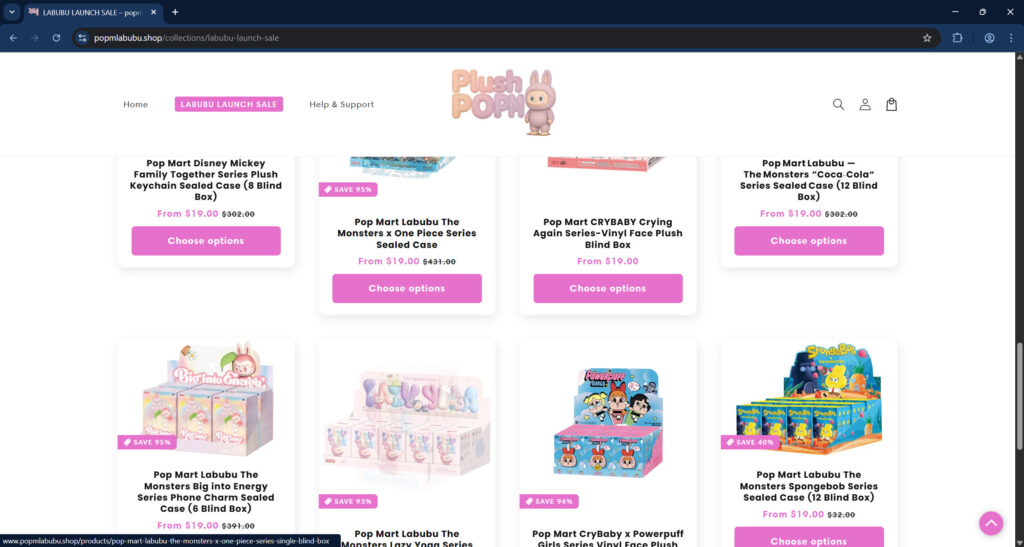
Scam Overview
The Labubu Outlet Store scam is a sophisticated dropshipping scheme operated by anonymous individuals, likely based in China, using a rotating cast of websites and ad campaigns to trick consumers into purchasing counterfeit or nonexistent Pop Mart Labubu collectibles.
The scam capitalizes on the popularity of collectible vinyl toys, particularly those from Pop Mart’s Labubu line. These toys have become massively viral due to their limited availability, “blind box” format, and their visually adorable designs. With demand high and stock often sold out from legitimate retailers, scammers saw an opportunity to exploit the hype.
Realistic-Looking Websites
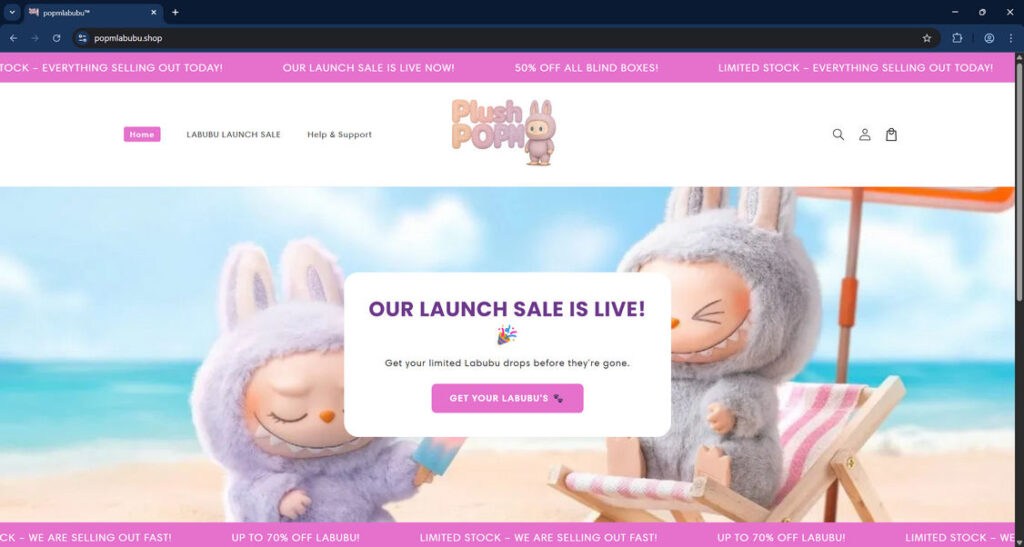
Sites like popmlabubu.shop feature polished web design, high-resolution product images, and real-time shopping carts that mimic legitimate e-commerce platforms. Many mimic the branding of Pop Mart and even display logos and typography close to the real thing.
Heavy Social Media Advertising
These websites run sponsored ads across Facebook, Instagram, and TikTok, often with captions like “Only $19! 80% Off Pop Mart Labubu Blind Boxes – U.S. Launch!” They rely on impulsive social media shoppers, especially those familiar with Pop Mart but unaware of trusted vendors.
Fake Urgency and Scarcity
Bright banners scream messages like “SELLING OUT FAST,” “FLASH SALE,” or “LIMITED STOCK.” They often add a countdown timer or suggest items are “almost gone,” pressuring users into a quick purchase.
Impersonation and Name Spoofing
The names “Pop Mart Labubu Outlet,” “PlushPOP,” or even “Labubu U.S. Store” are used to make shoppers believe the site is affiliated with Pop Mart directly. Some even fake customer reviews and order videos to simulate legitimacy.
Untraceable Dropshipping
Orders are fulfilled—if at all—through dropshipping suppliers in China. The products that do arrive are often cheap imitations, damaged goods, or completely unrelated items. Many customers report never receiving anything.
Impossible Refund Process
Once money is sent, there is no realistic path to a refund. Contact forms lead nowhere. Emails bounce. Payment processors like PayPal or credit card chargebacks are often denied due to how the scam is structured.
How The Scam Works
Understanding the mechanics behind this scam is critical. Here’s a detailed breakdown of how unsuspecting customers are deceived:
Step 1: Social Media Targeting
Scammers launch paid campaigns on Instagram, Facebook, and TikTok using visually striking ads. These include popular collectible characters, deep discounts, and urgent messages. They often use hashtags like #Labubu, #BlindBox, #KawaiiCollectibles to appear in relevant search feeds.
Step 2: Clickbait-Style Ad Copy
The ad text is designed to trigger an emotional reaction. Phrases like “Only $19 today,” “Rare Labubu restock,” or “First U.S. launch sale” are used to drive traffic. Limited time offers and false countdown timers intensify the sense of urgency.
Step 3: Fake Storefronts
Once clicked, the ad redirects users to a professionally designed storefront. Everything appears legitimate—logos, customer reviews, product photos, and even fake inventory meters. But these are simply cloned or AI-generated templates.
Step 4: Payment Collection
Buyers select items and are funneled through a checkout process. These sites accept credit/debit cards and sometimes PayPal. There are no security seals or buyer protections listed. Customers receive an order confirmation, but that’s often the end of the story.
Step 5: Dropship or No Ship
If the scammer ships anything at all, it comes via untracked mail from China. The item might be a knockoff, broken, or completely different from what was advertised. Often, nothing ever arrives.
Step 6: Refund Avoidance
Victims attempting to contact customer support find dead ends. Email addresses bounce back, contact forms go unanswered, and social media pages disappear. Banks and PayPal disputes are frequently rejected due to misleading order confirmations and fabricated shipping proofs.
Step 7: Domain Flipping
As complaints pile up or domain names get flagged, scammers abandon the old site and create a new one with a different name but identical layout and content. This cycle repeats endlessly.
What to Do If You Have Fallen Victim to the Scam
If you’ve already placed an order with one of these fraudulent stores, here are concrete steps you should take immediately:
1. Document Everything
- Take screenshots of the website, product listing, and your order confirmation.
- Save all emails, receipts, and transaction details.
2. Contact Your Bank or Credit Card Provider
- Dispute the transaction. Mention that the website is part of a scam operation and provide proof.
- If paid via PayPal, open a claim. Include screenshots of the false advertisements and non-delivery issues.
3. Report the Website
- Use IC3.gov (FBI’s Internet Crime Complaint Center).
- Report fraudulent sites to the FTC: reportfraud.ftc.gov.
- Report the website and ads to Meta (Facebook/Instagram) and TikTok for violating commerce policies.
4. Warn Others
- Post reviews on Trustpilot, Reddit, and scam alert forums.
- Comment on social media posts that are still live to warn other potential victims.
5. Monitor Your Accounts
- Watch for suspicious activity on your financial accounts.
- If you shared personal information, consider identity theft monitoring services.
6. Use Scam Reporting Tools
- Submit the site to scam-alert databases like ScamAdviser and Scamwatch.
Frequently Asked Questions About the Labubu Outlet Store Scam
What is the Labubu Outlet Store scam?
The Labubu Outlet Store scam refers to fraudulent websites posing as official or authorized retailers of Pop Mart’s Labubu collectibles. These sites offer deep discounts and limited-time sales, luring buyers into placing orders for fake, low-quality, or never-shipped items.
Is popmlabubu.shop a legitimate website?
No. While it appears professionally designed and uses convincing product images, popmlabubu.shop is part of a known scam network. Customers report not receiving their orders, receiving counterfeits, and being unable to obtain refunds.
How do scammers advertise these fake stores?
Scammers use Facebook, Instagram, and TikTok ads to target fans of collectible toys. They use phrases like “80% OFF Labubu Blind Boxes” and claim to be hosting limited U.S. launches to create urgency.
Why are the prices so low?
The extremely low prices are used to entice quick purchases and make the offer seem exclusive. In reality, they are bait for a scam operation. The products advertised either don’t exist or are counterfeit.
What happens after I place an order?
Most victims receive no product at all. In some cases, a cheap imitation or unrelated item is shipped. Contact attempts go unanswered, and refund requests are ignored or denied.
Can I get my money back?
It’s possible, but difficult. If you paid by credit card, immediately contact your bank to dispute the charge. If you used PayPal, file a claim with as much evidence as possible. Success rates vary depending on how the scammers respond and what proof you can provide.
Are there other websites involved in this scam?
Yes. These scams often operate multiple websites simultaneously, all with similar layouts and product listings. Once one site is exposed, the scammers simply launch a new one under a different name.
How can I avoid scams like this in the future?
Always verify a store’s legitimacy through Pop Mart’s official site or authorized retailers. Be wary of huge discounts and urgent sales. Look for trust signals like SSL security, real customer reviews, and contact details. If in doubt, search the website name along with the word “scam” to check for complaints.
Where should I report a scam website?
You can report fraudulent sites to:
- The Federal Trade Commission (reportfraud.ftc.gov)
- The FBI’s Internet Crime Complaint Center (ic3.gov)
- The payment processor used (PayPal, your bank, etc.)
- Social media platforms where the ads appeared
The Bottom Line
The Labubu Outlet Store scam is a textbook example of how modern dropshipping scams exploit social media, brand trust, and impulse buying to steal from consumers. The sites look real. The deals feel irresistible. But the reality is far from what’s promised.
If a price looks too good to be true, it probably is. Always verify websites through official brand channels and read independent reviews before you buy.
Stay alert, shop smart, and share this information to help others avoid the same trap.








