

A new product known as the ProVision Movie Beam Projector has recently emerged on the market, promising an easy and convenient way to project video content from streaming platforms and other sources. The device features several appealing attributes like an adjustable screen size, 180° rotation, and support for popular apps. However, during our extensive research we uncovered some concerning details about the ProVision Movie Beam that potential buyers should know before purchasing.
In this in-depth review, we will provide a comprehensive assessment of the ProVision Movie Beam Projector. We analyze its key features, pros and cons, pricing, company background information, customer support, and real customer reviews. By reviewing all of these factors, we aim to answer the critical question – is the ProVision Movie Projector a worthwhile purchase or not?
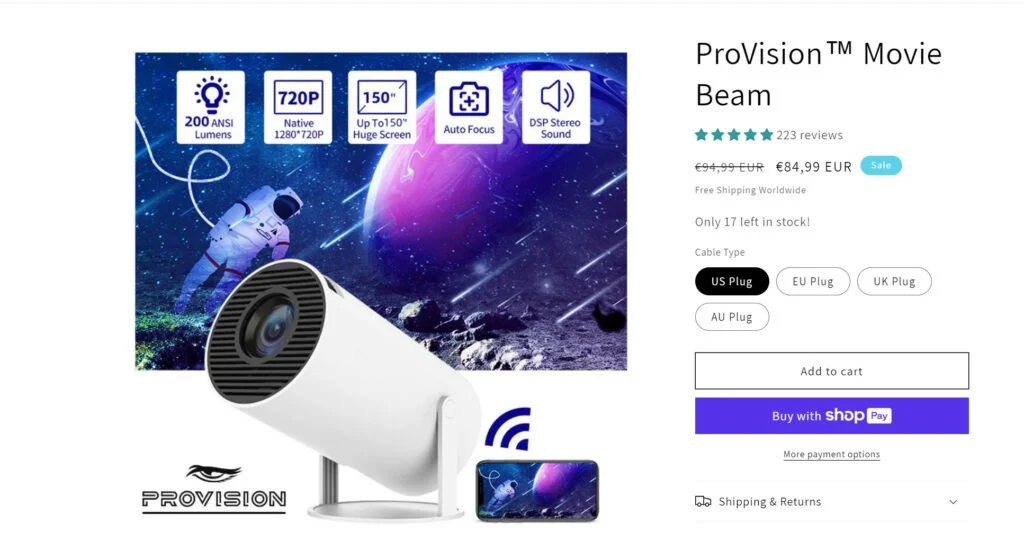
Overview of Key Features
The ProVision Movie Beam Projector offers the following features:
- Adjustable screen size from 30 to 200 inches
- 180° rotation allows for flexible viewing angles
- Built-in stand for easy setup and portability
- Projects 1080p HD quality video
- Compatible with 4000+ apps including Netflix, Prime Video, Disney+, Hulu and more
- WiFi, Bluetooth, HDMI and USB connectivity
- Rechargeable battery with up to 3 hours of use per charge
- Weighs 1.87 pounds for easy portability
At first glance, the flexibility of the adjustable screen size, 180° rotation, and extensive app support make the ProVision Movie Beam seem like an ideal portable projector. However, we examined each of these key features further to reveal the potential limitations.
Adjustable Screen Size
The ProVision Movie Beam can project screens ranging from 30 to 200 inches according to the sales claims. This level of flexibility enables buyers to customize viewing depending on the space and application. Larger projections up to 200 inches are better suited for outdoor movie nights, while smaller screens under 100 inches work well in tight indoor settings.
However, without knowing the projector’s lumens – a key metric for brightness – it’s unclear whether the larger screen sizes will be visible and high quality, especially in less than ideal lighting. Lower lumen projectors struggle to produce clear larger projections. This is an important specification that is not provided on the product website, making it difficult to assess the adjustability claims.
180° Rotation
The capacity to rotate the projection screen 180° can certainly enable convenient viewing from multiple angles. But again, without key details like the lumens, this feature may not work as seamlessly as advertised. Projector brightness is concentrated in a fixed area. So if the screen rotates, the opposite side of the rotated screen will appear darker and less clear.
This could make the 180° rotation pointless in reality. And considering the device’s portability, it’s unlikely buyers couldn’t simply reposition the entire projector for wider viewing angles. So the usefulness of the rotation capacity remains questionable.
4000+ App Support
One of the most promoted features of the ProVision Movie Beam is its support for over 4000 apps including the top streaming platforms like Netflix, Disney+, Hulu and more. In theory, having so many entertainment options accessible directly from the projector is appealing.
However, app support depends largely on the projector’s software and operating system. The product website provides no tech specifications about the internal software at all. Most inexpensive projectors utilize a lightweight Linux OS that offers limited app support compared to proprietary smart TV operating systems. Without OS details, the app compatibility claims are dubious.
Additionally, just because an app is accessible does not guarantee the streaming experience will be optimal. Factors like internet connectivity, processing power, and brightness will impact real-world video quality from apps. So the touted entertainment options may underdeliver in practice.
Pricing & Cost Considerations
According to the ProVision Movie Beam sales page, the projector retails for $297 with limited-time discounts frequently offered. The website also upsells a 2-year protection plan for $45.
Given its portable design and adjustability, the $297 price may seem reasonable on the surface. However, when comparing to projectors with similar core specs from reputable brands like Anker and LG, the pricing is less appealing:
- Anker Nebula Capsule II: $400 (200 lumens, 720p native resolution, Android TV OS)
- LG PH550: $450 (550 lumens, 1080p native resolution, webOS smart platform)
These alternatives offer key advantages like much higher lumens for brightness, established smart TV operating systems for verified app compatibility, and warranted build quality. The Nebula Capsule II is also highly portable with a fully integrated design like the ProVision Movie Beam.
Considering the unknown specs and branding for the ProVision Movie Beam, its pricing does not represent good value in comparison. Buyers would be wise to spend a little more for a known brand with technology that will deliver better performance and longevity.
Company Background Concerns
ProVision Marketing LLC based in Delaware is listed as the company behind the Movie Beam Projector. However, even after extensive searching, we found very few details or history about this business. The company website contains no information about their team, experience, history, or operations.
For any sizable purchase, but especially higher priced electronics, buyers want assurance they are purchasing from a legitimate, stable company. The extreme lack of background for ProVision Marketing raises immediate concerns. Buyers have no way to verify their qualifications or track record in manufacturing and supporting consumer electronics.
Unlike brands like Anker and LG who have decades of reputation in the projection and display industry, ProVision Marketing appears to have emerged only recently with no evidence of any experience producing or innovating AV products. This provides zero assurance about the Movie Beam’s quality or reliability.
Questionable & Misleading Reviews
One of the most common ways potential buyers evaluate a new product online is by reading through customer reviews. However, our investigation revealed multiple issues with how reviews are presented on the ProVision Movie Beam website that distort their legitimacy.
Copied Review Image
In one review, a customer named Helen S. provides a photo of her projected screen. However, a Google image search revealed this exact photo was copied from a Pinterest pin with no relation to the ProVision Movie Beam.
The outright copying of a review image raises huge doubts about the credibility of all the reviews on the website. If ProVision Marketing is willing to dupe shoppers with a fake photo, it’s highly likely they fabricate positive reviews as well with fake names and comments.
No Negative Reviews At All
Every single customer review displayed on the ProVision Movie Beam page is positive, some extremely so with 5 star ratings and glowing praise about picture quality and performance. However, for a brand new product with no reputation from an unknown company, this is unrealistic.
All products, even the very best, will have some 1, 2 or 3 star reviews from reasonable customers who experienced issues or were unsatisfied. The absence of any remotely negative remarks again suggests these reviews are not authentic and were created solely for marketing purposes.
Emphasis on Urgency
Many reviews curiously contain similar statements about ordering quickly before units sell out. “Supplies are limited so grab yours today” said one review. These comments about urgency align closely with the marketing claims on the main website. The suspicious consistency again implies fabricated reviews designed to urge purchases rather than honest feedback.
By promoting a sense of urgency and scarcity in fake reviews, the company hopes real buyers will be pressured into ordering before closely evaluating the product. This appears to be an unethical marketing tactic.
Lack of Customer Support
Reliable customer service and support is essential when buying electronics, especially higher cost products like projectors which can develop technical issues. However, ProVision Movie Beam buyers are limited to only email support. There are no phone or live chat options for real-time assistance.
The website also has no specifics about warranty coverage for defects or performance issues. Returns appear to be accepted only within 30 days in new condition. Compared to brands like LG which offer 1-year limited warranties and robust support resources, the lack of reliable support for the Movie Beam is concerning.
If customers encounter defective units or experience performance problems like dim projections or flickering images, email-only assistance severely limits the ability to troubleshoot problems in real-time. For $300 and up, buyers expect and deserve responsive support. But ProVision Marketing fails to provide this.
Final Verdict: Risky Purchase With Many Red Flags
Based on all of the questionable practices, misleading marketing claims, lack of company reputation, and concerns uncovered in our investigation, we cannot recommend the ProVision Movie Beam Projector as a worthwhile purchase. There are simply far too many red flags associated with this product that pose a real risk for buyers. Too much key information about the specs, technology, and seller are unknown or unreliable.
Until ProVision Marketing can substantiate their bold claims with transparent details and earn genuine positive reviews from verified buyers, smart consumers would be wise to avoid this projector. Instead, your best option would be to buy one of the alternative trusted brand projectors mentioned earlier in this review. Though they cost a little more, the peace of mind and proven performance will be well worth it.
Frequently Asked Questions about the ProVision Movie Beam Projector
1. What is the ProVision Movie Beam Projector?
The ProVision Movie Beam Projector is a compact, portable projector currently being marketed online as an easy way to stream movies, TV shows, and other entertainment options anywhere. The $297 projector is advertised to project screens up to 200″ in size, rotate 180 degrees, support thousands of apps, and more.
2. What are the main concerns about the ProVision Movie Beam Projector?
There are several concerning issues with the ProVision Movie Beam Projector that buyers should be aware of:
- Aggressive sales tactics create false urgency about limited supply
- Reviews appear fabricated with copied images and only positive remarks
- Lack of company background information raises reliability concerns
- Only email customer support offered, no phone or live chat
- Technical specifications are vague and lumens/brightness unknown
- Pricing not competitive compared to projectors from known brands
3. Why does the company background raise concerns?
ProVision Marketing LLC, the company selling the projector, has virtually no online presence or reputation. There are no details about their team, experience, operations, or history manufacturing electronics. This lack of background makes it impossible to verify their qualifications. Most buyers want assurance they are purchasing from an established, trustworthy company, especially for a $300 device.
4. How do we know the reviews are fabricated?
One red flag is that reviews include an image copied directly from Pinterest, proving at least some content is fake. Additionally, all reviews are positive – unrealistic for any new product. Many reviews suspiciously urge buyers to order quickly before stock runs out, aligning closely with sales claims about scarcity. All these issues strongly suggest the reviews do not reflect real customer experiences.
5. Why is the lack of customer support a problem?
Buyers are limited to email-only support after purchase. There is no phone number or live chat provided. The website also lacks specifics about warranties or guarantees. Having robust support options is essential for electronics, especially $300 projectors prone to issues. But ProVision Marketing fails to provide responsive customer service.
6. Should I buy the ProVision Movie Beam Projector?
We strongly advise against buying this projector. There are simply too many red flags, misleading claims, and risks involved. The lack of transparency and technical details makes it impossible to know if it can deliver on advertised features. Until the seller substantiates their claims and earns genuine reviews, consumers are better off purchasing projectors from reputable brands like LG, Anker and more.
7. What are some good projector alternatives to consider?
Instead of the risky ProVision Movie Beam, we recommend considering top-rated portable projectors from trusted brands like:
- Anker Nebula Capsule II: $400, 200 lumens, 720p, Android TV OS
- LG PH550: $450, 550 lumens, 1080p, webOS smart platform
- ViewSonic M1: $300, 250 lumens, 1080p, dual Harman Kardon speakers
Though a bit pricier, these projectors have warranties, robust support, and proven quality. They are a much safer purchase compared to the sketchy ProVision projector.
8. Where can I learn more about spotting scam products online?
The FTC provides excellent guides about identifying fraudulent products and false reviews. Additionally, sites like Trustpilot and Consumer Reports offer advice about researching sellers, recognizing paid promotions masquerading as reviews, and more red flags to watch for when shopping online. Equipping yourself with scam prevention knowledge is essential to avoid wasting money on dubious products.
This article is for educational purposes only and does not constitute professional, financial or legal advice. The content is intended for general information and should not be construed as definitive guidance. Information contained herein is subject to change without notice.  For concerns, please contact us via the provided form.
If you are the owner of the website or product in question and wish to offer clarifications regarding your business or website, please reach out to us through the provided Contact Form.

Join the discussion
0 commentsShare your experience or ask a question about this article.
Discussion
Start the conversation
Have a question or something useful to share? Add the first comment.