

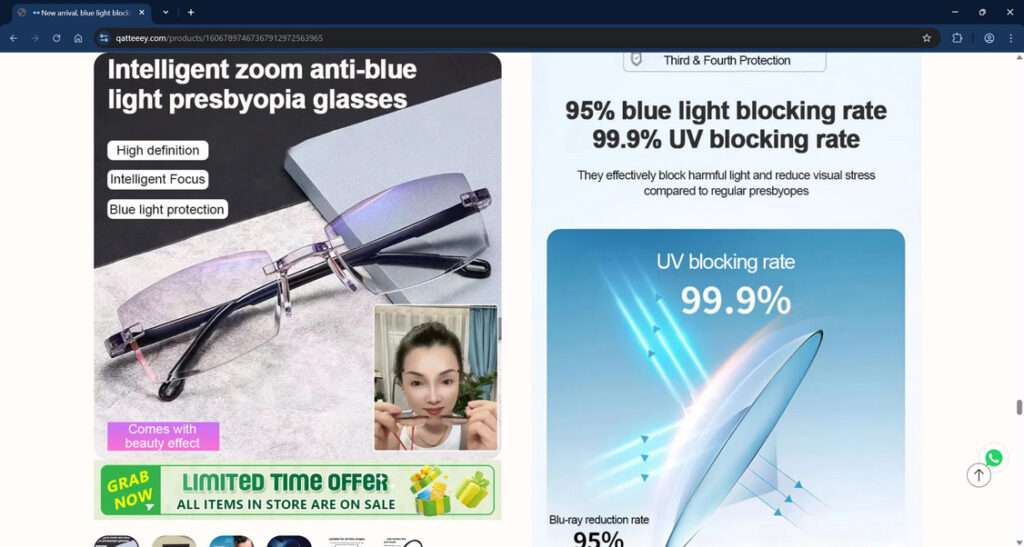
You’ve probably seen the ads—”intelligent zoom anti-blue light presbyopia glasses” that claim to improve your vision, reduce fatigue, and even treat eye conditions. They’re all over TikTok and Facebook, flaunting futuristic features and massive discounts. But are these miracle glasses from Qatteeey.com the real deal, or is it just another internet scam? If you’ve been tempted to click “buy,” stop right there. This detailed guide will reveal everything you need to know about the Qatteeey glasses scam.
Scam Overview
Qatteeey.com markets their glasses as groundbreaking optical technology at an unbeatable price. Their main product claims include:
- “Intelligent Zoom” functionality
- Blue light blocking
- Treatment for presbyopia, dry eyes, and even myopia
- Reduction of eye strain and fatigue
- Use of “negative ions” and “infrared rays”
Sounds impressive, right? Unfortunately, these claims crumble under scrutiny.
Red Flags Everywhere
- Intelligent Zoom Technology – A Marketing Illusion The term “Intelligent Zoom” suggests a pair of glasses that can automatically adjust focus, like a high-end camera lens. In reality, no affordable glasses have such capabilities. True auto-focus lenses exist, but they are bulky, costly, and used in medical or specialty devices—not something you’d get for under $50.
- Medical Claims Without FDA Approval Qatteeey glasses are advertised as treatments for presbyopia, myopia, and dry eyes. According to medical professionals, glasses can correct vision but do not treat or cure these conditions. Such claims without FDA or CE certification are not just misleading—they’re illegal in many countries.
- Copied Product Photos A quick reverse image search of Qatteeey’s product pictures shows they’re sourced directly from Alibaba and other wholesale sites. The same glasses sell for as little as $2–$5. Qatteeey simply slaps on a massive markup and a layer of marketing fluff.
- Deceptive Pricing Strategy The site often claims a fake sale with messages like “Save 80%! Now only $43.00!” These price cuts are artificial; the base price is inflated to create a false sense of urgency and value.
- Terrible Customer Reviews Trustpilot and Reddit are filled with complaints:
- Products not matching the pictures
- Cheap plastic quality
- Missing items
- No working customer service
- Refunds denied or capped at 20%
- Zero Contact Information Try finding a phone number or physical address for Qatteeey.com—you won’t. Their email support often bounces back, and there’s no live chat or helpline.
- No Transparency About the Seller Most legitimate eyewear companies list their company details, privacy policies, and return procedures clearly. Qatteeey hides behind vague wording, making it difficult to track down who’s really behind the operation.
- Misleading Ads on Social Media Paid influencers and automated ads flood TikTok, Facebook, and Instagram with promises of miracle results. These platforms are rarely monitored for deceptive advertising, giving scammers a free playground.
Why This Scam Works
Qatteeey leverages modern marketing psychology:
- Fear and pain points: Many people suffer from screen-related eye strain and are desperate for relief.
- Hope-based marketing: The idea of reversing aging eyes for $43 is emotionally powerful.
- Social proof illusion: Fake reviews and video testimonials enhance the legitimacy.
- Urgency triggers: Flash sales and countdown timers push impulsive purchases.
In short, this scam mixes buzzwords, fake tech, and emotional manipulation to fool consumers into parting with their cash.
How the Qatteeey Glasses Scam Works
Step 1: Viral Ad Campaigns
Qatteeey spends heavily on social media ads that:
- Feature eye-catching videos with vibrant graphics
- Claim that the glasses can fix vision problems without surgery or expensive optometrist visits
- Show actors or stock footage wearing glasses and reading fine print effortlessly
They use trending hashtags like #eyefatigue #visionloss #bluelightprotection to go viral.
Step 2: Misleading Product Descriptions
Once you click on the ad and land on Qatteeey.com, you’re greeted by a flashy product page:
- Claims of “FDA Approved Technology” (unverified)
- Pseudo-scientific jargon like “infrared rays,” “ionic stimulation,” and “intelligent vision lens”
- High-pressure sales tactics: Limited quantities, timers, pop-ups showing fake purchases
Step 3: False Reviews and Testimonials
Qatteeey uses either purchased reviews or AI-generated content to simulate happy customers:
- All reviews are overly enthusiastic, vague, and posted within days of each other
- Many feature stock images or stolen photos from legitimate reviews on Amazon or other platforms
Step 4: Purchase and Checkout
When you decide to buy:
- There’s no clear shipping time estimate
- No option to choose specific prescriptions
- No transparency on return policies until AFTER purchase
Many customers report being charged extra fees or experiencing mysterious charges on their bank statements.
Step 5: Delivery of Inferior Product
After waiting 2–4 weeks, you receive:
- A flimsy plastic frame
- Lenses with no visible blue light filtering
- No documentation or instructions
- Sometimes even the wrong color or size
The packaging is often in plain wrapping, hinting at dropshipping from China.
Step 6: No Real Customer Support
If you try to:
- Return the product: You’ll likely be ignored or asked to ship it back to an unknown foreign address (at your expense).
- Request a refund: You may be offered a 10–20% refund “as a gesture.”
- Contact support: Emails bounce or receive automated, unhelpful replies.
Step 7: Continued Exploitation
Some victims report:
- Getting placed on spam email lists
- Unauthorized subscription charges
- Personal information possibly sold to other scam sites
What to Do If You’ve Fallen Victim to the Qatteeey Glasses Scam
If you’ve already made a purchase and suspect you’ve been scammed, follow these steps:
1. Contact Your Bank or Card Issuer Immediately
- Dispute the charge as fraudulent
- Ask for a chargeback, especially if the product is defective or never arrived
2. Report the Website
- Report Qatteeey.com to:
- Better Business Bureau (BBB.org)
- Federal Trade Commission (ReportFraud.ftc.gov)
- econsumer.gov (for international complaints)
3. Leave Honest Reviews
- Share your experience on Trustpilot, SiteJabber, Reddit, and Facebook groups
- Warn others so they don’t fall into the same trap
4. Enable Fraud Protection
- Contact your bank to monitor for suspicious charges
- Change your card if necessary
- Use a virtual credit card for future online purchases
5. Never Return the Product Without Instructions
- Some scams trick users into shipping to fake return addresses
- Only return if you have a verified, trackable destination (unlikely with Qatteeey)
6. Report Ads to Social Media Platforms
- TikTok: Tap the three dots > Report ad
- Facebook/Instagram: Click the top-right corner of the ad > Report
7. Educate Others
- Talk to your friends and family about scams like this
- The more awareness, the fewer victims
FAQ About the Qatteeey Glasses Scam
What is Qatteeey.com?
Qatteeey.com is an e-commerce website selling so-called “intelligent zoom anti-blue light presbyopia glasses.” It has gained attention for making exaggerated claims and engaging in deceptive marketing practices.
Are Qatteeey glasses legitimate?
No. The product claims to offer advanced features like intelligent zoom and treatment for eye conditions, which are not supported by any scientific evidence. Most users report receiving low-quality, generic reading glasses.
Do Qatteeey glasses actually zoom or focus automatically?
No. Glasses cannot zoom or auto-focus like a camera unless they use advanced (and expensive) electronic lens technology, which Qatteeey’s product does not have.
Can these glasses treat presbyopia, myopia, or dry eyes?
No. Glasses can help correct vision temporarily, but they do not treat or cure eye conditions. Claims suggesting otherwise are misleading and medically inaccurate.
Why do the product photos look familiar?
The images used on Qatteeey.com are copied from wholesale platforms like Alibaba, where the same glasses are sold for a fraction of the price.
Is Qatteeey a dropshipping store?
Yes. All signs point to Qatteeey being a dropshipping operation, where cheap items are bought from suppliers and sold at a much higher price using misleading advertising.
What do real customers say about Qatteeey?
Many customers have complained about receiving poor-quality items that do not match the product description. Some never received anything at all. Attempts to contact customer support often go unanswered.
How can I get my money back if I ordered from Qatteeey?
You should contact your bank or credit card provider immediately and request a chargeback. Also, report the scam to consumer protection agencies.
Is it safe to buy anything from Qatteeey.com?
No. Given the large number of red flags, customer complaints, and fake claims, Qatteeey.com should be avoided.
How can I avoid scams like this in the future?
Always research the website, read independent reviews, verify medical claims, and be cautious of products that sound too good to be true or offer unrealistic results.
The Bottom Line
Qatteeey.com’s so-called “intelligent zoom” glasses are not revolutionary eyewear—they’re a textbook example of modern internet scams. Through viral ads, fake tech buzzwords, and nonexistent customer support, they exploit vulnerable consumers looking for affordable vision solutions.
If something seems too good to be true—like miracle glasses for under $50—it probably is.
Always do your research before making an online purchase. Check reviews, look for contact information, and question extravagant claims.
Stay smart. Stay safe. And keep your money away from scammers like Qatteeey.

Join the discussion
0 commentsShare your experience or ask a question about this article.
Discussion
Start the conversation
Have a question or something useful to share? Add the first comment.