

The Ram Mandir in Ayodhya is one of the most emotionally significant religious sites in India. For millions of devotees, donations made to the temple are not ordinary financial contributions. They are acts of faith, devotion, and trust.
That is why the recent allegations surrounding donation boxes at the Ram Mandir have caused such a strong public reaction.
The controversy centers on claims that money and valuables offered by devotees may have been misappropriated during the collection, counting, or handling process. The matter has now moved beyond political statements and social media speculation. A Special Investigation Team, or SIT, was formed by the Uttar Pradesh government, a preliminary report was submitted, an FIR was registered, and eight people have been named in the case.
However, the full picture is still developing. The exact amount allegedly siphoned off has not been conclusively established in public reporting, and the accused remain entitled to due legal process. At this stage, the safest way to describe the matter is as an ongoing investigation into alleged irregularities and possible theft involving temple donations.
What Is the Ram Mandir Donation Box Controversy?
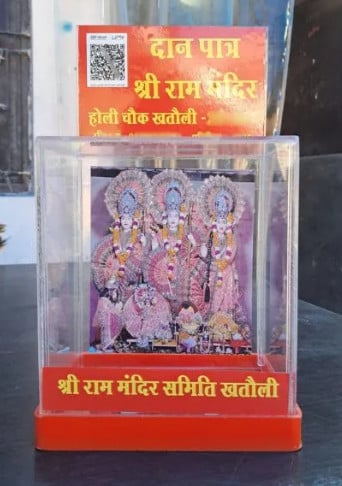
The allegations involve donations made by devotees at the Shri Ram Janmabhoomi Temple in Ayodhya. These donations reportedly included cash placed in donation boxes, also known as hundis, as well as valuables such as jewelry and other offerings.
According to reports, the suspected irregularities may have occurred during the handling of donations after they were collected from the boxes. The donation process reportedly involved several stages: collection from donation boxes, counting of cash and valuables, preparation of records, and transfer of funds to the bank.
The main concern is that the amount actually collected may not have matched what was recorded. Some reports have described allegations that lower voucher amounts were entered than the actual cash counted. There have also been questions about CCTV footage, control of donation box keys, security during counting, and whether standard procedures were properly followed.
This is why the controversy has become larger than a simple theft allegation. It has raised questions about internal controls, transparency, accountability, and the management of religious donations at a temple that receives offerings from devotees across India and around the world.
How Did the Controversy Begin?
The issue gained public attention after political leaders and local voices raised questions about alleged missing funds from Ram Mandir donations. Samajwadi Party leader Akhilesh Yadav publicly demanded action and called the matter serious because it involved the faith of devotees.
The Shri Ram Janmabhoomi Teerth Kshetra Trust initially rejected broad allegations of mismanagement and said internal audits were underway. Trust officials also maintained that regular checks had not shown major irregularities.
As the controversy grew, the Trust requested an independent inquiry. The Uttar Pradesh government then formed a three-member SIT to examine the allegations and establish the facts.
That decision was important because it shifted the matter from public accusation to formal investigation.
Who Is Investigating the Case?
The Uttar Pradesh government formed a three-member Special Investigation Team on June 13, 2026. The team was reportedly led by Lucknow Divisional Commissioner Vijay Vishwas Pant, with Inspector General of Police Kiran S and Special Secretary in the Finance Department Neel Ratan as members.
The SIT was asked to examine allegations related to donation handling, financial management, and possible misappropriation of temple funds. Reports said the team questioned temple staff, trust officials, and people involved in the donation counting process.
The SIT later submitted a preliminary report to the Uttar Pradesh government. After that, the matter moved into a criminal investigation stage with the registration of an FIR.
What Did the SIT Reportedly Find?
Public reports say the SIT’s preliminary findings pointed to serious lapses in the donation management process. These reported lapses include:
- Weak security during donation counting
- Failure to frisk staff entering and leaving the counting area
- Questions over access to donation box keys
- CCTV footage not being preserved for the expected period
- Possible violations of standard operating procedures
- Concerns over how counting staff were appointed or supervised
- Alleged discrepancies between actual collections and recorded amounts
One of the most sensitive claims involves donation box keys. Reports say a person linked to the temple’s management allegedly had access to keys for multiple donation boxes, which may have violated internal rules.
Another major issue is CCTV footage. Reports say footage from donation-counting areas may not have been preserved for the required period, making it harder for investigators to reconstruct exactly what happened.
These findings do not automatically prove guilt. They do, however, suggest that investigators found enough procedural weaknesses to justify a formal criminal case.
Who Has Been Named in the FIR?
According to reports, an FIR was registered against eight named people. They include people allegedly connected with the counting of cash and valuables received as donations.
The accused were reportedly booked under provisions related to theft by a clerk or servant, criminal breach of trust, cheating, and criminal conspiracy under the Bharatiya Nyaya Sanhita.
The names reported in the FIR include Ramshankar Yadav alias Tinnu, Lavkush Mishra, Anukalp Mishra, Avinash Shukla, Manish Yadav, Ramashankar Mishra, Subhash Chandra Srivastava, and Karunesh Pandey.
Reports also say that senior Trust figures were questioned by the SIT, but their names were not included in the FIR at that stage. That distinction matters. Being questioned in an investigation is not the same as being named as an accused.
How Much Money Was Allegedly Stolen?
This is one of the most important unanswered questions.
Social media posts and some reports have floated very large figures, including claims running into crores of rupees. However, the exact amount allegedly misappropriated has not been conclusively established in the public record.
Some reports say investigators recovered around ₹80 lakh in cash from several accused, along with some foreign currency. There were also claims of cash being found near or inside areas linked to the donation-counting process.
But recovered cash is not the same as the final scam amount. The investigation still has to determine how much money, if any, was actually stolen, over what period, by whom, and through what method.
Until investigators complete the process and courts examine the evidence, any exact figure should be treated with caution.
What Has the Ram Mandir Trust Said?
The Shri Ram Janmabhoomi Teerth Kshetra Trust has said it is committed to a fair investigation. The Trust has also said that legal proceedings are underway after the SIT’s interim findings and that it registered the FIR based on the preliminary report.
The Trust also tried to reassure devotees, saying that offerings personally handed over to its officials, including silver bricks, jewelry, and other valuables, are safe and accounted for.
Reports also said that Trust General Secretary Champat Rai and trustee Anil Mishra submitted resignations amid the controversy. The Trust reportedly said the resignations would be considered at its next meeting.
The Trust’s position appears to be that it requested the investigation to uncover the truth, counter misinformation, and restore confidence among devotees.
Why This Controversy Matters
The Ram Mandir donation row is not just about money. It is about trust.
Devotees give offerings because they believe the money will be used for religious service, temple maintenance, construction, welfare, and related purposes. When allegations emerge that such donations may have been mishandled, the emotional impact is far greater than in an ordinary financial dispute.
The case also matters because the Ram Mandir is not a small local shrine. It is a national religious landmark with enormous symbolic importance. That makes transparency especially important.
If the investigation confirms theft or embezzlement, the responsible individuals should face legal consequences. If the investigation shows that some viral claims were exaggerated, that should also be made clear publicly. Either way, the public needs facts, not rumor.
The Political Fallout
The controversy quickly became political. Opposition leaders have accused the BJP and the temple administration of failing to protect devotees’ donations. Some leaders have demanded a judicial probe or stronger independent oversight.
The BJP and its supporters have pushed back, accusing critics of politicizing a religious issue and using the controversy to attack the Ram Mandir project.
This political fight was predictable, but it also risks distracting from the core issue: whether donation money and valuables were properly protected, recorded, and deposited.
The investigation should not be judged by political noise. It should be judged by documents, CCTV records, bank trails, witness statements, accounting records, and recoveries.
What Happens Next?
The next steps are likely to include deeper questioning of the accused, examination of financial records, review of CCTV and donation-counting procedures, and attempts to trace the allegedly missing money.
Investigators may also look at whether the alleged wrongdoing was limited to a small group or whether wider failures in supervision made it possible.
The final report will be important. It should clarify the amount involved, the method used, the period during which alleged irregularities occurred, and whether any officials failed in their duties.
The Trust may also be forced to overhaul its donation management system. That could include stronger CCTV retention, independent audits, biometric access controls, stricter key management, mandatory receipts, dual-control counting systems, and real-time bank reconciliation.
What Devotees Should Do Now
Devotees should avoid panic and avoid spreading unverified figures on social media. The case is serious, but not every viral claim is confirmed.
Anyone donating to the temple or any religious institution should use official channels whenever possible. Digital transfers, official receipts, and direct donations through verified trust counters or websites are safer than handing money to intermediaries.
For large donations, donors should insist on proper documentation. This protects both the donor and the institution.
Bottom Line
The Ram Mandir donation controversy is now a formal criminal investigation, not just a rumor or political accusation. An SIT has submitted preliminary findings, an FIR has been filed, and eight people have been named in connection with alleged misappropriation of temple donations.
At the same time, the final facts are still not fully established. The exact amount allegedly stolen remains under investigation, and the accused have not been convicted.
What is clear is that the case has exposed serious concerns about how donations were handled, counted, recorded, and secured. For a temple built on the devotion of millions, that is enough to demand full transparency.
The public deserves a clean, evidence-based investigation. Devotees deserve accountability. And if wrongdoing is proven, those responsible should face the law without exception.








