

You see it in a scroll and it hits all the right emotional buttons. “Feel calm in 15 minutes.” “No drowsiness.” “Energy without jitters.” A clean blue design, “backed by science,” and a star rating that makes it look like everyone is already using it.
But once you slow down and look at how Relaxo Liquid Anti-Stress is marketed, priced, and reportedly charged, a different picture can appear. One where the biggest risk is not whether the powder tastes good, but whether you end up stuck in a subscription you never meant to start.
This review breaks down what Relaxo Liquid Anti-Stress claims to be, what’s actually in it, what the red flags look like, and how to protect yourself if you already ordered.
Quick verdict
Relaxo Liquid Anti-Stress is marketed like a premium “science-backed” daily calming supplement, built around common ingredients like ashwagandha, L-theanine, and magnesium glycinate. Those ingredients can be found in many reputable products.
The concern is not that the ingredients are mysterious. The concern is the marketing style and the complaints pattern shown in reviews: people alleging surprise subscription charges, difficult cancellation, and delivery issues after purchasing through social ads.
If you are considering buying it, treat it like a high-risk checkout: assume there may be a continuity plan unless you verify otherwise in writing before paying.
What is Relaxo Liquid Anti-Stress?
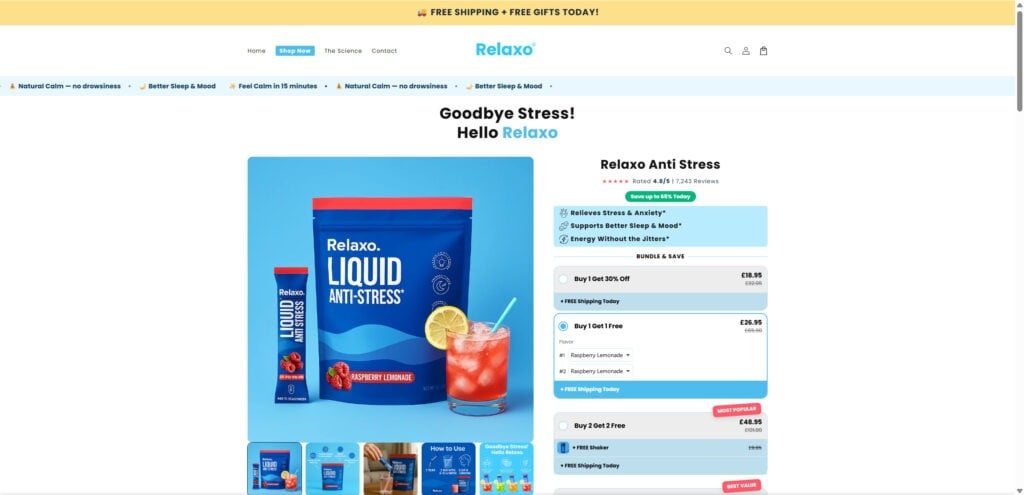
Relaxo Liquid Anti-Stress appears to be a powder supplement sold in single-serve “stick” packets (often shown as a sachet next to the larger bag). The product is positioned as a daily drink mix designed to support:
- Stress and anxiety relief
- Better sleep and mood
- Calm energy without caffeine-style jitters
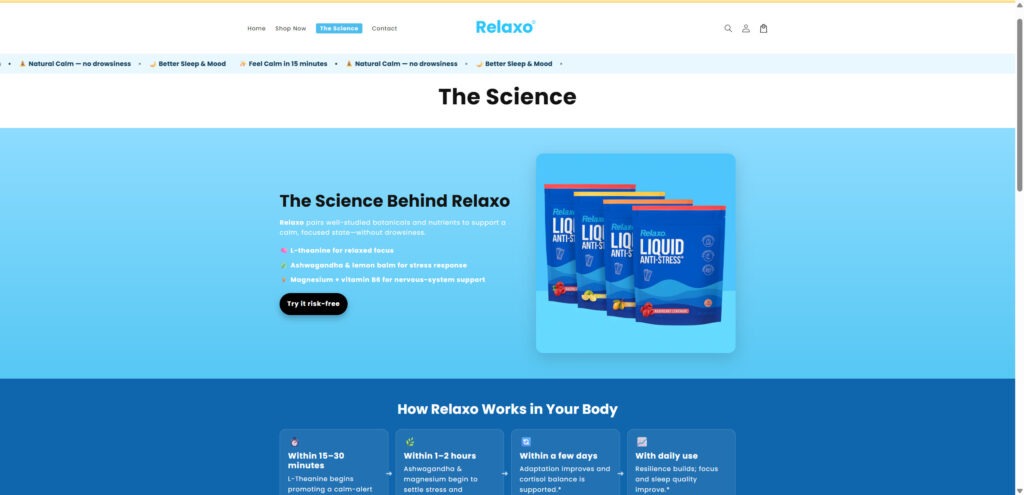
The site presentation leans heavily on clean branding, big review numbers, and “science” sections that make it feel like a researched wellness product rather than an impulse buy.
It also promotes add-ons (like a branded shaker and frother) as part of a bundle-style upsell funnel.
The core promise: calm fast, feel better, keep functioning
Relaxo’s messaging is basically: “You don’t need to stop your life to feel better. Just add one packet a day.”
That’s an appealing promise, especially for people who are burnt out, sleeping poorly, or stuck in a cycle of caffeine and stress.
The problem is not that stress support is a real category. It is. The problem is when a product’s marketing implies near-guaranteed results, dramatic speed, or “numbers” that sound like clinical outcomes but are actually sourced from on-site reviews or vague internal surveys.
What’s in it? Ingredient-by-ingredient reality check
Relaxo’s “Backed by Science” section highlights four ingredients:
Ashwagandha
Ashwagandha is one of the most common “stress support” botanicals. Some studies suggest it may help reduce perceived stress in certain people, especially at standardized doses, but results vary and it is not magic.
Important notes:
- Effects, if any, usually take consistent use, not a single sip.
- It may not be appropriate for everyone (thyroid issues, pregnancy, certain medications).
L-theanine
L-theanine is an amino acid found in tea. Many people use it for calm focus. It is often paired with caffeine, but it can also be used alone.
Important notes:
- It may help with a relaxed, alert feeling.
- Again, dosing matters. Many brands list exact milligrams.
Magnesium glycinate
Magnesium glycinate is widely used for relaxation and sleep support. It’s often better tolerated than some other magnesium forms.
Important notes:
- Many people are low in magnesium, but not everyone.
- Too much magnesium can cause GI issues, and it can interact with certain meds.
Vitamin C
Vitamin C is fine as a general nutrient, but it is not a direct anti-stress switch. In this context it often functions as a supportive “health halo” ingredient.
The big question: are the doses disclosed clearly?
This is where many supplement funnels get slippery.
A trustworthy supplement page usually makes it easy to find:
- The full Supplement Facts label
- Exact doses per serving
- Serving size
- Third-party testing or quality certifications (when they exist)
If a product leans harder on lifestyle promises than transparent dosing and manufacturing details, that’s not proof it’s a scam. But it is a reason to slow down before buying.
The marketing style: why it feels persuasive
Relaxo uses a classic “comfort conversion” layout:
1) Emotional hook
“Goodbye stress” style framing makes it feel like the product is the solution, not just a tool.
2) Fast timeline claims
Phrases like “feel calm in 15 minutes” push urgency and impulse. Stress relief is real, but rapid, consistent, guaranteed relief from a drink mix is a bold implication.
3) Big review numbers and star rating
The page shows a high star rating with thousands of reviews. That instantly lowers buyer skepticism.
4) Bundle pricing
“Buy 1 get 1 free” and “best value” tiers are designed to increase cart size and reduce refund probability. The more boxes you buy, the harder it is psychologically to admit it was a mistake.
5) Free shipping and free gifts today
Time pressure plus bonus stacking. It’s not illegal, but it’s a known direct-response pattern.
The biggest red flag: subscription and cancellation complaints
The most serious concern is the allegation of a “hidden subscription” or an automatic continuity plan that customers say they did not knowingly agree to.
On the Trustpilot, reviewers describe themes like:
- Buying once after seeing an ad (including on TikTok)
- Later discovering recurring charges
- Being told they have a subscription
- Cancellation being difficult or “impossible”
- Having to involve their bank
That specific pattern is worth taking very seriously because it moves the risk from “supplement didn’t work” to “billing problem that keeps happening.”
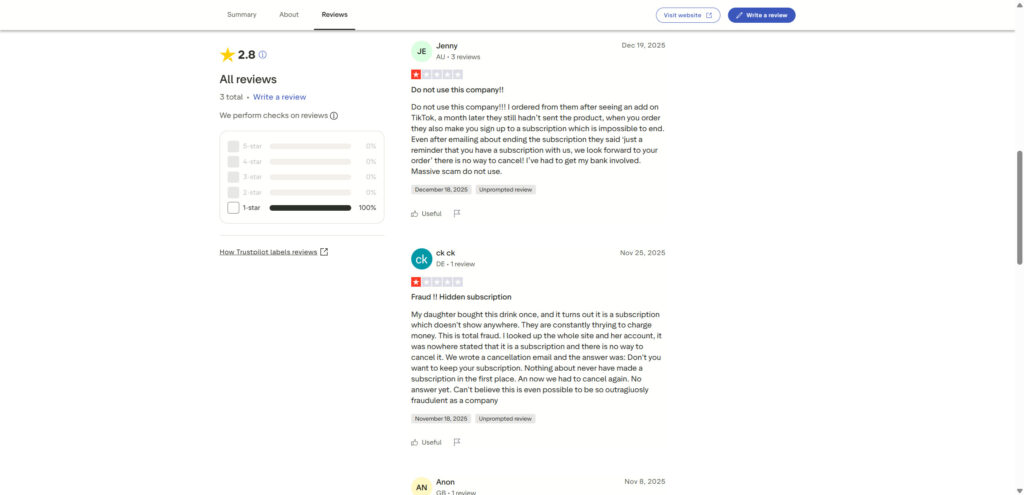
Even if some customers have normal experiences, recurring charge complaints are the type you should treat as a stop sign until proven otherwise.
Why “hidden subscription” issues happen so often in this niche
This isn’t unique to Relaxo. It’s a broader playbook used across many social-ad supplement funnels.
Here’s how it usually works:
Step 1: An irresistible first offer
The site promotes a steep discount, free gifts, and “today only” style urgency. You feel like you’re getting a deal.
Step 2: Checkout terms buried in fine print
Somewhere near the order button, or in a small checkbox area, the buyer is enrolled in a refill plan unless they opt out correctly.
Step 3: The second charge hits
It’s often 2 to 4 weeks later. The customer thinks it’s fraud because they thought it was a one-time purchase.
Step 4: Customer support friction
Support responds slowly, sends templated replies, or requires steps that make cancellation harder than it should be.
If you see even a few reports like this, you should assume the risk is real until you personally verify the exact terms before ordering.
Another red flag: mismatch between on-site hype and off-site sentiment
When a product page shows:
- 4.8/5 stars
- Thousands of “verified” reviews
- High satisfaction percentages like 90%+
…but external review platforms show harsh experiences, the gap matters.
It does not automatically mean the product is fake. But it does suggest that the on-site numbers may be marketing assets rather than reliable evidence.
A simple rule: on-site reviews are useful for flavor feedback and packaging complaints. Off-site reviews are better for billing, shipping, and support behavior.
Does Relaxo actually work for stress? What’s realistic
Let’s separate the category from the company.
What is realistic
- L-theanine can feel calming for some people.
- Magnesium glycinate can support relaxation for some people.
- Ashwagandha may reduce perceived stress over time for some people.
What is not realistic
- A guaranteed “feel calm in 15 minutes” outcome for most people.
- Major anxiety relief comparable to therapy, lifestyle changes, or prescribed treatments.
- Dramatic mood transformation without addressing sleep, caffeine, alcohol, and daily stress load.
If Relaxo works at all, it would likely work the same way many similar supplements work: modest support for some users, no noticeable effect for others, and side effects for a small group.
The real buying decision then becomes: do you trust the seller and the billing model?
Pricing and bundles: what the structure is telling you
Relaxo pushes bundles hard. That is not unusual.
But bundle-heavy funnels often correlate with two business realities:
- The product is expensive relative to its ingredients.
- The company relies on high average order value and continuity to be profitable.
That’s why you should be extra careful to confirm:
- Is it a one-time purchase?
- Is there a refill plan?
- If there is a plan, how do you cancel and how fast?
- Do you receive an email confirmation that explicitly states “no subscription”?
If you cannot get clear answers, it’s safer to walk away.
Shipping, tracking, and delivery concerns
Another recurring theme in complaint-driven funnels is shipping delay plus vague tracking updates.
That matters because refund windows often start at purchase date, not delivery date. A slow shipment can push you closer to the “sorry, you’re outside the return window” line.
If you already ordered:
- Save your order confirmation page, receipt email, and any terms shown at checkout.
- Screenshot the return policy and subscription wording on the day you ordered.
- Track every support interaction.
Who should avoid buying Relaxo Liquid Anti-Stres
Even if you ignore the billing concerns, some people should not experiment casually with stress supplements.
Avoid or get medical advice first if you are:
- Pregnant or breastfeeding
- Under 18
- Managing thyroid conditions (ashwagandha can be a concern for some)
- Taking sedatives, SSRIs, blood pressure meds, diabetes meds, or blood thinners
- Prone to low blood pressure, dizziness, or strong reactions to supplements
Also avoid if you:
- Hate subscription risk
- Do not want to deal with support emails
- Prefer buying supplements from brands with clear labels and easy refunds
If you want the ingredients without the risk: safer ways to buy
If your goal is calm focus or stress support, you can usually build a similar stack more safely:
Option A: L-theanine capsules from a major retailer
Look for:
- Clear dosage (often 100 to 200 mg)
- Good brand reputation
- Simple return policy
Option B: Magnesium glycinate from a reputable brand
Look for:
- Clear elemental magnesium amount
- Third-party testing where possible
- Transparent label
Option C: Ashwagandha standardized extract
Look for:
- Standardization (withanolides percentage)
- Clear daily dose
- Warnings and contraindications listed clearly
This approach won’t give you the flashy “free gifts today” funnel, but it usually gives you better transparency and fewer billing surprises.
What to do if you already bought and suspect a subscription
If you ordered Relaxo and you’re worried about recurring charges, act quickly and document everything.
1) Search your email for key terms
Check for emails containing:
- “subscription”
- “refill”
- “membership”
- “recurring”
- “future shipment”
2) Screenshot the policy pages
Take screenshots of:
- The product page
- Cart page
- Checkout terms
- Return and refund policy
- Any subscription language
3) Contact support in writing
Keep it simple and specific:
- State your order number
- State you are canceling any recurring plan immediately
- Ask for written confirmation that recurring billing is canceled
- Request a full refund if you did not consent to a subscription
4) Check your bank or card transactions
Look for:
- A second charge
- Slightly different merchant names
- Pending charges
5) If charges continue, escalate
- Dispute unauthorized recurring charges with your card issuer
- Ask your bank about blocking the merchant or issuing a new card number if needed
- Save all emails and screenshots as evidence
So, should you buy Relaxo Liquid Anti-Stress?
If you are judging only the ingredient concept, it’s not unique. You can find the same category of ingredients in many products.
If you are judging the overall buying risk, the subscription and cancellation complaints are the deciding factor. Any supplement that generates repeated “hidden subscription” style allegations is not a casual purchase. It’s a purchase you only make if you can confirm the terms clearly, keep documentation, and you are comfortable disputing charges if something goes wrong.
For most people, the smarter move is to skip the funnel and buy the same ingredients from a more transparent seller.
FAQ
What is Relaxo Liquid Anti-Stress?
Relaxo Liquid Anti-Stress is a powdered drink mix marketed as a daily supplement for stress support, mood balance, and calmer energy. It is promoted as “caffeine-free” and positioned as a simple routine you take each morning.
What does Relaxo claim it helps with?
Marketing claims typically include stress relief, reduced anxiety feelings, better sleep and mood, and steady energy without jitters. Some pages also suggest you may feel effects quickly, then build longer-term benefits with consistent use.
Does Relaxo work immediately?
Some ingredients commonly used for calm support can feel noticeable for certain people, while others feel little or nothing. “Fast results” claims should be treated as marketing, not a guarantee.
Is Relaxo clinically proven?
A product page may say “backed by science,” but that is not the same as a published clinical trial on the exact finished product. Unless the company provides clear study details (protocol, dosing, participants, outcomes, and who funded it), assume the claims are not proven in a strict medical sense.
What are the main ingredients in Relaxo?
Promotional materials highlight ingredients like ashwagandha, L-theanine, magnesium glycinate, and vitamin C. These are common supplement ingredients, but effectiveness depends heavily on dosage, quality, and individual response.
Can Relaxo replace anxiety medication or therapy?
No. Supplements are not a substitute for medical care. If you are dealing with significant anxiety, panic symptoms, or sleep issues that impact daily life, it is best to speak with a qualified clinician.
Is Relaxo safe to take every day?
“Safe for daily use” depends on your health, medications, and sensitivity to ingredients. Even common supplements can cause side effects or interactions for some people. If you are pregnant, breastfeeding, managing thyroid issues, or taking prescription medications, ask a healthcare professional before using it.
What side effects might people experience?
Potential issues can include stomach upset, headache, changes in sleep, or feeling unusually tired or wired. Individual responses vary. Stop use if you feel unwell and consult a clinician if symptoms persist.
Does Relaxo contain caffeine?
The product is commonly marketed as caffeine-free. Still, always check the label and any added flavor blends, especially if you are sensitive to stimulants.
Why are people warning about a “hidden subscription”?
Some customer complaints describe unexpected recurring billing after purchase, along with difficulty canceling. Even a few credible reports of that behavior is a serious red flag and a reason to be extra cautious at checkout.
How can I check if I accidentally subscribed?
Look for words like “subscription,” “autoship,” “membership,” “recurring,” “refill,” or “monthly.” Check:
- The checkout order summary
- Your confirmation email
- Any account page on the website
- Your bank or card statement for repeat charges
What should I do if I was charged again?
Act quickly:
- Screenshot the order page, confirmation email, and charges
- Email support demanding cancellation and refund for unauthorized recurring charges
- If they stall, contact your bank or card provider to dispute and block future charges
Is there a refund policy?
Most sites advertise a guarantee, but the real question is how easy it is to use in practice. Always read the full return terms and keep your receipts, screenshots, and tracking info.
Where is Relaxo shipped from?
That depends on the seller’s fulfillment setup and may not be obvious from the marketing page. Before buying, look for a shipping policy page with clear origin, timelines, and return address.
Is it better to buy Relaxo or choose alternatives?
If subscription complaints are a concern, it is usually safer to choose a reputable brand sold through established retailers with straightforward billing, clearer labels, and predictable customer support.
If you want, share the exact checkout text (especially the small print near the payment button) and I can turn it into a “subscription trap warning” FAQ entry that quotes the wording and explains what it means.

Join the discussion
0 commentsShare your experience or ask a question about this article.
Discussion
Start the conversation
Have a question or something useful to share? Add the first comment.