

ModuleUpgrade is a potentially unwanted program that injects advertisements into websites you visit and changes your browser’s default search engine and homepage. ModuleUpgrade is commonly bundled with other programs that you download from the Internet.
What is ModuleUpgrade?
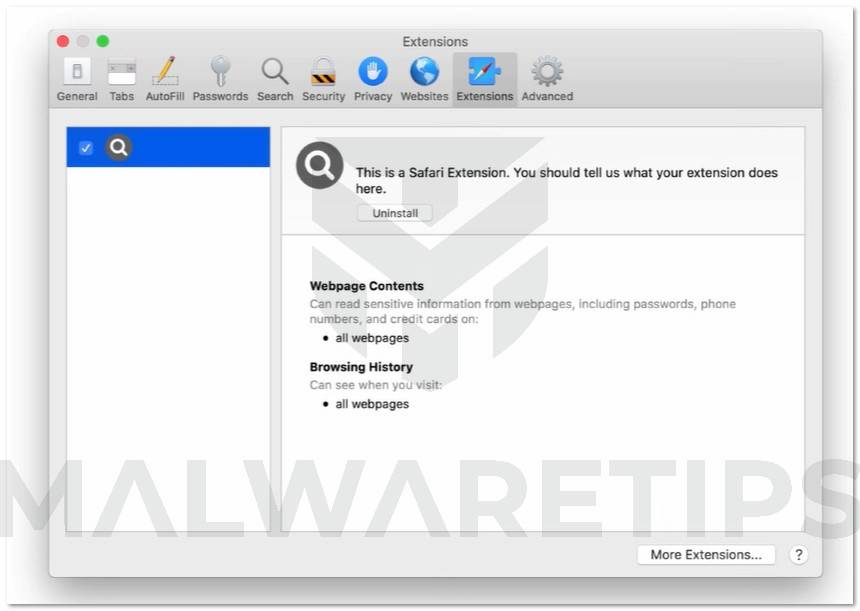
ModuleUpgrade is a malicious program that hijacks your browser homepage and search engine and displays unwanted advertisements not originating from the sites you are browsing. To do this, ModuleUpgrade uses a browser extension or program.
When installed on a computer, the ModuleUpgrade browser hijacker will redirect your browser search queries through ModuleUpgrade Search, which will redirect to search result pages from search.yahoo.com. This is most likely done to generate advertising revenue by using Yahoo Search for its search results.
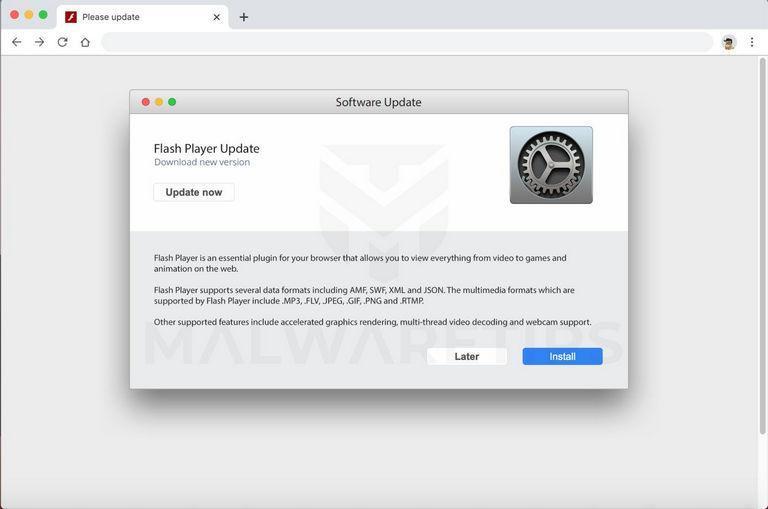
ModuleUpgrade will also open new tabs in the browser that display advertisements trying to sell software, push fake software updates, and tech support scams.
When the ModuleUpgrade browser hijacker is installed on a computer, common symptoms include:
- Your web browser’s default search engine is ModuleUpgrade Search
- Your browser’s search queries are redirected through ModuleUpgrade Search
- The “ModuleUpgrade” browser extension or program is installed on your Mac
How was ModuleUpgrade installed on my computer?
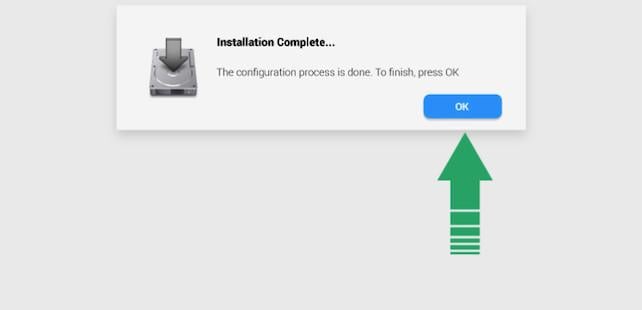
ModuleUpgrade is installed by the users, whether that is knowingly or not. Often, this type of program is offered through advertisements or bundled with other software, leaving the user puzzled about where this software came from.
Unfortunately, some free downloads do not adequately disclose that other software will also be installed and you may find that you have installed ModuleUpgrade without your knowledge.
If you do not know how ModuleUpgrade was installed or are concerned other extensions or unwanted programs may be installed on your Mac, you can use the removal guide below.
Removal instructions for ModuleUpgrade browser hijacker
Please perform all the steps in the correct order. If you have any questions or doubts at any point, stop and ask for our assistance.
- STEP 1: Remove malicious Profiles from your Mac
- STEP 2: Remove ModuleUpgrade from Mac
- STEP 3: Use Malwarebytes for Mac to remove ModuleUpgrade and other malware
- STEP 4: Remove ModuleUpgrade from Safari, Chrome, or Firefox
STEP 1: Remove malicious Profiles from your Mac
Profiles are used by IT admins in businesses to control the behavior of their Macs. These profiles can configure a Mac to do many different things, some of which are not otherwise possible.
When it comes to home users, adware and browser hijackers are using the configuration profile to prevent users from removing malicious programs from the computer. This also prevents the user from changing that behavior in the browser’s settings.
In this first step, we will check your computer to see if any configuration profiles are installed. To do this, follow the below steps:
-
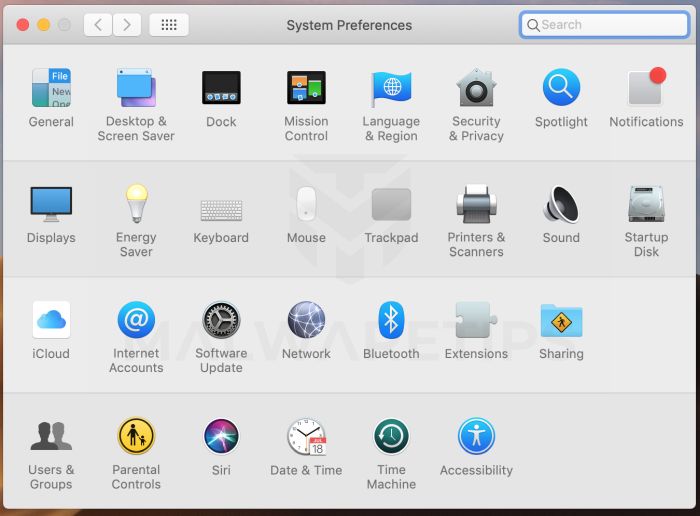
Open “System Settings”
From the Apple menu () in the top-left corner of the screen, select System Settings. (On macOS Monterey and earlier, this is called System Preferences.)
-
Look for “Profiles”
In the System Settings window, search for Profiles — on newer macOS versions you’ll find it under Privacy & Security, or you can type “Profiles” in the search box.
 No Profiles section? Good news — that means no profiles are installed on your Mac, which is completely normal. Skip ahead to the next step of this guide.
 -
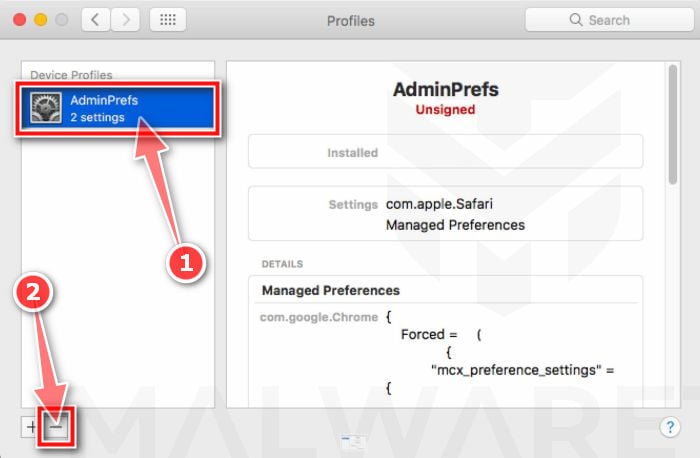
Remove the malicious profiles
Malware uses configuration profiles to lock your browser settings — forcing a fake search engine or homepage on you and preventing you from changing it back. If you see a profile you don’t recognize (and your Mac isn’t managed by your workplace or school), select it, press the − (minus) button, and click Remove to confirm.
STEP 2: Remove ModuleUpgrade from Mac
In this next step, we will uninstall ModuleUpgrade and remove its files from your computer. Sometimes the ModuleUpgrade browser hijacker can have a usable Uninstall entry that can be used to remove it.
-
Quit “ModuleUpgrade”
On the Apple menu bar, in the top-right corner, if you see the ModuleUpgrade icon, click on it and then select Quit.
-
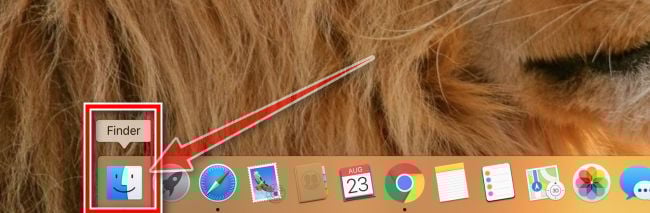
Open “Finder”
Click the Finder application on your dock.
-
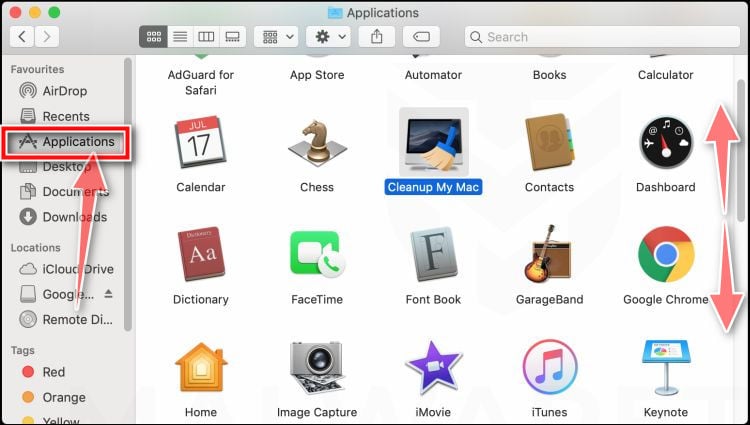
Click on “Applications”
In the Finder left pane, click on “Applications“.
-
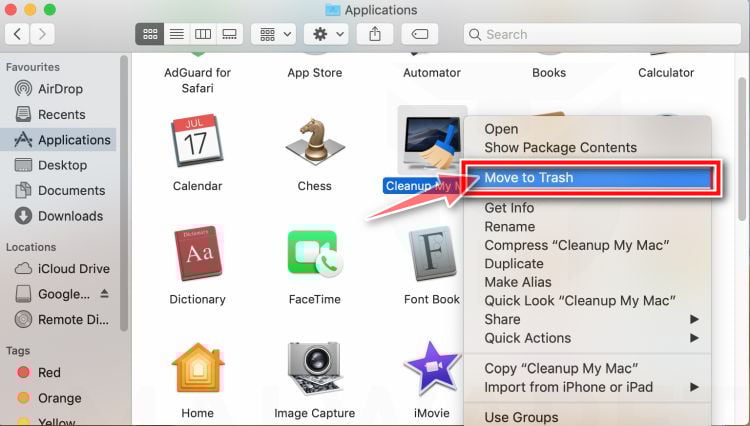
Find and remove ModuleUpgrade.
The “Applications” screen will be displayed with a list of all the apps installed on your device. Scroll through the list until you find ModuleUpgrade, right-click it, and then click “Move to Trash”.
There may be other malicious programs installed on your Mac. Look out for any suspicious program that could be behind all the drama – anything you don’t remember downloading or that doesn’t sound like a genuine program.
-
Remove ModuleUpgrade files
- Click the desktop to make sure you’re in the Finder, choose “Go” then click on “Go to Folder“.
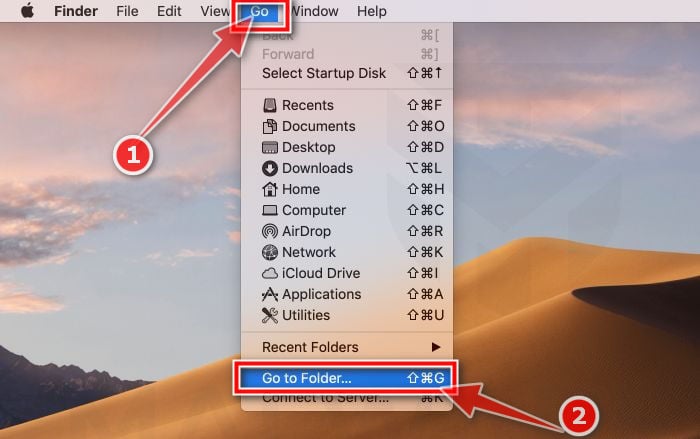
- Type or copy/paste each of the below paths into the window that opens, then click Go.
- /Library/LaunchAgents/
- ~/Library/LaunchAgents/
- /Library/Application Support/
- ~/Library/Application/
- /Library/LaunchDaemons/
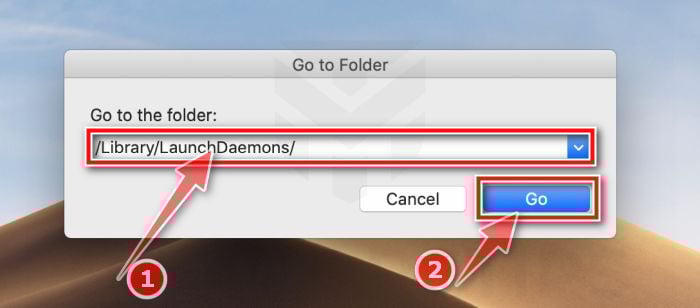
- In each of these folders, search for any recently-added suspicious files and move them to the Trash. Usually the name of theses files will contain “ModuleUpgrade”, similar to these : “com.ModuleUpgrade.plist” “installmac.AppRemoval.plist”, “myppes.download.plist”, “mykotlerino.ltvbit.plist”, or “com.myppes.net-preferences.plist”.
- Click the desktop to make sure you’re in the Finder, choose “Go” then click on “Go to Folder“.
Now that we’ve uninstalled ModuleUpgrade, in the next step we will scan your computer for any infections, adware, or potentially unwanted programs that may be present on your device.
STEP 3: Use Malwarebytes for Mac to remove ModuleUpgrade and other malware
In this third step, we will download, install and run a scan with Malwarebytes for Mac to remove ModuleUpgrade and other malware from your Mac.
Malwarebytes for Mac is a free on-demand scanner that removes the malware other security software tends to miss — adware, browser hijackers, and unwanted programs included. Cleaning an infected Mac with Malwarebytes has always been completely free, and it’s our go-to recommendation. Follow the steps below to scan and clean your Mac in just a few minutes.
-
Download Malwarebytes for Mac
Click the button below to download the latest version of Malwarebytes for Mac.
-
Open the Malwarebytes setup file
When the download finishes, open your Downloads folder and double-click the setup file to begin the installation.

-
Follow the On-Screen Prompts to Install Malwarebytes
The Malwarebytes for Mac Installer will guide you through a few quick screens. Click “Continue” and keep following the prompts until the installation completes.



When the installation is complete, Malwarebytes opens to the Welcome to Malwarebytes screen. Click “Get started“.
-
Select “Personal Computer” or “Work Computer”
Malwarebytes will ask what type of computer you’re installing it on. Click either Personal Computer or Work Computer, whichever applies.

-
Start the Scan
Click the “Scan” button. Malwarebytes will automatically update its detection database and begin checking your Mac for malware.

-
Wait for the Scan to Finish
Malwarebytes will scan your Mac for adware, browser hijackers, and other malicious programs. This can take a few minutes, so feel free to do something else — just check back occasionally to see the progress.

-
Quarantine the Detected Threats
When the scan is done, you’ll see a list of everything Malwarebytes found. Click the “Quarantine” button to remove all the threats at once.

-
Restart Your Mac
Malwarebytes will now remove all the malicious files it found. Some threats can only be fully removed after a reboot — if Malwarebytes asks you to restart, allow it. Once you’re logged back in, your Mac is clean.


STEP 4: Remove ModuleUpgrade from Safari, Chrome, or Firefox
In this final step, we will restore your browser settings back to their default configuration to remove spam notifications, malicious extensions, and unwanted browser settings.
Please note that this method will remove all extensions, toolbars, and other customizations but will leave your bookmarks and favorites intact. For each browser that you have installed on your computer, please click on the browsers tab below and follow the displayed steps to reset that browser..
Remove ModuleUpgrade browser hijacker from Safari
To remove the ModuleUpgrade browser hijacker from Safari we will check if there are any malicious extensions installeded on your browser and what settings have been changed by this malicious program.
-
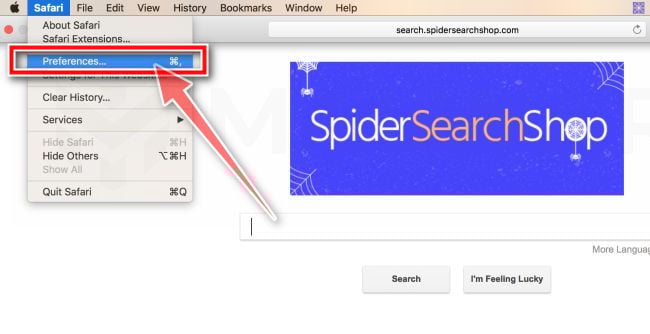
Go to Safari’s “Preferences”.
On the menu bar, click the “Safari” menu and select “Preferences”.
-
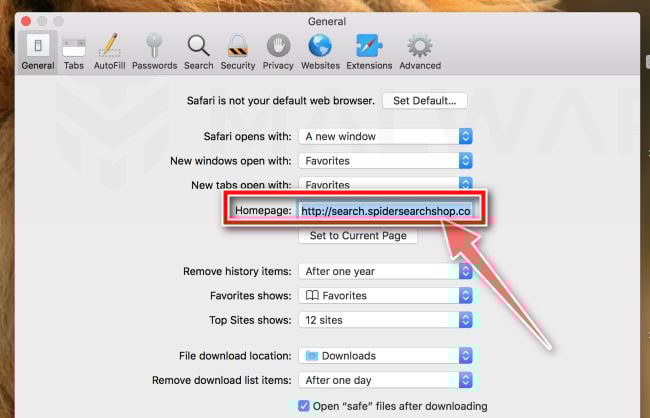
Check Homepage.
This will open a new window with your Safari preferences, opened to the “General” tab. Some browser hijackers may change your default homepage, so in the Homepage field make sure it’s a web page you want to use as your start-up page.
-
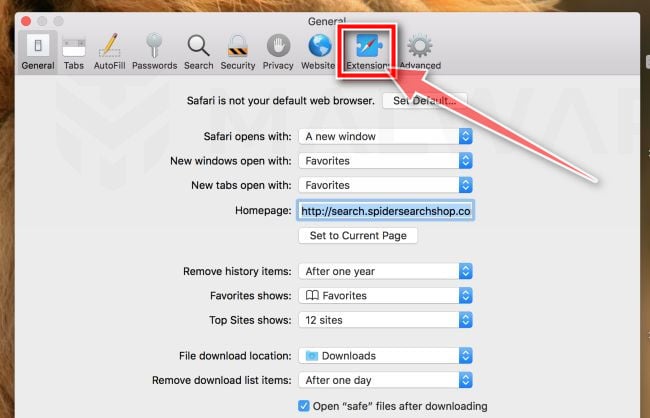
Click “Extensions”
Next, click on the “Extensions” tab.
-
Find and uninstall ModuleUpgrade.
The “Extensions” screen will be displayed with a list of all the extensions installed on Safari. Scroll through the list until you find the ModuleUpgrade extension, and then click on “Uninstall” to remove it.
There may be other malicious extensions installed. Look out for any suspicious browser extension that could be behind all the drama – anything you don’t remember downloading or that doesn’t sound like a genuine extension. By default, there are no extensions installed on Safari so it’s safe to remove any extension.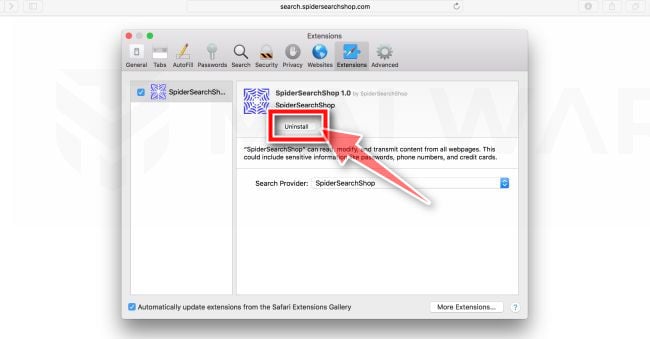
-
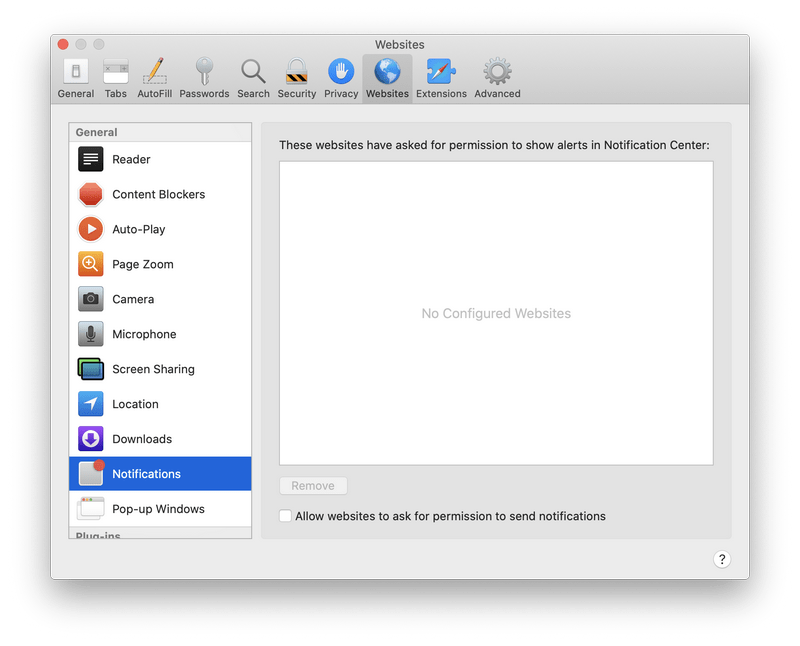
Remove spam notifications ads
Click Preferences, click Websites, then click Notifications. Deselect “Allow websites to ask for permission to send push notifications”.
-
Remove all data stored by websites on your computer.
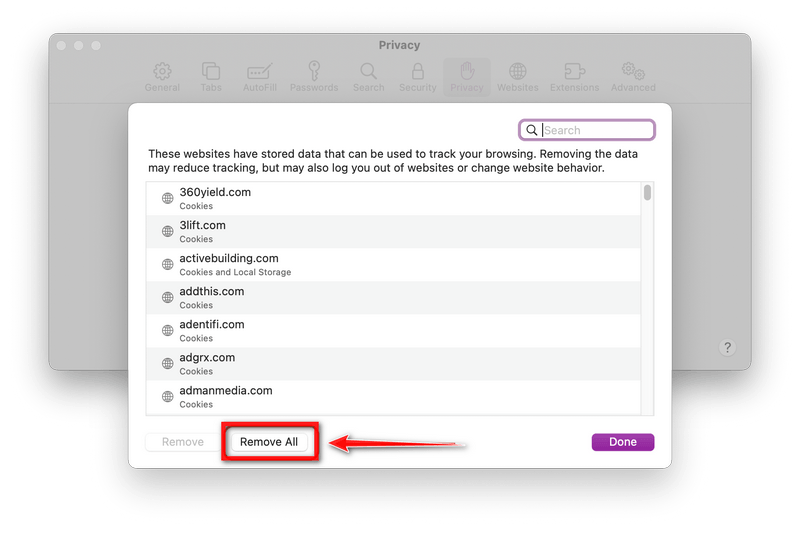
In the Safari menu, choose “Preferences…”, select “Privacy” at the top of the new window that appears, and then click the “Manage Website Data” button.
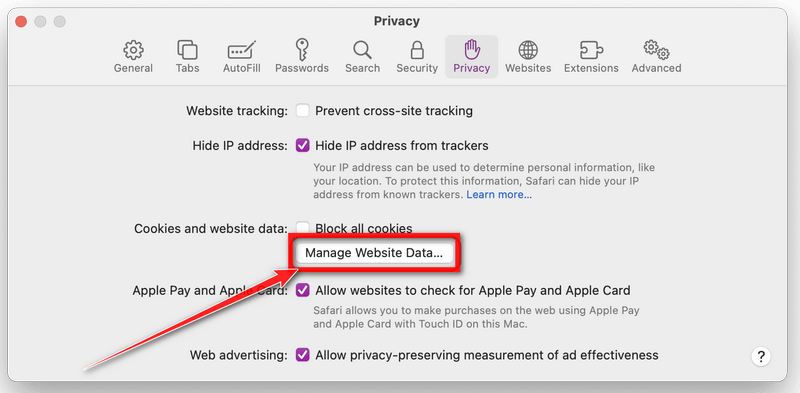
In the next dialog box, click “Remove All“. It will ask you if you are sure you want to remove all data stored by websites on your computer. Select “Remove Now” to clear data that could be used to track your browsing.
-
Empty Safari Caches.
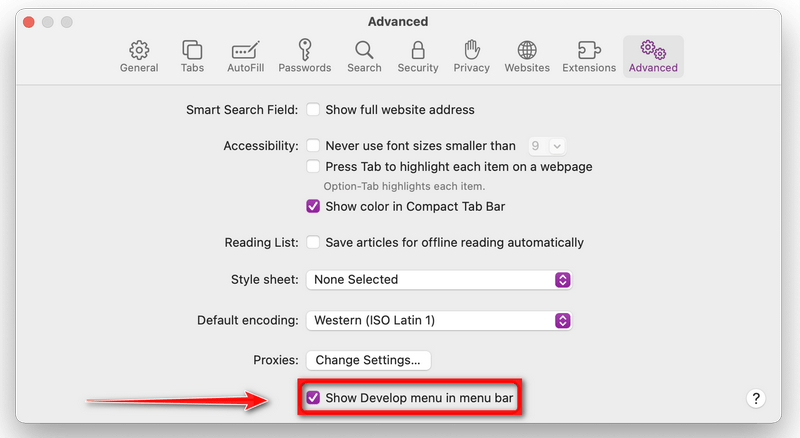
From your Safari menu bar, click Safari and select Preferences, then select the Advanced tab. Enable the checkbox to “Show Develop menu in menu bar“.
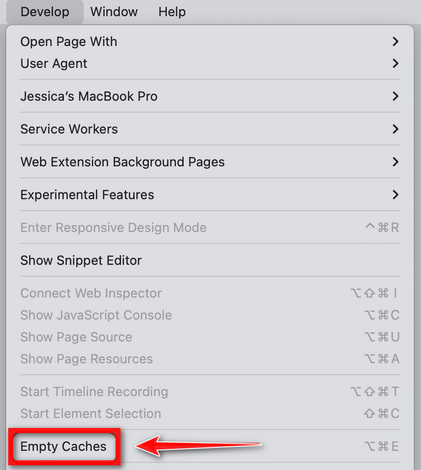
From the menu bar select Develop, then click on Empty Caches as seen in the image below.
Remove ModuleUpgrade browser hijacker from Chrome for Mac
To remove the ModuleUpgrade browser hijacker from Chrome for Mac we will reset the browser settings to its default. Doing these steps will erase all configuration information from Chrome such as your home page, tab settings, saved form information, browsing history, and cookies. This process will also disable any installed extensions. All of your bookmarks, though, will be preserved.
-
Click on the three dots at the top right and go to Settings.
Click on Chrome’s main menu button, represented by three dots at the top right corner. Now click on the menu option labeled Settings as shown by the arrow in the picture below, which will open the basic settings screen.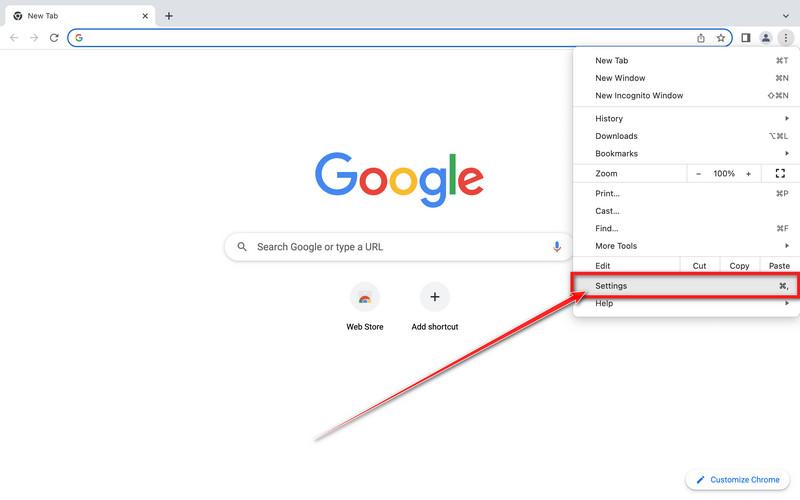
-
In the left sidebar, click on the “Reset and Cleanup” option.
In the left sidebar, click on “Reset and clean up“.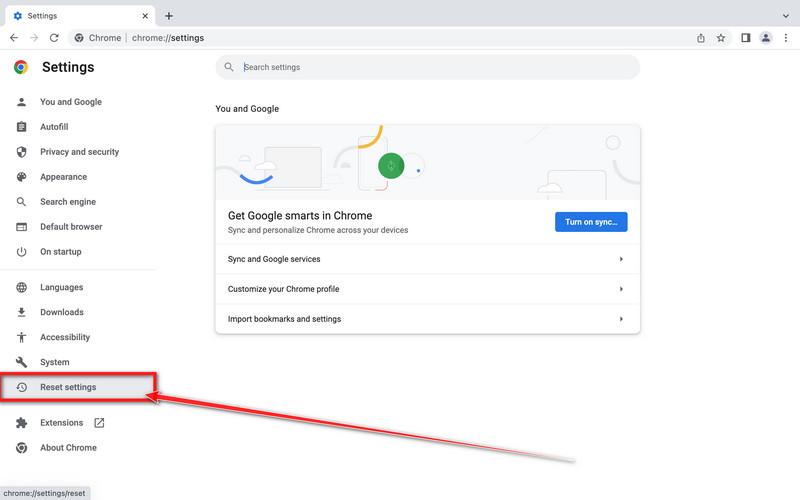
-
Click “Reset settings to their original defaults”.
Now click on the “Reset settings to their original defaults”. link as shown in the image below.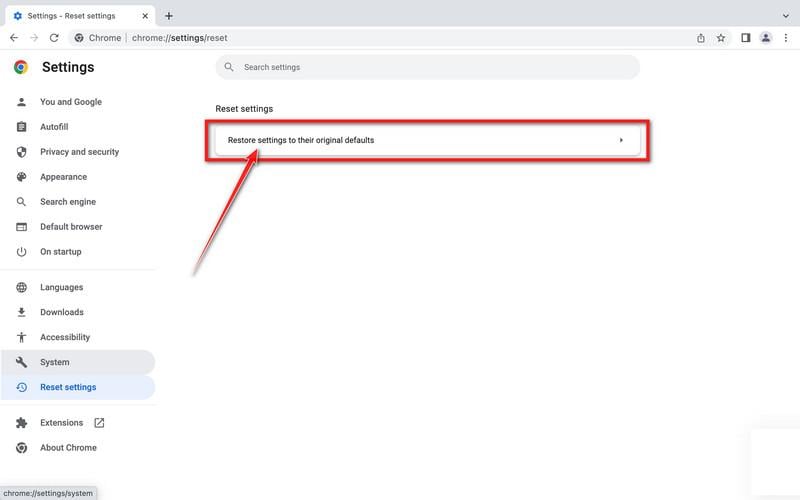
-
Click “Reset Settings” button.
A confirmation dialog should now be displayed, detailing the components that will be restored to their default state should you continue with the reset process. To complete the restoration process, click on the “Reset Settings” button.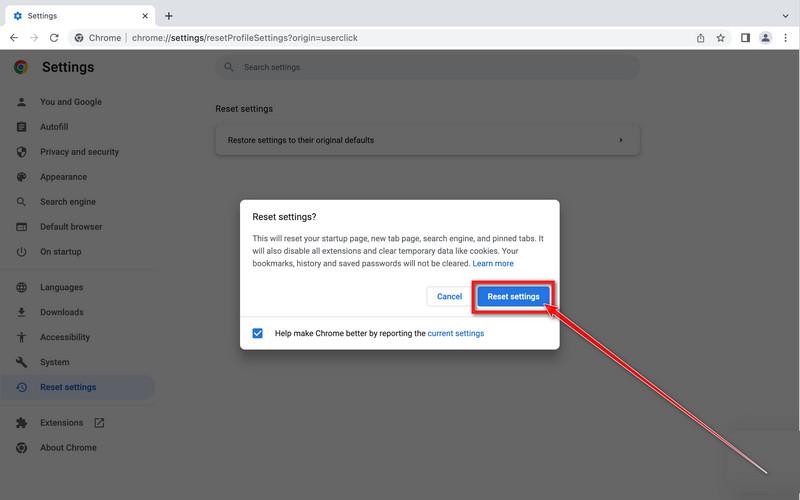
-
(Optional) Reset Chrome Data Sync.
In case a malicious extension reinstalls itself even after performing a browser reset, you have an additional option to reset the data sync for your browser. To do this, navigate to chrome.google.com/sync and click on the Clear Data button.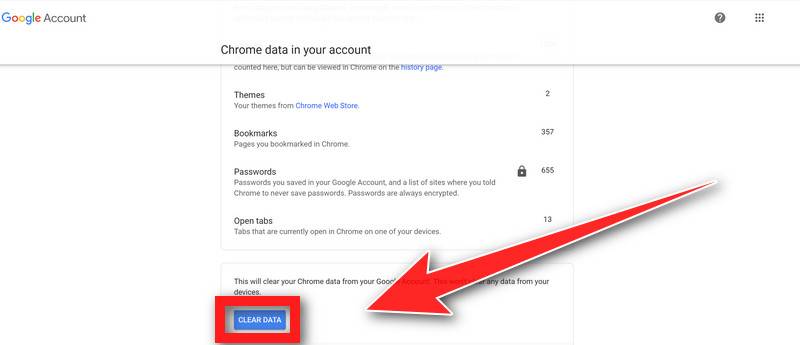
Remove ModuleUpgrade browser hijacker from Firefox for Mac
To remove the ModuleUpgrade browser hijacker from Firefox for Mac we will reset the browser settings to its default. The reset feature fixes many issues by restoring Firefox to its factory default state while saving your essential information like bookmarks, passwords, web form auto-fill information, browsing history, and open tabs.
-
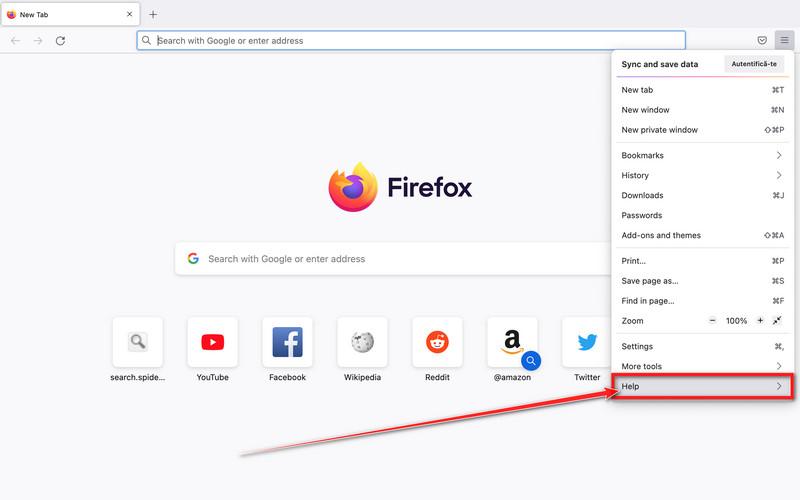
Go to the “Help” menu.
Click on Firefox’s main menu button, represented by three horizontal lines. When the drop-down menu appears, select the option labeled “Help“.
-
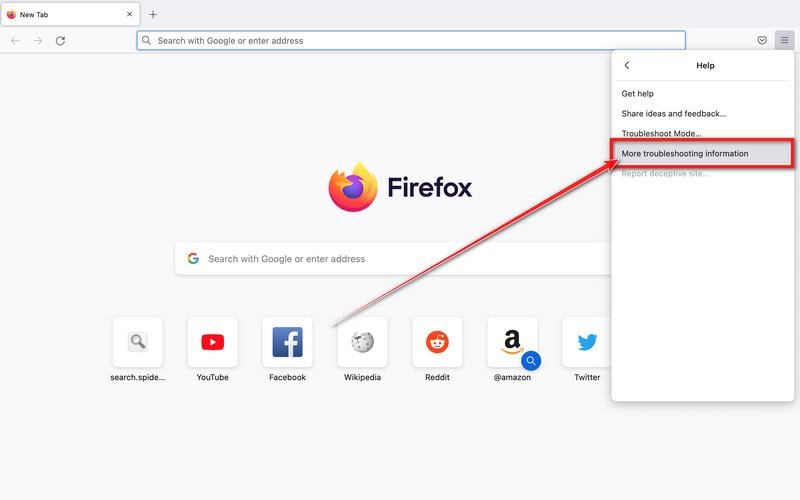
Click “Troubleshooting Information”.
Next click on the “Troubleshooting Information” option as indicated by the arrow in the image below. This will bring you to a Troubleshooting page.
-
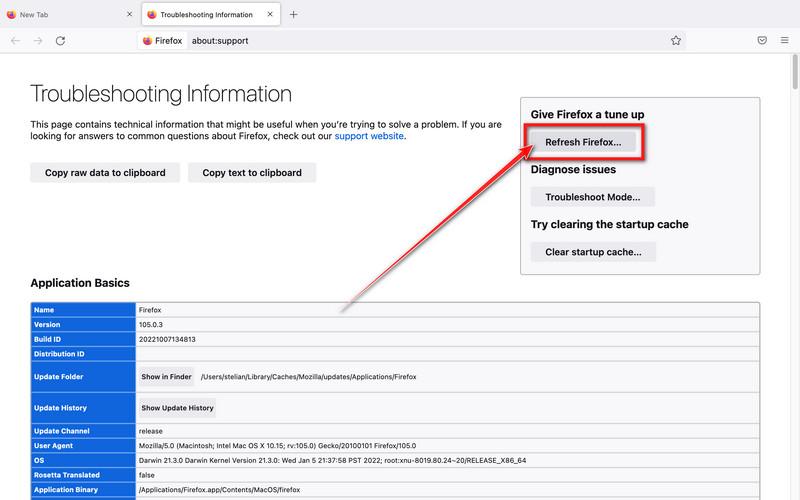
Click on “Refresh Firefox”
Click the “Refresh Firefox” button in the upper-right corner of the “Troubleshooting Information” page.
-
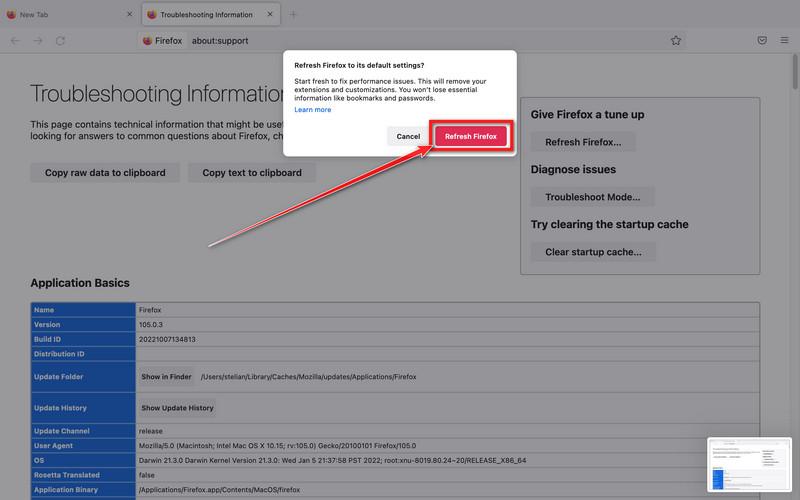
Confirm.
To continue, click on the “Refresh Firefox” button in the new confirmation window that opens.
-
Click on “Finish”.
Firefox will close itself and will revert to its default settings. When it’s done, a window will list the information that was imported. Click on the “Finish“.
Your computer should now be free of the ModuleUpgrade browser hijacker and other malware.
If your current antivirus allowed a malicious program on your computer, you might want to consider purchasing the full-featured version of Malwarebytes Anti-Malware to protect against these types of threats in the future.
If you are still experiencing problems while trying to remove a malicious program from your computer, please ask for help in our Mac Malware Removal Help & Support forum.








