


Firefox keeps switching to Yahoo on your Mac. You pick Google or another search engine in Settings, and Yahoo soon takes over your searches again.
This guide gets you back in control. You’ll set your search engine, remove the add-on, app or Mac profile forcing Yahoo, and make sure it stays gone.
Overview
Why Firefox keeps switching to Yahoo on your Mac
Yahoo Search itself is a real search engine, not a virus. When it replaces your choice without asking, something installed on your Mac is changing Firefox’s setting.
Mozilla says these changes often ride in with free software installers, fake antivirus tools, or add-ons that promise a faster browser but quietly swap your search.
Not every switch is malicious. Some legitimate apps bundle a search add-on during setup, so a box you left checked can be enough.
On a Mac, two more places matter: a configuration profile, which can set Firefox’s search engine, and a login item that brings the change back when you sign in.
The quick fix that works for most people
Start with these four actions, in order. They clear the usual causes without deleting anything you need.
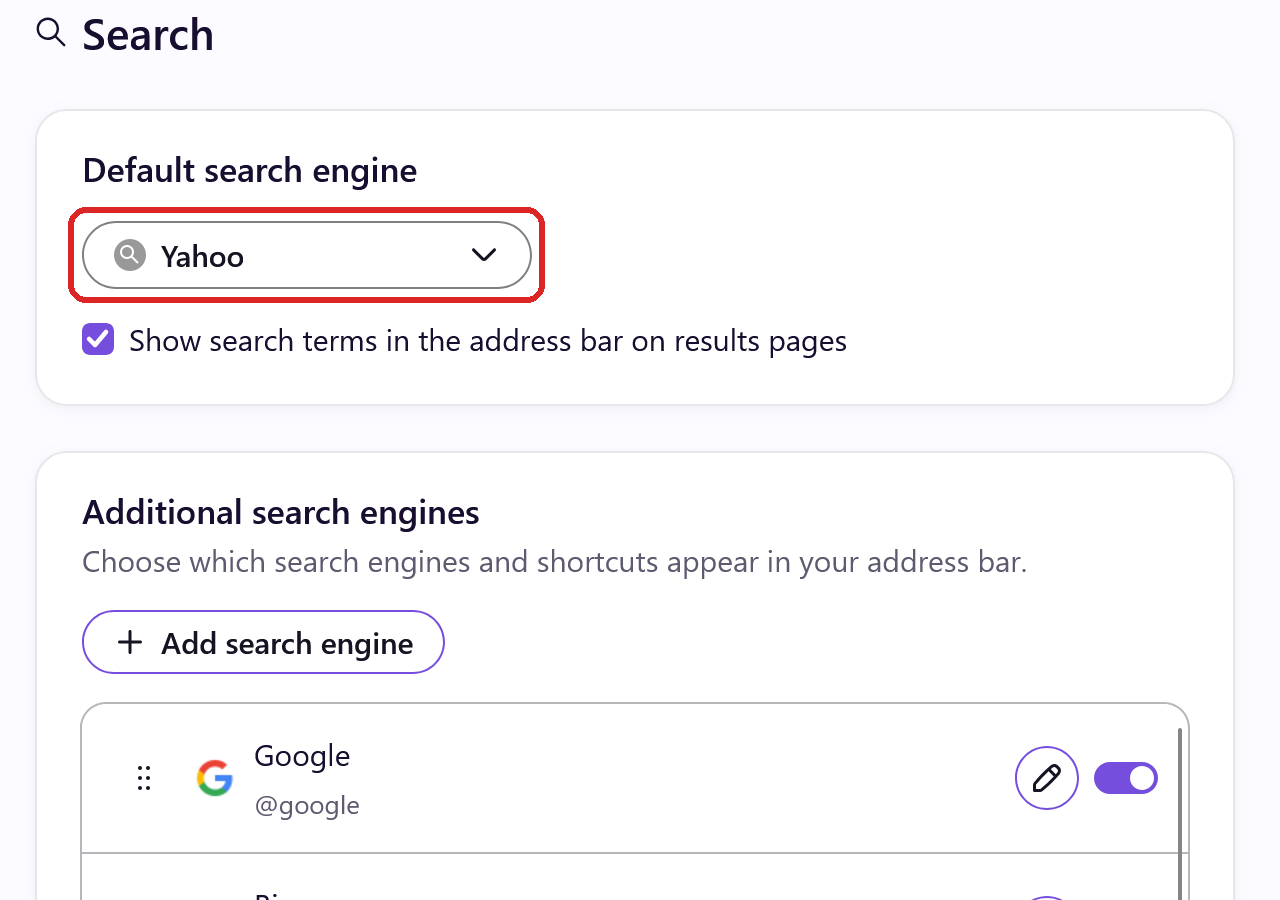
- Open Firefox > Settings > Search. Under Default search engine, pick the search engine you want instead of Yahoo.
- Type about:addons in the address bar and click Extensions. Remove any add-on you don’t recognize, especially search, “secure search” or new-tab add-ons.
- If Settings says “Your browser is being managed by your organization,” type about:policies to check whether a rule is setting Yahoo.
- Quit Firefox with Command+Q, reopen it, and search from the address bar. If Yahoo stays away, you’re done.
What to do if Yahoo comes back
If Yahoo returns after a restart, something outside the add-on list is resetting it. On a Mac, check configuration profiles, unfamiliar apps and login items.
Firefox sometimes spots a hijack on its own. If it offers to reset your search engine, click Change Search Engine to get your country’s default. Don’t change keeps Yahoo.
Work through the five steps below. Use the advanced checks only if Yahoo keeps winning, and don’t delete every profile just to change a search engine.
This guide covers a changed search engine, browser hijackers, unwanted add-ons and Mac adware. It won’t unlock encrypted files or secure an account someone else has taken over.
How to Remove Yahoo From Firefox on Mac
Follow the steps in order and test after each one. Once Yahoo is gone, skip ahead to the final check.
- Firefox search settings
- Final check: stop here when Yahoo is gone
- Advanced checks if Yahoo returns or the setting is locked
Step 1: Choose the search engine you want
Some screenshots below were taken on Windows. Firefox on a Mac has the same menus and buttons, just with Mac-style windows.
Firefox: pick your default search engine
-
Open Firefox Settings
Click the three-line menu at the top right, then Settings. On a Mac you can also choose Firefox > Settings from the menu bar.

-
Click Search and pick your engine
Click Search in the left sidebar. Under Default search engine, open the drop-down list and choose the one you want instead of Yahoo.
Shortcut: type about:preferences#search in the address bar. Firefox saves the change right away, with no reinstall needed.
-
Search from a new tab
Open a new tab and search from the address bar. If the results are no longer Yahoo, go to the final check before you stop.
If Firefox says an extension is controlling search, move on to that add-on. If you can’t change the setting at all, go to the policy checks instead of resetting again.
Step 2: Remove the add-on that brought Yahoo
Firefox: check your installed add-ons
-
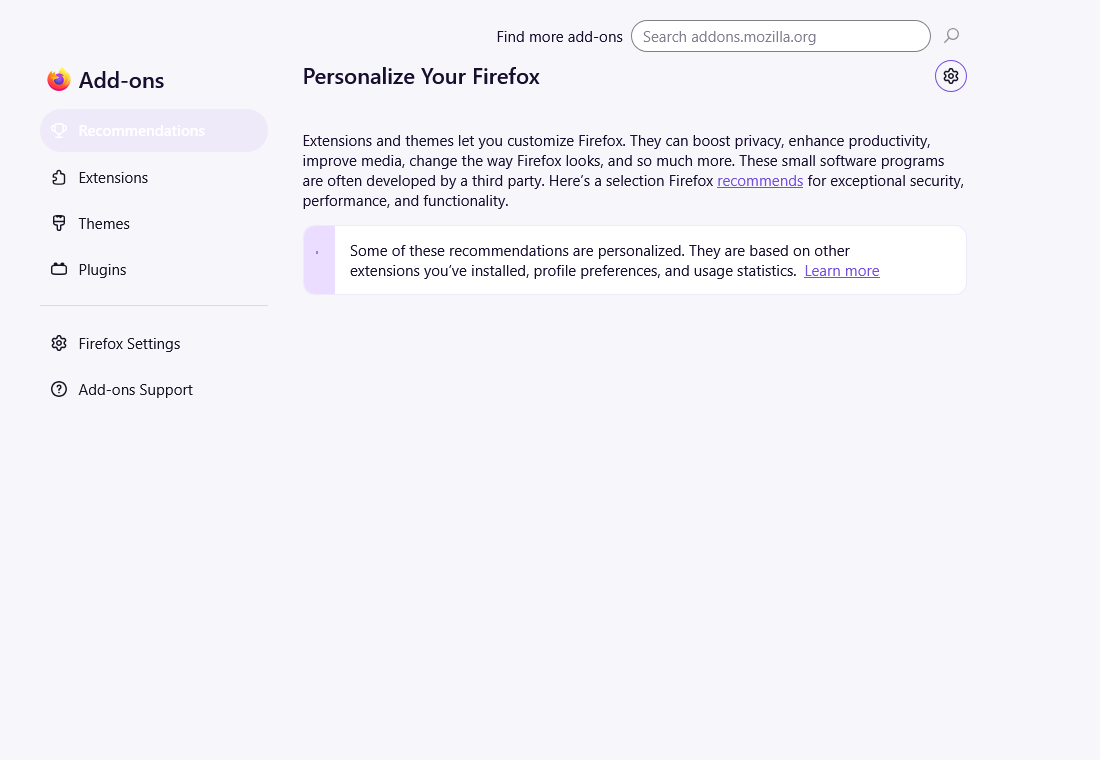
Open Add-ons Manager, then Extensions
Type about:addons and press Return. Click Extensions in the left sidebar, not the recommended add-ons on the opening page.
-
Turn off a suspect add-on and test
Use the toggle to turn off one add-on you don’t trust. Open a new tab and repeat the search that went to Yahoo.
If Yahoo stops, click that add-on’s three-dot menu, choose Remove, and confirm. Then set your search engine again in Search settings if needed.
No extensions listed? Skip removal. If an add-on won’t uninstall or keeps coming back, go to the advanced checks.
-
Check before doing anything bigger
If searches stay off Yahoo after you reopen Firefox, go to the final check. You don’t need to refresh Firefox.
If notifications keep opening pages you didn’t ask for
Only use this if alerts or pages open without you searching. A site you allowed to send notifications is not the same as a browser hijacker.
-
Open Firefox Settings and click Privacy & Security. Under Permissions, find Notifications and click Settings. Set the unwanted site to Block, then click Save Changes.
Change this in Firefox Settings, never through buttons inside an alarming alert. If the alerts stop and search works, you can skip scanning and resets.
Step 3: Scan your Mac if Yahoo keeps coming back
Skip this step if changing the setting fixed things. Use it when an add-on comes back, a strange app appears, or Yahoo returns after every restart.
Scan your Mac with Malwarebytes for Mac
Run this scan when Yahoo keeps coming back through an app or add-on. If one settings change fixed it for good, skip it.
The installer screenshots come from our Mac guide, so your version number and window style may look a little different.
MalwareTips may receive a commission from optional purchases. You don’t need a paid protection plan to follow the manual browser checks.
-
Download Malwarebytes for Mac
Malwarebytes for MacMac-specific scan and threat reviewPick the Mac download, not the Windows installer or AdwCleaner, which is Windows-only. Never install a cleaner offered by a page that redirected you.
-
Open the downloaded package
In Finder, open Downloads and double-click the Malwarebytes package. Your version number may differ from the example.

Check that the installer comes from Malwarebytes. If the file or a prompt doesn’t match what you meant to install, stop there.
Click Continue in the installer to begin. The example shows an older version, so your file name can differ.

Read the license screen and continue only if you agree. Agreeing to the license is separate from any paid subscription offer.

-
Finish installing and allow permissions
Keep going through the installer screens. Click Install when the install location looks right.

Enter your Mac password or use Touch ID when macOS asks. Never give that password to a website or to a caller offering help.
If Malwarebytes asks for Full Disk Access, go to System Settings, Privacy & Security, Full Disk Access and turn it on for Malwarebytes. Older macOS versions call it System Preferences.
Back in Malwarebytes, read any trial or subscription offers and decline the ones you don’t want.
If asked what kind of computer this is, choose Personal Computer for your own Mac. For a work Mac, follow your IT team’s instructions.

-
Update the app and pick a free scan
Click the Scanner tile itself, not its Scan button. Then open the Scan tab, choose Advanced scans, and pick Custom scan.
Quick and Custom scans are free. Threat Scan may need a trial or paid plan, and the older screenshots don’t mean you must buy anything.
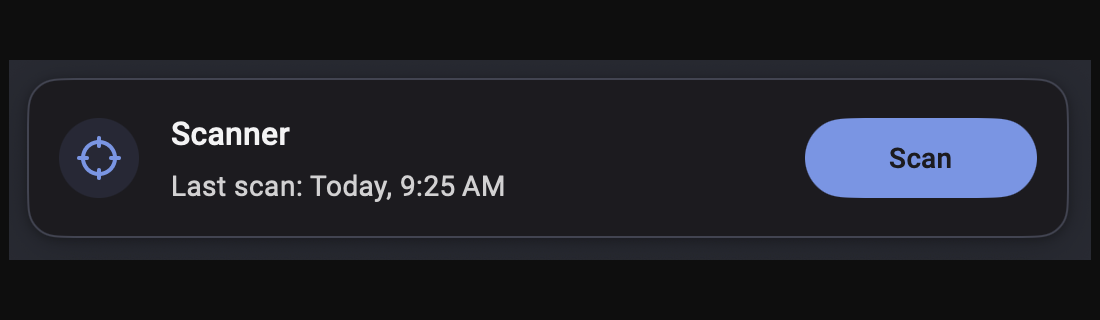
Select the folder or app you want checked in Finder, then click Open. The custom scan starts on that selection.
The dashboard’s Scan button may start a Threat Scan instead. Use the custom scan path above for the free option.
Let the scan finish. Don’t stop it or uninstall the app while it’s working through results.
The older example below shows a Threat Scan, not the free custom scan. Wait for results from the scan you chose.

-
Review the results and remove threats
Look at each detected name and location before you approve quarantine or removal. Save the report if you need help understanding an item.
The older interface below uses a Confirm button for selected items. In your version, use the matching quarantine or remove button.

These are example detections. Go by the list from your own scan.
-
Restart only if asked
If Malwarebytes asks for a restart to finish removal, save your work first. Afterward, reopen Malwarebytes and keep its report.

Then search in Firefox again and check for any returning add-on or policy. A clean scan doesn’t guarantee every changed setting or account problem is fixed.
-
Write down what brings Yahoo back
Note exactly when Yahoo returns, such as after a restart or login. Keep add-on and policy details with a copy of the scan report, minus personal details.
Don’t jump to deleting every management profile or launch folder. Find out what an item does before making a system-level change.
Step 4: Refresh Firefox if the setting still won’t stick
If search works now, go straight to the final check. Refresh Firefox only when the earlier steps didn’t fix its settings.
Refresh Firefox only when the targeted fixes aren’t enough
Refresh Firefox builds a fresh profile and keeps your essential data. Back up important bookmarks and make sure you can recover your passwords first.
The screenshots show our standard Firefox walkthrough. Button placement can vary between Firefox versions.
These annotated examples were captured on Windows. Your Mac has the same controls, but fonts and button order can differ.
-
Open Troubleshooting Information
Type about:support in the address bar and press Return. Look for the Refresh Firefox button, or the matching recovery button in your version.
Check that the page heading says Troubleshooting Information. The refresh controls sit in the tune-up box on the right.
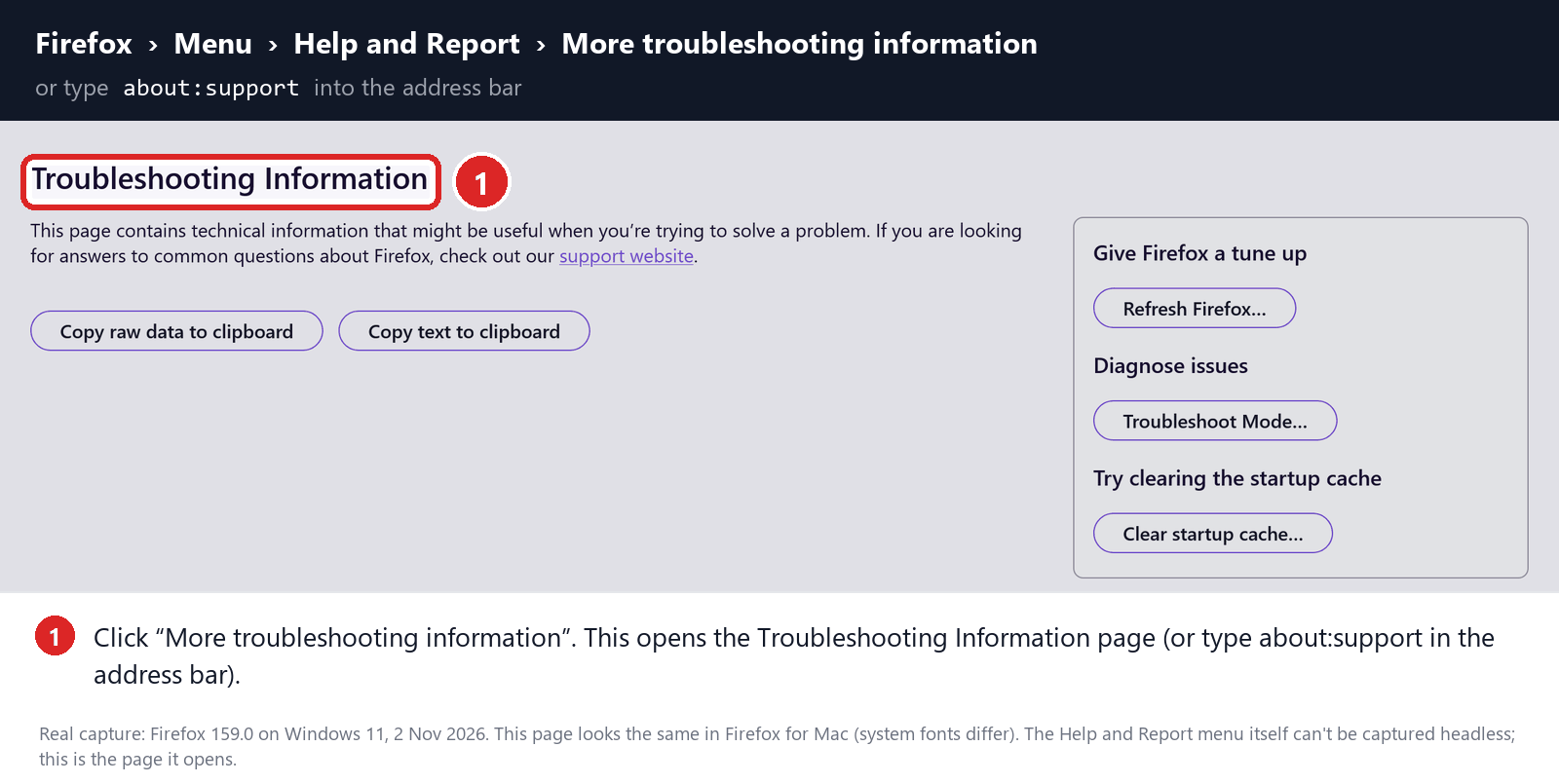
Find the Refresh Firefox button in that box before you continue.
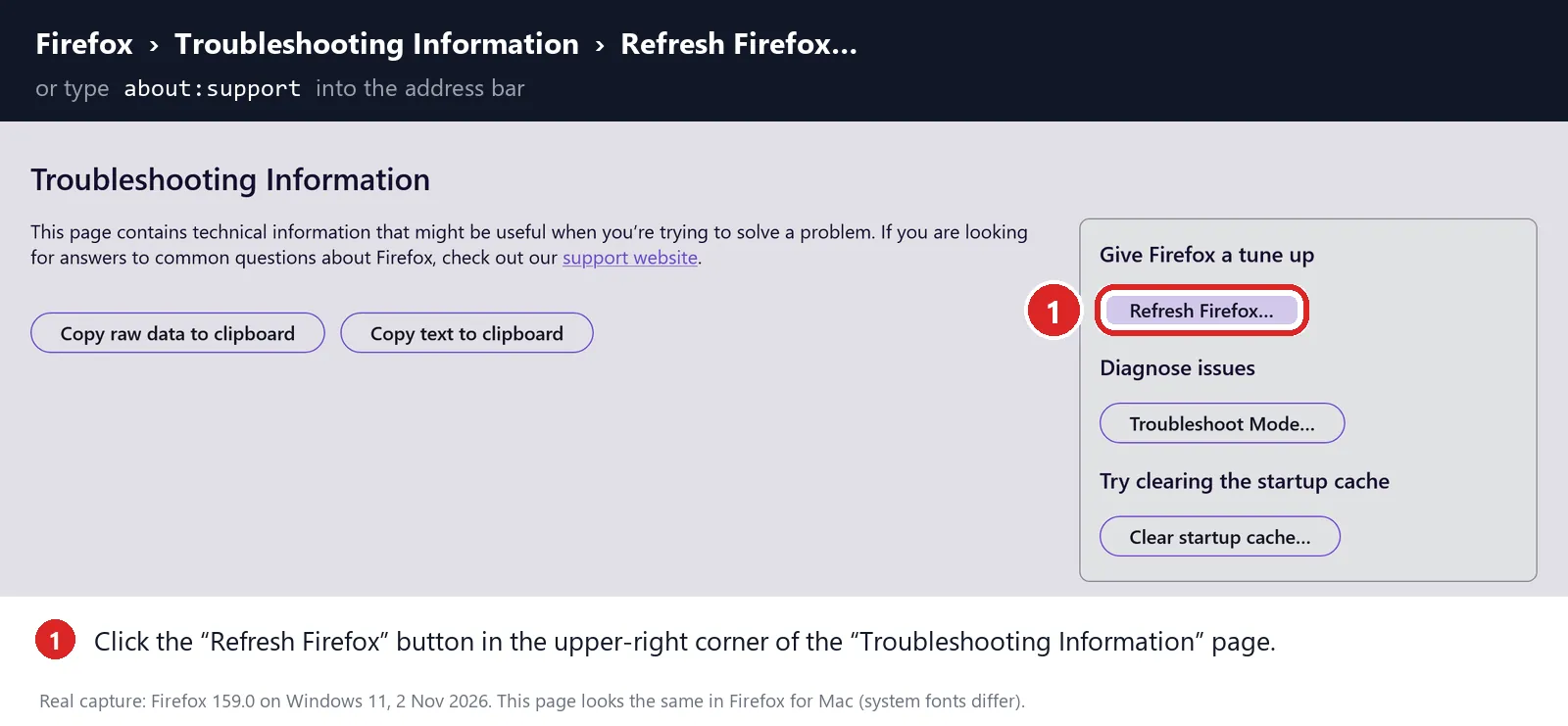
If there’s no refresh button, don’t delete your profile folder to fake one. Check Mozilla’s help for your version or ask for help.
-
Read what Refresh removes, then confirm
Read the confirmation. Firefox keeps bookmarks and passwords, but removes or resets extensions, themes, changed preferences and other customizations.
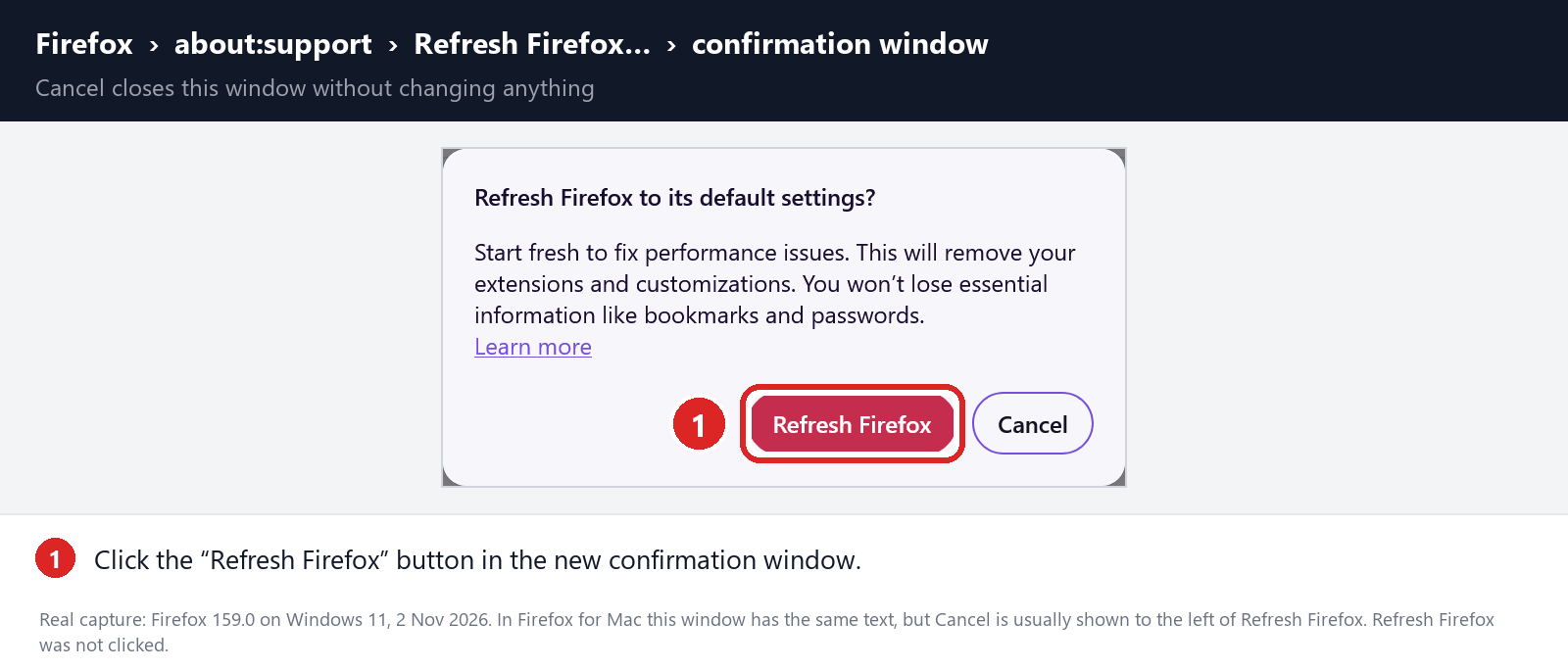
Save your work, then click Refresh Firefox. Firefox closes, rebuilds your profile, and shows a final screen to finish the job.
Set your search engine again and test before reinstalling add-ons. A policy from outside Firefox’s profile survives a refresh and needs its own check.
-
Keep the old data until you’re sure
Firefox may save your previous profile in a folder called Old Firefox Data. Keep it private until you’ve recovered what you need and Yahoo stays gone.
Don’t copy the whole folder back into the new profile. Restore only what you need, or the Yahoo setting may come back with it.
Step 5: Check that Yahoo is gone, then stop
Repeat the exact search that went to Yahoo. Use the address bar first, then check your new-tab search box and the page Firefox opens at launch.
-
Quit and reopen Firefox. Make sure your chosen search engine is still selected.
-
If Yahoo used to return after you logged in to your Mac, save your work, restart, and test again.
-
If you paused Firefox Sync, turn it back on gradually. You’re done when search stays correct through whatever used to bring Yahoo back.
If all of this works, you can stop here. The advanced section below is only for a setting that keeps returning, a locked setting, or an add-on you can’t remove.
Advanced Checks If Yahoo Keeps Coming Back
Show checks for a returning Yahoo search, locked settings and startup apps
Skip these checks if the fix is holding. On a work or school Mac, talk to IT before changing profiles, system files or startup items.
Find the Firefox policy that forces Yahoo
Type about:policies and look at the Active and Errors sections. Note any search engine rules, add-on rules or locked settings.
When a policy is active, Firefox Settings shows “Your browser is being managed by your organization.” Mozilla says security software or local rules can trigger this, not only employers.
Policies can be legitimate. If an organization manages your Mac, ask its IT team before changing anything.
Firefox can also read a policies.json file. Mozilla documents its Mac location inside Firefox.app/Contents/Resources/distribution.
Don’t edit the Firefox app as a routine fix. First confirm that file exists and actually contains the Yahoo setting.
If an expert recommends a targeted edit, keep a copy of the original file and leave other legitimate policy entries alone.
If the Firefox app itself was altered, reinstall it from Mozilla. Mozilla warns that some companies ship modified copies of Firefox with built-in toolbars.
Keep your Firefox profile when you reinstall, and ask for advice first if you’re unsure.
Don’t delete the whole distribution folder or bypass macOS security to make an edit work. That can create new problems.
Check Mac profiles, apps and login items
Open System Settings, General, Device Management if you see it. Check who issued a suspicious profile and what it changes, not just its name.
Mozilla supports configuration profiles for Firefox settings, including the default search engine. A profile you never installed can set Yahoo again, even after you refresh Firefox.
An unfamiliar name alone doesn’t prove a profile is bad. Confirm it actually configures Firefox or a related app.
Removing a profile can also remove accounts, certificates, VPN and other settings. Note those details first and understand what you’ll lose.
If you can’t remove a profile from your employer or school, contact IT. Don’t try to defeat enrollment just to change a search engine.
In Finder, open Applications and look for an app you don’t remember installing. Check its publisher, install date and any link to the add-on or profile you found.
Then check General, Login Items & Extensions for the same app’s background items. Turn off only an item you’ve tied to Yahoo, then test.
If Yahoo returns at every login, a LaunchAgent or LaunchDaemon may be involved. Have an expert check its program path before anything is changed.
Leave unrelated launch items alone. Emptying Library folders is not a safe or precise Firefox fix.
Try Troubleshoot Mode to test your add-ons
Open Firefox’s Help menu (Help and Report in some versions) and choose Troubleshoot Mode. Save your work, then read the restart prompt.
Run the same search in that mode. It turns off add-ons and some customizations, but doesn’t remove Mac apps or organization policies.
If Yahoo disappears, test your add-ons one at a time in normal mode. If Yahoo stays, look at your search setting, policies and outside software.
Test a second profile without deleting the first
Use about:profiles, where available, to create a clearly named test profile. Keep Sync and add-on imports off at first.
Search there and check about:policies. Mac-wide settings can affect both profiles even when their add-ons and preferences differ.
If the test profile works, compare the two before moving data. If it fails too, look for a policy or outside software.
Never choose Delete Files for your original profile just to run this test. Keep your data recoverable.
If a helper asks for your profile folder, find it in about:support. Quit Firefox completely before copying or changing profile files.
A user.js file can reapply settings at every launch. Check what it contains and where it came from before making a backed-up change.
After the fix, add back trusted add-ons and synced data a little at a time. Note what brings Yahoo back instead of repeating every reset.
Test Your Yahoo Search the Simple Way
Press Command+L in a normal Firefox window and search for something harmless. Don’t pick an old history suggestion or a keyword shortcut.
Then search directly on your chosen engine’s website. If that works, the problem is in Firefox’s search setting or address bar.
Check whether Yahoo opens before you type anything. A restored session, homepage or bookmark can do that without changing your search engine.
Back up bookmarks and check account recovery before any reset. Never send your whole profile folder to a stranger offering to fix it.
Why Clearing Cookies Won’t Remove Yahoo
Cookies store website data. They don’t uninstall an add-on, remove an app, or erase a rule Firefox reads at launch.
Clearing all site data signs you out of everything while leaving the real cause in place. Only clear one site’s data when it’s actually involved.
If Safari or Chrome switch to Yahoo too, look for a shared app or a changed proxy or DNS setting. Note your VPN and network settings before changing anything.
Don’t turn off security software to make a search page load. A blocked page and an unwanted search engine are different problems.
What to Do If Yahoo Still Won’t Go Away
-
Write down which Firefox profile is affected, any strange site that flashes before Yahoo, your add-ons, the about:policies output, and when Yahoo returns.
-
Keep scan reports and copies of original files private. Remove personal account names and folder paths before sharing them.
-
Ask for help in the MalwareTips Mac support forum, or ask IT first if the Mac belongs to your employer or school.
If you typed a password into an unfamiliar page, change it on the real service. Fixing Firefox doesn’t secure an account that was already exposed.
Using more than one browser? Our complete Yahoo redirect guide covers Chrome, Edge, Firefox and Safari on Windows and Mac.
Related: Bing redirects in Firefox on Mac and Yahoo in Firefox on Windows.
Frequently Asked Questions
Is the Yahoo search engine a virus on my Mac?
No. Yahoo Search is a legitimate search engine. The problem is whatever switched Firefox to it without asking, such as an add-on, a bundled app or a configuration profile.
That’s the thing to remove. You don’t need to block Yahoo’s website to get your own search engine back.
Why is Yahoo my search engine on my Mac?
Something on your Mac set it. Mozilla points to add-ons, fake antivirus tools and free software installers with extra checkboxes as common sources.
If you picked Yahoo yourself at some point, that’s fine too. Just choose another engine in Firefox Settings, Search.
Why can’t I remove Yahoo from Firefox?
If an add-on put Yahoo in Firefox’s list, the only way to remove it is to disable or remove that add-on. Find it in about:addons first.
If Firefox says it’s managed by your organization, a policy may be setting Yahoo. Check about:policies and the advanced section above.
How do I block Yahoo search on my Mac permanently?
Remove the add-on, app or profile that sets it, then choose your own default. With nothing left to push it, Yahoo stays gone.
To hide Yahoo from Firefox’s search list, go to Settings, Search, Additional search engines. Switch off its toggle, or click the trash icon if it was added later.
Will reinstalling Firefox get rid of Yahoo?
Often not. Your profile, a policy or a Mac app can survive a reinstall and switch Yahoo back. Find what’s resetting it first.
Reinstalling does help when the Firefox app itself was modified. Download it only from Mozilla’s website.
Does Refresh Firefox delete my bookmarks and passwords?
No. Refresh keeps bookmarks and passwords but removes extensions, themes and custom settings. Keep the Old Firefox Data folder private, and don’t copy all of it back.
The Bottom Line
If Firefox keeps switching to Yahoo, set your search engine in Settings, remove the add-on behind it, then quit and reopen Firefox to confirm the change sticks.
If Yahoo comes back, check about:policies, then your Mac’s profiles, apps and login items. Remove only what you can tie to Yahoo, not everything unfamiliar.
Still stuck? Post your notes and a redacted scan report in the MalwareTips Mac support forum. Yahoo itself isn’t the threat, so you can keep using it by choice.

Join the discussion
0 commentsShare your experience or ask a question about this article.
Your progress
Did these steps help?
Let us know how the guide worked for you.
Describe what you see and the step you reached. Keep passwords and other private information out.
Discussion
Start the conversation
Have a question or something useful to share? Add the first comment.