

Resia Ceylon Cinnamon is marketed as a powerful daily supplement that supports blood sugar, metabolism, and overall health using “highly bioavailable” cinnamon combined with MCT oil.
The presentation looks premium. The claims sound scientific.
But once you break down the sourcing, pricing, and marketing tactics, it follows the exact same pattern seen across many dropshipping supplement operations.
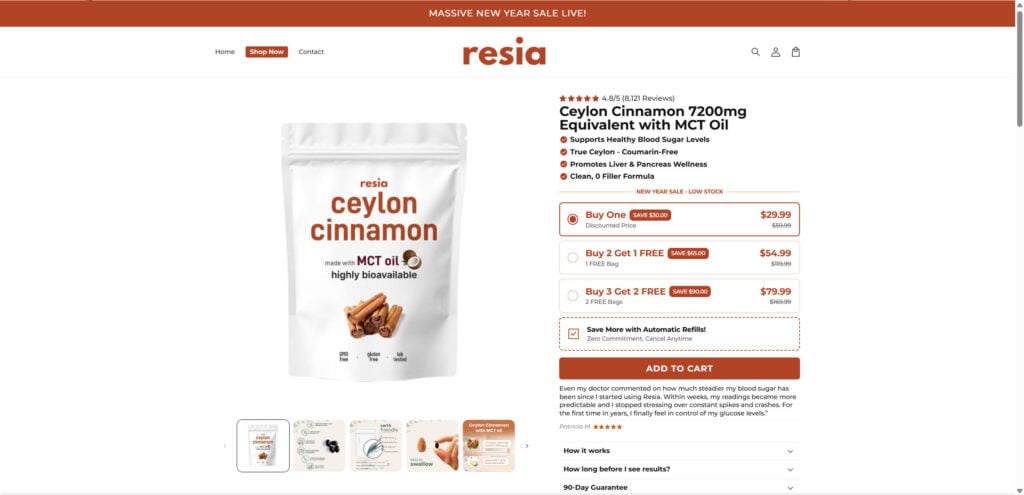
Overview
This is not a unique health product. It is a generic private-label supplement wrapped in aggressive marketing.
The typical structure behind this product
- Bulk Ceylon cinnamon + MCT oil softgels
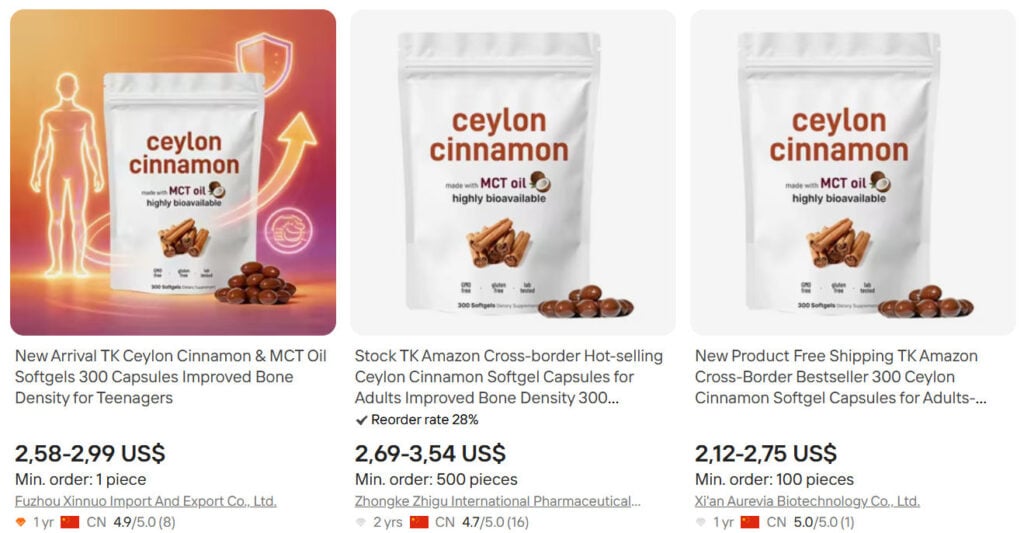
- Sourced from OEM manufacturers (your screenshots confirm this)
- Cost: around $2–$3 per unit in bulk
- Rebranded as a “premium metabolic supplement”
- Sold online for a large markup
- Often tied to subscription billing traps
What you’re told
- Advanced formula
- High potency (7200mg equivalent)
- Better absorption
- Scientifically backed benefits
What you’re likely getting
- A standard cinnamon supplement
- No unique formulation
- No exclusive sourcing
The Cinnamon Problem Most People Don’t Know
This is critical and rarely explained by these brands.
“Ceylon cinnamon” vs reality
Studies show that:
- Over 66% of cinnamon products fail quality or safety standards
- Around 9% labeled as Ceylon are actually Cassia or mixed
- Some products contain unsafe levels of compounds like coumarin
Even worse:
- Many “Ceylon” products sold online are actually cheaper Cassia cinnamon
Why this matters
- Cassia is significantly cheaper
- It contains higher levels of coumarin (linked to liver toxicity)
- Sellers can massively increase profits by mislabeling
Translation
You have no guarantee the product is actually Ceylon cinnamon.
What They Claim vs Reality
Claims used by Resia-style products
- Supports blood sugar balance
- Boosts metabolism
- Helps with weight management
- Improves overall health
- “7200mg equivalent potency”
Reality
- Cinnamon may have mild effects in some contexts
- There is no strong evidence it delivers dramatic results
- The “7200mg equivalent” wording is marketing—not standardized dosing
This is a classic case of:
Small potential benefit → exaggerated into major transformation
Proof of Dropshipping / Private Label Model
Your screenshots confirm this clearly.
What we see
- Identical packaging sold by multiple suppliers
- Same:
- design
- capsule format
- ingredient positioning
Wholesale pricing
- ~$2.12 to $3.54 per unit
What this means
- No proprietary product
- No exclusive formula
- Easily rebranded by anyone
This is not a specialized supplement.
It’s a mass-produced product with a custom label.
Major Red Flags
1. Fake “High Potency” Framing
“7200mg equivalent” is not a standard medical measurement.
It’s used to:
- inflate perceived strength
- confuse buyers
- justify higher pricing
2. Health Claims Without Proof
The product implies benefits for:
- blood sugar
- metabolism
- weight control
But provides:
- no clinical trials for the product
- no verified results
- no regulatory approval
3. High Risk of Subscription Traps
This is one of the biggest dangers.
Common pattern
- You think you’re making a one-time purchase
- Subscription is pre-selected or hidden
- You are billed monthly
- Cancellation is difficult
Typical issues reported with similar stores
- No clear cancel button
- Email-only support
- Delayed responses
- Continued charges
This is a known tactic in supplement funnels.
4. Inflated Pricing
- Wholesale cost: ~$2–$3
- Retail price: often $30–$70+
That’s a 10x–20x markup
You are paying for:
- branding
- ads
- funnel design
Not product quality.
5. Generic Ingredient Strategy
The formula is not unique.
It typically includes:
- Cinnamon extract
- MCT oil
These are widely available ingredients.
There is nothing proprietary here.
6. Lack of Transparency
Legitimate supplement brands usually provide:
- sourcing details
- lab testing
- certifications
- manufacturing standards
This type of store often does not.
What You Are Actually Buying
If the product arrives, expect:
- A basic cinnamon supplement
- Standard capsule quality
- No dramatic effects
- No “metabolic breakthrough”
At best:
- Mild, subtle benefit
- Possibly no noticeable change
Why This Model Works
This type of product is extremely effective at selling.
It targets people who:
- Want natural blood sugar support
- Are trying to lose weight
- Prefer “herbal solutions”
- Avoid prescription medication
The strategy combines
- Simple ingredient
- Scientific-sounding claims
- High potency messaging
- Subscription upsells
- Emotional health concerns
Is Resia Ceylon Cinnamon a Scam?
Technically
- The product exists
- It may contain cinnamon
Practically
- Claims are exaggerated
- Product is generic
- Value is poor
- Subscription risk is high
Most accurate classification
A high-risk supplement funnel using misleading marketing
Should You Buy It?
Not recommended.
Reasons
- No proof of strong results
- High markup
- Risk of fake or mixed cinnamon
- Subscription traps
- No real product differentiation
What To Do If You Already Ordered
Act immediately
- Check if you were enrolled in a subscription
- Monitor your bank account closely
- Save all product claims and screenshots
- Contact support and request cancellation
If problems appear
- Dispute the charge with your bank
- Block future transactions
- Keep all communication records
The Bottom Line
Resia Ceylon Cinnamon is not a premium health breakthrough.
It is most likely a generic, low-cost supplement sold through a high-conversion marketing funnel.
The biggest risks are not just the product—but:
- misleading claims
- uncertain ingredient quality
- hidden subscriptions
You are not buying something rare or advanced.
You are buying a common supplement with a premium story attached.








