

The cover looks like something you might find on a grandparent’s bookshelf. Rogue Remedies offers that comforting idea: useful knowledge, familiar plants, and a less complicated life.
Its sales page goes well beyond a cozy reading recommendation. Before buying Ruth Vance’s book, take a closer look at what the offer actually asks you to believe.
Overview
The Book and the Promise Around It
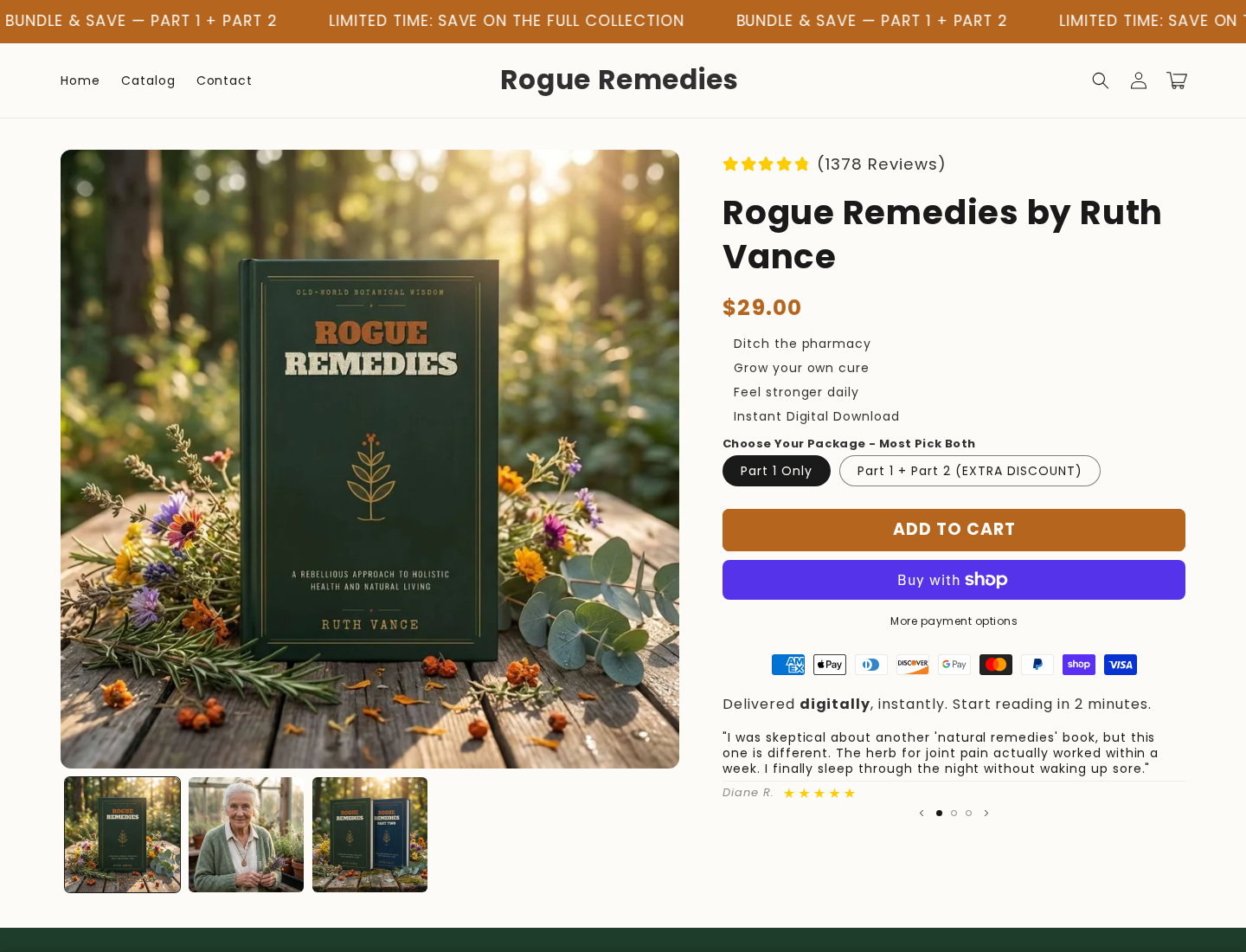
Rogue Remedies is marketed as an herbal guide by Ruth Vance. The reviewed Part 1 offer costs $29 and identifies the purchase as an instant digital download.
A printed collection is offered separately. The prominent bound-book illustration can attract attention, but the digital disclosure is visible beside the buying controls.
The larger concern is the health pitch: unusually fast relief, broad benefits, and language encouraging readers to move away from conventional medicines.
What Buyers Should Separate
- A book about traditional herbs is not automatically reliable treatment advice.
- An author’s personal story does not demonstrate medical qualifications or clinical results.
- A $29 PDF is not the same purchase as a printed book.
- The 60-day digital satisfaction promise does not cover every reason for requesting a refund.
- The physical-book policy is substantially stricter than the digital policy.
Why This Is a Buyer-Risk Investigation
The public pages establish a real sales offer and specific claims worth challenging. They do not establish that the entire book is fabricated or that every order fails.
No paid copy was purchased or read for this report. The findings concern the seller’s publicly advertised promises, author presentation, purchasing choices, and refund conditions.
That distinction keeps the focus where it belongs: whether the advertised health advice and purchase protection deserve your confidence.
The Health Claims Are the Main Problem
There is nothing inherently suspicious about learning how plants have been used. The trouble begins when historical use is presented as dependable relief for complex health problems.
The Rogue Remedies sales page promotes herbs for joint pain, anxiety, sleep, circulation, digestion, immunity, and other concerns.
Some promises attach very short timeframes, including relief from joint pain in 30 minutes and stress or anxiety in under 10 minutes.
It also suggests that one herb can replace painkillers, sleep aids, and anxiety medication. That is a much stronger proposition than offering garden recipes.
The page does not provide enough information to assess such promises for a specific reader: exact preparation, dose, intended condition, clinical evidence, contraindications, and monitoring.
Even a genuinely studied plant can behave differently in different preparations. A kitchen infusion, a concentrated extract, and a clinical study’s standardized product are not interchangeable.
The National Center for Complementary and Integrative Health explains that herbal products can interact with medicines and may differ from the products used in studies.
That does not mean every herbal practice is worthless. It means a reassuring story cannot safely replace the details needed to judge a treatment.
How the Rogue Remedies Offer Works
Step 1: The Story Starts With Exhaustion and Disappointment
The author narrative describes a crowded medicine cabinet, expensive supplements, persistent symptoms, and frustration with modern health advice.
For someone who has spent money without feeling better, that story can feel unusually personal. It recognizes disappointment before presenting a simpler answer.
The sales copy then contrasts inherited herbal wisdom with an industry portrayed as unnecessarily complicated and profit-driven.
Feeling understood is valuable. It still does not establish that the proposed remedies work, or that your prescribed treatment is unnecessary.
Step 2: Broad Possibilities Turn Into Specific Expectations
Next comes a long list of desirable outcomes. Each short promise gives a different reader a reason to imagine the book solving their own problem.
Someone with painful joints notices the rapid pain claim. Someone sleeping badly notices the sleep stories. Someone worried about money notices the low-cost comparison.
The cumulative effect is important: this is not simply a botanical reference advertised for general interest. It is sold through expectations of meaningful health changes.
Ask what evidence supports the exact claim you noticed. A bibliography about herbs generally would not establish every promised speed, benefit, or medication replacement.
Step 3: The Cover and Purchase Format Need Separate Attention
The product photograph depicts a substantial printed book. The selected offer, however, explicitly says instant digital download and displays $29 for Part 1.
A buyer scrolling quickly could remember the cover more clearly than the format. That is why checking the actual product title and delivery description matters.
The same page points customers toward a separate printed edition. There are also choices involving Part 1 alone or a collection with Part 2.
Before paying, identify the exact edition, number of parts, file format, and total. Do not assume every package button describes the same book delivery.
Step 4: Testimonials Add Confidence Without Answering the Evidence Question
The seller displays enthusiastic accounts involving improved energy, sleep, pain, and spending. A testimonial attributed to an anonymized family physician adds professional-looking reassurance.
Those stories are hosted by the seller. They are not equivalent to independently verified patient records or a controlled study of the recommendations.
An abbreviated doctor’s name cannot be checked like a full professional identity. That limits its value as a medical endorsement.
It would also be unfair to turn that limitation into proof that the doctor is invented. The practical response is not to rely on it.
Step 5: The Guarantee Changes Depending on What You Bought
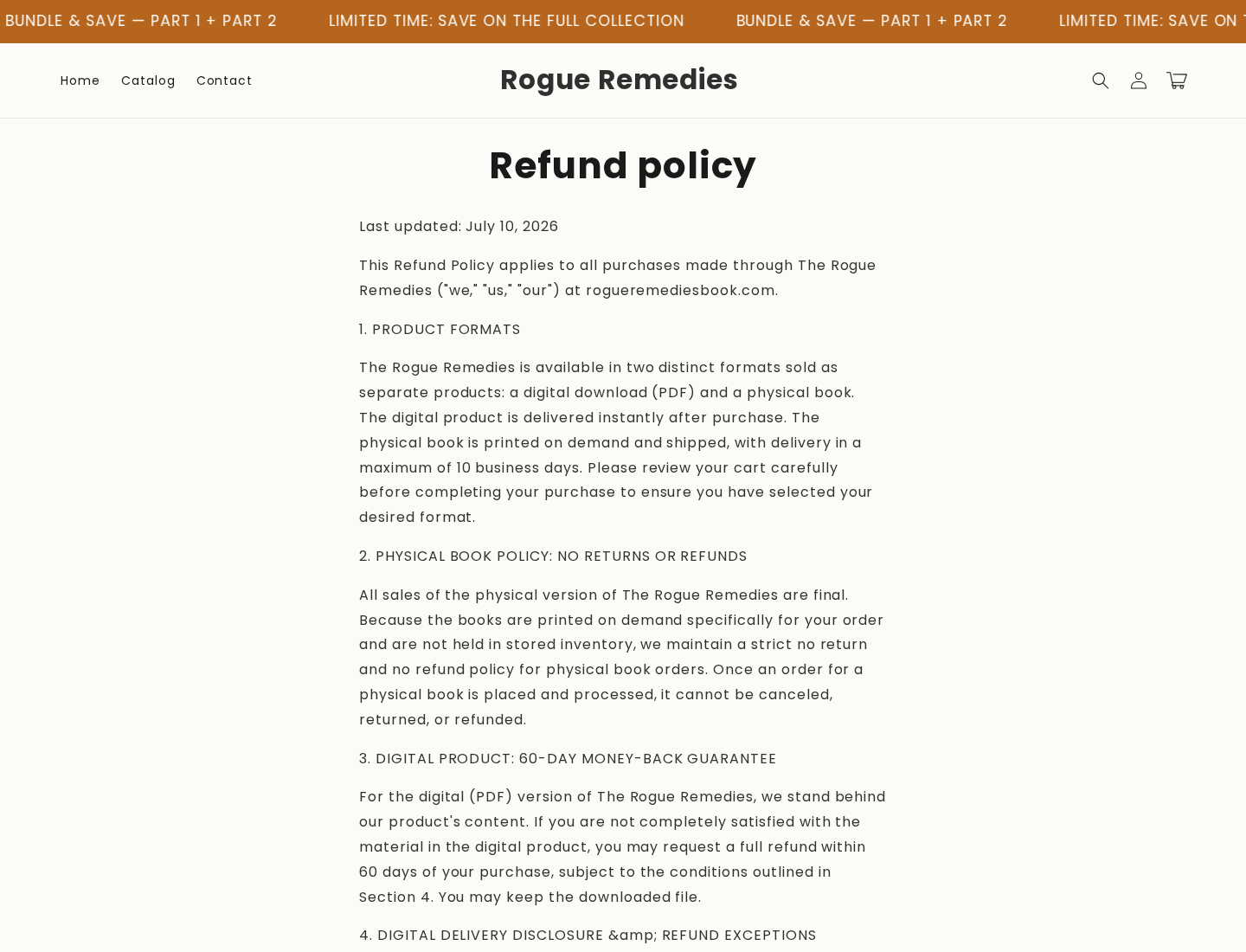
The sales language presents a generous 60-day satisfaction promise. The refund policy attaches that promise to dissatisfaction with digital content.
It excludes refunds based on expecting a printed book instead of the disclosed PDF. That is a format misunderstanding, not the same category as content dissatisfaction.
Physical books are described as printed on demand. Their orders become final and ineligible for cancellation, returns, or refunds once placed and processed.
A shopper comparing editions therefore needs to compare remedies too. Switching from PDF to print is not merely paying for paper.
Where the Advertising Deserves a Firmer Challenge
The most troubling part is the suggestion that readers can clear out medicines and replace them with simple herbs.
A sales narrative cannot know why you were prescribed something, what happens if it is stopped, or whether a proposed plant interacts with it.
Prescription sleep or anxiety treatment should not be changed because an advertisement makes ancestral remedies sound more authentic.
Nor does the absence of a pharmaceutical patent prove a treatment was suppressed. That argument can discourage readers from asking ordinary questions about evidence.
Tradition can be a starting point for investigation. It is not a shortcut around safety assessment, appropriate dosing, or the diagnosis of persistent symptoms.
A responsible herbal guide would make its limitations clear before encouraging health decisions. A refund promise does not protect against the consequences of unsuitable advice.
Author Identity, Business Details, and Book Support
Ruth Vance Is Presented Through a Sales Biography
The page calls Ruth Vance an author and old-world herbalist. Her story describes personal experimentation and sharing what she learned with relatives and friends.
That presentation does not independently establish professional licensure, relevant academic training, or the quality of the book’s medical review.
The public materials reviewed did not authenticate those qualifications. This report does not claim to have proven that the author is a fictional person.
The Terms Do Not Clearly Identify a Registered Operator
The reviewed terms use the Rogue Remedies brand, but did not supply a clearly named registered legal entity and business address.
That matters if a buyer needs to identify who accepted the order. A recognizable book title is not necessarily the legal merchant name.
The terms also retained a literal state-law placeholder and malformed website references. Those are signs of unfinished legal copy, not evidence establishing a criminal operation.
The Published Support Route Is an Email Address
The policies direct customers to hellowhisperis@gmail.com. The contact page describes an intended response time of 24 to 48 hours, Monday through Friday.
A Gmail address can be used by a genuine small business. The concern is accountability when it appears without clearer operator information for health-related sales.
No message was sent to test that response promise. Claims that nobody answers would go beyond the evidence gathered here.
Print-on-Demand Does Not Identify the Printer
The policy describes physical books as printed on demand, but that statement does not identify the printing company, production address, or dispatch origin.
There is no basis for calling the book Chinese-made or treating an unknown printer as a confirmed fulfillment center.
If the physical edition matters to you, ask who ships it and which policy covers damage, wrong editions, or nondelivery before buying.
What to Do If You Bought Rogue Remedies
-
Locate the exact edition on your receipt. Check whether it names a PDF, Part 1, a two-part collection, or a printed book.
-
Save the offer you relied on. Keep the guarantee, health promises, format disclosure, order confirmation, and payment record together.
-
Do not change medication because of the book. Ask the prescriber or pharmacist before substituting a remedy, changing a dose, or stopping treatment.
-
Request the applicable refund promptly. For digital content dissatisfaction, identify the order and explain the content concern within the stated 60-day window.
-
Describe a delivery problem separately. A missing PDF link, damaged printed book, or incorrect edition is not merely disliking the advice. State exactly what failed.
-
Keep the support trail. Send the request to the published address, retain the sent message, and record any response or promised processing date.
-
Ask your payment provider about unresolved issues. Explain whether the problem is nondelivery, misdescription, or an unhonored refund promise. Provider deadlines and eligibility vary.
The policy says qualifying digital refunds are processed within five to ten business days. Keep that promise distinct from the time your bank takes to show a credit.
If you expected print but ordered the disclosed PDF, explain that honestly. The seller’s format exclusion may affect its voluntary refund decision.
Do not fabricate a medical reaction or pretend the download never arrived. A precise, documented complaint is more useful than an exaggerated one.
If the receipt names a different merchant, include that information when asking for help. It can help the payment provider locate the correct transaction.
Reading Herbal Advice Without Taking Unnecessary Risks
If you bought the PDF and cannot find it, check the order confirmation for delivery instructions and look in your email’s spam folder.
Keep the purchase receipt separate from any later promotional messages. A newsletter is not the download you paid for.
Ask support to resend the legitimate access link rather than buying a second copy. Describe whether the link is missing, expired, or producing an error.
For a printed order, save the promised delivery estimate and tracking details. The refund policy describes delivery within a maximum of ten business days.
If that period passes, ask for the dispatch evidence and a remedy for nondelivery. A no-change-of-mind rule does not explain why a paid book never arrived.
These checks also prevent the wrong complaint being submitted. Receiving a PDF you dislike, receiving the wrong edition, and receiving nothing are three different problems.
Bring a specific recipe or ingredient list to a pharmacist rather than asking whether all natural remedies are safe. Exact details make the discussion useful.
Check plant identity, preparation, amount, intended use, and warnings. A common name may refer to different species or preparations.
Be particularly careful when a claim spans unrelated conditions. Something proposed for occasional digestive discomfort should not automatically become advice for anxiety, circulation, or chronic pain.
Do not let a strong testimonial discourage an assessment when symptoms persist. The cost of the book is only one possible consequence of following its advertising.
You can remain interested in traditional knowledge without accepting a sales page’s treatment promises. Curiosity does not require suspending ordinary standards of evidence.
Frequently Asked Questions
Is Rogue Remedies a Physical Book or a PDF?
Both formats are offered separately. The reviewed $29 Part 1 selection identifies an instant digital download, even though the main illustration shows a bound book.
Has Ruth Vance Been Proven to Be a Fake Author?
No such finding is established here. The sales biography was not independently authenticated, which is different from proving that the person does not exist.
Can the Remedies Replace Prescribed Medicines?
The sales pitch does not establish that. Do not replace pain, sleep, anxiety, or other prescribed treatment without discussing the specific change with your healthcare professional.
Does the 60-Day Guarantee Cover a Format Mistake?
The policy specifically excludes buying the disclosed digital edition while expecting print. Its digital satisfaction guarantee concerns the content, not every possible purchasing mistake.
Are Physical Book Orders Refundable?
The seller’s policy describes printed orders as final once placed and processed. Nondelivery, damage, and legal consumer protections should be raised separately from a change-of-mind request.
Is There Evidence of a Hidden Subscription?
The reviewed book offer describes a one-time payment. This investigation did not establish automatic refills or a recurring membership associated with that purchase.
The Bottom Line
Do not buy Rogue Remedies as a replacement for medical care. Its rapid-relief and medication-replacement promises go beyond the support shown in the public sales materials.
If you already purchased, verify the edition, preserve the promises, and request the remedy that fits your actual problem. Keep health decisions separate from a persuasive book advertisement.

Join the discussion
0 commentsShare your experience or ask a question about this article.
Discussion
Start the conversation
Have a question or something useful to share? Add the first comment.