

Imagine getting a perfectly fitted set of dentures without a single dental appointment—delivered to your door, customized using AI, and crafted with premium medical-grade materials. That’s exactly what the Seagril Dentures claims to offer. Promising a flawless smile for a fraction of the cost of professional dental work, this product has taken social media and online marketplaces by storm.
But is it too good to be true?
In this comprehensive investigation, we expose the truth behind the Seagril denture set: the claims, the marketing tactics, and the real risks involved. If you’re considering buying this product—or already have—this article will help you make an informed decision and avoid being scammed.
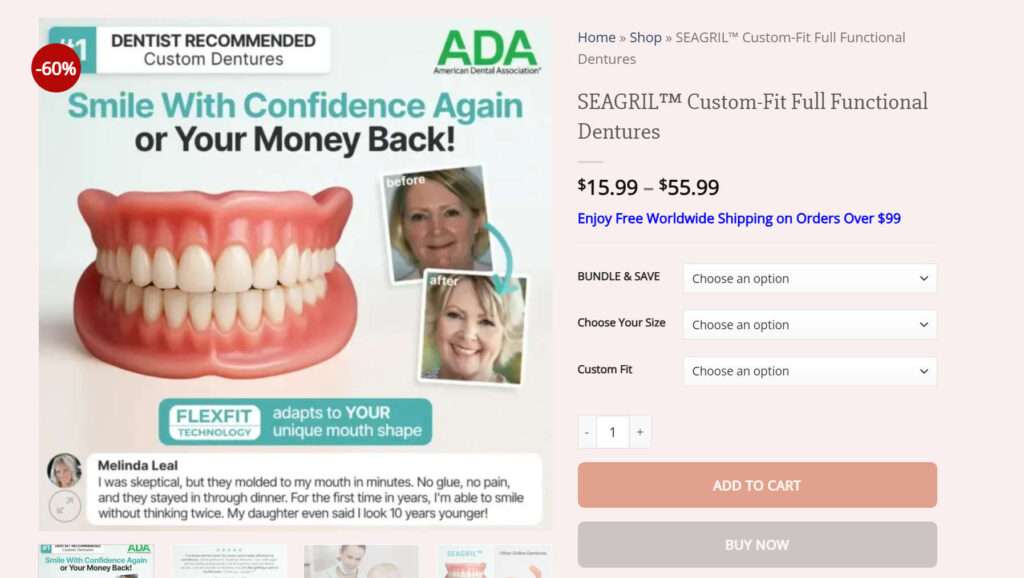
Unpacking the Seagril Denture Set Hype
The Seagril Denture Set is marketed as a revolutionary dental product offering affordable, professional-quality dentures designed with AI technology. According to the brand, customers can:
- Get custom-fit dentures using AI-powered CAD/CAM design
- Enjoy premium food-grade materials like silicone and resin
- Receive their dentures within 3–5 days
- Avoid dental appointments entirely
- Experience a painless, pressure-free fit
However, when we dig deeper, several red flags quickly emerge.
No Professional Oversight or Verification
Dentures require precise, personalized dental impressions and fittings supervised by licensed dentists. Seagril bypasses this process entirely. Despite claiming to use “AI-powered dental customization,” the company never verifies your oral structure with clinical accuracy. The result is often a poorly fitting, uncomfortable product.
Misleading Use of Medical Terms and Associations
The product description refers to institutions like the “University of Michigan School of Dentistry” and claims to use “FDA-compliant” materials. But there is no verifiable affiliation between Seagril and any accredited dental school or regulatory agency. These claims are used to create false authority.
Vague Company Information and No Transparency
The Seagril brand:
- Does not list a physical business address
- Has no known dental professionals on staff
- Offers no legitimate certification of the materials used
- Is sold on random, throwaway websites and ads with no customer service support
Many customers report unresponsive vendors and no means to return or refund defective products.
Fake Reviews and Testimonials
The glowing testimonials shown on the product page are highly suspicious:
- Many images are stock photos or AI-generated
- Reviews are duplicated across multiple unrelated product pages
- Claims of life-changing results are exaggerated and unverifiable
These reviews are part of a well-crafted illusion designed to build trust quickly and mislead vulnerable buyers—often seniors and people seeking low-cost dental solutions.
How the Seagril Denture Scam Works
Let’s break down the scam in detail to understand how it manipulates consumers and takes advantage of health-related insecurities.
Step 1: Targeted Advertising on Social Media
The scam begins with eye-catching ads on Facebook, Instagram, or TikTok. These ads:
- Show dramatic before-and-after smiles
- Claim discounts for the first 200 customers
- Offer a “Free Ultrasonic Cleaner” for a limited time
- Use phrases like “AI technology” and “dentist-free smile transformation”
These are designed to generate a false sense of urgency and credibility.
Step 2: Overhyped Product Page With Fake Science
After clicking the ad, users land on a page that claims:
- “98.45% design accuracy with AI-powered dental imaging”
- “FDA-approved, medical-grade silicone”
- “Patented customization tech from the University of Michigan”
These statements sound impressive—but lack evidence or proper citations. They are used purely to overwhelm the reader and push an emotional purchase.
Step 3: Deceptive Testimonials and Stock Imagery
The site features:
- Unverified reviews from “satisfied customers”
- Quotes supposedly from medical professionals
- Photos lifted from stock image databases
No review includes a real name, contact, or independent verification.
Step 4: Manipulative Urgency Tactics
Classic pressure techniques include:
- “Only 3 left in stock”
- “Offer expires in 15 minutes”
- “Join 25,000+ happy customers”
- “Buy now and get a second set free”
These push users to act before they can research the product properly.
Step 5: Unclear Pricing and Recurring Charges
Some buyers reported:
- Unexpected charges for accessories they never ordered
- Subscription plans with no option to cancel
- No confirmation emails or order tracking
These are all signs of a disreputable eCommerce operation.
Step 6: Shipping Poor-Quality or Generic Items
When the product arrives, it’s often:
- Made of cheap plastic or rubber
- Poorly molded and non-functional
- Lacking basic labeling or safety information
Others never receive a package at all.
Step 7: No Returns, No Refunds
When customers complain, they’re:
- Ignored by customer support
- Told they can’t return “customized” items
- Blocked from the website once they try to report issues
At this point, the website may disappear or rebrand under a new name, repeating the scam cycle.
What To Do If You’ve Been Scammed by Seagril
1. Contact Your Credit Card Provider
- Dispute the charge
- Request a chargeback due to fraudulent advertising
- Monitor your account for any recurring billing
2. Document Everything
- Take screenshots of the ad, product page, and emails
- Save your order receipt and shipping confirmation
- Note the date and time of your purchase
This information will be crucial if you file a fraud report.
3. Report the Scam to Authorities
- FTC (Federal Trade Commission): reportfraud.ftc.gov
- BBB Scam Tracker: bbb.org/scamtracker
- Internet Crime Complaint Center: ic3.gov
These reports help build cases against scam networks.
4. Warn Others Online
- Post on Reddit forums like r/scams or r/dentures
- Leave reviews on Trustpilot, SiteJabber, or ScamAdviser
- Comment on social media ads to warn other users
Spreading awareness can prevent others from being scammed.
5. Don’t Use the Product
Cheap dental materials can irritate your gums or even introduce infections. If you suspect allergic reactions or damage from wearing Seagril dentures, stop immediately and consult a licensed dentist.
Frequently Asked Questions (FAQ)
Is the Seagril Dentures FDA approved?
No. There is no evidence that the Seagril denture set is FDA approved or certified by any recognized dental authority. Claims of using “FDA-compliant materials” are misleading and unverifiable.
Does Seagril use real dental customization or AI technology?
There is no proof that Seagril uses any legitimate AI-powered dental customization. True custom dentures require physical impressions and dentist oversight, which this product does not provide.
Are the customer reviews on the Seagril website real?
Many of the reviews appear to be fake or generated using stock photos. Several testimonials are reused across unrelated products, suggesting they are fabricated to build false trust.
Why is Seagril not sold by trusted retailers like Amazon or Walmart?
Legitimate retailers require clear product labeling, quality assurance, and customer protection policies. Seagril likely avoids these platforms to sidestep regulation and accountability.
Is it safe to wear Seagril dentures?
Because the materials and manufacturing process are not verified, safety cannot be guaranteed. Users have reported poor fit, irritation, and low-quality construction. It is not recommended for long-term or regular use.
What should I do if I bought Seagril and want a refund?
If you purchased Seagril and want a refund, contact your credit card provider immediately to dispute the charge. Most users report that the seller is unresponsive and does not honor return requests.
How can I report the Seagril scam?
You can report the product to:
Can dentures really be delivered without seeing a dentist?
No. Properly fitted dentures require dental impressions, bite alignment assessments, and professional adjustments. At-home denture kits may result in poor fit, discomfort, and oral health issues if not supervised by a dental professional.
Are Seagril dentures reusable or long-lasting?
Despite marketing claims, the materials used in Seagril dentures do not meet professional durability standards. Many users have reported breakage, wear, or deformation after limited use.
How can I protect myself from similar dental scams?
Always research the product, check for clinical evidence, verify company details, and consult a licensed dentist before purchasing any dental or medical device online.
The Bottom Line
The Seagril™ Advanced Customized Full Denture Set is not the dental innovation it claims to be. It is a cleverly marketed scam using:
- Fake science
- Fraudulent testimonials
- High-pressure tactics
- No real medical oversight
If a product promises life-changing dental results for a low price and no dentist visits, it’s almost certainly a scam. Trust your instincts and always research before buying any medical or dental device online.
Final Advice: Real dentures require real dental care. If cost is an issue, look for community dental clinics or financing programs—not fake products sold through deceptive ads.









I got ripped off by Seagril Mother funkers i.want my money back or look out iam a comming for you, and you won’t like it. Iam sick of thies ppl, getting away with this they need to be caught and prosecuted hard i mean hard time in prison. Ill make sure something happens because no one else has the “balls”to stop this crap.
I understand the anger completely – you were robbed, and the fact that they do it in plain sight makes it worse. But please do not go after these people yourself. The name on the parcel is almost never the person who took your money; these operations run through fulfilment houses and rented company names, and the only person who ends up in trouble is the one who turns up at an address.
The route that actually costs them something: dispute the charge with your card issuer as not as described or unauthorised, ask for a new card number if there is any recurring billing, then file at reportfraud.ftc.gov and with your state Attorney General. Enough of those filings against the same merchant account is what gets it shut down and, when a case is won, what puts you on the list for a refund. And if anyone contacts you promising to get your money back for a fee, that is a second scam – ignore it.