

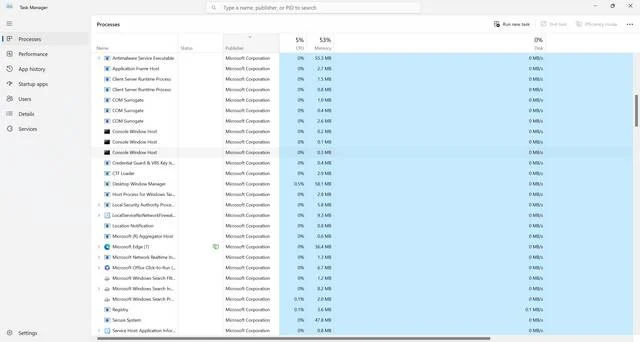
When you open the Task Manager on your Windows computer, you may come across a process called “Service Host: Local Service (No Network)”. This process might raise some questions in your mind, such as why it is running and whether it is safe or not. In this article, we will explore the purpose of the Service Host: Local Service (No Network) process and provide valuable insights to help you understand its role in your system.
Understanding the Service Host: Local Service (No Network) Process
The Service Host: Local Service (No Network) process, also known as “svchost.exe”, is a legitimate Windows system process that hosts multiple Windows services. These services are essential for the proper functioning of your operating system and various applications.
Windows uses the Service Host process to group similar services together, which helps in efficient resource management. Instead of running each service as a separate process, Windows combines them under a single Service Host process, reducing the overall system resource usage.
Why Is the Service Host: Local Service (No Network) Process Running?
The Service Host: Local Service (No Network) process is responsible for running services that do not require network access. These services are primarily related to system maintenance, hardware management, and other local tasks.
Here are some common services that are hosted by the Service Host: Local Service (No Network) process:
- Windows Audio Service: Manages audio devices and sound settings.
- Windows Event Log: Records system events and error messages.
- Windows Firewall: Provides network security by monitoring and controlling network traffic.
- Windows Time: Synchronizes the system clock with a time server.
- Windows Update: Downloads and installs Windows updates.
These services are essential for the smooth operation of your computer and ensuring that your system remains secure and up to date.
Is the Service Host: Local Service (No Network) Process Safe?
Yes, the Service Host: Local Service (No Network) process is safe and a legitimate part of the Windows operating system. It is not a virus or malware. However, like any other system process, it can be exploited by malicious software to disguise its presence.
If you suspect any unusual behavior or high resource usage by the Service Host: Local Service (No Network) process, it is recommended to scan your computer for viruses and malware. Malwarebytes Free is a reliable antivirus software that can help you detect and remove any potential threats.
Managing the Service Host: Local Service (No Network) Process
While the Service Host: Local Service (No Network) process is essential for your system’s functionality, it is possible for it to consume excessive system resources in some cases. This can lead to slow performance or high CPU usage.
To manage the Service Host: Local Service (No Network) process and optimize system performance, you can follow these steps:
- Identify the specific service causing high resource usage: In the Task Manager, right-click on the Service Host: Local Service (No Network) process and select “Go to details”. This will highlight the specific service associated with the process.
- Disable or restart the problematic service: Once you have identified the service causing the issue, you can try disabling or restarting it. To do this, open the Services application by pressing Windows + R, typing “services.msc”, and pressing Enter. Locate the corresponding service and right-click on it to disable or restart it.
- Update your system: Outdated system files or drivers can sometimes cause issues with the Service Host: Local Service (No Network) process. Make sure to keep your Windows operating system and drivers up to date to avoid any compatibility problems.
By following these steps, you can effectively manage the Service Host: Local Service (No Network) process and improve your system’s performance.
Summary
The Service Host: Local Service (No Network) process, also known as “svchost.exe”, is a legitimate Windows system process that hosts multiple essential services. It is responsible for running services that do not require network access, such as audio management, event logging, firewall, time synchronization, and Windows updates.
While the Service Host: Local Service (No Network) process is safe, it is important to stay vigilant and scan your computer for viruses and malware if you notice any unusual behavior or high resource usage. Malwarebytes Free is a reliable antivirus software that can help you detect and remove any potential threats.
To manage the Service Host: Local Service (No Network) process and optimize system performance, you can identify the specific service causing high resource usage, disable or restart the problematic service, and keep your system up to date.
By understanding the role of the Service Host: Local Service (No Network) process and taking necessary precautions, you can ensure the smooth operation of your Windows computer and maintain its security and performance.

Join the discussion
0 commentsShare your experience or ask a question about this article.
Discussion
Start the conversation
Have a question or something useful to share? Add the first comment.