

If you’ve recently come across a mesmerizing video ad of a cute, ultra-lifelike AI-powered penguin plush toy, you’re not alone. The toy waddles like a real penguin, makes adorable chirping sounds, and supposedly reacts to touch with advanced artificial intelligence. Sound too good to be true? That’s because it is. Welcome to the latest e-commerce scam making the rounds: the Super Realistic Plush AI Penguin Scam.
In this comprehensive guide, we’ll break down exactly how the scam works, what red flags to watch for, and what to do if you’ve already fallen victim.
Let’s get into it.
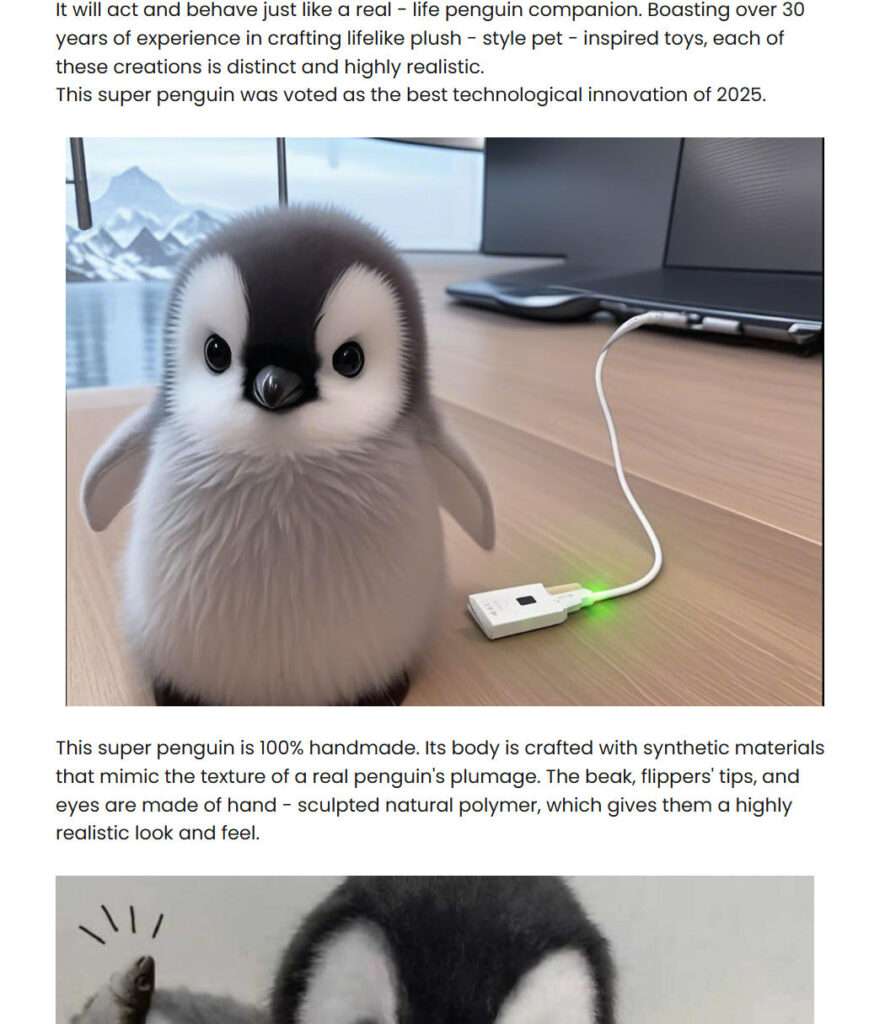


Scam Overview
The Super Realistic Plush AI Penguin scam is part of a growing trend of fraudulent online stores luring consumers with viral, emotionally charged ads. Promising groundbreaking innovation and cute companionship, this scam targets people’s love for animals and their trust in online convenience. The plush toy in question is marketed as an AI-enhanced, handmade penguin that looks and behaves just like the real thing. But here’s what’s really going on.
The Alluring Pitch
On the surface, the sales pitch is almost irresistible. Here’s a snapshot of what these scam sites claim:
- “Acts like a real penguin!”
- “100% handmade and eco-friendly.”
- “Over 30 years of design experience.”
- “Awarded Best Technological Innovation of 2025.”
- “Secure payment via PayPal and credit card.”
- “GoogleTrusted Store certified.”
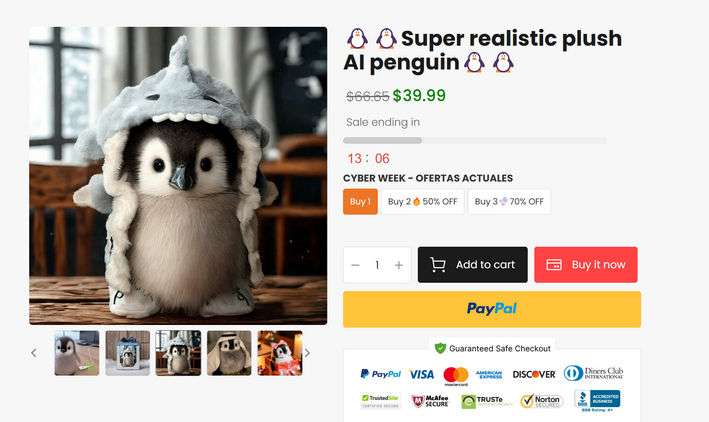
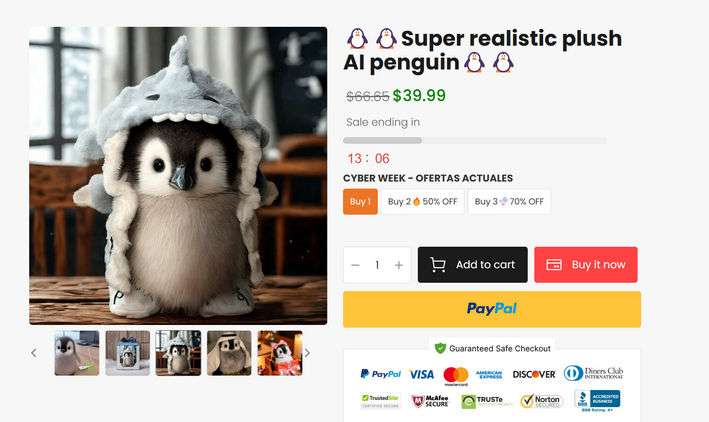
They use words like “technological wonder,” “highly realistic,” and “AI-driven” to sell you a fantasy. Each product page is cluttered with countdown timers, fake stock alerts, and urgency-driving messages like “CYBER WEEK – OFERTAS ACTUALES.”
Fake Visuals
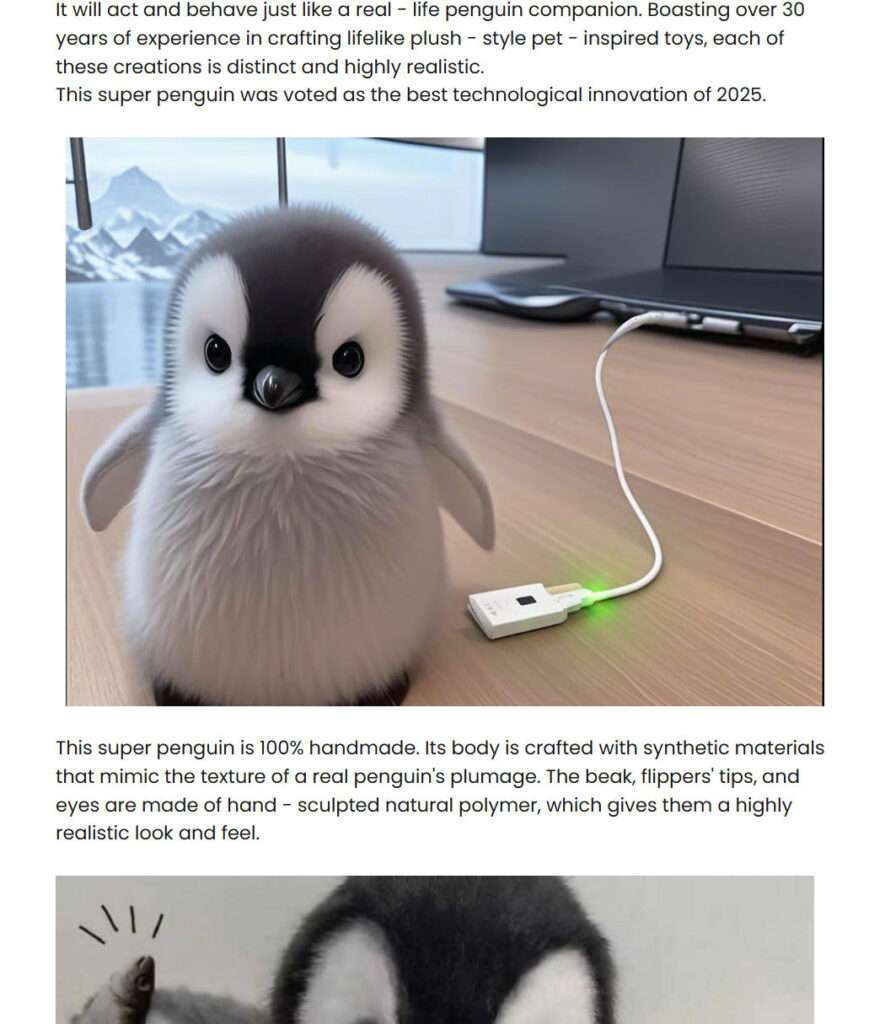
Photos and videos on the product pages and ads are convincing—at first glance. They often show the penguin waddling adorably, flapping its flippers, and responding to human touch. But if you look closely, the movements are too smooth and too perfect. That’s because they’re generated using AI animation tools, not real footage of an actual toy. There is no real product that behaves the way it’s shown.

Emotionally Manipulative Marketing
They don’t just want your money; they want your trust. Scammers push emotional buttons by suggesting the toy is an ideal gift for children, seniors, or even therapy use. They say it’s suitable for people with sensitivities and safe for all age groups.
This kind of manipulative copywriting is designed to bypass your logical thinking and fast-track your emotional impulse to “Add to Cart.”
Lack of Transparency
Reputable online stores offer full details—real company addresses, return policies, phone numbers, and customer service contacts. Scam sites have none of this. They hide behind vague language and fake trust signals like “PalPay certified reputable merchant.” Notice the typo? It’s deliberate.
False Guarantees
These sites often claim:
- “100% Money-Back Guarantee”
- “GoogleTrusted Store”
- “Has paid 100k GBP in PayPal as store guarantee”
None of these are verifiable. There’s no third-party certification or proof. It’s all invented to establish fake credibility.
You’re Not Getting What You Paid For
Even if something arrives in the mail—which many buyers report never happens—it’s usually a tiny, poorly made stuffed animal with zero AI functionality. It doesn’t walk, it doesn’t react, and it certainly doesn’t chirp or slide on its belly.
Others report receiving broken or unrelated items entirely. And when they try to contact customer service, the email bounces, the number doesn’t work, or there’s complete radio silence.
The Bigger Picture
This isn’t a one-off scam. It’s part of a larger network of fraudulent websites that copy and paste similar tactics, simply swapping out the product. Yesterday it was the “Realistic Puppy”, “Bunby Bunny,” today it’s the “AI Penguin,” and tomorrow it’ll be something else.
How the Scam Works
To better understand how the scam hooks people, let’s break it down step-by-step. Each phase is engineered to build trust, evoke emotion, and manipulate your behavior into making a purchase.
Step 1: Fake Demo Videos
Using tools like DALL-E and other AI video generators, scammers create hyper-realistic animations of the penguin toy moving, chirping, and reacting to humans. These videos are embedded into:
- Facebook and Instagram ads
- TikTok influencer-style content
- Fake YouTube reviews
This is the first bait.

Step 2: Emotional Triggers and Outlandish Claims
Once you’re on the site, the copy hits you with:
- “Voted best innovation of 2025!”
- “100% handmade and safe for all ages!”
- “Acts like a real penguin!”
By the time you’ve scrolled halfway down the page, you’re already emotionally invested. Maybe you’re picturing your child or elderly parent hugging this lifelike penguin. That’s no accident.
Step 3: High-Pressure Sales Tactics
Next come the psychological traps:
- Countdown timers: “Sale ends in 10:54 minutes!”
- Limited stock notices: “Only 3 left in your region!”
- Fake testimonials: Glowing reviews with generic photos
These features make you feel like you have to act now or miss out forever. It short-circuits rational decision-making.
Step 4: The Checkout Funnel
The purchase process is deliberately fast. Most pages skip over reviewing your order and jump right into payment collection.
They offer standard payment methods like PayPal or credit cards, but beware—many of these checkout systems are spoofed, meaning your info could be compromised.
Step 5: Delivery (or Lack Thereof)
After you place your order, one of two things happens:
- You get nothing – no confirmation email, no shipment tracking, no product.
- You get junk – a poorly stitched plush toy that looks nothing like the videos.
Either way, it’s a rip-off.
Step 6: Refunds are a Dead End
Even if they promise a “100% satisfaction guarantee,” trying to get your money back is nearly impossible:
- The “support” email doesn’t work
- There’s no phone number
- Social media accounts vanish
- Disputing through PayPal or your credit card may take weeks, if it works at all
What to Do If You’ve Fallen Victim to the AI Penguin Scam
If you’ve already made a purchase or handed over sensitive information, don’t panic—but do act quickly. Here’s what to do:
1. Contact Your Payment Provider Immediately
- PayPal: Open a dispute for an item not received or significantly not as described
- Credit Card: Call your issuer and request a chargeback
The sooner you act, the better your chances of recovery.
2. Report the Website
File a complaint with:
- Federal Trade Commission (FTC): reportfraud.ftc.gov
- Internet Crime Complaint Center (IC3): ic3.gov
- Better Business Bureau (BBB): If applicable
The more reports, the faster these scams are shut down.
3. Monitor Your Bank Statements
Scammers might attempt additional charges or sell your information to third parties. Look out for:
- Unauthorized transactions
- Subscription charges
- Charges from unrelated or foreign companies
Report anything suspicious right away.
4. Change Your Passwords
If you created an account on the scam site or reused login credentials, change them everywhere. Use a secure password manager like LastPass or 1Password.
5. Educate Others
Warn friends and family by sharing your experience on:
- Social media
- Online review sites (Trustpilot, Sitejabber)
- Forums like Reddit
Raising awareness is key to stopping the spread.
6. Install Browser Protection Tools
Consider browser extensions like:
- AdGuard – filters harmful content
- Bitdefender TrafficLight – blocks malicious links
These tools help prevent future scams.
Frequently Asked Questions About the Super Realistic Plush AI Penguin Sca
Is the AI Penguin toy real?
No. The so-called “Super Realistic Plush AI Penguin” is a scam. The videos and images are digitally created, often using AI tools and animation software. There is no actual product that moves, chirps, or behaves like a real penguin as advertised.
What do people actually receive when they buy it?
In most cases, victims report receiving:
- Nothing at all
- A low-quality stuffed animal that looks nothing like the promotional images
- A broken or unrelated item
It is never the advanced, AI-powered penguin shown in the ads.
How do scammers make the penguin look real in ads?
Scammers use AI-generated animations and heavily edited videos to make the penguin appear lifelike. These videos are not real product demonstrations. They are designed to trick you into believing the toy is far more advanced than it is.
❓ Is it safe to buy from the site selling the penguin toy?
No. These websites are part of a larger network of fraudulent online stores. They often use fake trust badges, unverifiable claims, and high-pressure sales tactics. Once they have your money or personal information, support disappears entirely.
I paid using PayPal or a credit card—can I get a refund?
Possibly. Here’s what you should do:
- PayPal: Open a dispute under “item not received” or “item significantly not as described.”
- Credit Card: Call your bank to request a chargeback and explain the situation. The faster you act, the better your chances of recovering the funds.
How can I tell if an online store is a scam?
Here are red flags to look for:
- Over-the-top claims (e.g., “acts like a real penguin” or “award-winning innovation”)
- No physical address or working customer support
- Fake reviews and testimonials
- Typos or weird grammar (e.g., “PalPay certified” instead of PayPal)
- Countdown timers and low-stock alerts pushing urgency
Are there other scams like this?
Yes, very similar scams have involved fake plush toys like:
- “Bunby Bunny”
- “Realistic AI Puppy ”
- “Realistic AI Cat”
These scams follow the same pattern: fake visuals, emotional marketing, low-quality delivery, and no support.
What should I do if I gave them my personal information?
If you shared your full name, address, or payment details:
- Monitor your bank account for unusual activity.
- Change your passwords for any accounts that may be compromised.
- Enable two-factor authentication where possible.
- Report the scam to authorities like the FTC or IC3.
Will reporting the scam actually help?
Yes. While it may not guarantee a refund, reporting the scam contributes to:
- Shutting down fraudulent websites
- Triggering investigations
- Alerting platforms like PayPal, Shopify, or Facebook to disable the scammers’ accounts
Every report counts.
The Bottom Line
The Super Realistic Plush AI Penguin scam is a sophisticated fraud that blends fake visuals, emotional manipulation, and high-pressure tactics to steal money from unsuspecting buyers. If you’ve been targeted, know that you’re not alone—and that there are ways to fight back.
Always research before purchasing from unknown stores. Look for verified reviews, real company info, and red flags like fake certifications or urgent sales gimmicks.
Stay vigilant and share this article to protect others from falling into the same trap.

Join the discussion
0 commentsShare your experience or ask a question about this article.
Discussion
Start the conversation
Have a question or something useful to share? Add the first comment.