


Your mother asks you to reorder the herbal supplement in her kitchen. You find the familiar carton, but one word on the ingredient line has changed.
The store has put the new carton under your old order history. Before pressing the button, you want to know what the change means for the item she requested.
Overview
Start with what you were asked to replace
Did she ask for the same plant or the same powder pictured on the back? One request leaves more room for a replacement than the other.
Try asking which detail would make the person turn a replacement down. That answer is more useful than deciding which carton looks most like the old one.
Keep the two product descriptions intact
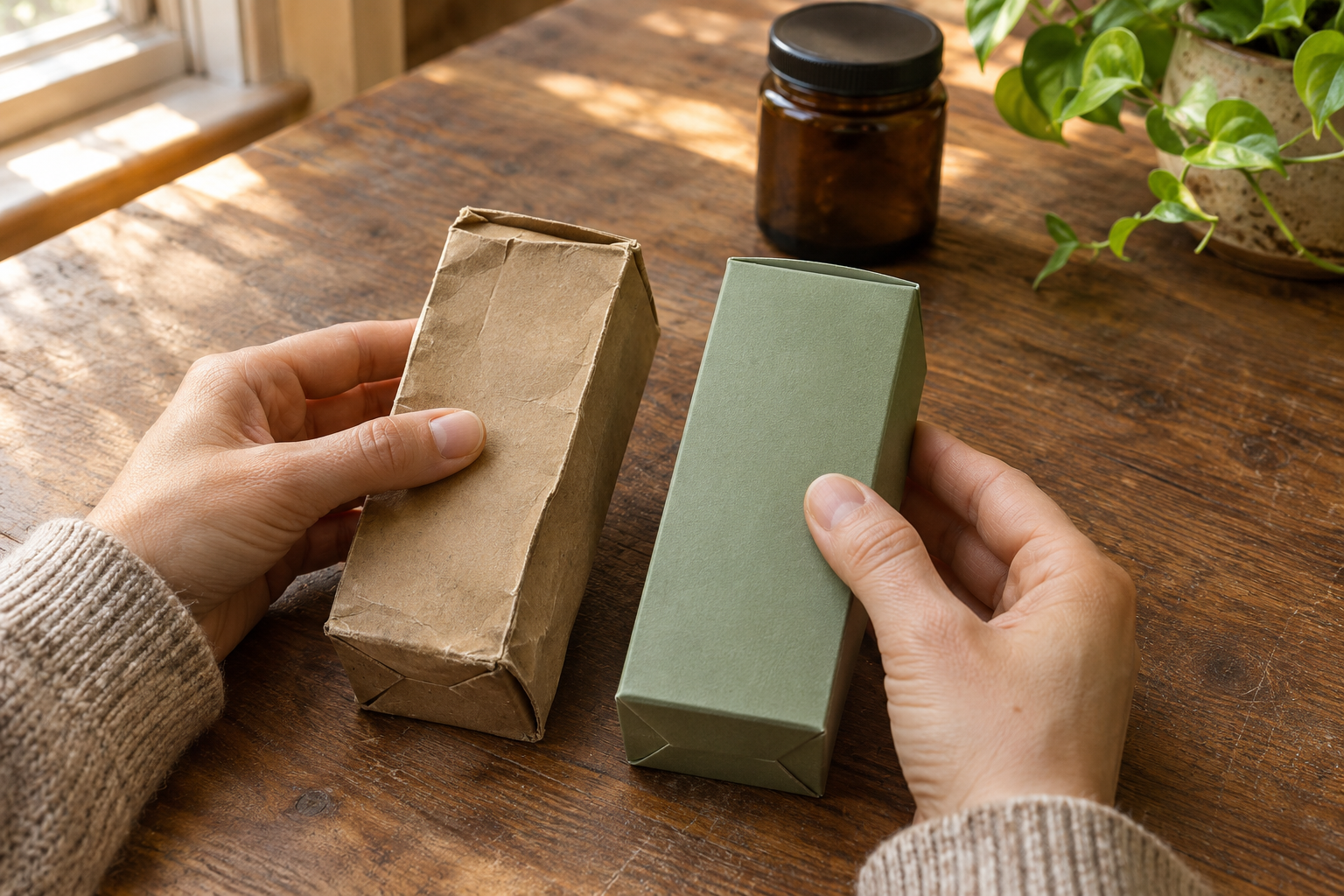
Put the old ingredient line on the left and the proposed replacement on the right. Leave enough space below each to record where that wording came from.
- Keep the original spelling even if it looks unfamiliar.
- Mark which words came from a bottle and which came from a listing.
- Write your conclusion beneath the two entries, not over either one.
If a later photograph changes your answer, you’ll be able to explain why. Someone helping with the order can see the original discrepancy instead of having to take your word.
Know which question belongs to whom
A reference deals with printed names, not the contents of the package in your cart. Your mother, meanwhile, can tell you which changes she would actually accept.
Think of a replacement decision as two separate checks. First, work out what each description names. Then ask whether the item offered has the features you meant to buy.
Bundle and refill warning
Check the bottle count and total before accepting a replacement bundle. Agreeing that two names match doesn’t mean you want every bottle in the offer.
If refills are offered, check the schedule and what authorizes another charge. Choose the quantity and billing terms you actually want before confirming the order.
How to Compare the Botanical Names on Two Labels
Step 1: Find the two lines that belong together
You can do the first comparison at a kitchen table. For the old item, use the package the person actually kept, if available, rather than today’s search result.
What if she shows you a kitchen jar she labeled herself? Her handwriting tells you what she called it, not which carton she emptied into it.
If she kept the original carton, put its ingredient line in your comparison and mark the handwritten note separately. If not, leave the original package wording unknown.
For the proposed replacement, look for the label that belongs to the selected option. Some pictures show a whole family of products while the order specifies just one.
Imagine a photograph showing a travel carton beside a larger box. The text you need is visible on the larger box, but you selected the travel carton.
Write that down as a picture of the larger option. Enlarging the photograph can make the letters easier to read without establishing what’s printed on the other carton.
Suppose the seller turns the travel carton around for another picture. Now you can read the option name and its ingredient line on the same carton.
Step 2: Read the reference beside your notes
The NIH botanical guide explains both words in a species name: genus and specific epithet. A following initial can credit the botanist.
Kew’s black cohosh record lists Cimicifuga racemosa as a synonym of Actaea racemosa, its accepted name for the same species.
On the reference page, read the heading right above the entry. In a crowded set of search results, the description underneath a neighboring heading may look equally convincing.
Save the address of the entry itself rather than the general search page. Someone opening that link later shouldn’t have to guess which result you used.
Step 3: Put the other words back into the decision
Picture a fictional reorder: the old carton gives the synonym and says root powder. The replacement gives the accepted name and says root extract.
Your mother asked for the powder, so set the proposed replacement aside. Point to the remaining difference when you explain why you didn’t order it.
Now change just the word extract to powder on the second carton. That objection disappears from your comparison. There is no reason to keep calling that line a mismatch.
That doesn’t make all the other entries agree. Imagine a second ingredient that your mother specifically asked you to avoid. Read that entry before treating the shopping task as finished.
If you keep a note for next time, make it narrow: the old and new labels agree on the requested ingredient description. Leave room for a different answer next time.
Step 4: Separate a contradiction from an incomplete description
NCCIH distinguishes blue cohosh, Caulophyllum thalictroides, from black cohosh. Your note specifies black, but the shop offers blue.
Pass on that offer and leave the request open.
A second listing says only “cohosh root.” Ask what that short description stands for before deciding whether to cross this option off your list.
| What the seller supplies | What to write in your note | The next useful step |
|---|---|---|
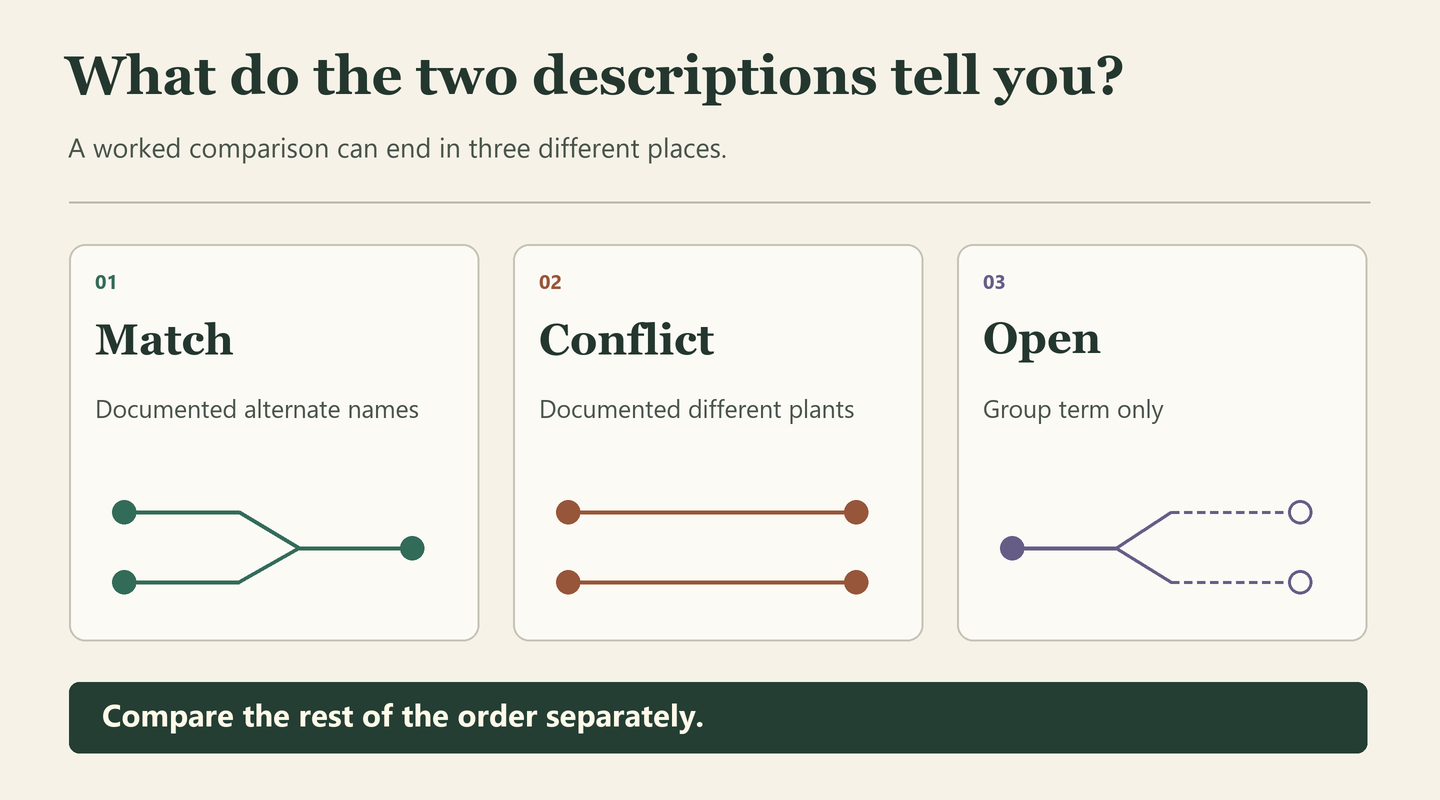
| A documented name match | Keep the reference beside the quoted lines. | Compare the other words on that line. |
| A specifically different plant | Write down precisely which item was offered. | Ask for the item you originally requested. |
| Only a shortened description | The missing words could change the answer. | Request the full line for this option. |
The same shop could send you both offers in one message. Reply to each under its own item reference so neither answer gets attached to the wrong offer.
Which Item Does the Supplier Sheet Actually Describe?
Read the heading over the unfamiliar expression. A two-column sheet might put an orderable item number on the left and a purchasing category on the right.
Kew describes Cimicifugae Rhizoma as a pharmaceutical name used for several species in some medicinal literature.
Picture a fictional supplier sheet with that expression in a column headed “Material.” An accompanying catalog lists several possible sources, but none has been marked.
Seeing it on the list answers a modest question: it is among the possibilities in that catalog. What you need for this sale is the source selected for this item.
Imagine the same problem without the Latin. A menu lists three possible fillings for a pastry tray. The menu alone doesn’t say which filling went into the box you ordered.
Back at the shop, ask which entry belongs to your order. The answer should let you point to one entry without choosing it yourself.
Suppose the reply attaches two documents, an old selection list and a revised item sheet. Look for the product reference on each before choosing the one with the newer date.
If the revised sheet identifies the offered item and names its source, update your note. Keep the original catalog entry beside it so the change makes sense.
Suppose the revised sheet offers two item numbers and the shop invites you to choose. Confirm which one the quoted price covers before treating either as the actual offer.
How One Ingredient Row Can Become Two by Mistake
Picture a fictional carton with two printed rows. The first describes a powder and gives an alternate name in parentheses. The second separately describes an extract.
Cover the parentheses and count the two printed rows. Uncovering the words in brackets hasn’t changed where the second entry starts.
Now look at the shop’s short title, which condenses the entire panel into a few words.
The title doesn’t tell you which row was dropped from the description, if either. Ask for the panel before declaring something missing from the product itself.
Picture a copy with a fresh bullet at the beginning of every wrapped line. Suddenly a few words in parentheses are sitting on their own.
Instead of arguing about how many ingredients the list contains, go back to the original line breaks. Put each alternate name beside the material it actually described.
A simple second pass helps catch that mistake. Have someone read each printed row aloud while you follow the copy, without telling them where you think a row begins.
Look for words such as “also called” or a clearly separate entry on the panel. If a crop hides the opening parenthesis, ask for the full image.
Once you’ve repaired the list, it can support a specific question. Does the new item still declare both preparations, or has the retailer simply shortened its product title?
When Two Old Cartons Tell Different Stories
Suppose you find two empty cartons in the cupboard instead of one. Both bear the same shop sticker, but only one has the ingredient wording you remember.
The receipt in your email calls the purchase an herbal refill. It doesn’t say which carton belonged to that order. The newest message isn’t necessarily about the carton you need.
In this example, a small printed item code ends in 14 on one carton and 41 on the other. The numbers are easy to transpose when reading them aloud.
The detailed order confirmation ends in 41. That settles which old item you bought that time. It doesn’t settle which item your mother meant when she asked for another box.
If the confirmation has no code, look for a recorded feature unique to one carton. A description of the blue lid won’t help if both lids are blue.
Show her the two cartons before contacting the seller. She can answer the question about her request; the seller can answer which description goes with the current catalog entry.
Now suppose the seller offers a photograph of item 14 with exactly the wording she wants. Your saved order still selects item 41. Don’t attach the photograph to that order.
Choose the item she identified, then check its own description before paying. The mistake here wasn’t a mysterious plant name. It was using the right photograph for the wrong selection.
What Would Actually Settle the Disagreement?
Suppose you ask whether the right carton will ship and get a friendly reply saying the pictures are representative. That’s useful information about the pictures, not about the carton.
Try a question the shop can answer without knowing what you used the product for. Identify the selected option and quote the handful of words that disagree.
For the fictional reorder, you might ask: “On the small carton I selected, what words follow the plant name on the ingredient line?”
Which reply would settle the wording question?
A reply identifying the small carton’s item reference and quoting its current ingredient line addresses the question. A reply naming the product family leaves the option unresolved.
Suppose your message asked about both the small carton and the large one. A reply saying yes may mean either size. Write back about the one you actually want.
Keep an answer about advertised wording separate from an answer about dispatch. A seller may be able to confirm what its catalog says without confirming which stock will ship.
If both versions carry the same item number, ask when the new artwork went into use and whether the shop still holds older stock under that number.
A print date can distinguish two designs in the catalog. A photo of the carton set aside for your shipment answers the more immediate question about your delivery.
That distinction also matters for an out-of-stock item. Agreement about last month’s label does not authorize the shop to send whatever it considers the nearest replacement.
What to Do Before Ordering or After Receiving a Replacement
-
Decide which difference would change your order. If someone asked for a particular preparation, keep that request visible while you compare the two names.
When ordering for another person, show them the remaining difference before accepting it on their behalf. A cheaper package isn’t an answer to a question about the contents.
-
Keep the selected option with its description. If a printed receipt lists only a price, save the itemized confirmation too.
If those records differ, keep both originals instead of editing one to agree with the other. The seller can then see where the discrepancy first appeared.
-
Ask the question that could change your answer. If the item is fully identified and wrong for your request, ask for a different item rather than another spelling.
If the seller cannot identify what will ship, leave the replacement out of your purchase. You don’t need to accuse anyone to decline an uncertain selection.
-
Compare what arrived with what you accepted. Keep a clear picture of the relevant panel, the package identity and the order description before asking about a discrepancy.
If you wanted to return it unopened, check the applicable instructions before disturbing the seal. Describe the exact difference without claiming to know which plant is inside.
A return request and a replacement request aren’t interchangeable. If you don’t want another carton, say so when you ask which options the seller offers.
Frequently Asked Questions
Can I rely on the colored picture of the plant?
A drawing may help you recognize the carton you remember. It doesn’t resolve a conflict between the printed ingredient line and the description of the selected replacement.
What does that initial after the name mean?
When L follows a species name, it credits Linnaeus. Copy the entry as printed so someone else can find the same reference.
What if my photograph cuts off the second word?
Mark that part as unreadable rather than filling it from memory. A clearer photo of the same panel is more useful than ten listings for other bottles.
Should I correct a suspected spelling mistake myself?
Keep the printed spelling beside your suggested correction. Ask which wording was intended for this item so the person replying can see precisely what prompted the question.
Can two retailers’ matching descriptions settle a disagreement?
If both descriptions came from the same supplier sheet, you still have one underlying description. Look for something that connects it to the option being sold.
What if the shop changes its explanation after delivery?
Keep both replies and ask which item each one describes. A correction to today’s listing doesn’t tell you by itself what was promised on your order.
The Bottom Line
For a reorder, buy only the version that matches what you meant to replace. If one requested detail still differs, passing on that carton is a complete answer.
If the label differs from your order, keep the carton and ask about a return before use. Don’t choose a substitute on the strength of a name.

Join the discussion
0 commentsShare your experience or ask a question about this article.
Community experiences
Did this happen to you?
Your experience could help someone recognize the same scam. Submit a private report for our team to review.
I experienced this tooReports are reviewed before publication. Sharing publicly is always your choice.
Discussion
Start the conversation
Have a question or something useful to share? Add the first comment.