

A sleek, futuristic vehicle called the “Suzuki Moorai” has been making waves across TikTok, Instagram, and Reddit. Marketed as an all-terrain robot dog vehicle straight out of a science fiction blockbuster, the Moorai is supposedly a revolutionary mobility solution by Suzuki, blending cutting-edge robotics with urban adventure utility. Videos show a four-legged robotic creature, often being ridden like a motorized horse, navigating rocky slopes and concrete streets with ease. The internet is buzzing.
But here’s the burning question: Is the Suzuki Moorai real, or is this just another internet hoax fueled by AI renderings and viral hype?
This article breaks down the full story — investigating the origin of the viral content, analyzing available footage, comparing it to real Suzuki projects, and assessing whether the “Moorai” ever actually existed beyond pixels on a screen.
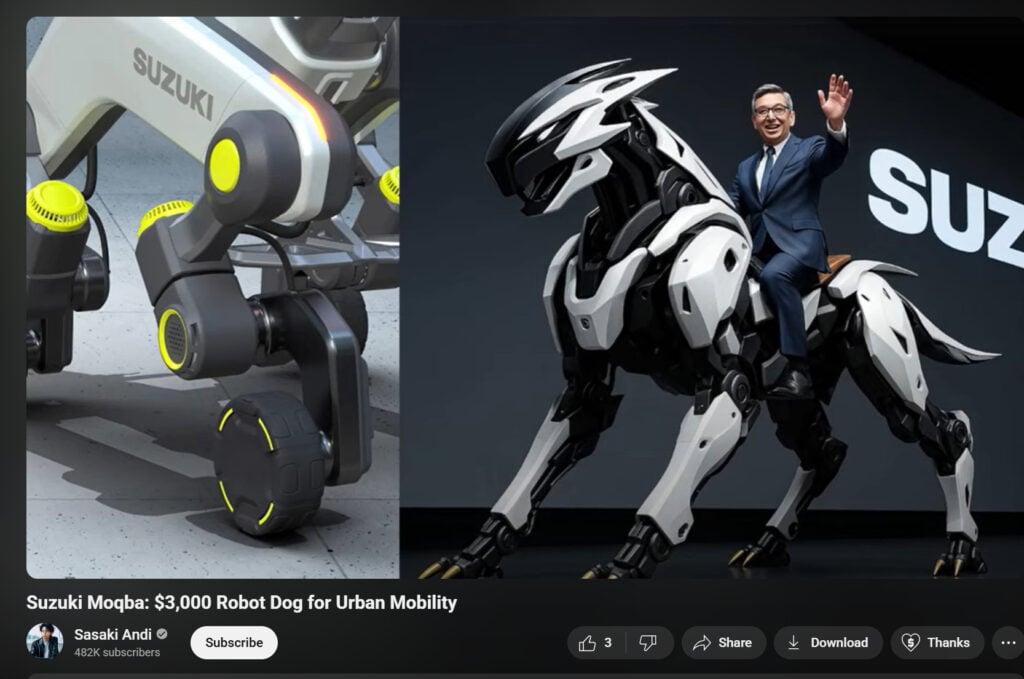
What Is the Suzuki Moorai Supposed to Be?
According to trending posts, the Suzuki Moorai (sometimes referred to as “Suzuki Moqba”) is:
- A robot dog-style all-terrain vehicle
- Designed for individual urban mobility
- Capable of traversing rough landscapes, stairs, rivers, and city streets
- Retailing for around $3,000
- Smart, autonomous, and futuristic in form and function
Some versions of the video depict a humanoid or businessman in a suit riding atop the Moorai, like a robotic centaur. Others showcase the machine walking in an eerily smooth, robotic gait through urban settings or snowy mountains.
At first glance, it seems like the next step in mobility innovation — a robotic companion that doubles as transport. But is there any truth behind the concept?
Analyzing the Viral Footage: Style Over Substance?
The first major red flag appears when analyzing the footage. Here’s what careful observers have noted:
1. Unnatural Animation and Movements
The walking animation of the robot dog appears too perfect. The leg movements, balance, and interaction with terrain lack the real-world imperfections seen in current robotics. Boston Dynamics, one of the leaders in robotic mobility, still shows jerky, mechanical movements in real-world trials. The Moorai, in contrast, moves like a digital model animated by artists.
2. Lighting and Texture Inconsistencies
Some clips show odd lighting discrepancies. For example, the shadows and reflections on the robot’s body don’t match the environment — a common giveaway in CGI renderings. The robot seems to cast minimal shadow or reflect ambient lighting unnaturally.
3. Looped Sequences and Recycled Scenes
Several clips use the same motion loops, suggesting they were produced for aesthetic impact rather than technical demonstration. The environment remains static, and the lack of camera jitter or real-world interaction further raises doubts.
No Official Recognition: What Suzuki Really Announced
To validate whether the Suzuki Moorai exists, a visit to Suzuki’s official websites, global press release pages, and major automotive industry publications yields a telling result: There is no mention whatsoever of a vehicle called Moorai or Moqba.
Instead, the only project remotely related is the Suzuki MOQBA — which stands for “Modular Quad Base Architecture.” Unveiled as a concept at the Japan Mobility Show, this design is:
- A modular platform aimed at mobility-impaired individuals
- Intended to support wheelchair attachments and urban transport
- Not humanoid or quadruped in shape
- Not intended for recreational or animal-like transport
- Still a concept, not a product available for sale
There is no connection between the real MOQBA and the videos circulating online. The footage using the “Moorai” name appears to exploit the similarity in wording to create a fictional association with a legitimate Suzuki project.
How AI and CGI Are Fueling the Confusion
With the rise of AI art generators and CGI tools, it’s easier than ever to fabricate lifelike animations and realistic-looking “products” that never existed. Here’s how these tools are shaping the Suzuki Moorai phenomenon:
AI-Generated Imagery
Some still images in the viral videos show people riding the Moorai with perfectly smooth integration — these are likely AI composites. Tools like Midjourney and DALL·E can now create hyper-realistic human-robot combinations with astonishing detail.
Unreal Engine and Blender Animation
The fluidity of the walking motions suggests use of advanced animation tools such as Blender or Unreal Engine 5, both of which are frequently used to create cinematic-grade CGI for entertainment and promotional purposes.
No Physical Prototype Evidence
Despite dozens of videos showing different angles of the Moorai, not a single behind-the-scenes video exists. No unboxing, no assembly line footage, no real-world trial — all of which typically accompany even early-stage prototypes.
Tracing the Misinformation: Where Did It Begin?
The Suzuki Moorai hype appears to originate from AI-focused content creators aiming to generate viral engagement. The most prominent version is a YouTube video titled “Suzuki Moqba: $3,000 Robot Dog for Urban Mobility,” posted by a channel that frequently showcases AI-generated concept vehicles.
What’s concerning is the lack of disclaimer in these videos. Viewers are led to believe the vehicle is real, with no indication that the content is speculative or fictional.
In Reddit discussions and comment sections, users are beginning to call out the inconsistencies. Some have reverse-searched the images and traced them back to CGI artist portfolios, where similar concepts are labeled as speculative.
Bottom Line: What You Really Need to Know About the Suzuki Moorai
The Suzuki Moorai is not a real vehicle — it’s a viral fabrication powered by AI-generated visuals and speculative CGI. Despite compelling videos circulating across social media platforms, there is no official record, announcement, or product development from Suzuki to support the existence of such a robot dog vehicle.
What you’re seeing is likely a combination of:
- AI-rendered concept art
- Mislabeling of Suzuki’s real project, the MOQBA mobility platform
- Strategic digital illusions crafted to spark virality, not reality
While the Moorai captures the imagination with its sleek design and futuristic appeal, there is no engineering foundation or commercial roadmap behind it. It’s a powerful example of how digital content can blur fact and fiction, especially when shared without context.
Bottom Line:
The Suzuki Moorai is not a real product. It’s a digitally-crafted concept that may inspire future innovation — but for now, it belongs to the realm of science fiction, not the real world of robotics or transportation. Always verify before you believe, and appreciate the creativity without mistaking it for technological reality.

Join the discussion
0 commentsShare your experience or ask a question about this article.
Discussion
Start the conversation
Have a question or something useful to share? Add the first comment.