Unmasking Svchost.exe – Is It Legit or Malware in Disguise?
Written by: Stelian
Published on:
SvcHost.exe is a crucial Windows system file that hosts many essential services. Unfortunately, malware often disguises itself as svchost.exe to bypass detection. In this comprehensive guide, we’ll cover all you need to know about svchost.exe.
What is SvcHost.exe?
SvcHost.exe is the Shared Service Host process for Windows, responsible for managing a large group of Windows services. The services it handles include:
Windows Update – Installs OS and software patches
Windows Firewall – Manages inbound and outbound network access
Windows Audio – Manages sound drivers and audio playback
Network Connections – Manages network adapters and protocols
Windows Event Log – Tracks system events and errors
Windows Error Reporting – Reports errors to Microsoft
In total, svchost.exe can host upwards of 70 different system services. By grouping multiple services into one svchost.exe process, Windows conserves system resources.
Svchost runs as multiple instances, each hosting a subset of Windows services. All instances are located in %SystemRoot%\System32 and signed by Microsoft.
Normal Behavior for SvcHost.exe
When functioning properly, svchost.exe should exhibit this behavior:
Regular multiple instances – It’s normal to see many svchost.exe entries running, each hosting specific services.
Low resource usage – Svchost processes have a small footprint, only using resources for hosted services.
No weird child processes – Legit svchosts only spawn OS service related processes.
Static file locations – Svchost only runs from System32 or the SysWOW64 folder for 32-bit systems.
No direct network calls – The services it hosts may connect outwards, but core svchost makes no network calls directly.
As long as svchost.exe instances align with these parameters, they are legitimate and no cause for concern.
How Malware Abuses SvcHost.exe
Cybercriminals often target svchost.exe for malware impersonation because of its common presence and high privileges. Tactics include:
1. Mimicry
Malware authors name executables svchost.exe and install them in the system folders. This makes them appear legitimate and blend into the crowd of real svchost entries.
2. Service Hijacking
Some malware hijacks existing svchost-hosted services by registering themselves as a service. This grants them the same trusted execution context as critical system services.
4. Privilege Escalation
Svchost runs with SYSTEM privileges, enabling full access to the OS. By impersonating it, malware inherits powerful permissions to bypass restrictions.
5. Stealth
Blending in as one of numerous svchost instances allows malware to operate discreetly, circumventing detection. Malware svchosts are sometimes hidden entirely from task managers.
Once embedded, some things malicious svchosts may do:
Log keystrokes and steal data
Download more malware
Deploy ransomware across files
Abuse services like Windows Update for attacks
Disable security tools
Allow remote attackers access to the system
The high privileges gained allows malware to carry out these tasks while avoiding limits placed on normal software.
How to Spot Malicious SvcHost.exe
While sneaky, fake svchosts do exhibit telltale traits that can reveal their true nature:
1. Check Install Location
Verify svchost.exe instances are only located in %SystemRoot%\System32 or %SystemRoot%\SysWOW64. Other locations indicate an imposter.
2. Inspect Process Properties
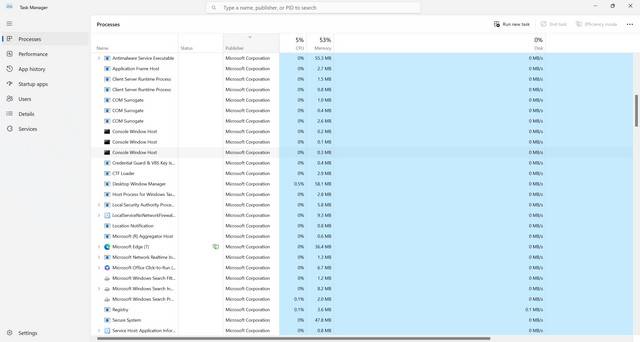
Use Process Explorer to view detailed properties on suspect svchosts, like hosted services, command line, parent process, etc. Anything unusual is a red flag.
3. Verify Digital Signature
Real svchost.exe is digitally signed by Microsoft. Bogus ones often lack a legitimate signature.
4. Monitor Resource Usage
Check CPU, memory and disk usage for outliers. Malicious svchosts often consume more resources than the real ones.
5. Examine Network Traffic
Inspect traffic with Wireshark – svchost itself shouldn’t connect outwards at all. Any direct network calls are sure signs of malware.
6. Check Service Registry Entries
Malware svchosts sometimes add suspect service names to the registry that don’t match any legitimate Windows service.
Removing Malicious SvcHost.exe
This malware removal guide may appear overwhelming due to the number of steps and numerous programs that are being used. We have only written it this way to provide clear, detailed, and easy-to-understand instructions that anyone can use to remove malware for free. Please perform all the steps in the correct order. If you have any questions or doubts at any point, stop and ask for our assistance.
To remove the SvcHost.exe Trojan and other malware from your computer, follow these steps:
STEP 1: Use Rkill to terminate malicious processes
In this first step, we will download and run Rkill to terminate malicious processes that may be running on your computer.
RKill is a program that was developed at BleepingComputer.com that attempts to terminate known malware processes so that your normal security software can then run and clean your computer of infections. When RKill runs it will kill malware processes and then removes incorrect executable associations and fixes policies that stop us from using certain tools.
Download Rkill.
You can download RKill to your computer from the below link. When at the download page, click on the Download Now button labeled iExplore.exe. We are downloading a renamed version of Rkill (iExplore.exe) because some malware will not allow processes to run unless they have a certain filename.
RKILL DOWNLOAD LINK (The above link will open a new page from where you can download Rkill)
Run RKill.
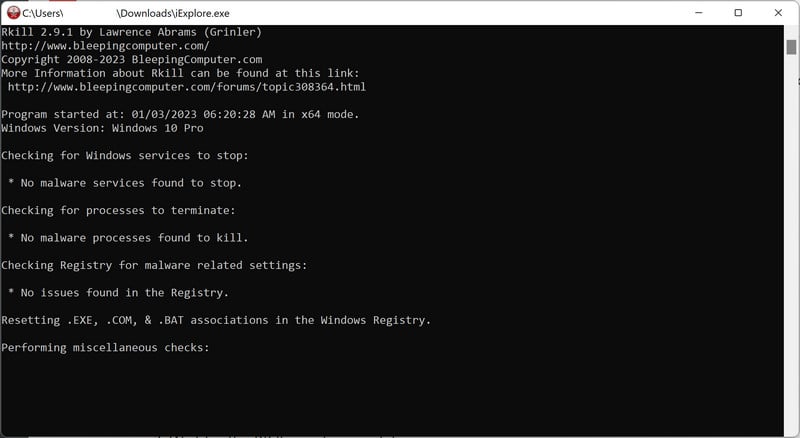
After downloading, double-click the iExplore.exe icon to kill malicious processes. In most cases, downloaded files are saved to the Downloads folder. The program may take some time to search for and end various malware programs.
When it is finished, the black window will close automatically and a log file will open. Do not restart your computer. Proceed to the next step in this guide.
STEP 2: Uninstall malicious programs from Windows
In this second step, we will manually check if any unknown or malicious programs are installed on the computer. Sometimes adware and browser hijackers can have a usable Uninstall entry that can be used to remove them.
Windows 11Windows 10Windows 8Windows 7
Open the Settings app
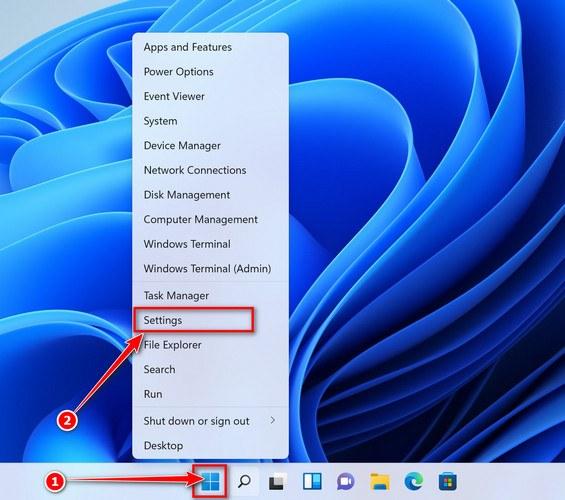
Press Windows + I on your keyboard to open Settings. Alternatively, right-click the Start button and select “Settings” from the menu.
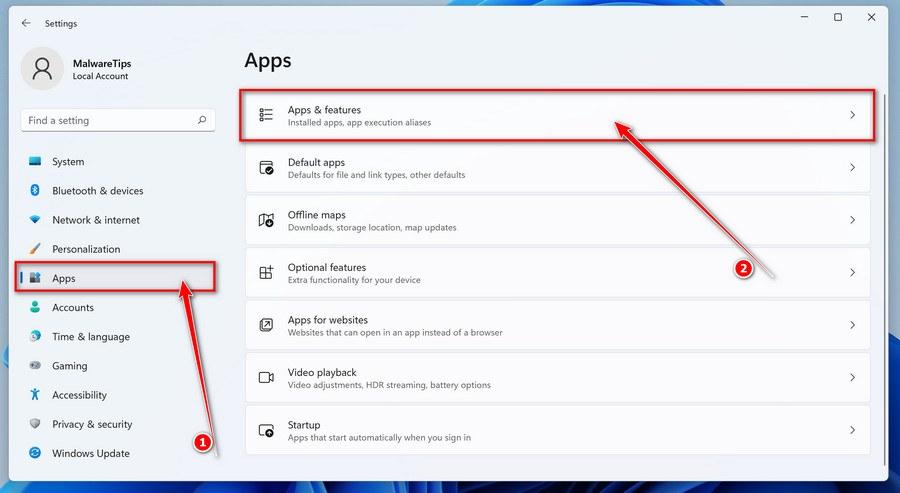
Go to “Apps & Features”
In the Settings window, click “Apps” in the sidebar, then select “Apps & Features“.
Find and uninstall the malicious program
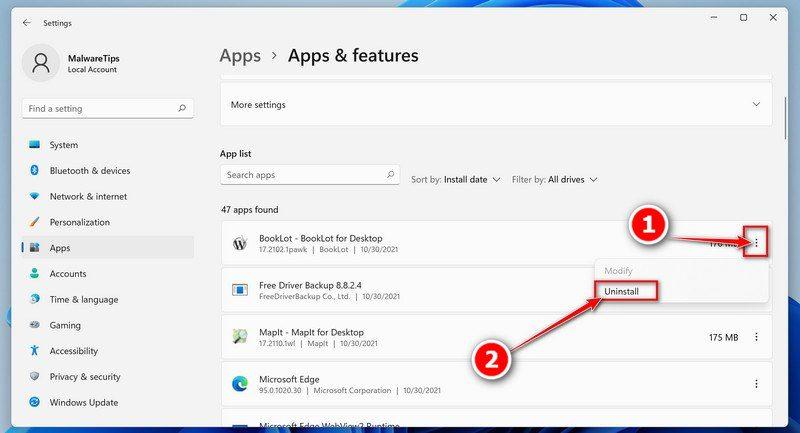
Scroll through the list of installed apps and look for anything suspicious — a program you don’t remember installing, or one with a strange or generic name. Quick tip: click “Sort by” and choose “Install date“. Malware is usually one of the most recently installed programs, so it will appear near the top.
When you find the malicious program, click the three dots next to it and select “Uninstall“.
Didn’t find any suspicious programs? That’s fine — not all infections install visible apps. Just continue with the next step in this guide.
Complete the uninstall
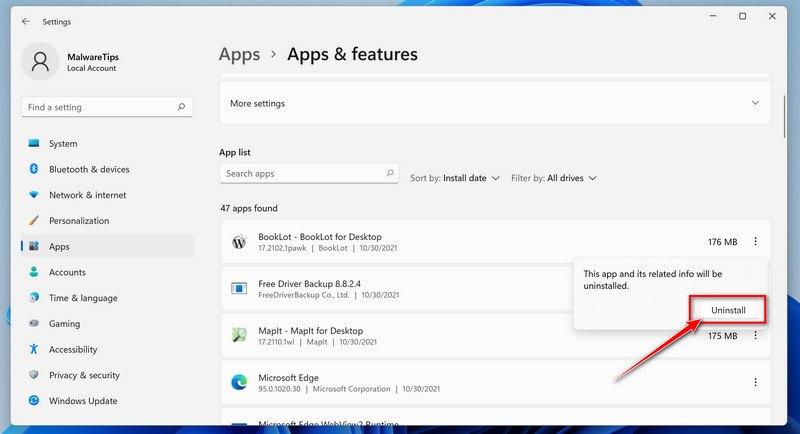
Confirm by clicking Uninstall in the message box, then follow the remaining prompts. Read each prompt carefully — some malicious programs use confusing wording or pre-ticked boxes hoping you’ll click through without looking.
Open the Settings app
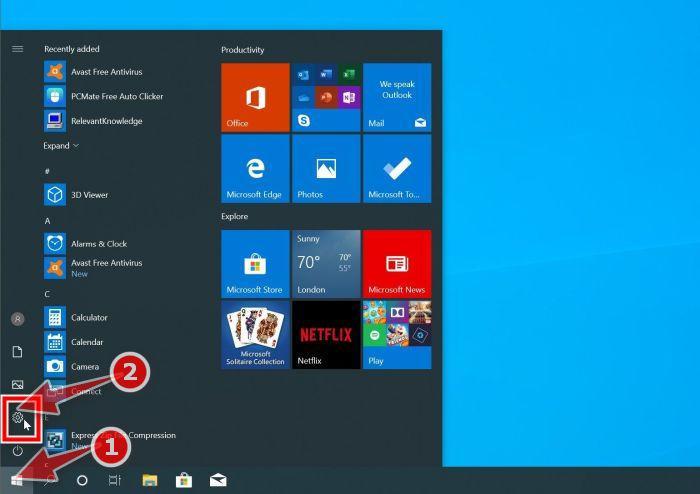
Press Windows + I on your keyboard to open Settings. Alternatively, click the Start button on the taskbar and select “Settings” (the gear icon).
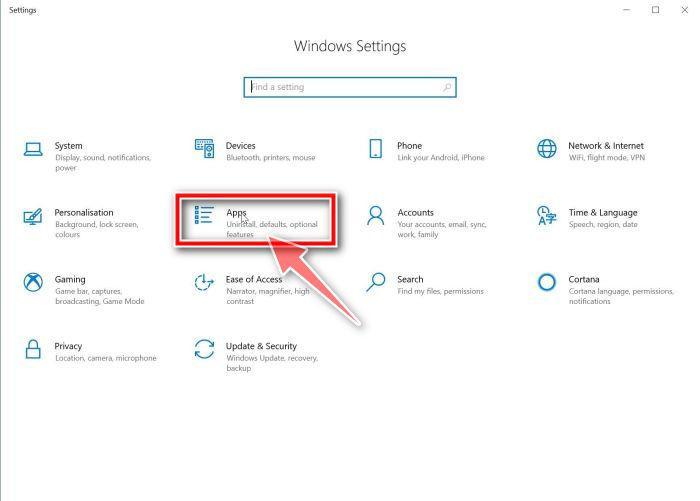
Click on “Apps”
In the “Windows Settings” window, click “Apps“. The “Apps & Features” section should open by default — if it doesn’t, select it from the list on the left.
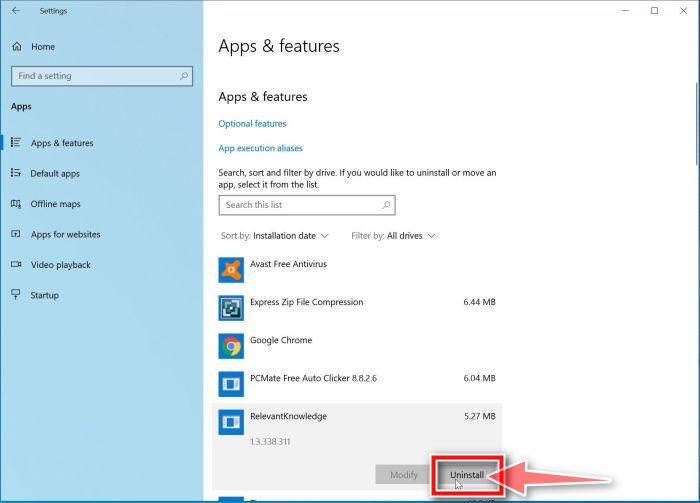
Find and uninstall the malicious program
Scroll through the list of installed apps and look for anything suspicious — a program you don’t remember installing, or one with a strange or generic name. Quick tip: click “Sort by” and choose “Install date“. Malware is usually one of the most recently installed programs, so it will appear near the top.
When you find the malicious program, click on it and select “Uninstall“.
Didn’t find any suspicious programs? That’s fine — not all infections install visible apps. Just continue with the next step in this guide.
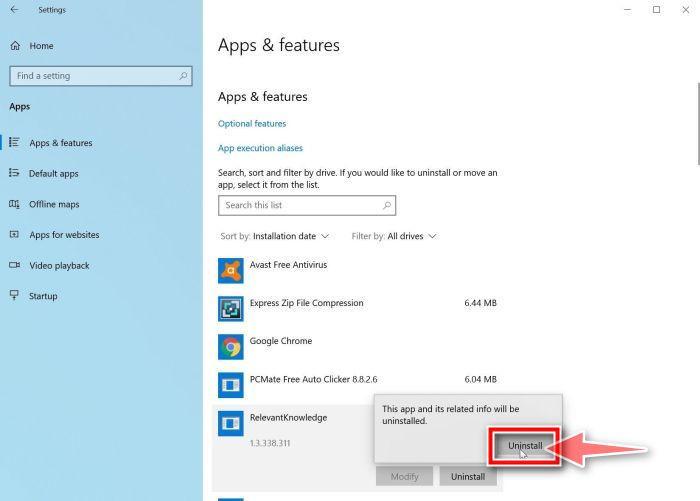
Complete the uninstall
Confirm by clicking Uninstall in the message box, then follow the remaining prompts. Read each prompt carefully — some malicious programs use confusing wording or pre-ticked boxes hoping you’ll click through without looking.
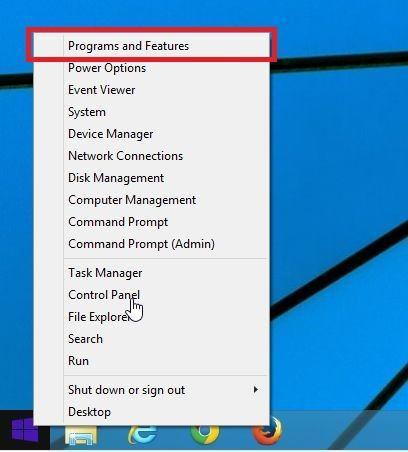
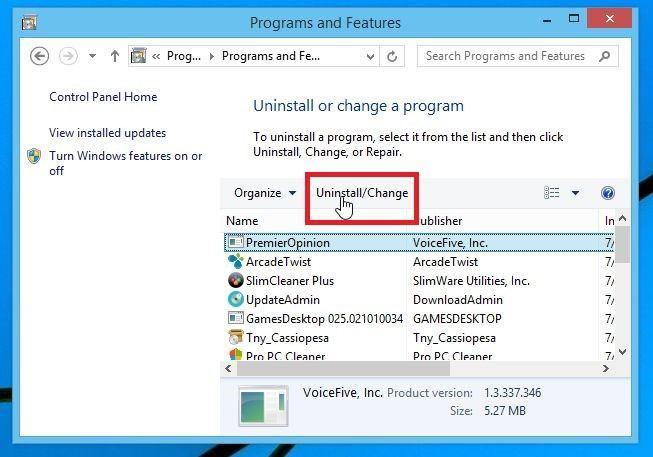
Open “Programs and Features”
Right-click the Start button in the taskbar, then select “Programs and Features“. This takes you straight to the list of installed programs.
Find and uninstall the malicious program
Scroll through the list of installed programs and look for anything suspicious — a program you don’t remember installing, or one with a strange or generic name. Click to highlight it, then click the “Uninstall” button.
Didn’t find any suspicious programs? That’s fine — not all infections install visible apps. Just continue with the next step in this guide.
Complete the uninstall
Confirm by clicking Yes in the message box, then follow the remaining prompts. Read each prompt carefully — some malicious programs use confusing wording or pre-ticked boxes hoping you’ll click through without looking.
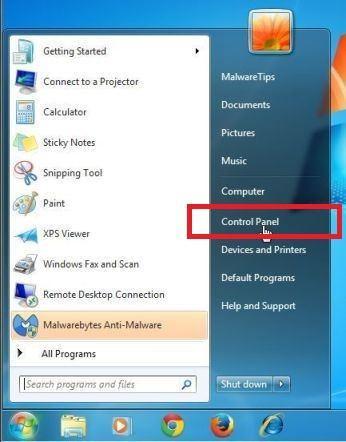
Open the Control Panel
Click the “Start” button, then click “Control Panel“.
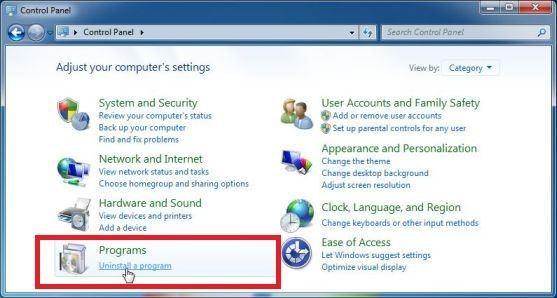
Click on “Uninstall a Program”
In the Control Panel, click “Uninstall a Program” under the Programs category.
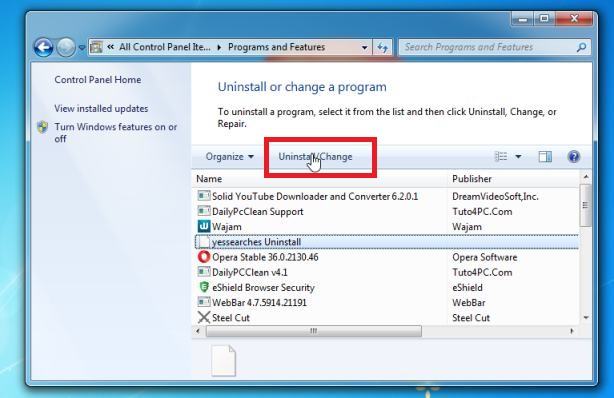
Find and uninstall the malicious program
Scroll through the list of installed programs and look for anything suspicious — a program you don’t remember installing, or one with a strange or generic name. Click to highlight it, then click the “Uninstall” button.
Didn’t find any suspicious programs? That’s fine — not all infections install visible apps. Just continue with the next step in this guide.
Complete the uninstall
Confirm by clicking Yes in the message box, then follow the remaining prompts. Read each prompt carefully — some malicious programs use confusing wording or pre-ticked boxes hoping you’ll click through without looking.
Is a stubborn program refusing to uninstall? Use Revo Uninstaller to force-remove it completely, including leftover files and registry entries.
With the malicious programs removed, you’re ready for the next step in this guide.
STEP 3: Reset browsers back to default settings
In this step, we will remove spam notifications, malicious extensions, and change to default any settings that might have been changed by malware. Please note that this method will remove all extensions, toolbars, and other customizations but will leave your bookmarks and favorites intact. For each browser that you have installed on your computer, please click on the browsers tab below and follow the displayed steps to reset that browser.
ChromeFirefoxMicrosoft EdgeInternet Explorer
Reset Chrome for Windows to default settings
We will now reset your Chrome browser settings to their original defaults. This will reset your startup page, new tab page, search engine, and pinned tabs. It will also disable all extensions and clear temporary data like cookies. Your favorites, history, and saved passwords will not be cleared.
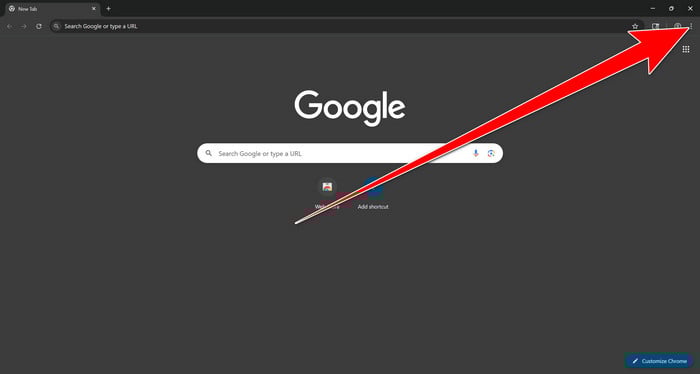
Open the Chrome menu
Open Google Chrome and click the three-dot (⋮) icon in the top-right corner.
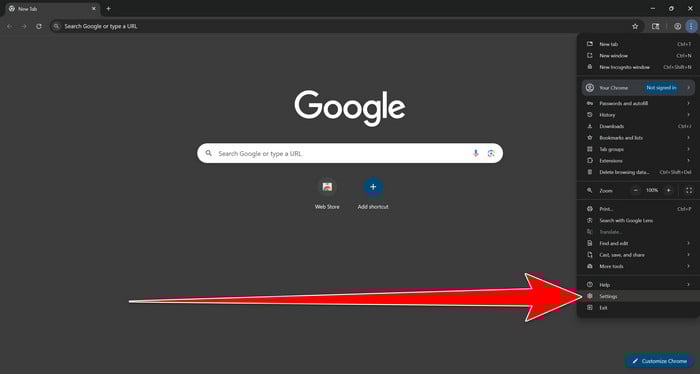
Open Chrome Settings
Select Settings from the Chrome menu.
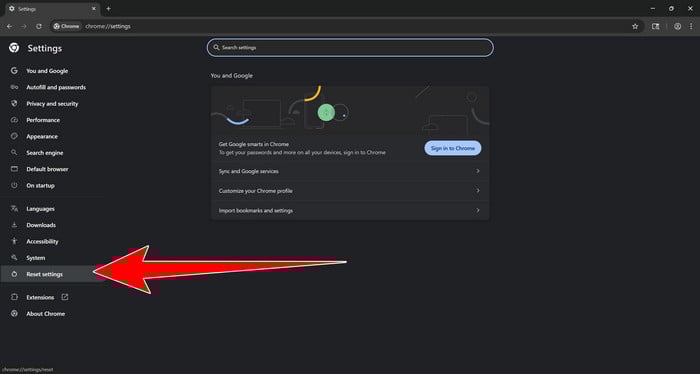
Select “Reset settings”
Look at the menu on the left side of the Settings page. Scroll down and click Reset settings.
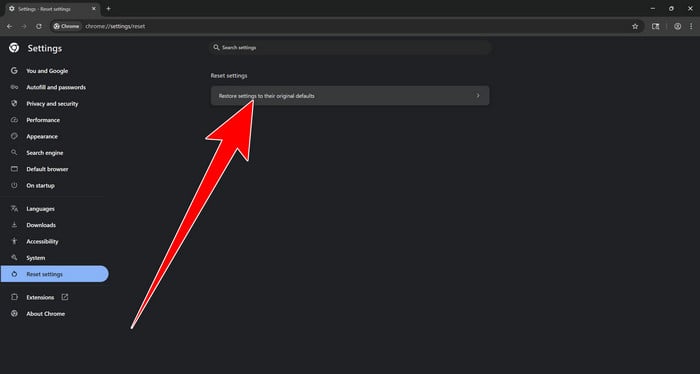
Restore Chrome’s original settings
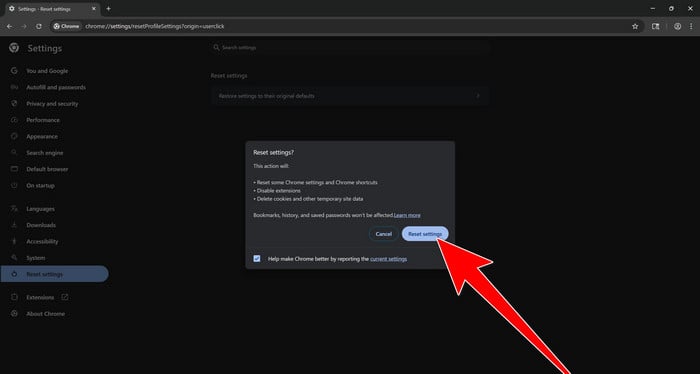
Click Restore settings to their original defaults.
Confirm the Chrome reset
A confirmation window will appear. Click Reset settings.
This will:
Restore the default search engine, homepage, and new tab page
Reset startup pages and pinned tabs
Disable installed extensions
Clear temporary cookies and website data
Don’t worry: Chrome will not delete your bookmarks, browsing history, or saved passwords.
Restart Chrome and perform a test search. If your searches now open normally in Google, you can stop here.
If searches are still redirected through shady domains complete the additional step below.
Remove persistent search hijacker data
Only complete this step if the redirect continues after resetting Chrome.
Some browser hijackers hide inside Chrome’s local search-engine database. A standard Chrome reset may not remove this database, which is why searches can continue to pass through shady sites.
The following procedure creates a backup of the affected database and allows Chrome to build a new, clean version. This is safer and less disruptive than deleting the entire Chrome profile.
First, prevent Chrome Sync from restoring the hijacked settings:
Open a new Chrome tab.
Copy the following address, paste it into Chrome’s address bar, and press Enter:
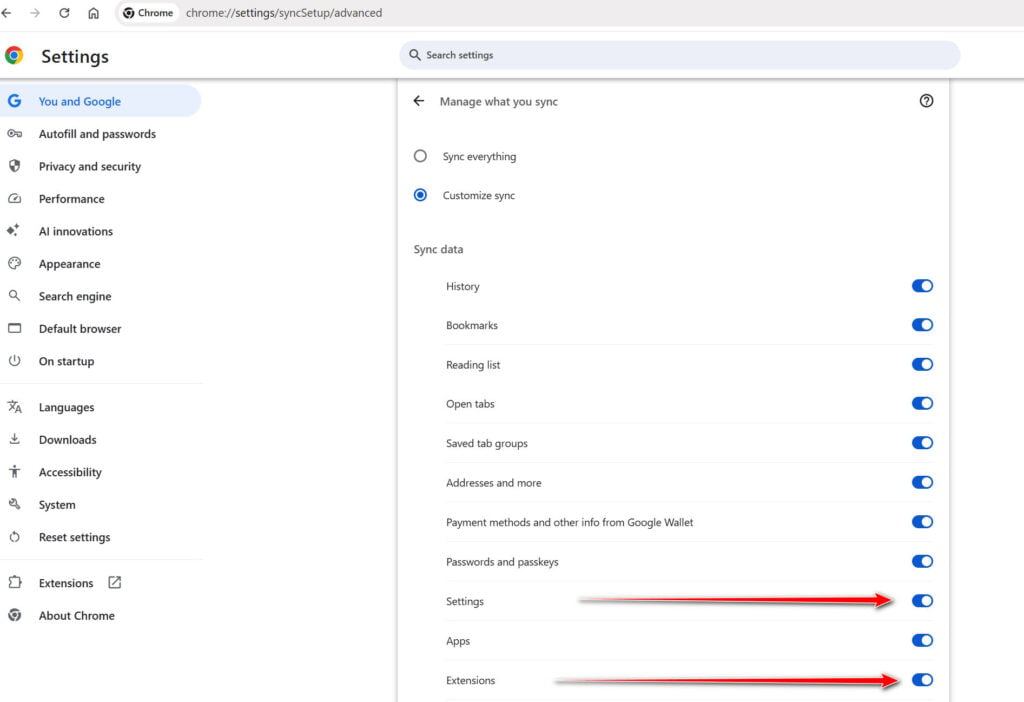
chrome://settings/syncSetup/advanced
Under Manage what you sync, select Customize sync.
Turn off Settings and Extensions.
You can leave Bookmarks and Passwords enabled so your important data remains synchronized.
Note: Some newer Chrome versions may automatically redirect this address to the Google Account settings page. If that happens, locate the list of synchronized Chrome data and turn off Settings and Extensions there.
Now save anything you are working on and close every Chrome window.
Run the cleanup command:
Press the Windows key on your keyboard.
Type PowerShell.
Open Windows PowerShell. Administrator access is not required.
Copy the entire command shown below.
Right-click inside the PowerShell window to paste the command, then press Enter.
If Windows warns you about pasting multiple lines, select the option to continue.
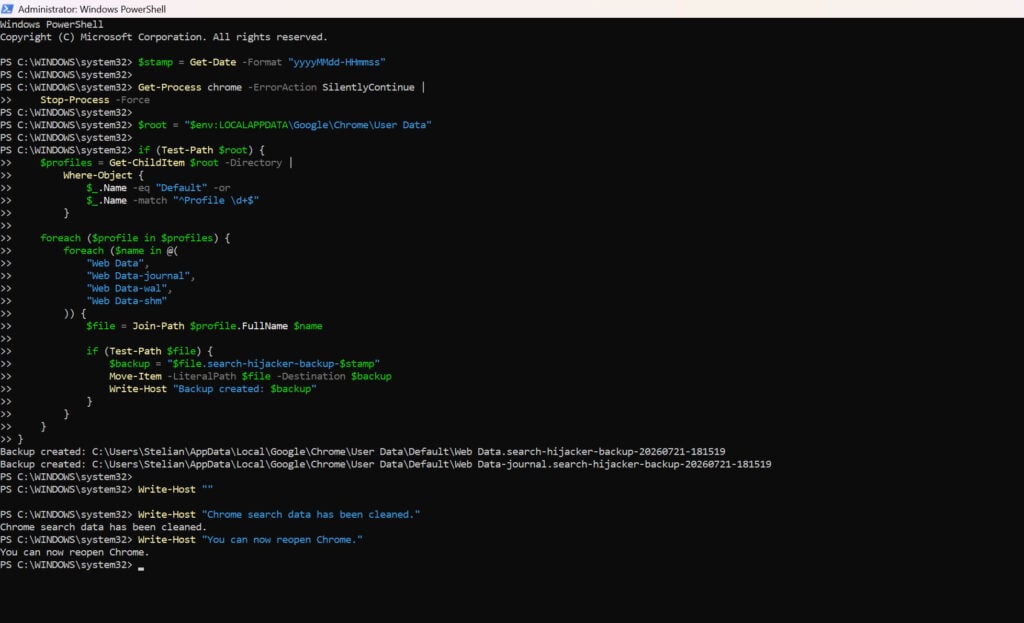
Write-Host "" Write-Host "Chrome search data has been cleaned." Write-Host "You can now reopen Chrome."
Wait until PowerShell displays the following message:
Chrome search data has been cleaned.
You can now reopen Chrome.
Close PowerShell and reopen Google Chrome. Chrome will automatically create a clean search database for every local profile.
Next, copy the following address, paste it into Chrome’s address bar, and press Enter:
chrome://settings/searchEngines
Make sure Google is selected as the default search engine. Test several searches from the address bar and confirm that they no longer pass through shady search engines.
Your important Chrome data is protected: the PowerShell cleanup does not remove bookmarks, saved passwords, browsing history, cookies, or installed extensions. However, it may reset locally stored Autofill addresses and form suggestions.
The original search database is not deleted. PowerShell renames it and adds search-hijacker-backup to its filename so it can be recovered if necessary.
Keep Settings and Extensions synchronization disabled while testing Chrome. Do not enable every extension at once. Enable only the extensions you recognize, one at a time, and test Chrome after each one.
If the redirect returns after enabling a particular extension, remove that extension immediately.
Reset Firefox for Windows to default settings
We will now reset your Firefox browser settings to their default. The reset feature fixes many issues by restoring Firefox to its factory default state while saving your essential information like bookmarks, passwords, web form auto-fill information, browsing history, and open tabs.
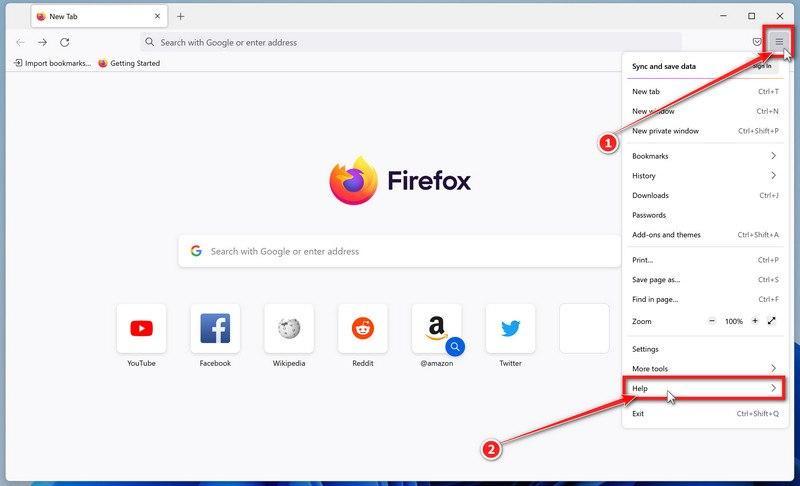
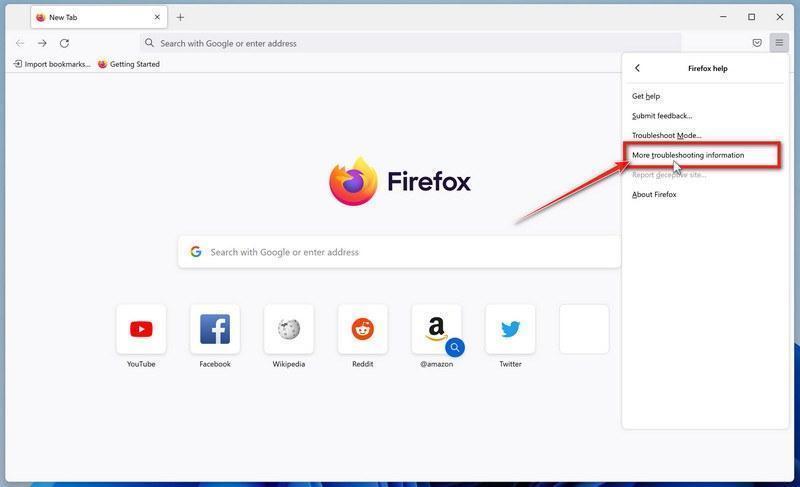
Open the Firefox menu and click “Help”
Click the three horizontal lines in the top-right corner of Firefox to open the main menu, then select “Help“.
Click “More troubleshooting information”
In the Help menu, click “More troubleshooting information“.
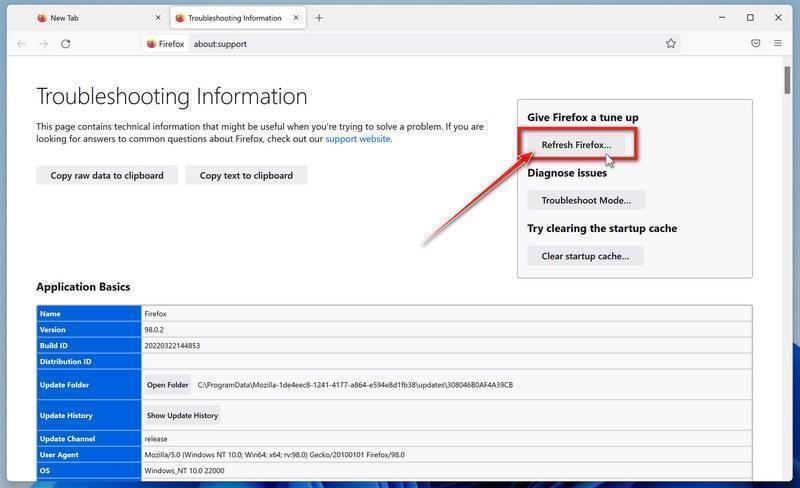
Click “Refresh Firefox”
On the “Troubleshooting Information” page, click the “Refresh Firefox” button in the top-right area of the page.
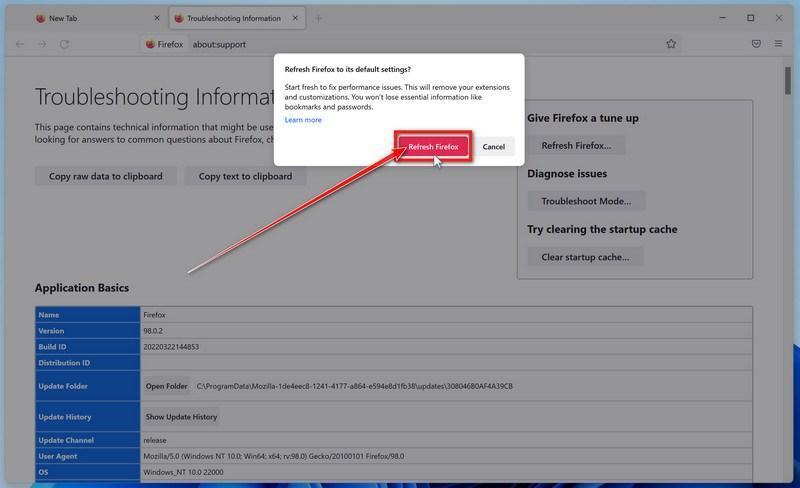
Confirm the refresh
In the confirmation window, click “Refresh Firefox” again. This removes extensions, themes, and customized settings — the usual hiding places for browser hijackers — while keeping your bookmarks, history, and saved passwords safe.
Click “Finish”
Firefox will close, reset itself to default settings, and reopen with a window listing the information that was restored. Click “Finish” — your Firefox is now clean.
About the “Old Firefox Data” folder: Firefox saves a copy of your old profile on your desktop. If something you need is missing after the reset, you can recover it from this folder. Otherwise, delete the folder — it contains sensitive data like passwords and cookies, and may also still hold the malicious files you just removed.
Reset Microsoft Edge to default settings
We will now reset your Microsoft Edge browser settings to their default. This will reset your startup page, new tab page, search engine, and pinned tabs. It will also disable all extensions and clear temporary data like cookies. Your favorites, history, and saved passwords will not be cleared.
Updated for Microsoft Edge on Windows 10 and Windows 11 — July 2026.
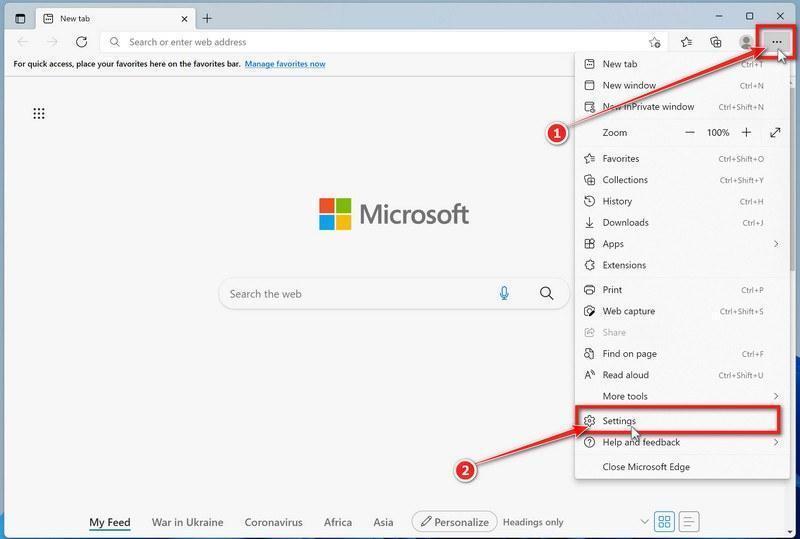
Open the Edge menu and click “Settings”
Open Microsoft Edge. In the top-right corner, click the three-dot (…) icon, then click Settings.
Prevent the unwanted settings from returning through Edge Sync
If you are signed in to Microsoft Edge, a bad setting or extension may be stored in your Microsoft account and return after the reset.
Copy the following address, paste it into the Edge address bar, and press Enter:
edge://settings/profiles/sync
On the Sync page, turn off these two options:
Settings
Extensions
You can leave Favorites and Passwords turned on.
If Edge says that sync is already off, simply continue to the next step.
Important: Edge Sync settings are separate for each profile. If you use more than one Edge profile, switch to each affected profile and repeat this step.
You do not need to sign out of your Microsoft account or delete the Edge profile.
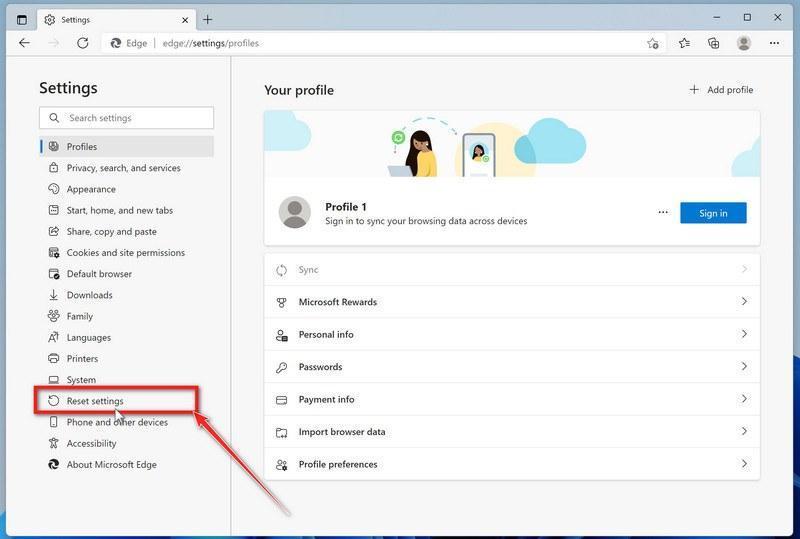
Open “Reset settings”
In the left sidebar, click Reset settings.
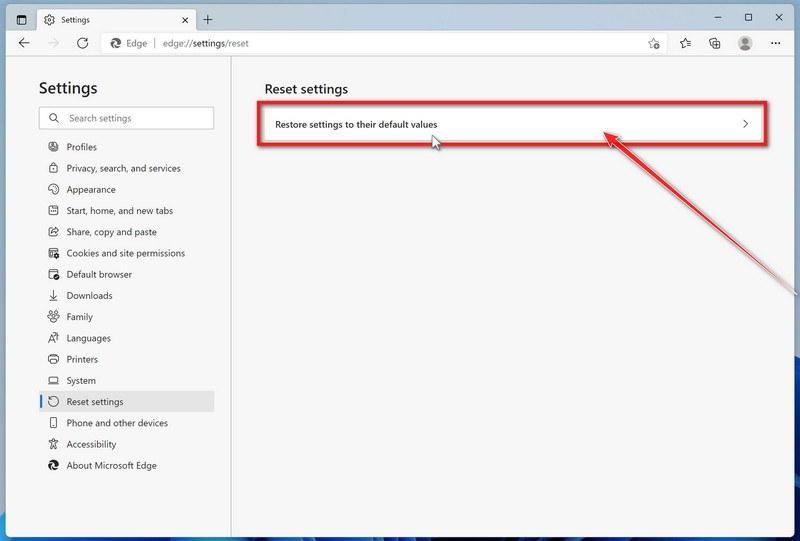
You can also open the reset page directly. Copy the following address, paste it into the Edge address bar, and press Enter:
edge://settings/reset
Click “Restore settings to their default values”
Click Restore settings to their default values.
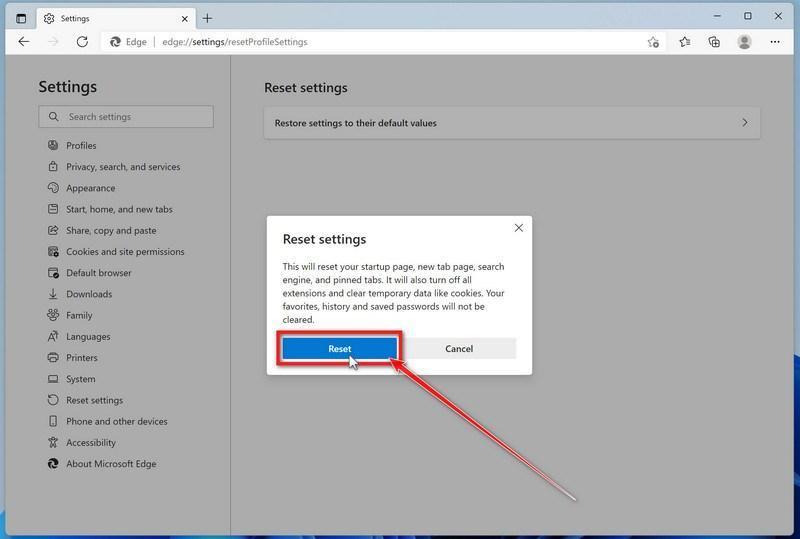
Confirm the reset
In the confirmation dialog, click Reset.
This resets the startup page, new tab page, search engine, and pinned tabs. It also disables all extensions and clears temporary site data, such as cookies.
Don’t worry: your favorites, browsing history, and saved passwords will not be deleted.
Check your extensions before turning them back on
Copy the following address, paste it into the Edge address bar, and press Enter:
edge://extensions
Remove any extension you do not recognize or no longer use. Pay particular attention to extensions related to search, coupons, shopping, PDF conversion, browser protection, new tabs, or video downloading.
Do not turn all extensions back on at the same time. Enable only the extensions you recognize and trust.
Select a trusted search engine
Copy the following address, paste it into the Edge address bar, and press Enter:
edge://settings/searchEngines
Select Bing, Google, DuckDuckGo, or another search provider you trust and make it the default.
Remove any unknown search engines, especially providers with strange names or addresses that you did not add yourself.
Restart Edge and perform a search from the address bar. If searches are no longer redirected, you can stop here.
If the redirect remains, clean the corrupted search data without deleting the Edge profile
Use this additional step only if Edge continues to redirect searches after the normal reset.
This command cleans the search-engine database from every local Edge profile while keeping your favorites, saved passwords, browsing history, cookies, and profiles.
Before continuing: save anything you are working on because the command will close Microsoft Edge.
Open the Windows Start menu.
Type PowerShell.
Open Windows PowerShell. Administrator access is not required.
Copy the entire command below.
Paste it into PowerShell and press Enter.
$stamp = Get-Date -Format "yyyyMMdd-HHmmss"
$root = Join-Path $env:LOCALAPPDATA "Microsoft\Edge\User Data"

Get-Process -Name msedge -ErrorAction SilentlyContinue |
    Stop-Process -Force -ErrorAction SilentlyContinue

Start-Sleep -Seconds 2

if (-not (Test-Path -LiteralPath $root)) {
    Write-Host "The Microsoft Edge profile folder was not found:"
    Write-Host $root
    return
}

$profiles = Get-ChildItem -LiteralPath $root -Directory |
    Where-Object {
        $_.Name -eq "Default" -or
        $_.Name -match "^Profile \d+$"
    }

$movedFiles = 0

foreach ($profile in $profiles) {
    foreach ($name in @(
        "Web Data",
        "Web Data-journal",
        "Web Data-wal",
        "Web Data-shm"
    )) {
        $file = Join-Path $profile.FullName $name

        if (Test-Path -LiteralPath $file) {
            $backup = "$file.search-reset-backup-$stamp"

            try {
                Move-Item -LiteralPath $file -Destination $backup -ErrorAction Stop
                Write-Host "Cleaned: $($profile.Name)\$name"
                $movedFiles++
            }
            catch {
                Write-Warning "Could not clean: $file"
            }
        }
    }
}

Write-Host ""

if ($movedFiles -gt 0) {
    Write-Host "Microsoft Edge search data has been cleaned." -ForegroundColor Green
    Write-Host "You can now reopen Microsoft Edge."
}
else {
    Write-Host "No Edge search database files were found." -ForegroundColor Yellow
}
The command does not permanently delete the original files. It renames them as backup files, and Edge creates a clean search database when it starts again.
Note: this additional cleanup may also reset saved form-fill suggestions, saved addresses, and manually added search engines. It does not delete favorites, passwords, or browsing history.
Reopen Edge and test the browser
Open Microsoft Edge again, visit edge://settings/searchEngines, and select your preferred search engine.
Perform several searches from the address bar to confirm that the redirect is gone.
Keep synchronization for Settings and Extensions turned off until you are certain that the computer and extensions are clean. If you enable them again, turn them on one at a time and test Edge after each change.
If Edge still redirects your searches
Open edge://policy. If this is your personal computer and Edge displays unknown policies such as ExtensionInstallForcelist or DefaultSearchProvider, the hijacker may be installed outside the browser profile.
In that situation, continue with the next malware-removal steps and run a complete antivirus scan. If the computer belongs to a company or school, contact its IT administrator before changing any policies.
Reset Internet Explorer to default settings
We will now reset your Internet Explorer browser settings to their default. You can reset Internet Explorer settings to return them to the state they were in when Internet Explorer was first installed on your computer.
Go to “Internet Options”.
Open Internet Explorer, click on the gear icon in the upper-right part of your browser, then select “Internet Options“.
Select the “Advanced” tab, then click “Reset”
In the “Internet Options” dialog box, select the “Advanced” tab, then click on the “Reset” button.
Click on “Reset”.
In the “Reset Internet Explorer settings” section, select the “Delete personal settings” checkbox, then click on the “Reset” button.
Click on “Close”.
When Internet Explorer has completed its task, click on the “Close” button in the confirmation dialogue box. Close your browser and then you can open Internet Explorer again.
STEP 4: Use Malwarebytes to remove for Trojans and Unwanted Programs
In this next step, we will we will install Malwarebytes to scan and remove any infections, adware, or potentially unwanted programs that may be present on your computer.
Malwarebytes is one of the most popular and trusted anti-malware tools for Windows — and it’s completely free for removing infections. It catches threats that many antivirus programs miss, including adware, browser hijackers, and trojans. Follow the steps below to scan and clean your PC in just a few minutes.
Download Malwarebytes
Click the button below to download the latest version of Malwarebytes for Windows from the official source. The free version is all you need — it will scan your computer and remove adware, browser hijackers, and other malicious software at no cost.
(The link opens in a new page where your download will start)
Install Malwarebytes
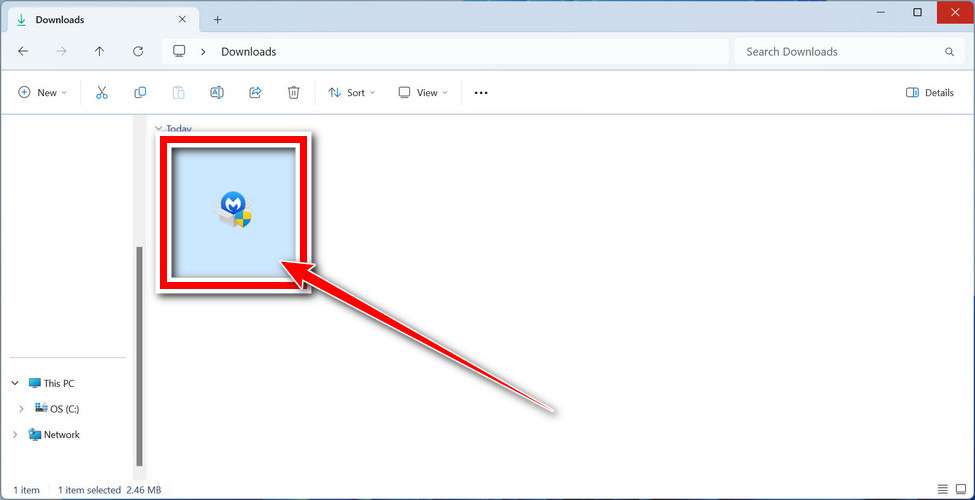
When the download finishes, open your Downloads folder and double-click the MBSetup file. If Windows shows a User Account Control pop-up, click “Yes” to allow the installation.
Follow the On-Screen Prompts to Install Malwarebytes
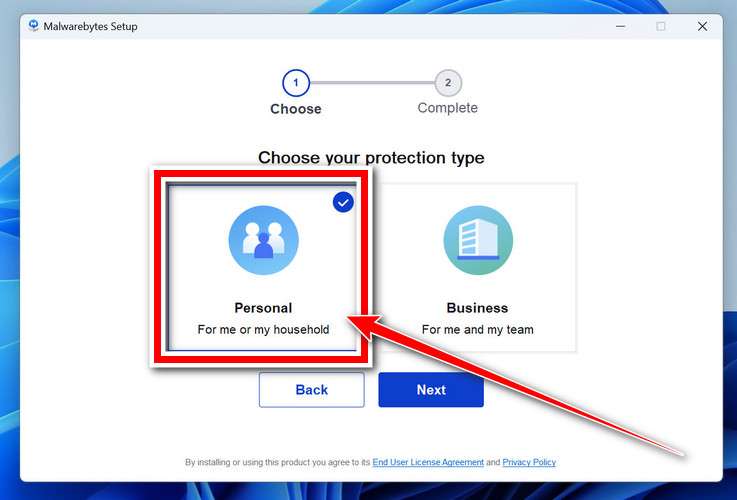
The setup wizard will walk you through a few quick screens:
Choose where you’re installing the program — “Personal Computer” or “Work Computer” — then click Next.
Malwarebytes will now install on your device. This usually takes under a minute.
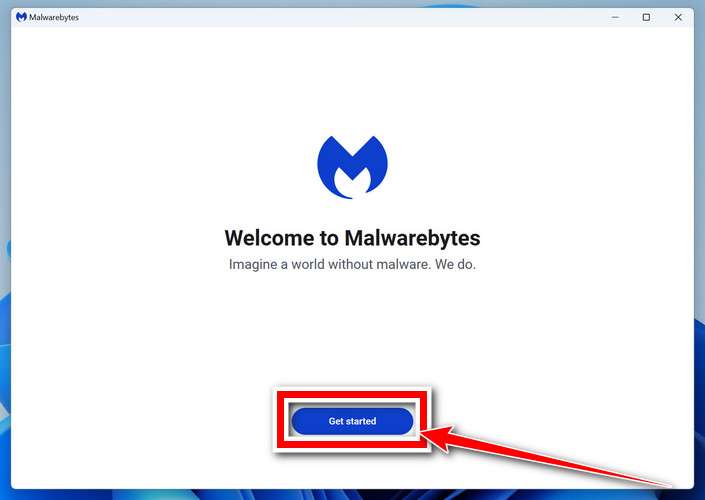
When installation is complete, the “Welcome to Malwarebytes” screen will open automatically.
On the final screen, click Open Malwarebytes to launch the program.
Enable “Scan for Rootkits”
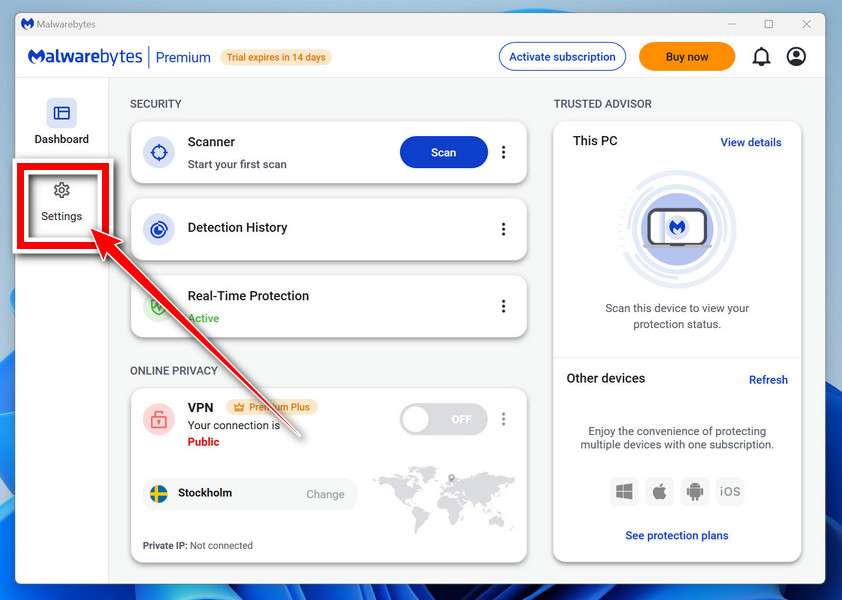
Before scanning, turn on rootkit detection so Malwarebytes can find even the most hidden threats. Click the Settings gear icon on the left side of the screen.
In the settings menu, find “Scan for rootkits” and click the toggle so it turns blue.
Done? Click “Dashboard” in the left pane to return to the main screen.
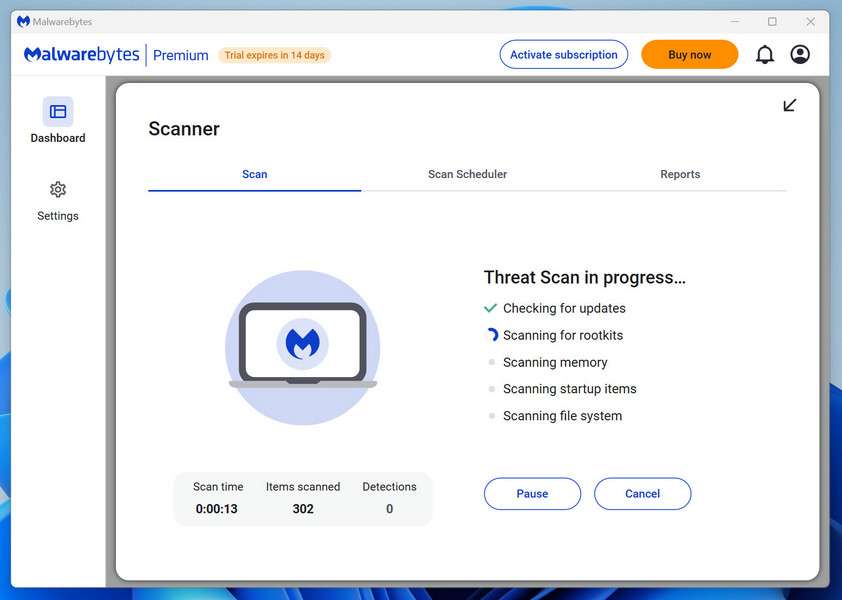
Start the Scan
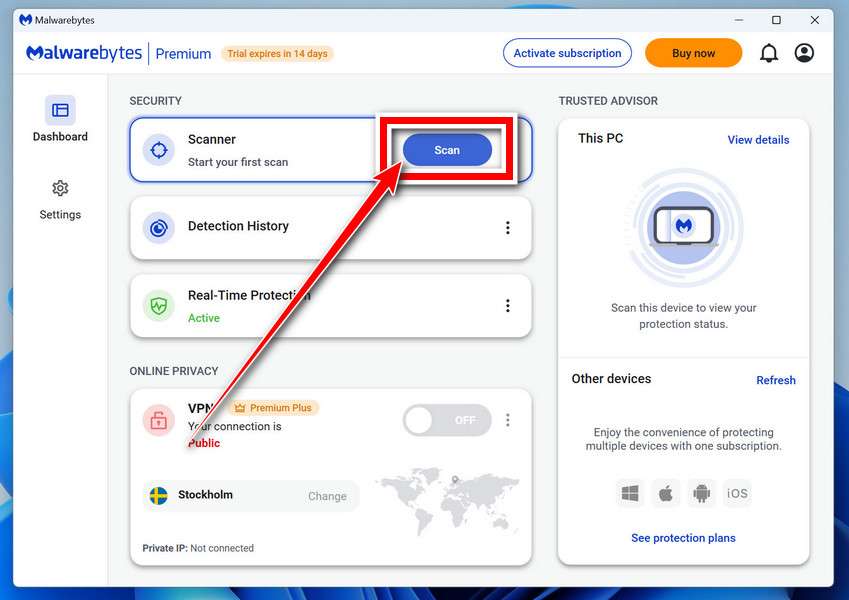
Click the blue Scan button. Malwarebytes will automatically update its virus database and start checking your computer for malware.
Wait for the Scan to Finish
The scan checks your entire system for browser hijackers and other malicious programs, so it can take several minutes. Feel free to do something else — just check back occasionally to see the progress.
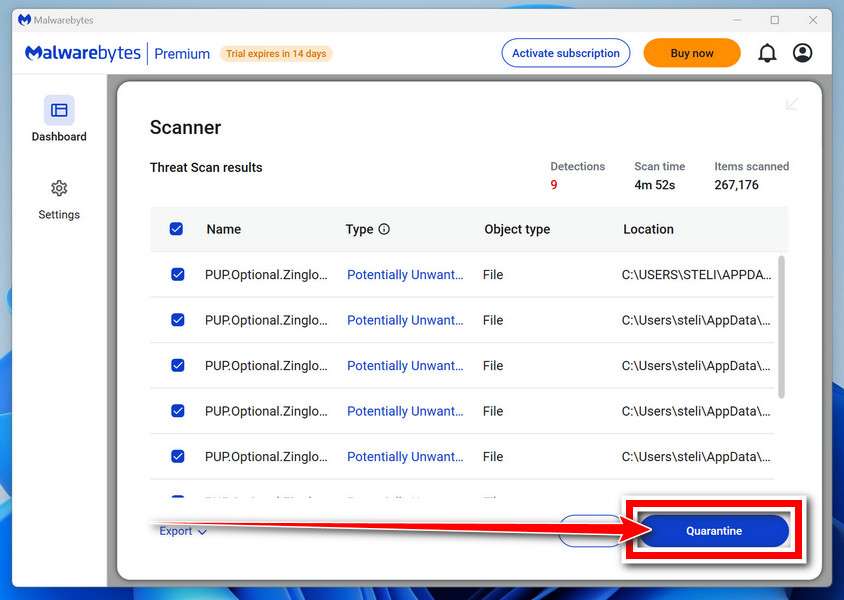
Quarantine the Detected Threats
When the scan is done, you’ll see a list of everything Malwarebytes found — malware, adware, and potentially unwanted programs. Click the “Quarantine” button to remove all of them at once.
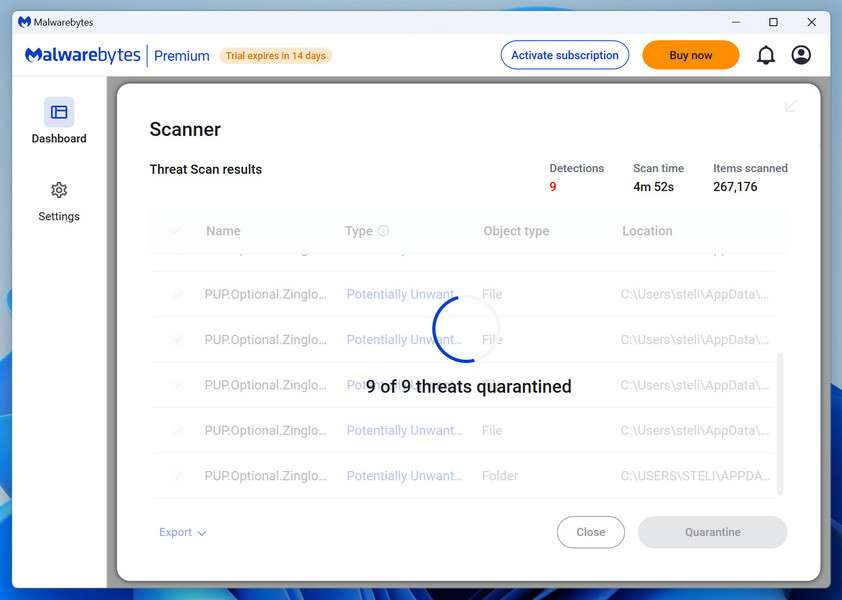
Malwarebytes will now remove the malicious files and registry entries and move them safely into quarantine.
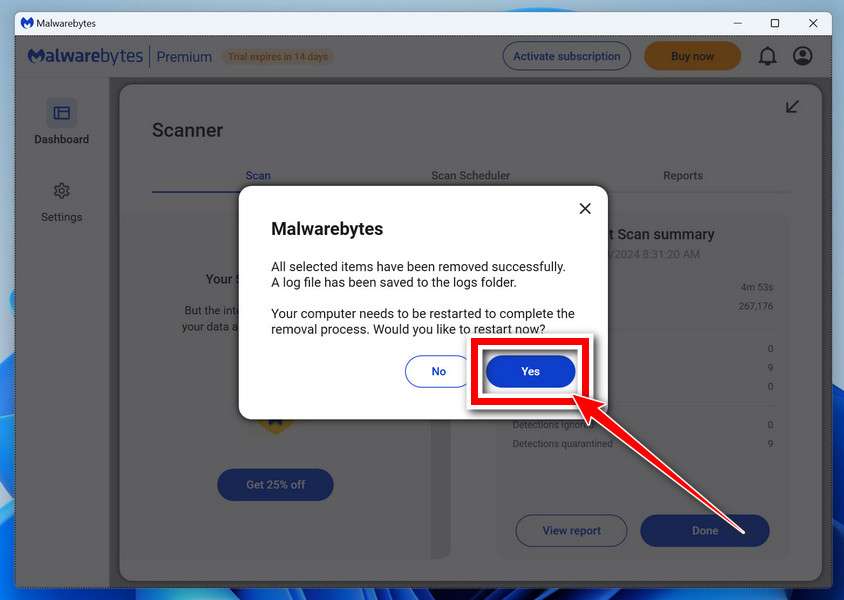
Restart Your Computer
Some threats can only be fully removed after a reboot. If Malwarebytes asks you to restart, click Yes. Once you’re logged back in, your PC is clean and you can continue with the next steps in this guide.
STEP 5: Use HitmanPro to remove Rootkits and other Malware
In this fifth step, while the computer is in normal back, we will download and run a scan with HitmanPro to remove Trojans, rootkits, and other malicious programs.
HitmanPro is a second-opinion scanner — it’s designed to catch what your main antivirus might have missed. Instead of relying on a single detection engine, it checks the behavior of files in the locations where malware usually hides. Anything suspicious gets sent to the cloud, where it’s analyzed by two of the best antivirus engines available: Bitdefender and Kaspersky.
Good news: scanning is completely free, with no limits. You only need a license when it’s time to remove what was found — and even then, you can activate a free one-time 30-day trial to clean your PC at no cost. (A full license is $24.95 per year for 1 PC.)
Download HitmanPro
Click the button below to download HitmanPro. Remember — the scan is free, so you have nothing to lose by checking your PC.
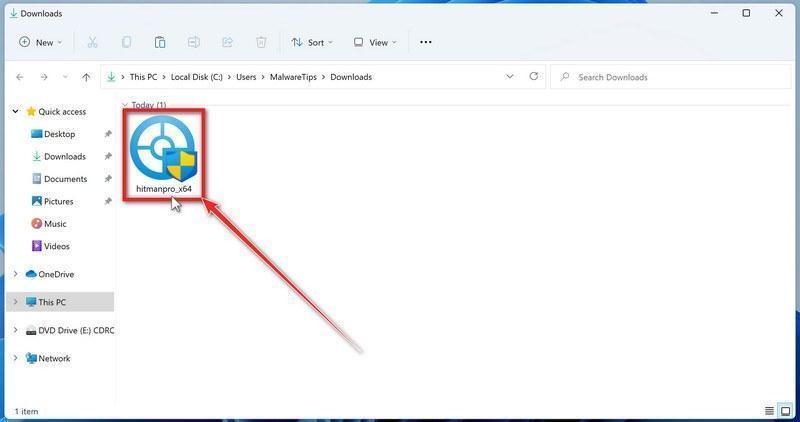
When the download finishes, open your Downloads folder and double-click the file: “hitmanpro.exe” on 32-bit Windows, or “hitmanpro_x64.exe” on 64-bit Windows.
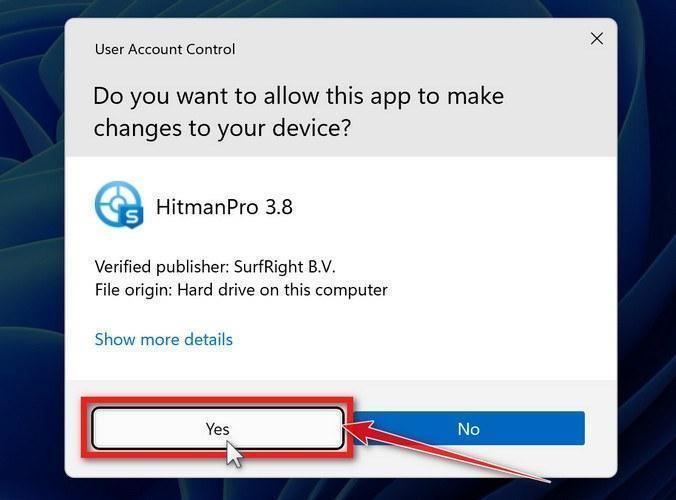
If a User Account Control pop-up asks whether HitmanPro can make changes to your device, click “Yes” to continue.
Follow the On-Screen Prompts
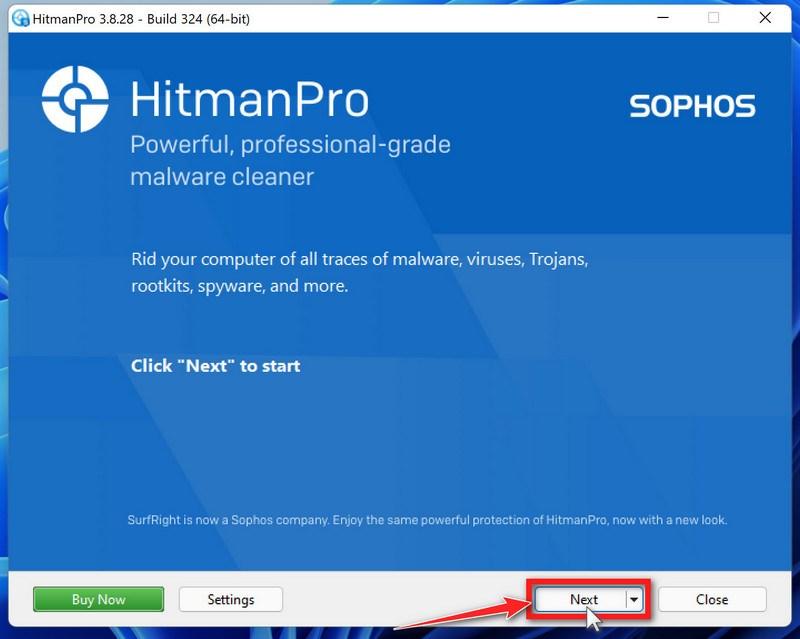
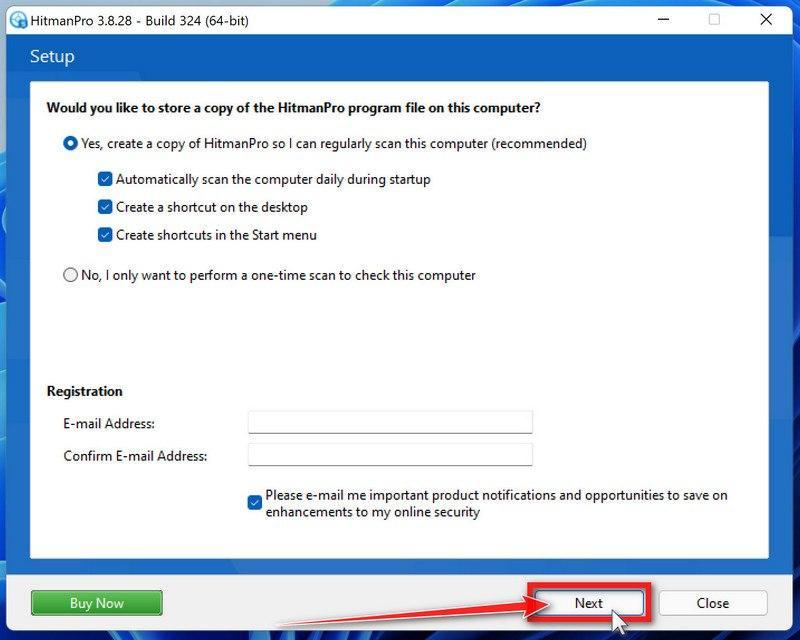
On the HitmanPro start screen, click “Next” to begin the system scan. No lengthy setup required — it goes straight to work.
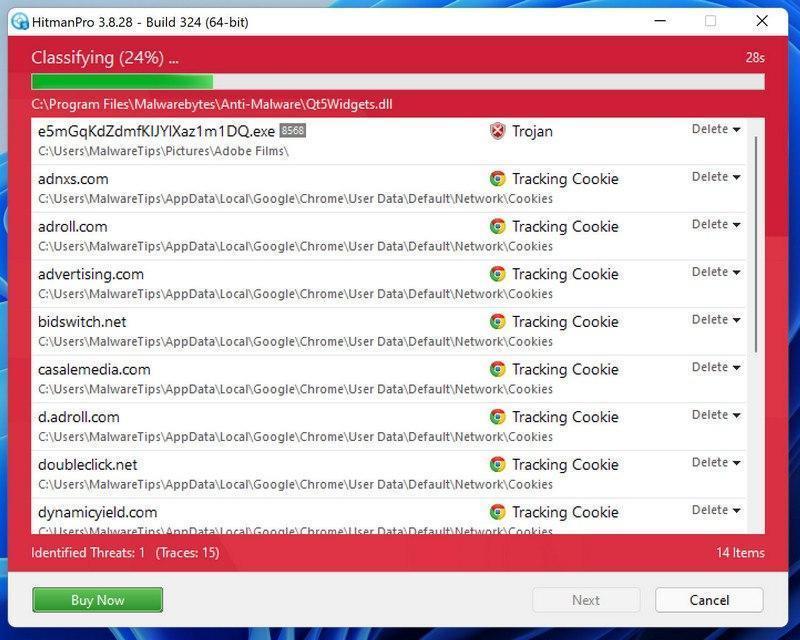
Wait for the Scan to Finish
HitmanPro will now check your computer for malicious programs. This usually takes just a few minutes thanks to its cloud-based scanning.
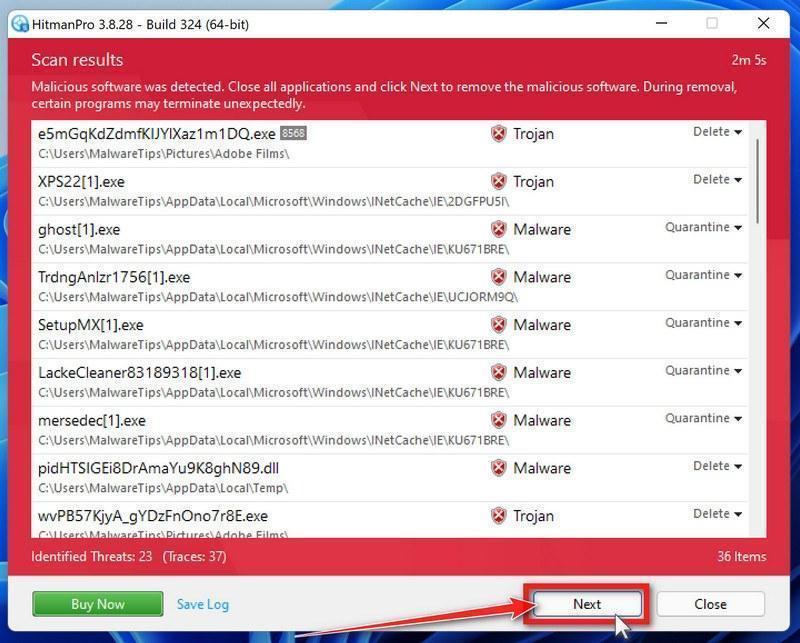
Review the Results and Click “Next”
When the scan is done, HitmanPro will show you everything it found. Click “Next” to remove the detected threats.
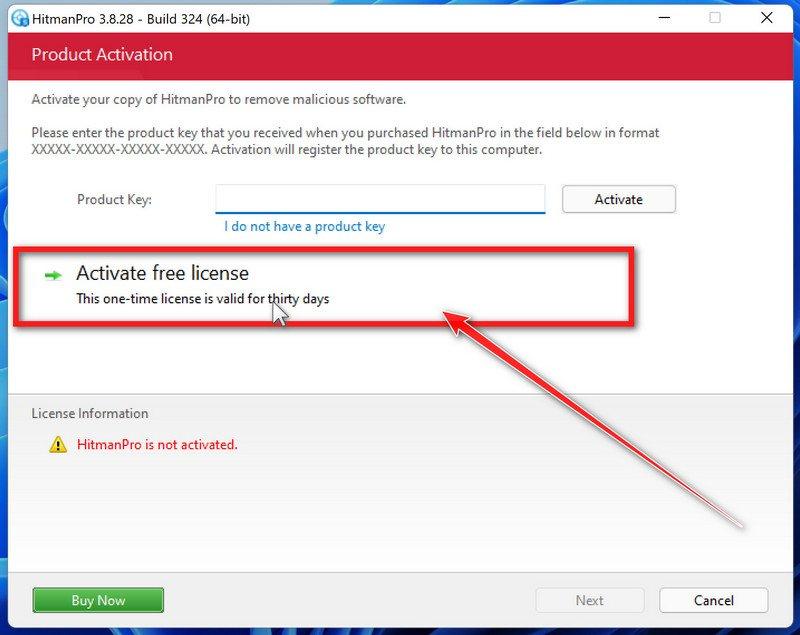
Click “Activate Free License”
To remove the malicious files, click the “Activate free license” button. This starts your free 30-day trial — no payment details needed — and unlocks the full cleanup.
When the removal is complete, HitmanPro will show a summary of everything it cleaned. Click Next, then click Reboot if prompted. If there’s no reboot prompt, just click Close — your PC is clean.
STEP 6: Use AdwCleaner to remove Malicious Browser Policies and Adware
In this next step, we will use AdwCleaner to remove malicious browser policies and unwanted browser extensions from your computer.
AdwCleaner is a free on-demand scanner that specializes in adware, browser hijackers, and unwanted toolbars — the exact threats that mainstream antivirus programs often miss. It also includes tools that repair the damage malware leaves behind, like hijacked browser settings and malicious policies. It’s a quick scan that’s well worth running.
Download AdwCleaner
Click the button below to download AdwCleaner — it’s free, portable, and requires no installation.
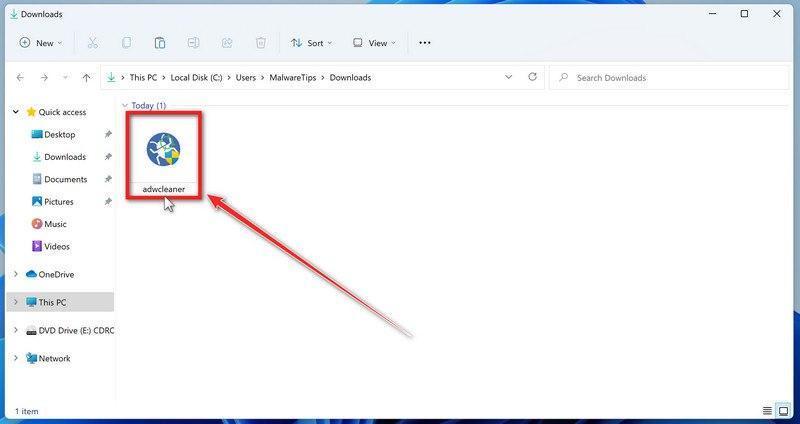
Open your Downloads folder and double-click the file named “adwcleaner_x.x.x.exe“. There’s no installation — the program starts right away.
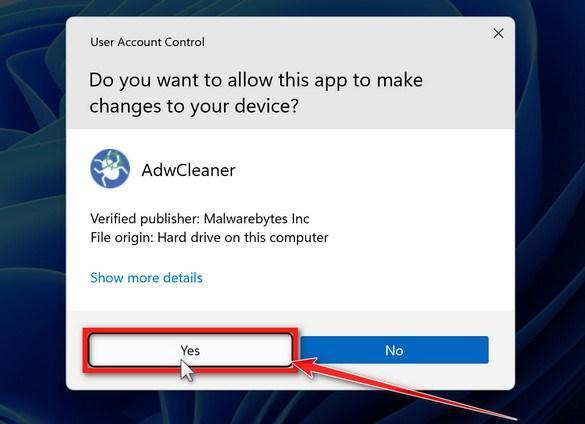
If Windows asks whether you want to allow AdwCleaner to run, click “Yes“. When the license agreement appears, click I agree to continue.
Enable “Reset Chrome policies”
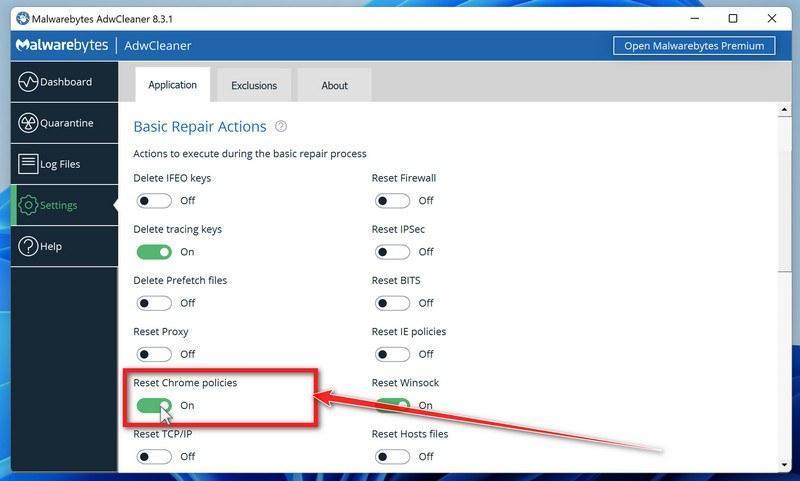
This setting removes malicious browser policies — a trick malware uses to lock your browser settings so you can’t change them back. Click “Settings” on the left side of the window, then turn on “Reset Chrome policies“.
Start the Scan
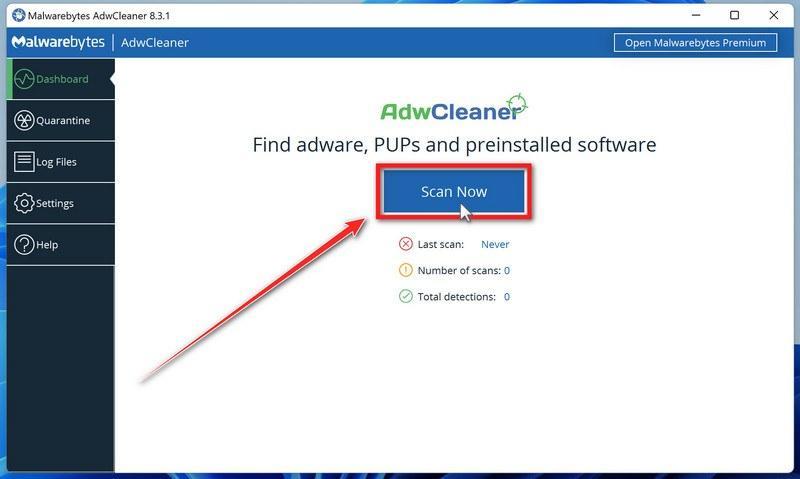
Click “Dashboard” on the left side of the window, then click the “Scan” button.
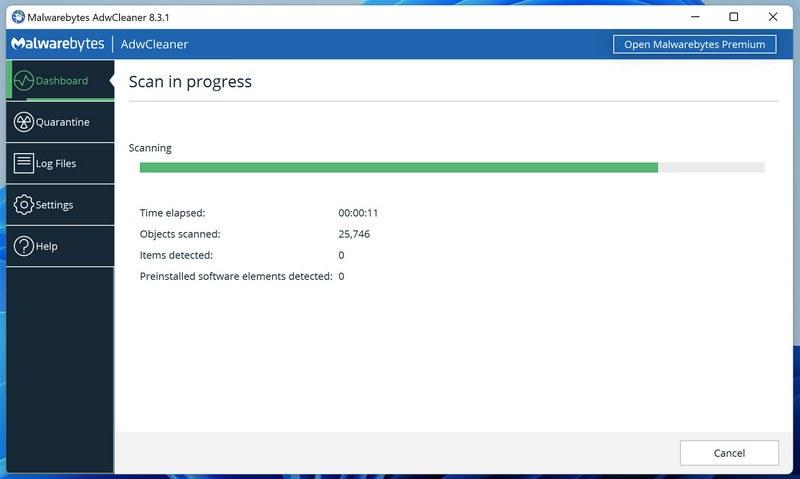
Wait for the Scan to Finish
AdwCleaner will now check your computer for adware and other malware. This usually takes only a few minutes — it’s one of the fastest scanners around.
Quarantine the Detected Threats
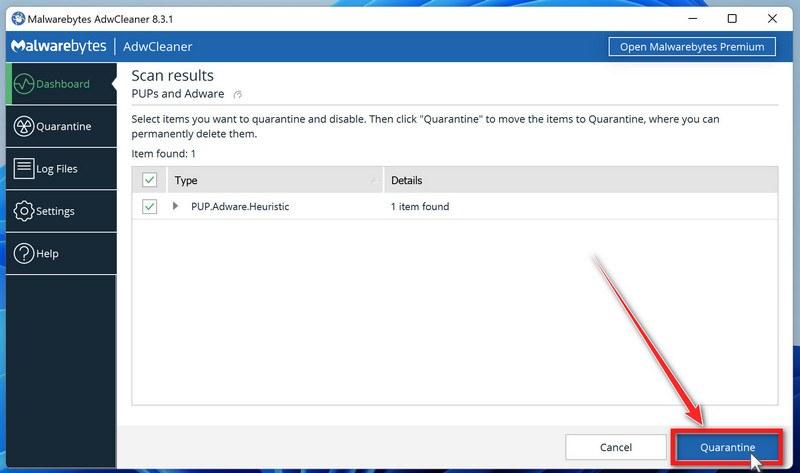
When the scan finishes, AdwCleaner will list everything it found. Click the “Quarantine” button to remove all the malicious items at once.
Click “Continue” to Finish the Cleanup
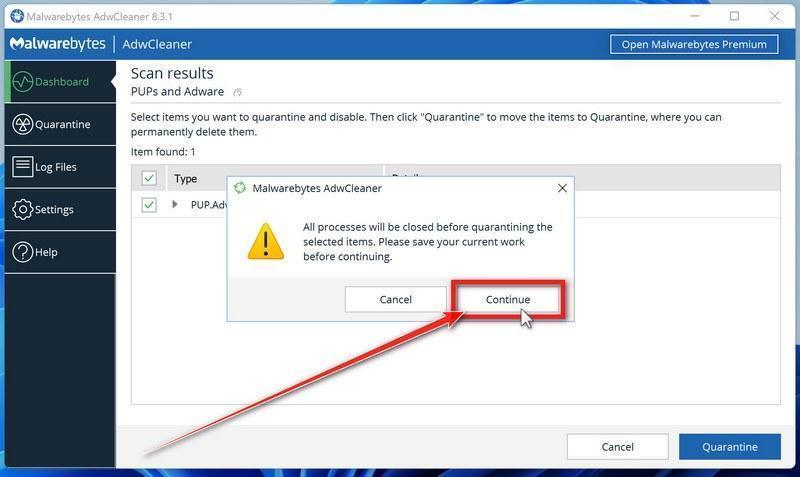
Save any open work first — AdwCleaner needs to close your open programs before it can clean. When you’re ready, click the “Continue” button.
AdwCleaner will now delete all detected malware from your computer. If it asks you to restart your PC, allow it — your computer will be clean when you log back in.
STEP 7: Perform a final check with ESET Online Scanner
This step involves installing and running a scan with ESET Online Scanner to check for any additional malicious programs that may be installed on the computer..
ESET Online Scanner is a free second-opinion scanner that performs a deep, full-system check for viruses, trojans, rootkits, and other malware. We use it as the final step because it’s thorough — if anything slipped past the previous scans, ESET will find it. A clean result here means your computer is malware-free.
Download ESET Online Scanner
Click the button below to download ESET Online Scanner.
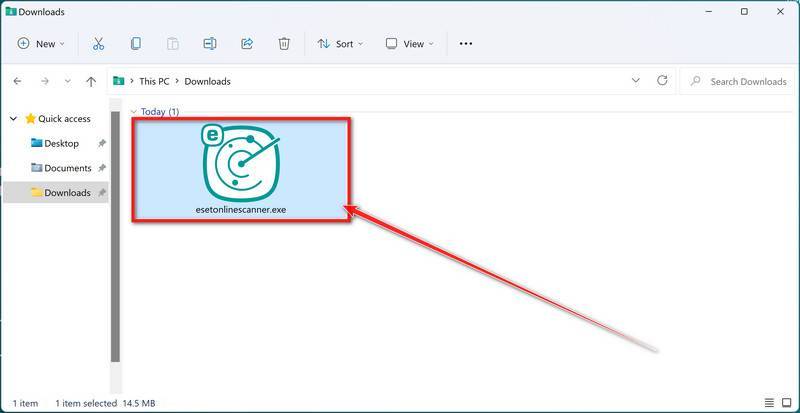
When the download finishes, open your Downloads folder and double-click “esetonlinescanner.exe“.
Install ESET Online Scanner
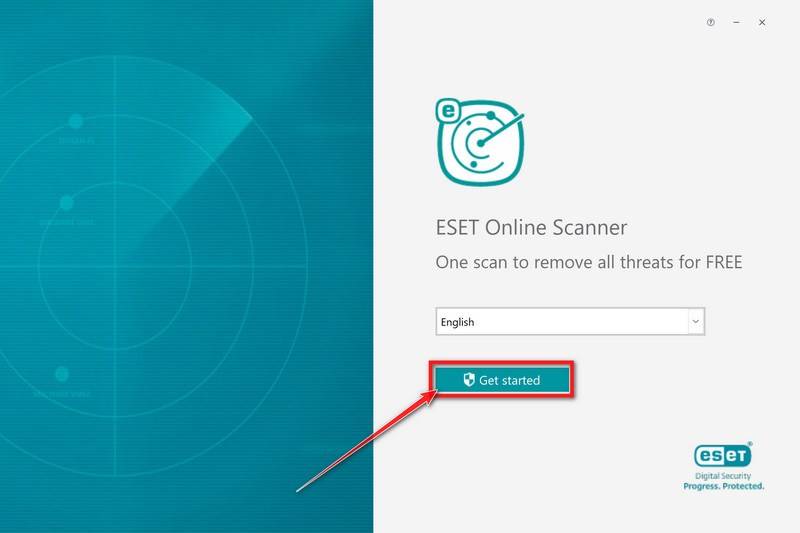
On the start screen, select your language from the drop-down menu and click Get started.
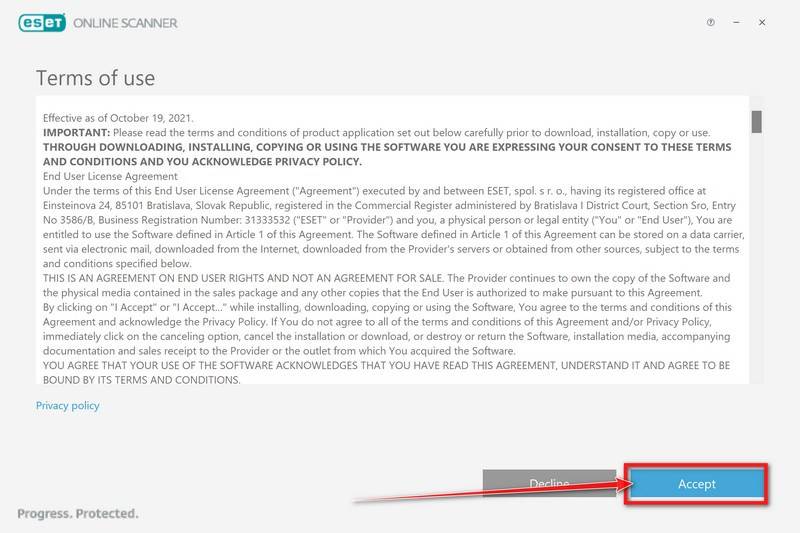
On the Terms of use screen, click Accept.
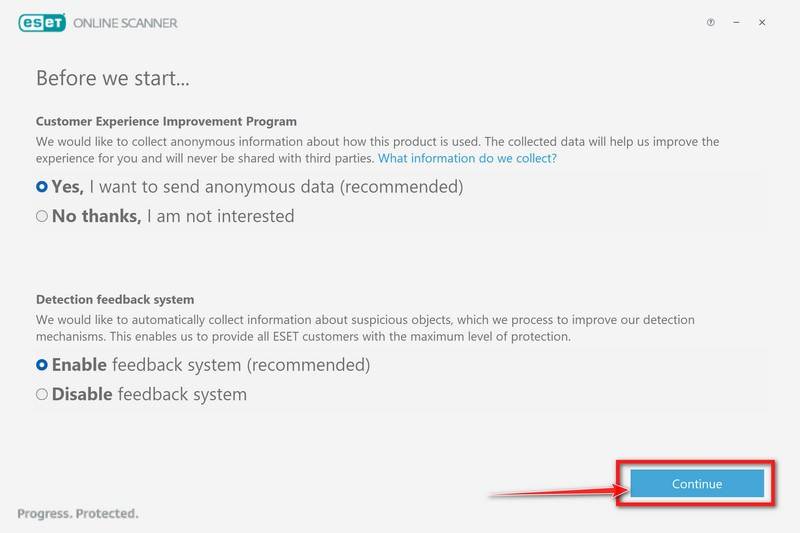
Choose your preferences for the Customer Experience Improvement Program and the Detection feedback system (either choice is fine), then click Continue.
Start a Full Scan
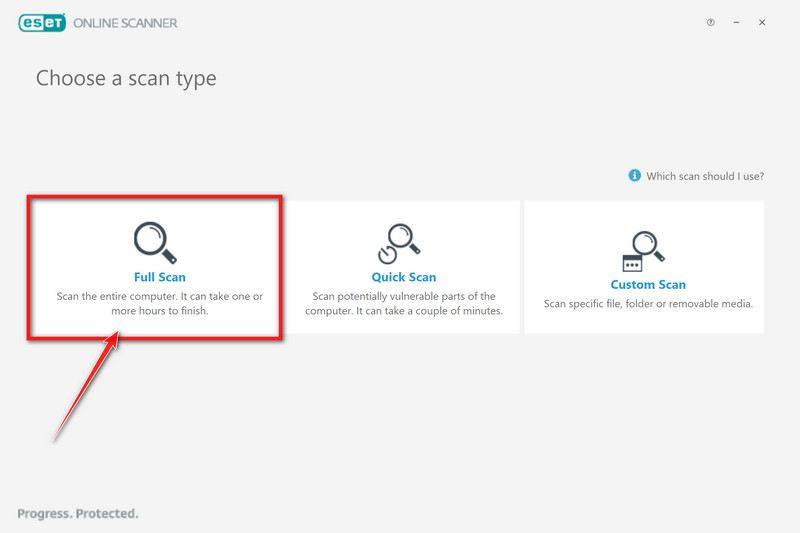
Click Full Scan — this checks your entire computer, not just the common hiding spots.
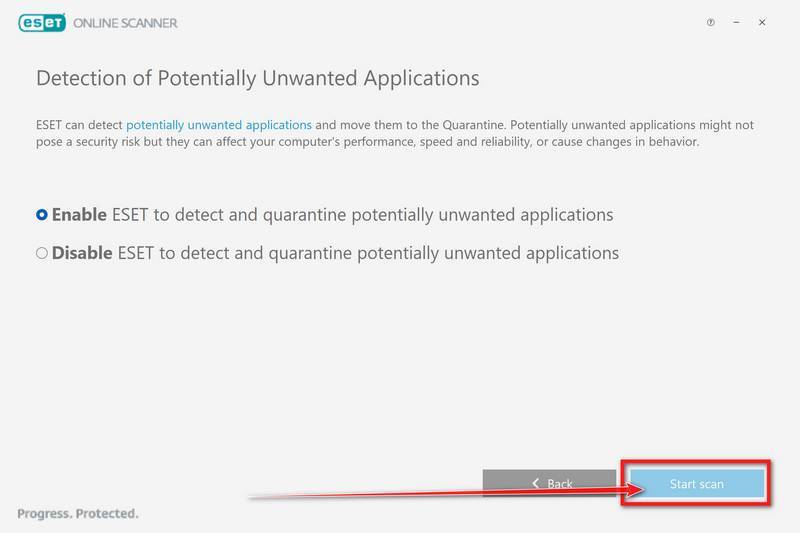
Select Enable for Detection of Potentially Unwanted Applications — this lets ESET catch adware and bundled junk programs, not just viruses. Then click Start scan.
Wait for the Scan to Finish
ESET will now check every file on your computer. Because it’s a full scan, this can take a while — often an hour or more, depending on how much data you have. Leave it running in the background and check on it from time to time.
Review the Results
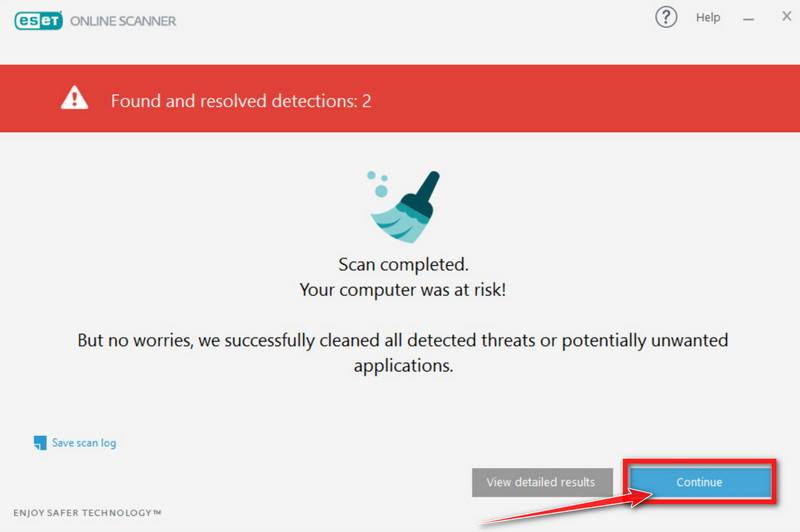
When the scan completes, the Found and resolved detections screen appears. Any threats found were automatically cleaned and quarantined — there’s nothing extra you need to do. Click View detailed results if you want to see exactly what was removed.
If ESET found nothing — congratulations, your computer has passed the final check and is malware-free.
STEP 8: Run the System File Checker (SFC) tool
In this step, we will use System File Checker (SFC) tool to detect and repair files that may have been corrupted by malware.
The SFC tool scans all protected system files on your computer and replaces any files that are corrupt or damaged with a cached copy that is stored in a compressed folder at %WinDir%\System32\dllcache. By running the SFC tool, you can help ensure that your system is functioning properly and fix any issues.
Open Command Prompt as Administrator.
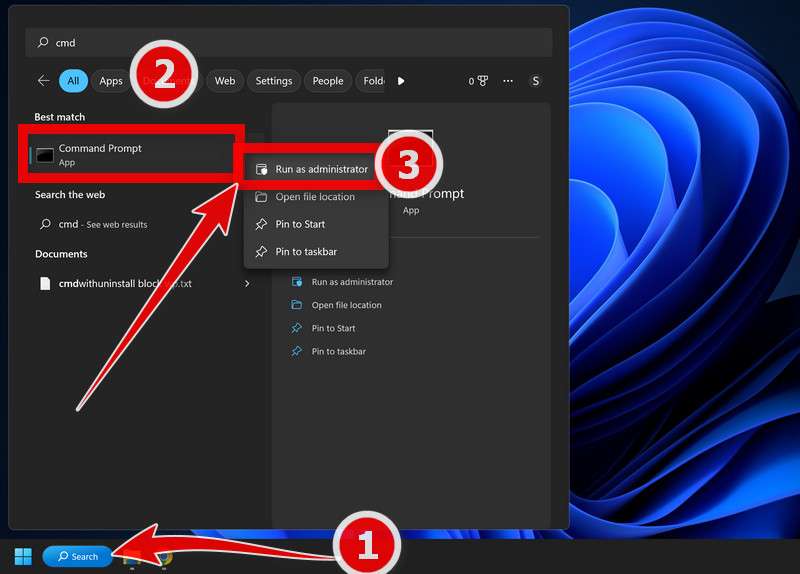
To open the Command Prompt as an administrator in Windows, type “cmd” in the search bar and then right-click on the Command Prompt result and select “Run as administrator” as shown in the image below. A User Account Control (UAC) prompt will appear asking for permission to allow the program to run. Click “Yes”.
Type “sfc /scannow”.
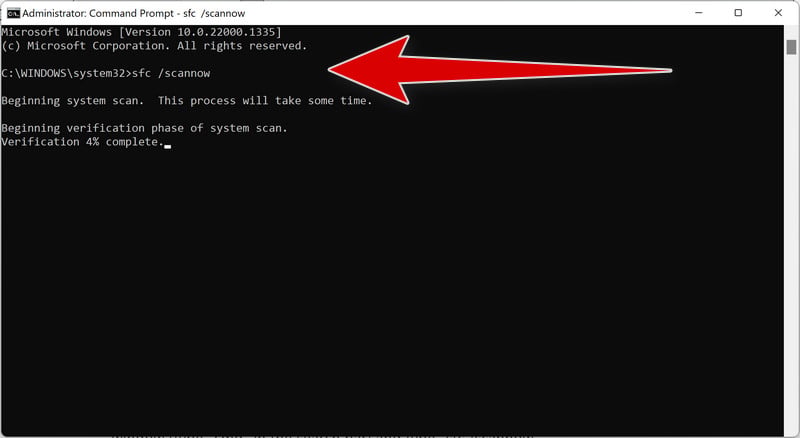
You will now be presented with a black screen called the ‘Administrator: Command Prompt’. On this screen, type “sfc /scannow” to scan for and repair any corrupt system files.
Restart your computer.
Restart your computer if sfc /scannow repaired files. System File Checker may or may not prompt you to restart but even if it doesn’t, you should restart anyway.
Run again sfc /scannow.
Run again sfc /scannow to check if the files were repaired.
STEP 9: Run the Disk Check tool
As a final step, we will utilize the Disk Check tool, commonly referred to as “chkdsk,” to identify and resolve any issues that were caused by malware.
This tool checks your hard disk for errors and can fix any issues it finds. To use the Disk Check tool, you will need to open the command prompt and enter the “chkdsk” command followed by the drive letter (e.g., “chkdsk C:”). You can also add the “/f” flag to the command to instruct the tool to fix any errors it finds. By running the Disk Check tool, you can help ensure that your hard disk is functioning properly and fix any issues that may be causing high disk usage.”
Open Command Prompt as Administrator.
To open the Command Prompt as an administrator in Windows, type “cmd” in the search bar and then right-click on the Command Prompt result and select “Run as administrator” as shown in the image below.
A User Account Control (UAC) prompt will appear asking for permission to allow the program to run. Click “Yes”.
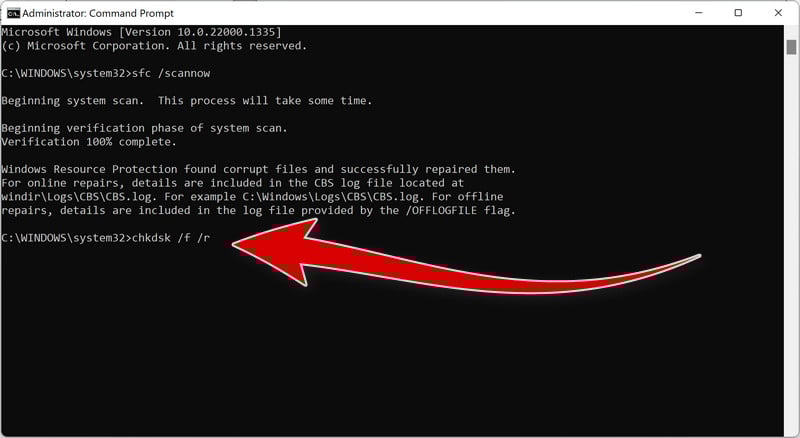
Type “chkdsk /f /r”
You will now be presented with a black screen called the ‘Administrator: Command Prompt’. On this screen, type “chkdsk /f /r” to repair any errors on your hard drive.
Restart your computer
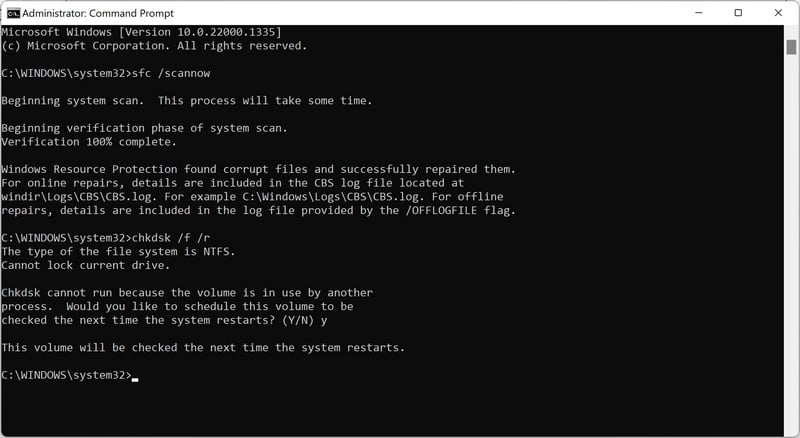
The Disk Check tool may require you to restart your computer in order to complete the scan and repair process. Type “Y” and click on Enter, then restart the computer.
A CHKDSK command can take a long time, especially when performed on larger drives. Once it’s done, however, it will present a summary of results including total disk space, byte allocation, and, most importantly, any errors that were found and corrected.
Your computer should now be free of the SvcHost.exe Trojan and other malware.
If your current antivirus allowed this malicious program on your computer, you may want to consider purchasing Malwarebytes Premium to protect against these types of threats in the future. If you are still having problems with your computer after completing these instructions, then please follow one of the steps:
Svchost.exe allows Windows to efficiently handle large groups of integral system services. But this importance also means malware authors are eager to exploit it.
While troubling, the patterns to recognize malicious svchosts masquerading as the real ones are clear. Using the investigative and removal techniques outlined here, you can keep this crucial system file working for you, not against you.
By remaining vigilant and leveraging the right tools, most users can defend against malware abusing this vital process. But if problems point to a deeper kernel level infection, the Microsoft cavalry has your back.
Stay secure out there, keep watch for shady svchosts, and think twice before trusting a process, even fundamental system ones! Proper care means no Windows component needs to undermine your computer’s security.
10 Rules to Avoid Online Scams
Here are 10 practical safety rules to help you avoid malware, online shopping scams, crypto scams, and other online fraud. Each tip includes a quick “if you already got hit” action.
Stop and verify before you click, log in, download, or pay.
Most scams win by creating urgency. Verify using a trusted method: type the website address yourself, use the official app, or call a known number (not the one in the message).
If you already clicked: close the page, do not enter passwords, and run a malware scan.
Keep your operating system, browser, and apps updated.
Updates patch security holes used by malware and malicious ads. Turn on automatic updates where possible.
If you saw a scary “update now” pop-up: close it and update only through your device settings or the official app store.
Use layered protection: antivirus plus an ad blocker.
Antivirus helps block malware. An ad blocker reduces scam redirects, phishing pages, and malvertising.
If your browser is acting weird: remove unknown extensions, reset the browser, then run a full scan.
Install apps, software, and extensions only from official sources.
Avoid cracked software, “keygens,” and random downloads. During installs, choose Custom/Advanced and decline bundled offers you do not recognize.
If you already installed something suspicious: uninstall it, restart, and scan again.
Treat links and attachments as untrusted by default.
Phishing often impersonates delivery services, banks, and popular brands. If it is unexpected, do not open attachments or log in through the message.
If you entered credentials: change the password immediately and enable 2FA.
Shop safely: research the store, then pay with protection.
Be cautious with brand-new stores, “closing sale” stories, and prices that make no sense. Prefer credit cards or PayPal for dispute options. Avoid wire transfers, gift cards, and crypto payments.
If you already paid: contact your card issuer or PayPal quickly to dispute the transaction.
Crypto rule: never pay a “fee” to withdraw or recover money.
Common patterns include fake profits, then “tax,” “gas,” or “verification” fees. Another is a “recovery agent” who demands upfront crypto.
If you already sent crypto: stop paying, save evidence (wallet addresses, TXIDs, chats), and report the scam to the platform used.
Secure your accounts with unique passwords and 2FA (start with email).
Use a password manager and unique passwords for every account. Enable 2FA using an authenticator app when possible.
If you suspect an account takeover: change passwords, sign out of all devices, and review recent logins and recovery settings.
Back up important files and keep one backup offline.
Backups protect you from ransomware and device failure. Keep at least one backup on an external drive that is not always connected.
If you suspect infection: do not connect backup drives until the system is clean.
If you think you are a victim: stop losses, document evidence, and escalate fast.
Move quickly. Speed matters for disputes, account recovery, and limiting damage.
Stop payments and contact: do not send more money or respond to the scammer.
Call your bank or card issuer: block transactions, replace the card if needed, and start a dispute or chargeback.
Secure your email first: change the email password, enable 2FA, and remove unfamiliar recovery options.
Secure other accounts: change passwords, enable 2FA, and log out of all sessions.
Scan your device: remove suspicious apps or extensions, then run a full malware scan.
Save evidence: screenshots, emails, order pages, tracking pages, wallet addresses, TXIDs, and chat logs.
Report it: to the payment provider, marketplace, social platform, exchange, or wallet service involved.
These rules are intentionally simple. Most online losses happen when decisions are rushed. Slow down, verify independently, and use payment methods and account controls that give you recourse.
25 thoughts on “Unmasking Svchost.exe – Is It Legit or Malware in Disguise?”
i only have 2 viruses I got rid ofthem With out malwarebytes or hitman PRO i used windows defender
Hi, HAVE ABOUT 7 OR 8 instances of svchosts and they are jamming my system. is that normal? I try to right click but I am in XP and there’s no open file option. I downloaded ESET Poweliks Cleaner. It found nothing and neither did roguekiller and hitmanpro.
Hi,
I have a slight problem. As I was going through the steps (which were working greatly, thank you) at step four when I clicked on the link you gave, it said it could not find the page. Is there an alternate download link I should use or should I just skip that step? Please help.
Good morning, I need your help and assistance. I am not a computer versatile user, however, as a IT immigrant, I had to be a self taught person. My computer is infected with svchost.exe malware, and albeit having proceeded 4 times with all the above steps, Avast keeps on alerting the malware existance. How can I remove this nasty malware/virus? Pls bear in mind that I shall need very detailed steps. Many thanks in advance.
Malwarebytes has detected the virus and removed it but it keeps coming back especially after restarting and my CPU usage reaches 100% again, i don’t know why people are happy about anti virus/malware stuff, i think they’re all useless, i suffered from iexplorer.exe virus once and tried all popular anti-virus software’s but the virus kicked their asses and i was able to remove it manually after lots of attempts. My advice is stay away from any suspicious sites or downloads and you will not need any anti-sh*t.
I used step 1, which didn’t work, but step 2 worked for about an hour picking out 2,008 objects! Not only did it get rid of svchost, it fixed other annoying viruses like websteroids, search conduit, and illivid! Thank you so much! Every thing is fixed on my PC and finally, my computer is lightning fast!
Hello,
You should follow all the steps in the correct order, if you cannot do a step, then go ahead with the other. If you need help, just let me know!!
Salut Stelian,acum incerc ghidul tau,deoarece mereu cand deschid un program imi cere acordul shvchost.exe. Daca dupa acest ghid,problema mea tot nu este rezolvata sau mai apar alte probleme,te rog,ma poti ajuta?tot ce am gasit pe net era cu bani,de 3 ore caut ceva sa ma ajute si tu esti momentan singura mea solutie. Multumesc anticipat.
I was having a lot of trubble getting svchost.exe off this laptop. After the first three steps it was smooth sailing for me. I followed all 8 steps and now this laptop is completely clean
I was having a lot of trubble getting svchost.exe off this laptop. After the first three steps it was smooth sailing for me. I followed all 8 steps and now this laptop is completely clean
Thanks for your nice guide. I found your pages via googling “Explorer.exe might be using svchost.exe to connect to the Internet”. So my case is that I found one of svchost.exe occupies memory from 400MB–1.7GB,CPU usage of 20% and some network traffic. Unlike other svchost.exe whoes parent process are service.exe, this svchost.exe ‘s parent is explorer.exe instead. Is your guide still suitable in this case?
Malware bytes found lots of malware/trojans that my Panda Antivirus Pro 2015 could only detect but not entirely remove it without the shit constantly coming back
Stelian leverages over a decade of cybersecurity expertise to lead malware analysis and removal, uncover scams, and educate people. His experience provides insightful analysis and valuable perspective.



















i only have 2 viruses I got rid ofthem With out malwarebytes or hitman PRO i used windows defender
Hi, HAVE ABOUT 7 OR 8 instances of svchosts and they are jamming my system. is that normal? I try to right click but I am in XP and there’s no open file option. I downloaded ESET Poweliks Cleaner. It found nothing and neither did roguekiller and hitmanpro.
svchost jumps to 2+ Gb RAM and locks up my system
Thanks. Hope it to work…….
Hi,
I have a slight problem. As I was going through the steps (which were working greatly, thank you) at step four when I clicked on the link you gave, it said it could not find the page. Is there an alternate download link I should use or should I just skip that step? Please help.
Good morning, I need your help and assistance. I am not a computer versatile user, however, as a IT immigrant, I had to be a self taught person. My computer is infected with svchost.exe malware, and albeit having proceeded 4 times with all the above steps, Avast keeps on alerting the malware existance. How can I remove this nasty malware/virus? Pls bear in mind that I shall need very detailed steps. Many thanks in advance.
Hello Franklin,
Could you please start a thread in our Malware Removal Assistance forum : http://malwaretips.com/forums/malware-removal-assistance.10/
– as we need some logs from your system to see what’s going on!
Hello SE,
Can you please start a thread in our Malware Removal Support forum: http://malwaretips.com/forums/malware-removal-assistance.10/
Malwarebytes has detected the virus and removed it but it keeps coming back especially after restarting and my CPU usage reaches 100% again, i don’t know why people are happy about anti virus/malware stuff, i think they’re all useless, i suffered from iexplorer.exe virus once and tried all popular anti-virus software’s but the virus kicked their asses and i was able to remove it manually after lots of attempts. My advice is stay away from any suspicious sites or downloads and you will not need any anti-sh*t.
I used step 1, which didn’t work, but step 2 worked for about an hour picking out 2,008 objects! Not only did it get rid of svchost, it fixed other annoying viruses like websteroids, search conduit, and illivid! Thank you so much! Every thing is fixed on my PC and finally, my computer is lightning fast!
thanks buddy. really helped
all the steps are smooth like butter..really effective and useful info…thanx alot…
Hello Stelian. Why wouldn’t I choose to delete rather than quarantine the infected files? Thank you so much!
is it a step by step procedure or need to choose what apps we want to use?
Hello,
You should follow all the steps in the correct order, if you cannot do a step, then go ahead with the other. If you need help, just let me know!!
Salut Stelian,acum incerc ghidul tau,deoarece mereu cand deschid un program imi cere acordul shvchost.exe. Daca dupa acest ghid,problema mea tot nu este rezolvata sau mai apar alte probleme,te rog,ma poti ajuta?tot ce am gasit pe net era cu bani,de 3 ore caut ceva sa ma ajute si tu esti momentan singura mea solutie. Multumesc anticipat.
Salut Marius,
Da, normal ca te ajut. Incearca ghidul si vezi daca iti rezolva problema. Daca nu, te rog sa creezi un thread in forumul asta: http://malwaretips.com/forums/malware-removal-assistance.10/
Salut si noroc!
Thanks for the help.
I was having a lot of trubble getting svchost.exe off this laptop. After the first three steps it was smooth sailing for me. I followed all 8 steps and now this laptop is completely clean
Thanks for the help.
I was having a lot of trubble getting svchost.exe off this laptop. After the first three steps it was smooth sailing for me. I followed all 8 steps and now this laptop is completely clean
Hi,
Thanks for your nice guide. I found your pages via googling “Explorer.exe might be using svchost.exe to connect to the Internet”. So my case is that I found one of svchost.exe occupies memory from 400MB–1.7GB,CPU usage of 20% and some network traffic. Unlike other svchost.exe whoes parent process are service.exe, this svchost.exe ‘s parent is explorer.exe instead. Is your guide still suitable in this case?
Thank you so much for this guide
Malware bytes found lots of malware/trojans that my Panda Antivirus Pro 2015 could only detect but not entirely remove it without the shit constantly coming back
with best regards
Damien J – from Sweden
really nice work man,hats off to you
it worked
also I shared link on facebook also
thanks
Hello,
Yes, please perform all the steps from this guide!