

Hot, sweaty nights are the worst: tossing, turning, and waking drenched in sweat. Along comes The Cold Blanket, backed by catchy slogans like “FreezeCore™” and “Arc‑Chill tech” – and glowing 5-star reviews everywhere. It sounds perfect, but something doesn’t add up. Is this blanket the real deal, or just a social media scam? Keep reading – this article exposes the tech, the scheme, and what to do if you’ve already bought one.
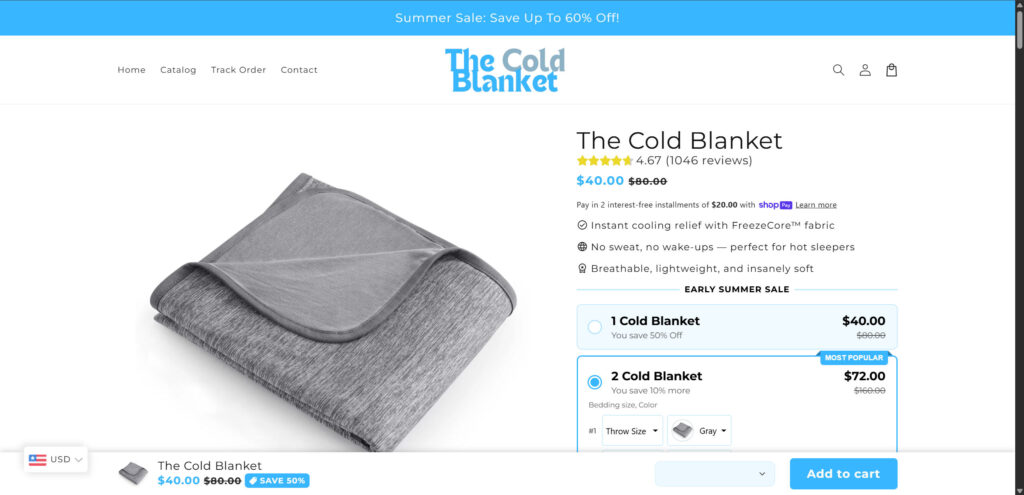
Overview
What The Cold Blanket Claims to Be
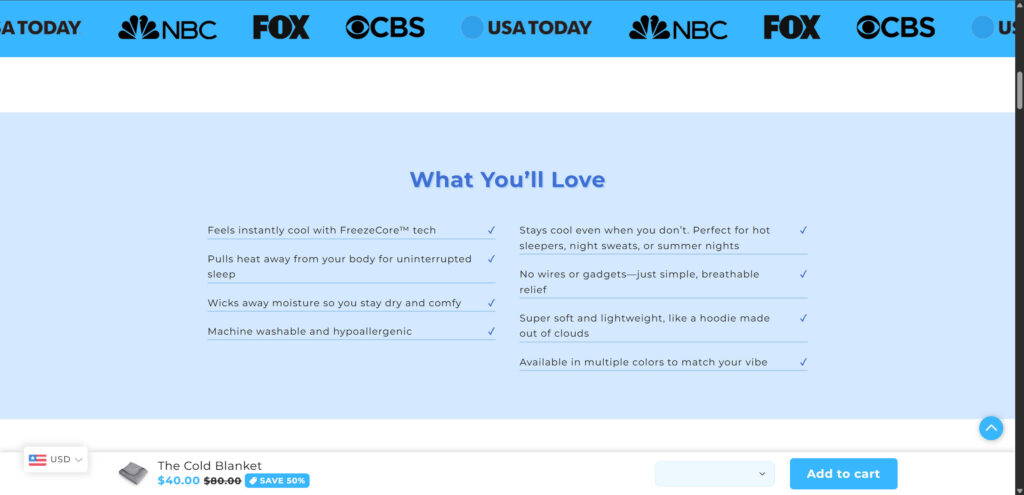
- Instant cooling with FreezeCore™ fabric: Announced as a proprietary textile that “feels cool to the touch” and controls body temperature without gadgets.
- Arc‑Chill technology: Marketed as advanced phase-change material that allegedly draws heat away from the body.
- Breathable and moisture-wicking: They promise a pillow-like softness, lightweight feel, and active moisture absorption.
- Hypoallergenic, machine-washable, kid and pet-friendly: A laundry list of convenient features.
- Exclusive sale prices: Frequently offered at steep discounts (40–60% off), with 2-for-1 deals or time-limited offers.
Where It’s Sold
- A slick one-page website under a .com domain (e.g., “thecoldblanket.com”), with no clear company details – no email, physical address, or customer-service number.
- Bold social media campaigns: flashy Facebook and Instagram ads with before-and-after clips, testimonials, and celebrity-style endorsements.
- Multiple site “bundles” and upsells – common e-commerce tactics to encourage larger purchases.
Real Price vs. Dropship Cost
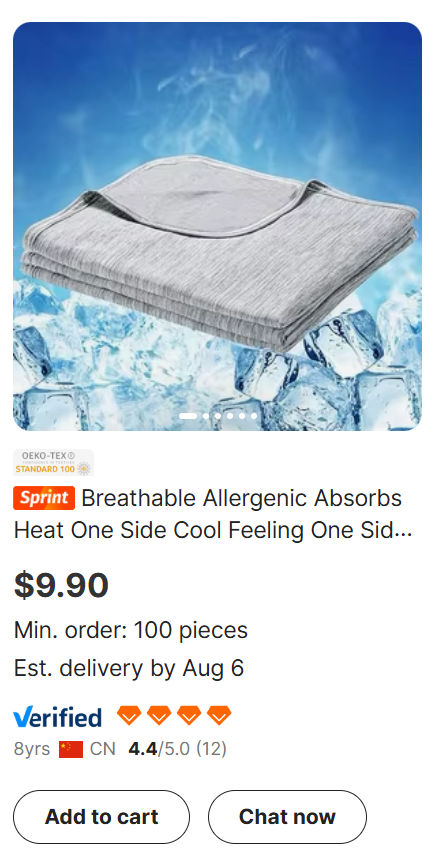
Although sold for $40–$80 retail, identical photos and product specs are found on Alibaba and other wholesale sites for $5–$6 per unit.
This suggests classic dropshipping: same product, massive markup, minimal overhead, and likely suppliers in China.
User Feedback: Mixed to Negative
- Facebook complaints revealed mismatched sizes, unresponsive sellers, and missing customer support.
- Reddit threads question the realism of “instant cooling tech” – most users say the fabric feels cool at first but warms quickly.
- No independent reviews on credible platforms like Trustpilot, Amazon, or Reddit – only a stream of 5-star reviews on the site itself, likely to boost trust artificially.
Product Specs: Too Good to Be True?
- The tech-sounding names – FreezeCore™, Arc‑Chill – have no technical documentation, patents, or published studies.
- Fabric overview: likely synthetic blends – nylon, polyester, spandex – that can feel cool initially, but won’t actively regulate temperature.
- Despite claims, surface-cooling fabrics do not significantly reduce core body temperature or prevent night sweats.
So Is It a Scam?
- Not illegal – but it’s typical dropship/affiliate marketing: low-cost consumer goods sold with exaggerated claims and high markups.
- Signals of concern: no contact info, unverified testimonials, price hikes, false scarcity.
- Outcome for consumers: a mild novelty item that feels slightly pleasant – temporarily. But it won’t deliver the transformative cooling promised.
How the Scheme Works
Below is a detailed breakdown of how The Cold Blanket operation is structured – from ad creation to customer delivery.
1. Ad Creation & Hook
- Targeted Facebook/Instagram ads: “Tired of waking drenched in sweat?” They show sweaty sleepers, then a cozy individual using the Cold Blanket, highlighting “FreezeCore™ tech”.
- Emotional payoff: Positioning the product as a lifestyle solution – cool sleep, no AC, revitalized mornings.
- Promise of exclusivity: “Summer Sale,” “Limited-Time”, “Only available online” – creating urgency and FOMO.
2. Landing Page & Conversion Funnel
- High-impact visuals: Crisp photos, lifestyle shots, testimonials, “As Seen On NBC/CBS/USA Today” badges (often generic or stock).
- Tiered pricing: $40 for one, $72 for two, $99 for three – structured to boost average purchase value.
- Checkout with upsells: Remind customer: “Add cooling pillow” or “get 6-pack of blankets” as final purchase prompts.
3. Dropship Fulfillment
- Overseas supplier link: Actual blankets ship from China-based manufacturers via AliExpress or Alibaba, with minimal packaging.
- No inventory control: Orders go straight to factory; seller never touches the product.
- Shipping delays and no tracking: Blankets advertised to arrive within 7–14 days may take 3–5 weeks – customers often unaware until long past the estimated date.
4. Fake Reviews & Social Proof
- Website-only glowing reviews: Generally short, generic, same writing style, 5-stars – likely purchased or AI-generated.
- Repurposed social media videos: Users “reacting” to first touch – often from other product campaigns, not original customers.
- No authentic 3rd-party reviews: A mark of inauthentic social proof.
5. Lack of Customer Service
- No real email: Contact page limited to form; messages go unanswered.
- No refund policy clarity: Returns accepted within 30 days – but refund link often broken or difficult to navigate.
- Poor issue resolution: Complaints pile up – wrong size, no cooling effect, lost packages – with no response or follow-up.
6. Source Obfuscation & Rebranding
- Generic packaging: Blankets ship in unbranded poly mailers, often labeled in Chinese.
- No brand identity: No white labels, logos, or certificates regarding FreezeCore™ or Arc‑Chill tech.
- Reused product descriptions: Cut-and-paste material from generic cooling blanket products across multiple dropship campaigns.
What to Do If You’ve Fallen Victim
If you’ve purchased The Cold Blanket and feel misled or dissatisfied, take these steps:
1. Review the Return Policy
- Check the site: Typically 14–30 days return window. Print or screenshot proof of policy and purchase date.
- Act quickly: Time limits often start from delivery date or charge date – not site visit.
2. Contact the Seller
- Email the provided address,
- Use the site’s contact form once, mentioning order number, issue, and refund request.
- Record all contact attempts: dates, times, “no response” notes in case of escalation.
3. Dispute the Charge
- Credit/debit card: Phone your bank or issuer. File a dispute under “services not as described” or “fraudulent transaction.” Many authorities offer buyer protection.
- PayPal or Shop Pay: Initiate dispute through the platform, referencing delivery delay or misrepresentation.
4. File a Complaint
- Consumer Protection: For U.S. purchases, report to the FTC or local consumer affairs. Even international orders can be flagged as fraudulent.
- Platform Reviews: Leave honest reviews on Trustpilot, SiteJabber, Reddit – exposing fake claims, no service.
- Social Media: Comment on ad posts, public pages – not to rant, but to warn others factually.
5. Monitor for Unauthorized Charges
- Bank statement checks: Look for “The Cold Blanket” or similar descriptors. Often dropship scams bill under nondescript names.
- Report suspicious charges: Notify your bank immediately if there are unexplained recurring charges.
6. Consider a Cooling Alternative
- Try legit brands: Ex. ChiliSleep, SHEEX, BedJet – they offer temperature-regulating bedding backed by science and warranties.
- Eco-friendly tactics: Use cotton, bamboo, or moisture-wicking sheets; room fans; AC timers.
The Bottom Line
The Cold Blanket is marketed as a revolutionary solution to hot, sweaty nights – but it’s likely a classic dropshipping product with slick branding, exaggerated claims, and price inflation. No credible tech backing or customer-service infrastructure supports its promise.
✅ If you’re seeking genuine sleep-cooling relief, there are legitimate, science-backed options.
⚠️ But if you’re enticed by high-markdown prices and glossy ads, beware: you may just end up with a lukewarm fabric that doesn’t deliver.








