


A TikTok job ad offers work you can pick up from your phone. Your first payout makes it feel like you’ve found something real.
Then they start talking about the next task in a way that sounds more like trading.
Overview
A job ad became a request to send €2,600
A person in Germany said they followed a TikTok ad and joined a Telegram group for simple paid tasks. They reported being able to make an early withdrawal.
The group later offered bonus work with a higher supposed return. The person said they sent €2,600 because they believed the money was connected to spot trading.
They described screens that looked like an investment portfolio but were part of the pitch. The original report does not identify the operator or provide an independently verified trading record.
The important change was what the person had to do with their own money. They were no longer just completing tasks and getting paid.
Police in Bavaria describe this switch from work to “investment”
The Bavarian police warning about job scams describes offers to promote social media profiles, small initial payments, and higher-paying special tasks that require deposits.
The payment at the start and the later demand can coexist. The initial money gives you an experience you can verify. It doesn’t authenticate the investment that comes afterward.
Look at what each part of the offer actually asks you to do:
- A social media ad invites you to earn from quick tasks.
- A private group or contact handles the assignment and claims to handle payment.
- A small early payout makes the arrangement feel established.
- A bonus task requires a transfer of your own money.
- A trading screen or chat message is presented as evidence of what the transfer earned.
If you see this change, stop before sending money. Ask what real provider would hold your funds and whether it has any record you can verify independently.
The portfolio is not the transaction
The picture on a dashboard can be changed by whoever runs it. Start with the records from your own bank, exchange, or wallet.
A transfer receipt can confirm that funds went somewhere. It cannot tell you that they went into a genuine trade, that somebody bought an asset, or that profits were made.
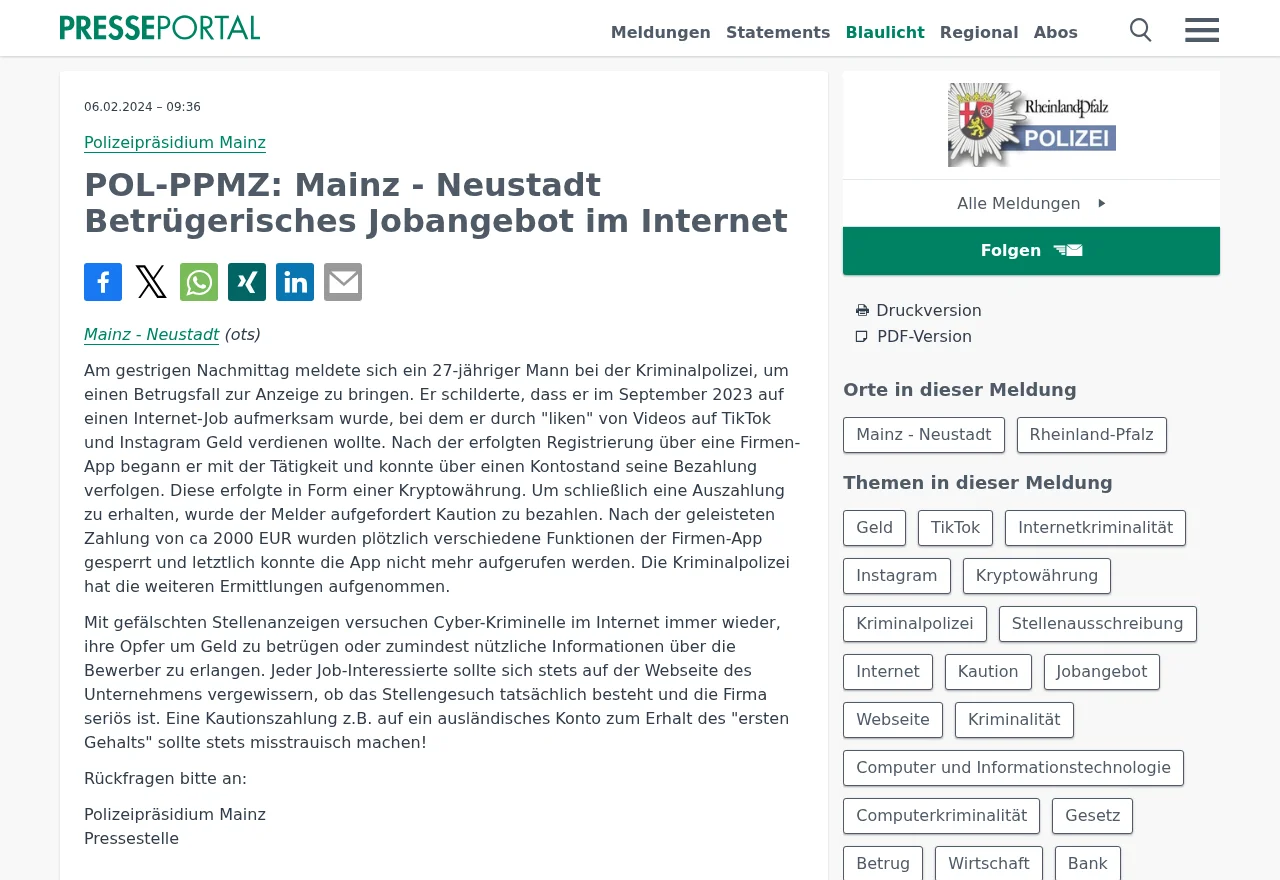
Police in Mainz described a separate job scam involving social media tasks, a balance on an app, and a deposit request. That case was separate from the Telegram report.
A bank or exchange reviewing your report needs the time, amount, and transfer reference. Screenshots of supposed profits help explain the persuasion, but they answer a different question.
How the Scam Works
Step 1: The ad offers small paid tasks
An offer may look appealing precisely because it sounds ordinary. You can imagine doing a few short assignments between other jobs or checking your progress on a break.
Separate the ad’s placement from the employer’s identity. A real social platform can carry a deceptive ad. Use an independent source to check the organization before handing over anything.
Save the ad if it’s still available. Record the account name, platform, and timing. Keep a private record if the ad disappeared before you could capture it.
A real employer should be able to explain the work and how you get paid. Give yourself time to check that before following a stranger into a group.
Step 2: A Telegram group assigns the work
A chat can make a job feel active because you see new tasks and other people discussing payments. Those messages do not establish who the participants are.
The worker in this case said there was a first payout. That explains why a new assignment could look like a continuation. Verify what you received in your actual account.
Save the amount and time of that first transfer. If you later report the scam, it helps to distinguish money that came in from payments you sent.
If you are told to use only the chat for questions, step out and verify who supposedly employs you. Keep the group records for your report.
Step 3: A bonus task changes what you are paying for
The next assignment may require you to pay before it can begin. It may still be called work, even though the explanation now depends on investing or trading.
Ask why this amount has to go to an unfamiliar destination and who is responsible for returning it. Use the answer to assess the request before sending anything.
A higher promised return sounds like compensation for a better assignment. It does not explain why the worker needs to supply the money or where it will be held.
Stop when an activity you understood as paid work becomes a payment you must make. Save the request and check any organization’s identity outside the channel.
Step 4: A trading display gives a story to the transfer
In this case, the person said the screen made the payment look like it would produce spot-trading returns. No independent account history verified that claim.
Check whether you actually placed a trade through a provider you selected and can reach yourself. Look for your order history inside its official service.
A screenshot can be generated or edited. Even a live balance does not tell you whether the operator can fund a withdrawal.
Keep the display as evidence of what was promised.
If you already sent funds, check the actual transfer status with the service that handled it. Never pay another amount to test an alleged withdrawal.
How to Reconstruct the Payment Without Trusting the Dashboard
Begin with where your own money left. That could be a bank transfer to an exchange, a card transaction, or a payment from an existing crypto balance.
Separate any purchase of cryptocurrency from the later movement of it. A purchase confirmation can help identify the amount. A transfer record can show whether it left your account.
Record the currency shown at each stage. The reported case names a payment valued at €2,600. Your records may show a different amount after conversion or fees.
Keep the time zone with each record if you can. A chat, bank statement, and exchange can display the same activity at different local times.
Ask your exchange which records it needs. A useful report often names the asset and gives the transaction reference. No support agent needs your wallet recovery phrase.
If only your bank debit is visible, contact the service you actually paid and ask what it did with the payment.
It can explain whether there is a separate transfer record.
If the group says another payment will release the profits
Save that request, along with any claimed condition that you were not told about before. Let your provider review your real transfer before you discuss anything with the group.
If the dashboard changes or disappears, keep what you already have. There is no reason to send new funds to restore your access to the display.
If somebody offers a recovery service in the same chat, keep it separate from your confirmed exchange and police contacts.
Report that offer if it asks for money or account access.
What the First Payout Can and Cannot Show
Check which account actually received the small payment. A ledger entry on the group’s website is different from money you can see in your bank account or exchange.
If funds really arrived, record the provider and whatever name appears in its history. Do not assume it came from the same company the group claimed to represent.
A high advertised return usually gives you a figure to focus on.
Review what you agreed to before that changed. You may have joined to do paid work, with no investment arrangement.
If the chat began calling you an investor, save the first message using that description. Look for documented terms, an accountable provider, and a real record of the transaction.
If a later refund notice arrives, compare it with your provider’s activity before relying on it. A promise, screenshot, or message saying “completed” does not settle whether money moved.
If you are filing a report in Germany
Write the ad, Telegram invitation, small payout, and larger payment in the order they occurred. Include which steps took place in an app and which involved your real financial provider.
If you made several payments with different references, list them separately. Include international transfers or crypto conversions if your own provider’s records show them.
Tell police whether the ad is still visible or whether only the chat remains.
Save what you already have. You do not need to reopen a site to prove your loss.
If the bank or exchange gives you a case number, include it in any later report. Give the financial provider the police reference if it asks for it.
When a familiar platform appears on a payment receipt
The name of an exchange on a receipt may identify the service that processed the purchase. Ask that exchange whether your funds were still held there or have moved out.
If the supposed investment statements show a different provider, handle that as a second name to verify. No brand on a screenshot can establish who held your money.
If you can still access a legitimate exchange, download or save the receipts you need before losing the original phone. Keep the records independent of the Telegram history.
What to Do if You Have Fallen Victim to This Scam
Stop sending money. Use the bank or exchange you normally use to check whether funds are still pending, still in your account, or already transferred out.
-
Stop the tasks and all further payments. Save the messages. Ignore requests to cover a balance, finish a bonus, or pay for a withdrawal.
-
Contact your bank or exchange. Give the amount, asset, date, and reference. Ask what can still be stopped and which records to preserve.
-
Write down each transfer separately. Include the first payout, your own deposit, and any later withdrawal attempt. Use numbers from the provider you actually used.
-
Report the ad and the group. Use the reporting tools in TikTok and Telegram. Save the original ad account and relevant chat details first.
-
Report to the police. For a German case, check the official Onlinewache portal or contact your local police directly.
-
Check any personal information you shared. Secure accounts and report exposed identification or payment details to the affected provider through its own support channel.
If you have another transfer scheduled, contact the provider before it goes through. Ask it how to cancel what you can still see pending.
If you borrowed money to make the payment, tell the lender what happened and get a record of the remaining balance. Keep the genuine borrowing separate from the chat’s demands.
Tell any relative who helped fund the transfer which institution was involved. They may need to report what happened to their own provider, using their receipts.
Frequently Asked Questions
The group paid me once. How could it still be a scam?
The first payout confirms that you received money. It does not verify that the next transfer is safe or that a displayed trading return is real.
Check the later request on its own. If you have to pay your own money to keep doing the work, stop and ask for independent verification.
Was TikTok or Telegram running the job?
The source describes an ad on TikTok and a group on Telegram. Neither placement identifies the operator or makes the platform responsible for the financial promises.
Report the ad and account through the platform where you saw each one. Give police the story in order so the records can be compared.
Does the portfolio prove my €2,600 was traded?
Confirm activity through the real regulated provider you used, if there is one. A dashboard controlled by the people requesting the payment cannot independently verify trades.
Save the screen to explain what you were shown. Use payment records to establish what was actually sent.
What if the exchange already sent my crypto?
Contact it immediately with the transaction reference. Ask what the status is and what the service can still review. Recovery depends on the actual transfer and providers involved.
If somebody offers guaranteed recovery in exchange for another payment or your wallet secrets, end that contact and continue through the official case.
Should I delete the Telegram chat after I report it?
Keep the messages first. Save the account names, provider details, payment requests, and timestamps that explain what happened. Store them privately and tell the platform where the contact occurred.
Block or leave after saving what you need. Keep your original records if the police or provider wants to compare them with the transactions.
Is there any reason to finish the bonus task?
No. Finishing just because someone says a return is close puts more of your money at risk. Stop before the next payment and ask the real provider about your balance.
If a group’s demand is about paying back money you received, let your bank or payment provider establish what happened and how to handle it.
The Bottom Line
When paid tasks become deposits for supposed trading profits, stop. Check the transfer with your own bank or exchange and leave the dashboard alone.
If you already sent money, report the payment and retain the ad, chat, and actual transfer records. These can explain the case without any further payment.

Join the discussion
0 commentsShare your experience or ask a question about this article.
Discussion
Start the conversation
Have a question or something useful to share? Add the first comment.