

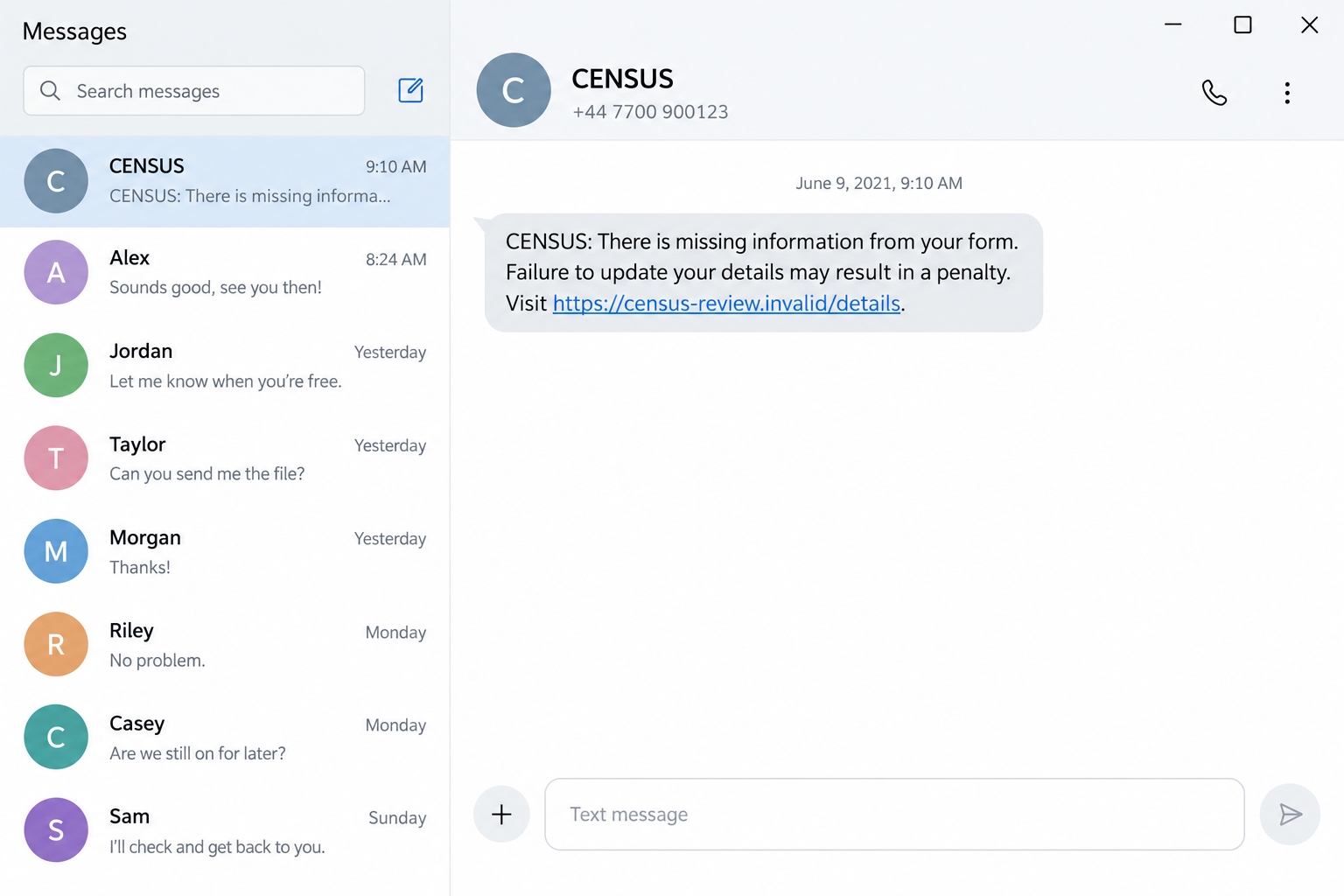
A text says something is missing from your census form. The next sentence mentions a penalty, and a link promises a quick way to put things right.
A UK census scam makes that ordinary doubt feel urgent. Before correcting anything, check whether the person demanding the correction has shown a legitimate connection to it.
Overview
The missing-information notice is a documented impersonation pattern
Fraudulent texts circulated around Census 2021, claiming that recipients had omitted information or needed to avoid a penalty. The link led away from genuine census handling.
This article examines that historically documented pattern. It does not announce a new 2026 census deadline or claim that a particular old phishing site is still active.
The deception attaches an official-sounding obligation to an unauthorized information or payment request. The legitimate census and its genuine enforcement process are not the scam.
Verify an unexpected notice independently. Do not let concern about a real obligation make the sender’s preferred website your automatic next destination.
Official records distinguish phishing from the real process
The ONS 2021 digital-service report describes takedowns of fake non-completion sites and public guidance that credit-card details were not needed for the census.
ONS also published historical enforcement information describing letters, visits, and potential proceedings. A stranger’s instant payment link does not establish that official process.
Those sources support the historical scam mechanism. They do not authenticate a message somebody receives now or establish its sender’s identity from a displayed label.
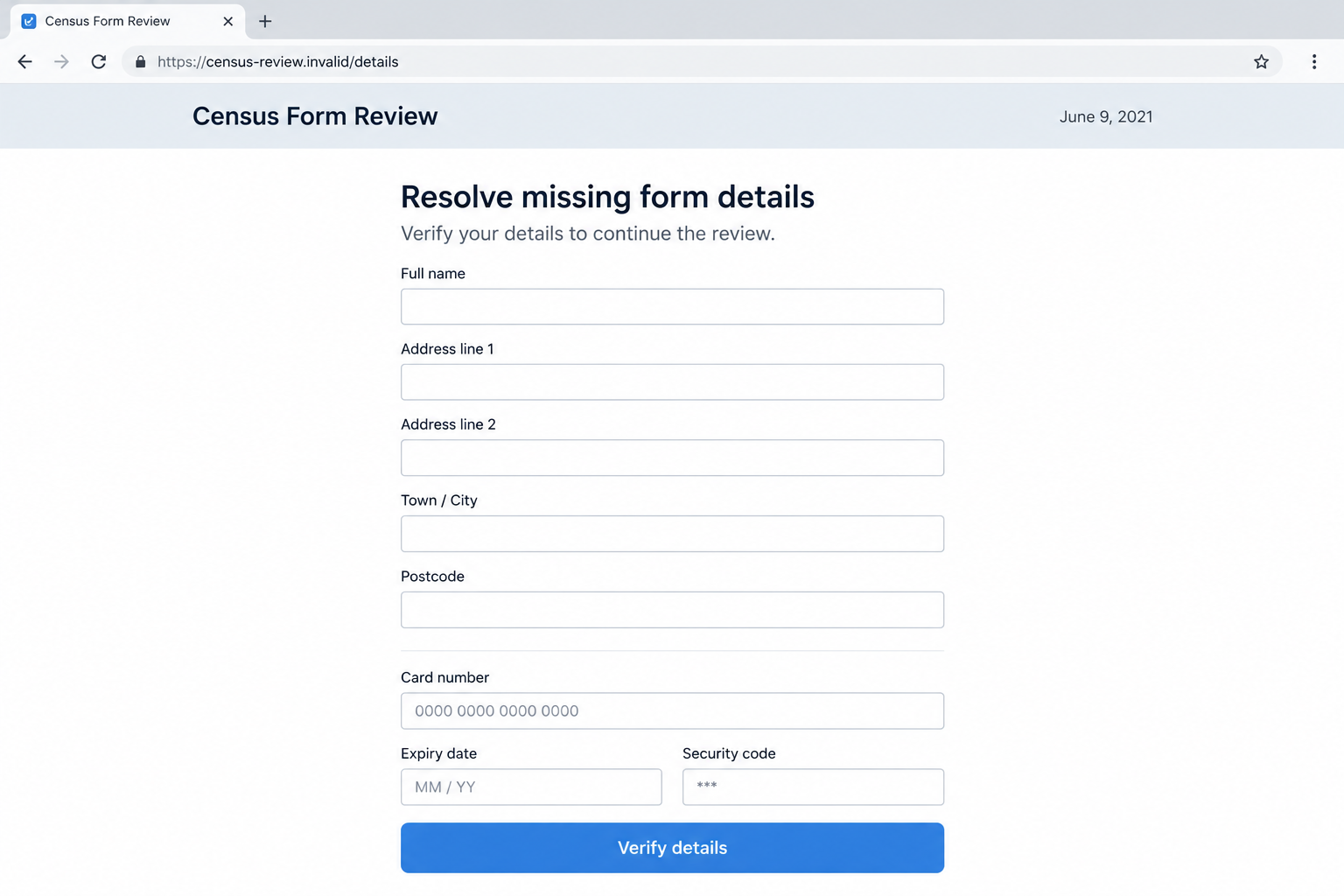
The illustrations are fictional, dated examples with nonfunctional addresses. They do not show an actual open census portal, court demand, or newly intercepted message.
Separate the obligation, the claimed error, and the payment request
A legitimate statistical process, a possible form question, and an unexpected request for card details are different things. One does not automatically confirm the others.
- Check which authority and survey the contact actually claims to represent.
- Verify any deadline through that authority, not the text’s link.
- Do not supply card details to an unfamiliar form-error page.
- Do not treat a mobile sender name as proof of government origin.
- Keep genuine official correspondence separate from suspicious messages.
- Report exposed information or payment to the relevant provider promptly.
You can investigate a genuine question without allowing the unknown sender to collect more information. That separation is the most useful protection in this scam.
Why an Alleged Form Error Can Sound Believable
The recipient supplies the uncertainty
A household form can involve several people and details. Someone may not remember exactly what was submitted or which family member handled it.
A message saying information is missing therefore invites a plausible question: did we overlook something? It can create concern without providing any meaningful evidence.
Do not answer the concern by filling in the sender’s blanks. Ask the genuine authority whether a verified issue actually exists.
An official-sounding reference is also easy to include. Without matching independent records, it remains part of the message’s story rather than proof of a case.
A penalty threat changes the meaning of a simple click
The link may look like a convenience, but the threat makes using it feel necessary. The recipient is encouraged to act before considering who controls the destination.
The goal is to make a security decision seem like routine compliance. Entering private information can be framed as correcting a harmless administrative mistake.
Read the requested action plainly. A card submission is not merely checking whether a demographic field was completed.
Likewise, an unfamiliar account login should not become mandatory because a text uses the language of enforcement. Confirm the underlying process before supplying access.
How the UK Census Scam Works
Step 1: The text claims a problem with the recipient’s form
The contact uses census wording and states that something needs updating. It may claim missing details, incomplete submission, or a problem requiring urgent attention.
The historical messages supply examples of the tactic, not a rule that every suspicious text uses identical words. The message creates an alleged obligation to respond.
A person who remembers completing a census may become particularly concerned. The contact seems connected to something genuine even when the connection has not been established.
Begin with the actual authority and record. Do not assume the sender knows your submission merely because the claim mentions a familiar survey.
Step 2: A fine or deadline discourages independent checking
The warning suggests that failing to follow the link will have a consequence. That pressure can make a stranger’s route feel safer than pausing.
A claimed deadline is still a claim. It should be checked independently rather than accepted as the reason to bypass ordinary verification.
Do not debate the sender about whether the penalty is fair. First establish whether a genuine notice, competent authority, and actual obligation exist.
If you have real official correspondence, use its verified support or court route to clarify it. A suspicious text should not define that separate process.
Step 3: The link replaces official handling with a copied page
The destination may display familiar wording and structured fields. It can appear to continue the form-related process described in the message.
Consistency between the text and website is not independent evidence. Both may simply repeat the same unauthorized claim.
A company or government name inside a longer address does not prove ownership. Look at the actual destination, not only the part you recognize.
You do not need to explore the page to establish that the request deserves caution. Use a trusted authority’s site and reporting guidance instead.
Step 4: The requested details go beyond correcting a form
A page may ask for name and address details before introducing payment information. The early administrative fields can make the later request seem connected.
That connection needs a real explanation. A census-related label does not establish why an unknown page should receive a card number or security code.
The second image shows a hypothetical form making this switch. Its fields illustrate the warning sign and do not represent a recovered operational website.
Do not enter real details to determine whether the page works. A functional submission can expose information even when the promised correction or payment never happens.
Step 5: Follow-up requests can extend the original exposure
After a submission, another message may claim that verification failed or a payment needs confirming. The recipient can be pressed to provide more information.
Knowing the details you supplied does not make the follow-up sender legitimate. It may only show that the information reached the collection process.
Stop and address the actual exposure through the bank, account provider, or official reporting channel. Continued cooperation is not a way to undo the first submission.
Preserve the conversation and any transaction record already available. Describe what happened without returning to the page to complete the sender’s invented process.
Real Census Obligations Are Not Instant Text-Payment Instructions
The historical enforcement process involved official records
ONS published an explanation of Census 2021 enforcement in England and Wales, including reminder letters, follow-up visits, and potential court proceedings.
This matters because the existence of genuine obligations does not validate a stranger’s penalty link. A real process and its impersonation can coexist.
Do not infer that no census-related prosecution could ever be genuine. Check actual official documents through the relevant authority rather than applying a blanket rule.
The guide concerns the documented phishing pattern, not legal advice about a particular court notice. Obtain appropriate assistance if genuine proceedings or deadlines are involved.
A genuine visit is a different interaction from a payment text
Historical official reminders could include contact from a census field officer. The ONS explanation describes follow-up support intended to encourage completion through the genuine process.
That context does not authorize an unknown visitor to collect money or private account details. Verify the identity and purpose through official channels.
Do not let familiarity with a genuine visit authenticate a later unrelated link. Each interaction still requires its own check.
Equally, do not confuse all statistical contact with fraud. Confirm which organization and process are involved before deciding what response is appropriate.
A historical warning should not become a false current deadline
The examples here refer to Census 2021. Their dates are part of the explanation, not a claim that readers now need to complete that historical process.
If a contact refers to another survey or year, check that specific activity with the responsible authority. Do not rely on an old message’s help number or link.
Use current published information for a present inquiry. A saved warning can help identify a pattern without supplying the right administrative route for every situation.
This avoids another mistake: replacing an impostor’s outdated instructions with outdated instructions of your own. Verification should fit the actual notice being investigated.
What to Check Before Replying to a Census-Related Message
Identify what the contact wants you to disclose
Read the fields and payment instruction rather than the page’s reassuring heading. Ask how the information would resolve the claimed issue.
Distinguish ordinary survey responses from bank access or payment data. Combining them on one screen does not make them one legitimate task.
A request for an authentication code deserves particular care. Read the service’s own explanation of what that code approves.
Do not let the census-themed page reinterpret a bank authorization as a harmless reference. The surrounding story cannot change the purpose of the original notification.
Use a contact source outside the suspicious message
Find the authority independently through an official source you trust. Ask about the specific request without using the text’s offered link or callback details.
A matching name in search results is not enough by itself. Confirm the destination before entering private information or following a payment route.
If you kept genuine earlier correspondence, it can provide context. Check whether the new request fits the actual process rather than merely resembles its wording.
You can ask for clarification without submitting the questioned details. A safe identity check should not require disclosing sensitive information to the unverified person first.
Keep evidence without sharing private household information
Save the message, sender details, visible address, and any receipt. Include a date and a short description of the action you took.
Keep actual household answers, identity documents, and account details out of public posts. Appropriate reporting channels can explain what private evidence they need.
If you cannot recover a missing screenshot safely, say so. A factual report with a gap is preferable to another risky visit to the website.
Focus on the observed request and result. An unverified guess about the attacker or their location can distract from the details providers need to investigate.
If You Already Entered Information
Match the response to what was supplied
A viewed page, personal-detail submission, disclosed password, and approved card payment are different events. Separate them in your timeline.
When a card or banking secret was entered, contact the actual provider promptly. Do not wait for the alleged census process to send a final confirmation.
If no sensitive information was supplied, do not assume an account was stolen. Close the page, report the message, and investigate any relevant device changes.
A useful response should contain the actual risk, not the imagined punishment in the text. The sender’s story no longer needs to guide your decisions.
Do not keep paying to cancel the first payment
A follow-up contact may say a correction, refund, or reversal requires another fee. Check that claim with your payment provider instead.
Do not accept an unsolicited caller as official recovery support because they know about the original message. Knowledge can come from the exposed interaction.
Ask verifiable providers about any available remedy and retain their instructions. There is no reason to finance an unknown intermediary’s guarantee.
If a real obligation remains uncertain, investigate it through the responsible authority separately. Ending the scam conversation does not require ignoring legitimate correspondence.
What to Do if You Have Fallen Victim to This Scam
-
Leave the unverified form or payment process. Stop responding and do not approve another code or transaction at the sender’s direction.
Preserve the suspicious notice before blocking or deleting it. Record whether you viewed a page, provided details, or paid anything.
Do not contact the suspect sender to request cancellation. Begin a separate conversation with the actual account or payment provider.
-
Tell your bank or card issuer promptly. Explain the fields disclosed, any authorization given, and the exact financial record if money moved.
Ask about blocking activity, replacing exposed details, and possible dispute or recovery steps. Let the provider explain what fits your circumstances.
A promised refund from the suspicious page is not a bank confirmation. Keep receipts and genuine case references rather than following more payment instructions.
-
Protect exposed accounts and identity information. Replace a disclosed password through its real service and change matching credentials elsewhere.
If identity details were supplied, use appropriate official identity-fraud guidance and tell affected providers about unfamiliar activity. Do not assume card replacement addresses every exposure.
Keep documents private during follow-up. An unknown supposed investigator should not receive additional copies merely because they claim to understand the incident.
-
Report the suspicious communication through current channels. The NCSC’s phishing guidance explains message and website reporting, including texts to 7726 where supported.
For a financial loss or account compromise, follow Report Fraud’s current instructions for England, Wales, and Northern Ireland; use Police Scotland for Scotland.
These are current reporting routes, not old Census 2021 survey helplines. Describe the event and preserve the reference supplied by the official reporting service.
-
Check relevant software or browser exposure. If you followed instructions to install something or allowed remote access, obtain trusted help and run a Malwarebytes check.
Review unfamiliar notifications or extensions you approved. AdGuard may reduce advertising or redirects, but it cannot erase submitted card data or reverse a payment.
A text alone is not proof of device infection. Tailor the security response to the actual interaction rather than buying a repair promised by another stranger.
-
Investigate any genuine official issue separately. Contact the real authority about a verified letter, account notice, or process you still do not understand.
Do not miss a genuine deadline based on general internet advice. Ask the responsible body or an appropriately qualified adviser when actual legal proceedings are involved.
Continue monitoring exposed accounts and reject paid recovery offers. The safest next step should reduce the number of unknown people controlling your information.
Frequently Asked Questions
Does this article announce a new census deadline?
No. It examines a documented Census 2021 phishing pattern and explains how to verify a suspicious request. Present obligations require current official information.
Were all Census 2021 reminders fraudulent?
No. Official records describe genuine letters and visits. That real process did not authenticate a stranger’s text-based penalty or card-collection page.
Does the existence of legal penalties validate a payment link?
No. A genuine obligation and an unauthorized demand are separate matters. Verify the actual authority and notice instead of paying from the text’s instructions.
Should I enter card details to correct household information?
Not in an unverified form. The official 2021 digital-service report describes public guidance that census completion did not need credit-card information.
Where can I report a suspicious text now?
Use current NCSC and carrier guidance, including 7726 where available. Report loss or compromise through the appropriate current police reporting route.
Should I ignore an actual court notice because scam texts exist?
No. Independently verify the document and seek appropriate assistance. General phishing advice is not a decision about the validity of a specific legal notice.
The Bottom Line
The UK census scam borrows the anxiety of an official obligation to justify an unauthorized form or payment request. A threat does not authenticate its sender.
Verify the genuine process independently, keep private account details out of the suspicious page, and report actual exposure through current channels. Do not confuse historical examples with new deadlines.








