


The email asks whether a woman claiming to be your niece really speaks for you. It says someone needs your answer before they release a payment.
Even if you’ve never heard of the person, the question can be difficult to leave unanswered. That’s what makes this message worth a closer look.
Overview
The fake offer puts someone else between you and £1,000,000
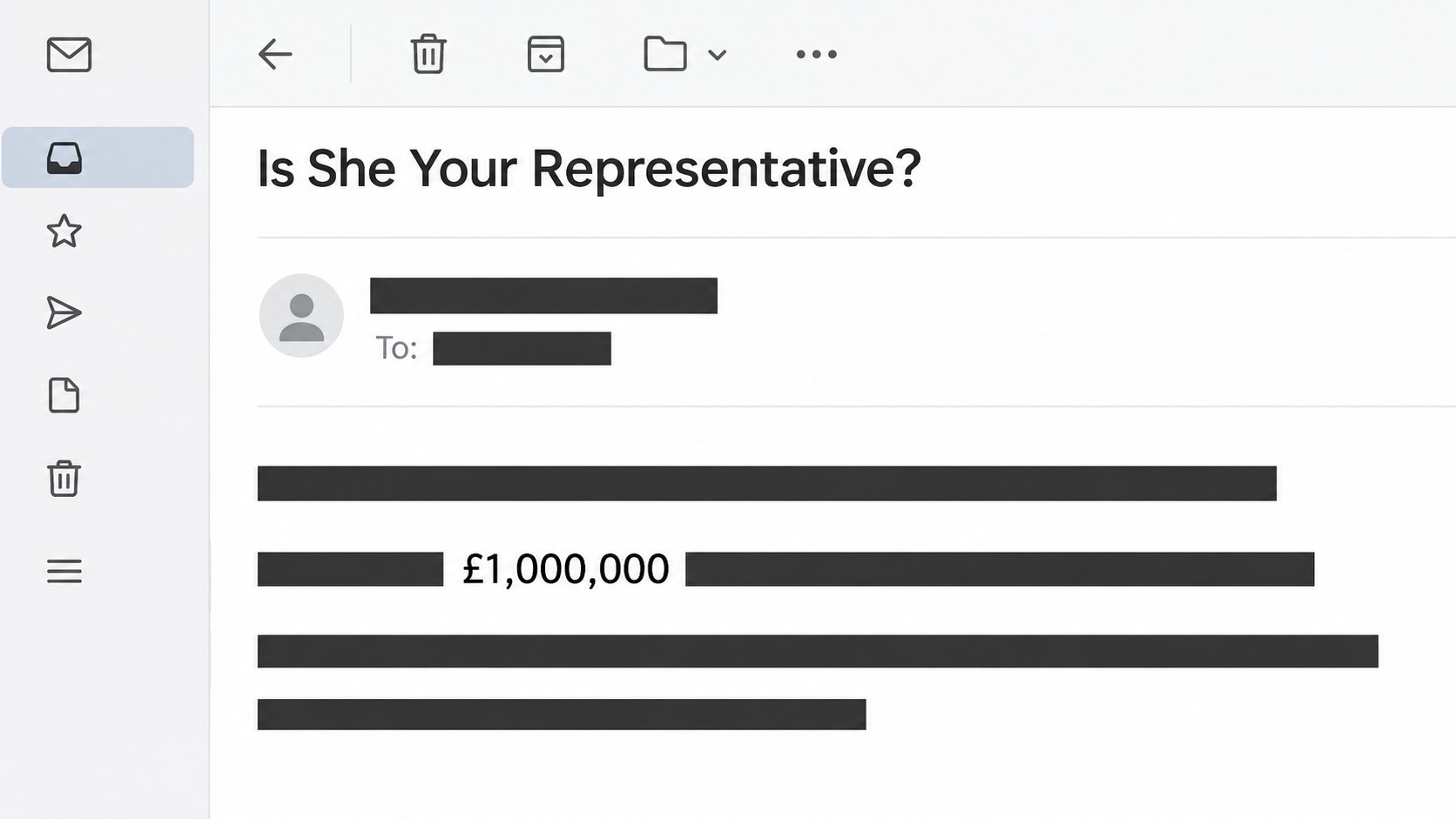
The UK cybercrime compensation email scam offers a remarkable sum to someone it says has already been cheated. The reported subject asks whether an unnamed woman is your representative.
The email claims you were selected alongside 99 other people who lost money to online fraud. It puts the supposed award at £1,000,000.
The woman named in the email supposedly says she is your niece and you cannot act for yourself. The sender gives you 72 hours to respond.
The sender isn’t asking whether you want free money. It asks whether you’re willing to let a stranger take what is supposedly already yours.
The image shows a reconstruction of the identifying subject fragment and amount. It doesn’t show a government decision, a bank record, or a real person making a claim.
A real bureau’s name doesn’t validate a private solicitor’s email
The sender claims to be a solicitor working with the UK Financial Intelligence Unit. That organization is real, but the title in the signature isn’t evidence of an appointment.
The National Crime Agency’s UKFIU page describes its financial intelligence role. It doesn’t authenticate an individual award described by an unsolicited sender.
The footer invokes two law firms as well as a postal address. Familiar names don’t bring a case file, a previous communication you can verify, or permission to represent you.
Don’t treat names used in the letter as proof that the named people or organizations participated. The sender can borrow an identity as easily as a bureau’s name.
The documented request is for a reply, not an immediate payment
The first email asks the reader to confirm or deny the representative’s story. It promises further paperwork and directions to a paying bank if the reader wants the award.
No follow-up fee, bank transfer instructions, or identity upload was verified in the reported sample. Requests of that kind are known risks in recovery fraud, not observed steps here.
The police recovery fraud guidance explains why seemingly helpful offers to retrieve losses deserve independent checks. Criminals can approach you again after an earlier incident.
Here are the details that matter when reading the letter:
- The case comes to you through a surprise email, not an official process you started with a verified claim number.
- The stated award is unusually high, but the message doesn’t show a calculation tied to your documented loss.
- The invented deadline applies pressure before you speak to anyone who already knows about your real case.
- The supposed solicitor promises to choose where your next contact happens.
- Nothing in the email requires you to reply before looking for independent confirmation.
How the UK Cybercrime Compensation Email Scam Works
Step 1: A letter makes an old loss feel newly recoverable
Someone who lost money may still be waiting for news from a bank, police, or platform. The compensation letter taps into that unfinished business.
The email says other victims have been selected too. That gives the offer the appearance of a program rather than a stranger who decided to send you money.
It doesn’t show how the sender identified your loss or calculated the amount. The message supplies a scale, not the details needed to tie the money to your case.
Keep the missing details out of your reply. Check an existing report or claim with the organization you originally contacted, where a legitimate record should already exist.
Step 2: The lawyer introduces an emergency that wasn’t there yesterday
The supposed niece is the second reason to answer. Someone may ignore a surprise award, yet feel obliged to correct an allegation that a relative is acting without permission.
The sender puts themselves on your side. They say that replying is the way to keep the funds away from an unauthorized representative.
This is the choice the email wants you to see: answer immediately or surrender the money. Checking through an independent channel has been left out.
Even a recipient who recognizes the name should not answer it on the sender’s terms. If there is a real family question, speak privately through a number you already use.
Step 3: A reply puts the sender in charge of the next conversation
Answering a yes-or-no question may feel harmless. It still tells the sender that the address is active and that the story got someone’s attention.
From there, the purported solicitor offers to prepare documents and introduce the bank. If you accept that route, the people verifying the claim are the people introduced by its sender.
That is a poor substitute for independent checks. A second email with a different signature or a letter on legal-looking stationery can continue the same story without adding independent evidence.
If you already replied, you can still stop. You are not obliged to confirm your identity, justify your silence, or accept new instructions because you answered once.
Step 4: A later request may change what is at risk
Recovery fraud can turn into a request for a processing charge, purported tax, identity document, or account details. Treat any later request as new exposure, not a requirement established here.
A request for an identification scan matters even without an immediate fee. Someone may try to use the document to impersonate you, especially if you already shared an address.
If the sender supplies a payment account, knowing the bank’s name does not make the beneficiary official. The bank may be real while the person receiving money has no authority.
Don’t send a smaller amount to prove the route works. A successful transfer shows only that funds went somewhere, not that the promised compensation exists.
Step 5: Waiting for a payout gives the sender more time
A person who already provided documents or money may want to wait to avoid making the situation worse. The sender can exploit that uncertainty with a new delay or requirement.
The real institutions can help even if someone told you the case is confidential. A bank needs accurate details early to assess what it can do about a payment.
If you had a separate chargeback or police report underway, don’t close it on the email’s instructions. Verify any change with the person already handling the genuine report.
Keep the original fraud and the recovery approach separate in your notes. It’s possible for them to be related, but the new message alone doesn’t identify who sent either one.
What to Do if You Have Fallen Victim to This Scam
-
Stop speaking with the claimed representative. Don’t confirm family details, send a denial letter, or let the sender choose a number to call.
If you only received the email, you can report it and leave it unanswered. The stated 72 hours does not require action through the sender.
-
Check any real claim from its original paperwork. Find the correspondence or reference you received when you contacted your bank, police service, insurer, or other legitimate case handler.
Use the contact information attached to that verified case or look up the organization independently. Don’t copy the destination from the supposed solicitor’s signature.
-
Speak to your bank immediately if you paid or shared banking information. Explain that it was a purported fraud recovery payment, rather than describing it only as a transfer error.
Give them the beneficiary, amount, method, and time from your own records. Ask what options exist, including account protection and whether a recall or dispute is possible.
If you paid using a different service, contact that provider as well. Nobody should charge you privately to make an unverified promise to retrieve the payment.
-
Protect your identity if you sent documents. Record which pages and identifiers were shared. Ask the relevant document issuer, bank, or official fraud service how to limit misuse.
An exposed banking password or one-time code requires an account security response, not only identity monitoring. Use your bank’s verified contact route right away.
-
Keep evidence of what happened, not a new copy of the offer. Save the original email, reply chain, any instructions you received, and genuine payment confirmations.
Do not seek more incriminating evidence by continuing to correspond. You can give existing material to your bank or the reporting service without promising the sender anything.
-
Make a report through the appropriate national channel. In the UK, start from the verified Report Fraud guidance. Follow the jurisdiction instructions if you’re in Scotland or elsewhere.
If you live outside the UK, use your local fraud reporting service and tell it the message invoked a UK agency. Keep the reporting reference for your records.
-
Tell someone who can help you recognize repeat approaches. If another person was aware of the original loss, show them the pattern without forwarding any live contact or payment instructions.
A follow-up may present itself as another investigator or a bank’s specialist team. Continue only through a contact you establish independently.
How to Check a Real Recovery Claim Without Reopening the Story
Find which institution already knows about the loss
An original complaint normally leaves a record with the institution you contacted. Start with its reference, the dates you reported, and the amount originally disputed.
If you can’t find documentation, ask the institution how to locate a claim. The surprise sender doesn’t need your passport to decide whether a legitimate record exists.
Check whether the case handler can explain the current status from information already in its system. The sender’s missing detail is not your responsibility to supply.
Do the same with legal representation. An unsolicited claim that someone speaks for you does not replace the instructions you gave a lawyer or the authorization you can verify.
Keep the promise separate from any pressure to pay
Some legitimate recovery or court processes may involve costs. That does not make an unsolicited release fee valid, especially when the person demanding it controls the entire route.
Ask the real case handler what deadlines apply. If you’re considering professional help, check the firm independently and ask for clear costs in writing.
Keep your recovery budget to yourself. Telling a stranger what you can afford may turn one false deadline into a series of payment requests.
If the only evidence for an award comes from the same person demanding your reply, stop there. You do not need the sender’s permission to step away.
Verify a legal identity without trusting the signature block
A name in a reply can belong to a real solicitor who never contacted you. The check is whether the real firm recognizes that communication, not whether the name exists.
The Solicitors Regulation Authority’s consumer guidance explains how to check a firm or solicitor in England and Wales. Find an independent number for the firm.
Give the firm enough context to identify the approach without sending sensitive documents. An unexpected request for payment deserves its own verification even if you dealt with a lawyer before.
If a firm confirms it did not contact you, preserve the answer for the fraud report. A false signature does not make the innocent firm responsible for the email.
Look twice at promises about timing and secrecy. If a purported representative won’t let you check with your existing claim handler, don’t treat that pressure as a legal obligation.
Keep a record of what you checked separately from what the sender claimed. The distinction matters when a bank or investigator asks how you learned about the supposed award.
Frequently Asked Questions
Is there really a £1,000,000 award from the UKFIU?
The email makes that claim without establishing a genuine award. The UKFIU is a real unit, but its name doesn’t authenticate the sender or the proposed payment.
Does the named woman actually have access to my claim?
The message provides no independent evidence that she does. If you have a real case, verify any representative through the agency handling it.
Should I reply just to say I don’t know her?
No reply is needed to the suspicious sender. A direct check with an institution you already trust can answer the concern without confirming anything to the email’s operator.
What if this arrives after I reported a different scam?
Check the status of your original report through its verified channel. The timing of this message is not proof that it came from anyone involved in that report.
Was there a known release fee in this example?
The documented opening message asks for a reply and promises further instructions. A subsequent fee was not established, so report what you actually received or paid.
What if I sent documents but didn’t send money?
Treat the information as potentially exposed and seek advice from the document issuer or local fraud service. The lack of a transfer does not rule out identity misuse.
The Bottom Line
Don’t answer the email that says a supposed niece could collect your UK cybercrime compensation. The amount, deadline, and legal signature are not independent evidence of a real claim.
Verify any genuine case where you first reported it. If you already sent money or identity information, contact the provider or document issuer through a verified route.

Join the discussion
0 commentsShare your experience or ask a question about this article.
Community experiences
Did this happen to you?
Your experience could help someone recognize the same scam. Submit a private report for our team to review.
I experienced this tooReports are reviewed before publication. Sharing publicly is always your choice.
Discussion
Start the conversation
Have a question or something useful to share? Add the first comment.