

UnitedHealthcare, one of the largest health insurance companies in the United States, has agreed to settle a class action lawsuit alleging the company violated the Telephone Consumer Protection Act (TCPA) by making unauthorized telemarketing calls to customers. The $2.5 million settlement could provide payments between $350-$1000 to over 12,000 eligible individuals who received prerecorded calls without consent.
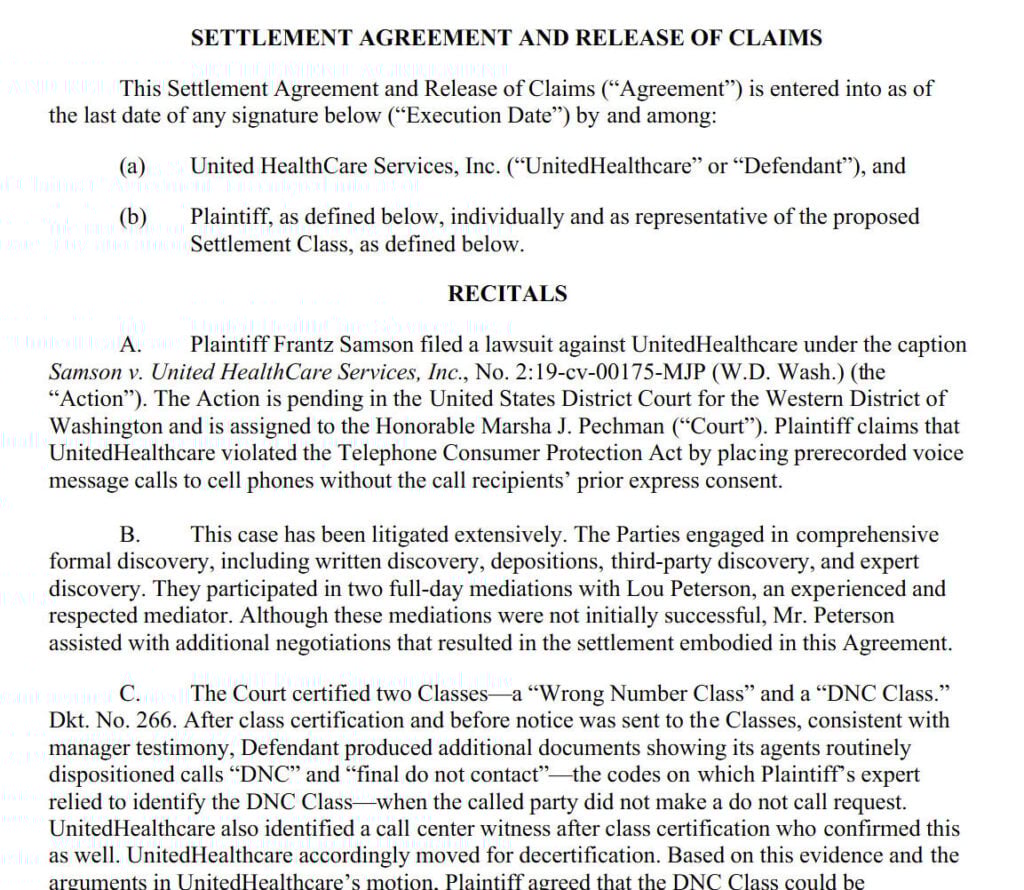
The Allegations Against UnitedHealthcare
The class action lawsuit, originally filed in January 2019, accused UnitedHealthcare of using an artificial or prerecorded voice message to contact customers for the purposes of marketing and customer retention. However, the TCPA prohibits companies from calling cell phones without prior express consent using an automatic telephone dialing system or prerecorded voice.
The lawsuit alleges that UnitedHealthcare violated this federal telemarketing law by contacting customers enrolled in Medicare Advantage plans and other health insurance plans sold by UnitedHealthcare with unauthorized prerecorded calls. These calls were made by various teams within the company focused on customer retention, including:
- Medicare and retirement non-licensed retention team
- Community and state national retention team
- Medicare and retirement collections team
The calls were made between January 9, 2015 and January 9, 2019 to individuals who were not UnitedHealthcare members at the time or who had not consented to receive telemarketing calls.
Settlement Terms and Payments
To settle the claims, UnitedHealthcare has agreed to establish a $2.5 million settlement fund which will provide cash payments estimated between $350 to $1,000 to each eligible individual.
To be eligible for a settlement payment, individuals must have received one or more of the unauthorized prerecorded calls from UnitedHealthcare during the relevant timeframe and meet the following criteria:
- Were not a UnitedHealthcare member at the time of the calls
- Did not consent to receive telemarketing calls from UnitedHealthcare
- Received a notice of the settlement by email or mail
The final cash payment amounts will depend on the total number of eligible claimants who submit valid claims. Payments are expected to be issued in 2025 after the court grants final approval of the settlement.
How to File a Claim for Settlement Payment
Eligible individuals were notified of the pending settlement by email or mail. The notice provided login credentials to submit a claim online through an electronic claim form.
Alternatively, individuals can download and print a physical claim form to fill out and mail back. Claims must be submitted by April 15, 2025 in order to receive payment.
If eligible individuals took no action in response to the settlement notice, they will not receive any compensation. The settlement administrator is responsible for verifying eligibility and issuing payments.
Settlement Still Requires Court Approval
While UnitedHealthcare has agreed to the terms of the $2.5 million settlement, it still requires final approval from the U.S. District Court for the Northern District of Illinois Eastern Division.
A hearing is scheduled for June 20, 2025 where the court will review the terms of the settlement and make a determination on whether to grant final approval. Both parties agreed to the settlement terms earlier this year after extensive negotiations.
What Happens if the Court Approves the Settlement
If the court grants final approval, UnitedHealthcare will begin the claims process and start issuing settlement payments to eligible class members who submitted valid claims. Eligible individuals will be sent their check for an estimated $350 to $1,000 by the claims administrator.
UnitedHealthcare will also be barred from engaging in the unauthorized telemarketing practices outlined in the lawsuit. The settlement resolves all claims made in the class action on behalf of individuals who meet the eligibility criteria.
What Happens if the Court Rejects the Settlement
If for any reason the court decides to reject the proposed settlement terms, the litigation would resume. The lawsuit would proceed toward trial unless UnitedHealthcare and the plaintiffs can reach a revised settlement agreement.
An order denying the motion for settlement approval would likely delay resolution of the case for several more months or longer. However, both parties have indicated they believe the current terms are fair and reasonable to end the litigation.
UnitedHealthcare Faces Other Legal Issues
The pending TCPA class action settlement is not the only legal matter currently affecting the large health insurer. Earlier this year, UnitedHealthcare suffered a massive data breach that impacted millions of customers nationwide.
February 2022 UnitedHealthcare Data Breach
In February 2022, UnitedHealthcare revealed its insurance management systems were breached by hackers who gained access to sensitive personal information belonging to millions of customers. The data exposure occurred through software vendor Change Healthcare, which operates billing and revenue management systems used by UnitedHealthcare.
Investigations into the data breach found that exposed information included names, dates of birth, addresses, phone numbers, email addresses, and Social Security numbers. Medical claims data was also compromised, including health insurance ID numbers, treatment details, diagnosis codes, and billed amounts.
The February 2022 cyberattack disrupted Change Healthcare’s systems and prevented healthcare providers nationwide from verifying coverage and collecting payments for over four weeks. While investigations continue, initial estimates suggest up to 190 million people may have been impacted by the far-reaching UnitedHealthcare data breach.
Ongoing Legal Fallout
The UnitedHealthcare data breach has already triggered legal action on multiple fronts. Various federal and state prosecutors have launched investigations into the security lapse.
In April 2022, the U.S. Department of Health and Human Services Office for Civil Rights opened an investigation into potential HIPAA privacy violations related to the massive healthcare data exposure.
Multiple state attorneys general have also initiated investigations, including those in Indiana, Minnesota, and Kentucky. Beyond regulatory oversight, Change Healthcare and UnitedHealthcare also face dozens of civil lawsuits from affected individuals and healthcare providers alleging negligence and breach of contract.
The pending investigations and lawsuits ensure the data breach will continue subjecting UnitedHealthcare to legal scrutiny throughout 2022 and beyond. While cooperating with regulators, the company is also focused on providing credit monitoring and ID theft protection services to impacted customers.
Key Takeaways From the UnitedHealthcare TCPA Settlement and Data Breach
The pending $2.5 million settlement of a class action lawsuit represents another major legal headache for health insurance giant UnitedHealthcare. Key takeaways include:
- UnitedHealthcare agreed to settle allegations it violated telemarketing laws by making prerecorded sales calls without consent.
- Over 12,000 customers could receive $350 to $1000 through the proposed $2.5 million settlement fund.
- The settlement requires court approval and claims can be filed through April 2025.
- This lawsuit comes as UnitedHealthcare faces fallout from a massive data breach impacting millions.
- Multiple state and federal investigations into the data exposure remain ongoing.
- The legal actions pose continuing financial and reputational risks for UnitedHealthcare.
As UnitedHealthcare works to resolve the pending TCPA litigation and data breach investigations, the company’s legal troubles are far from over. The extent of the financial and reputational damage remains uncertain. However, the two developments together underscore the substantial risks major healthcare players face from cyber incidents and unlawful sales practices.








