

A new phishing scam has emerged that preys on expectations of pending packages and dupes victims into paying fake USPS redelivery fees. This expansive guide will uncover everything you need to know about how this scam works, common ploys to watch for, and how to keep yourself protected.
Overview of the Scam
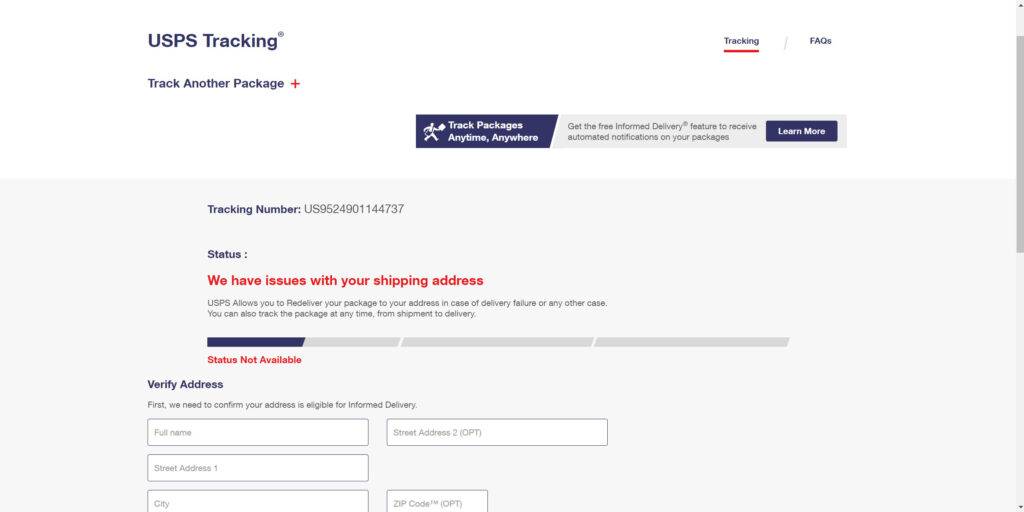
This scam typically starts with an email, text message, or phone call pretending to come from the US Postal Service. The message claims a package intended for you requires redelivery due to an incorrect address, missed attempt, or other delivery problem.
You are provided with a tracking number and urged to click on a link or call a number to schedule redelivery and pay any associated fees. However, the link and number direct to fraudulent USPS sites and call centers seeking to steal entered personal and financial information.
Once your name, date of birth, account details, or other data is harvested, scammers steal identities, make illicit purchases, or sell the information on the black market. Many victims have reported stolen funds, compromised accounts, and nightmare struggles with identity recovery after falling for this scam.
How the Scam Works
This scam strategically deceives victims using the following deceptive tactics:
Crafting Fraudulent Messages
Scammers first fabricate SMS texts, emails, and phone scripts impersonating authentic USPS communications about missed deliveries. These specify a fake tracking number and claim redelivery must be scheduled and paid for online or over the phone.
The messages mimic real USPS redelivery formats and language. Email subjects state things like “USPS Delivery Attempt Failed,” “Schedule Redelivery of Your Package,” or “Action Required to Get Your Package.”
Including Realistic Tracking Numbers
Some messages include fake but convincing-looking USPS tracking numbers that victims can enter on the USPS website, showing a real package in transit.
Seeing real tracking results lends legitimacy to the alerts, so users trust the instructions to schedule redelivery by clicking the provided link without hesitation. In reality, the tracking numbers are fabricated.
Providing Urgent Call-to-Action
Notifications emphasize acting quickly to arrange redelivery before the package is returned to the sender. The urgency aims to prompt action before users notice any inconsistencies.
Threats of fees for failed delivery may also be cited to scare victims into compliance. These high-pressure tactics play on panic and fear.
Directing Victims to Phony Sites and Numbers
Links and phone numbers within the alerts appear to be direct to the genuine USPS at first glance. However, they actually route to sophisticated fake USPS websites and call centers controlled by scammers.
Both the fraudulent sites and call agents closely imitate the real USPS while making elaborate redelivery scheduling and payment processes seem compulsory. But it’s all a scam.
Collecting and Stealing Personal and Financial Data
To “schedule redelivery and pay fees,” the spoofed USPS sites and call agents prompt victims to enter personal identifiers like name, birth date, social security number, driver’s license details, address, phone number, and credit card or banking data.
In reality, USPS does not charge fees for redelivery attempts. Scammers steal all submitted information to commit financial fraud. Some fake sites also contain malware that infects users’ devices.
Exploiting Stolen Identities and Accounts
With the acquired details, scammers can easily engage in identity theft such as:
- Opening fake credit cards or accounts
- Filing phony tax returns for refunds
- Stealing retirement account funds
- Selling information bundles on the black market
- Draining bank accounts using account numbers
Scammers may also use compromised usernames and passwords to directly access existing accounts and assets. This all leaves victims dealing with severe financial and identity devastation.
Pursuing Secondary Scams and Fraud
Scammers often follow initial cons with additional scams against the same victims:
- Contacting victims posing as USPS investigators offering to recover stolen funds or reverse identity theft for an upfront fee they pocket.
- Calling while impersonating bank reps to “assist” with fraud claims while actually tricking victims into allowing account access.
- Sending links for “security updates” that actually contain malware granting access to devices and networks.
These supplement scams lead to more stolen money, data, and misery for victims already reeling from previous fraud.
What to Do If You’re a Victim
If you provided any sensitive information or paid any redelivery fees, take these steps right away:
- Contact banks to halt charges on compromised accounts and cards. Monitor statements closely for signs of fraudulent use of funds and data.
- Place 90-day fraud alerts on all credit files to make opening new illicit lines of credit more challenging. Continuously check credit reports as well.
- Change all account passwords, and security questions, and enable two-factor authentication everywhere possible.
- File detailed reports with the real USPS through their postal inspector website and with the FTC.
- Ignore any supposed offers of help recovering lost money or restoring identity in exchange for advanced fees. These invariably indicate follow-up scams.
Red Flags to Spot This Scam
While this scam can look incredibly convincing, these tips can help expose it:
- Messages urging you to pay redelivery fees that USPS would never actually require.
- Links routing to mismatched domains outside of usps.com.
- Fake sites lacking security certificates and the “HTTPS” designation.
- Requests for unnecessary personal details beyond just address and payment info.
- Caller IDs on scam calls displaying spoofed USPS numbers.
- Follow-up contacts from “USPS” offering aid reversing damages for a fee.
How to Avoid This Scam
Protect yourself from the USPS redelivery payment scam using these key precautions:
- Never click links or call numbers within unsolicited messages – independently find official USPS contacts.
- Verify supposed delivery issues and redelivery options directly with USPS using confirmed channels before taking action.
- Analyze sites carefully for valid domains, security certificates, and USPS branding.
- Do not disclose personal or financial data through unverified sites or calls.
- Keep software updated to detect fraudulent sites attempting malware installation.
- Review USPS scam awareness resources to stay on top of the latest techniques targeting customers.
- Use strong unique passwords and two-factor authentication to secure online accounts.
Is Your Device Infected? Run a Free Malware Scan
Slow performance, constant pop-ups, or strange behavior? These are classic signs of a malware infection. The fastest way to find out is to scan your device with Malwarebytes Free — one of the most trusted malware removal tools available.
The free version detects and removes the most common threats, including:
- Adware — the cause of those annoying pop-ups
- Browser hijackers — unwanted redirects and changed homepages
- Trojans and spyware — hidden programs stealing your data
- Potentially unwanted programs (PUPs) — software you never asked for
👉 Select your device below — Windows, Mac, or Android — then follow the simple steps to download Malwarebytes, scan your system, and remove any threats it finds. The scan usually takes 5 to 20 minutes.
Run a Malware Scan with Malwarebytes for Windows
Malwarebytes is one of the most popular and trusted anti-malware tools for Windows — and it’s completely free for removing infections. It catches threats that many antivirus programs miss, including adware, browser hijackers, and trojans. Follow the steps below to scan and clean your PC in just a few minutes.
Download Malwarebytes
Click the button below to download the latest version of Malwarebytes for Windows from the official source. The free version is all you need — it will scan your computer and remove adware, browser hijackers, and other malicious software at no cost.
Download MalwarebytesOfficial installer for Windows 11 and 10. Your download starts right away.Want real-time protection? See Malwarebytes Premium Malwarebytes Free for WindowsScans and removes malware at no cost
-
Install Malwarebytes
When the download finishes, open your Downloads folder and double-click the MBSetup file. If Windows shows a User Account Control pop-up, click “Yes” to allow the installation.
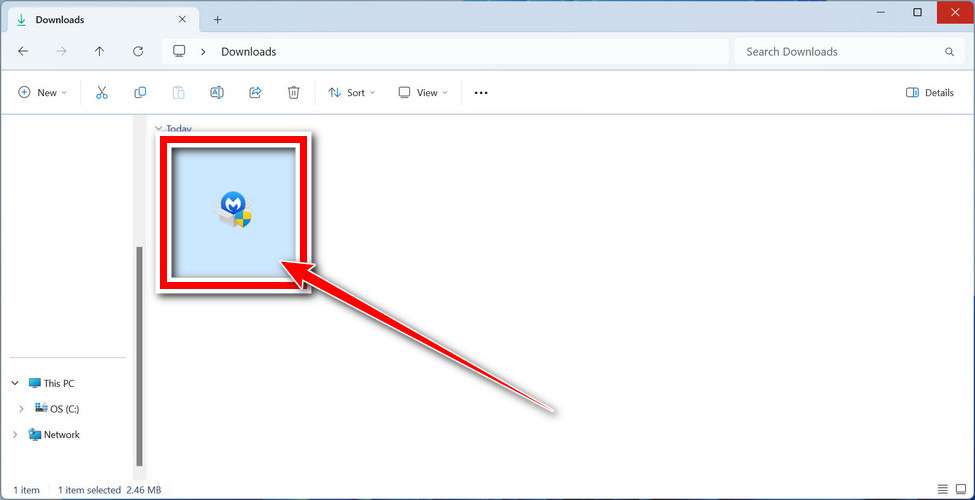
Follow the On-Screen Prompts to Install Malwarebytes
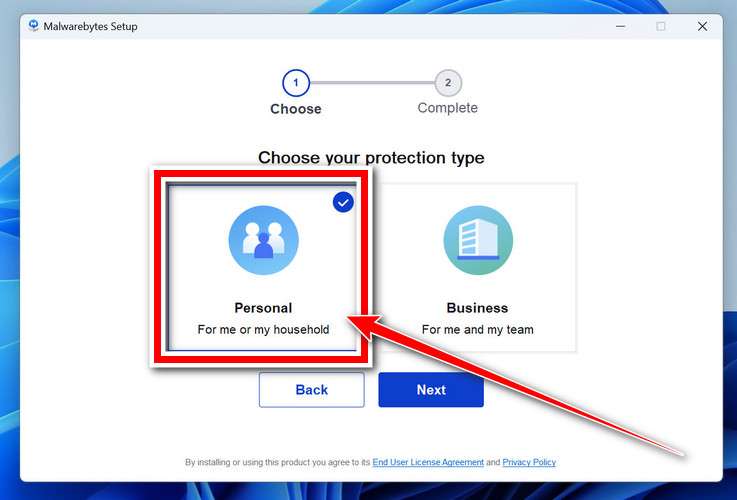
The setup wizard will walk you through a few quick screens:
-
Choose where you’re installing the program — “Personal Computer” or “Work Computer” — then click Next.
-
Malwarebytes will now install on your device. This usually takes under a minute.

-
When installation is complete, the “Welcome to Malwarebytes” screen will open automatically.

-
On the final screen, click Open Malwarebytes to launch the program.

-
Enable “Scan for Rootkits”
Before scanning, turn on rootkit detection so Malwarebytes can find even the most hidden threats. Click the Settings gear icon on the left side of the screen.
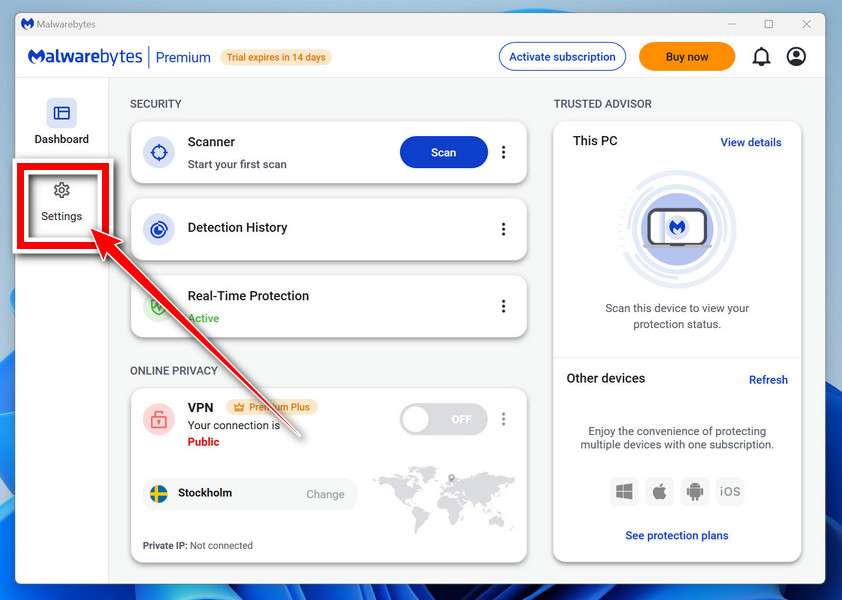
In the settings menu, find “Scan for rootkits” and click the toggle so it turns blue.

Done? Click “Dashboard” in the left pane to return to the main screen.
Start the Scan
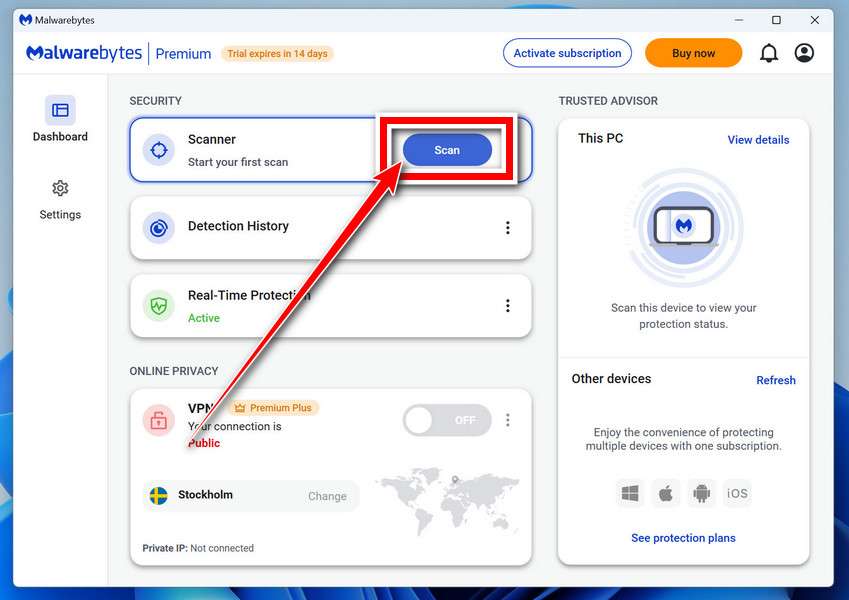
Click the blue Scan button. Malwarebytes will automatically update its virus database and start checking your computer for malware.
-
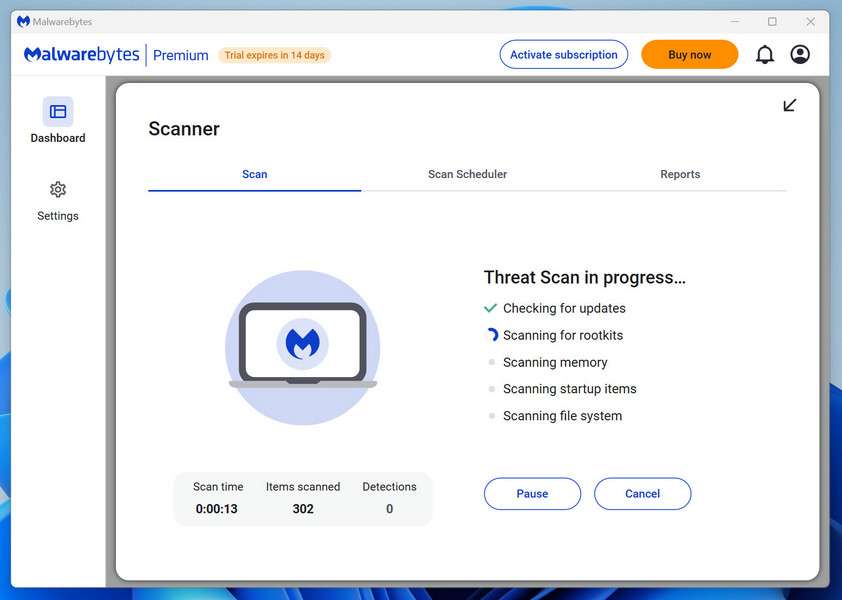
Wait for the Scan to Finish
The scan checks your entire system for browser hijackers and other malicious programs, so it can take 5 to 20 minutes depending on your computer. Feel free to do something else — just check back occasionally to see the progress.
-
Quarantine the Detected Threats
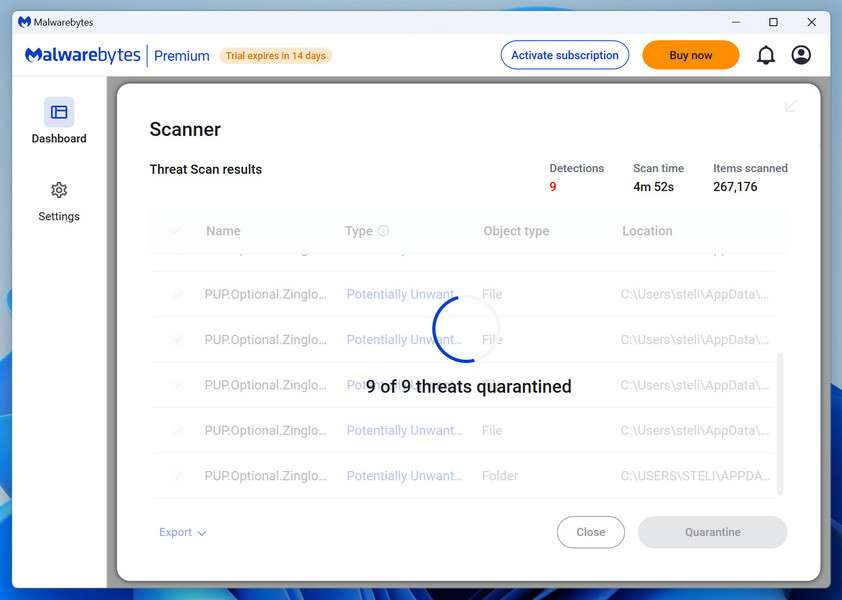
When the scan is done, you’ll see a list of everything Malwarebytes found — malware, adware, and potentially unwanted programs. Click the “Quarantine” button to remove all of them at once.

Malwarebytes will now remove the malicious files and registry entries and move them safely into quarantine.
-
Restart Your Computer
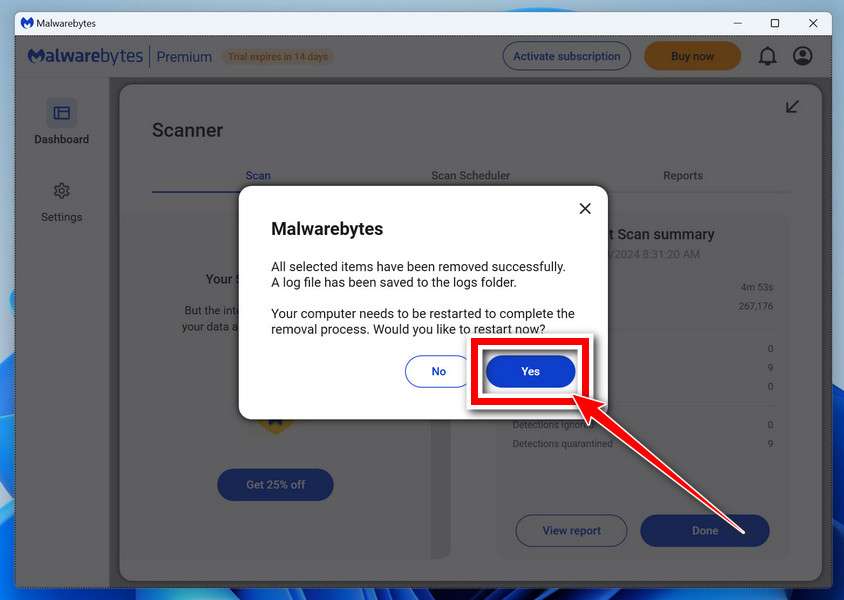
Some threats can only be fully removed after a reboot. If Malwarebytes asks you to restart, click Yes. Once you’re logged back in, Malwarebytes has finished removing the threats it found.
That’s it — your Windows PC is now clean of trojans, adware, and other malware, and should be back to running smoothly.
If you are still having problems with your computer after completing these instructions, then please follow one of the steps:
- Run a computer scan with ESET Online Scanner
- Ask for help in our Windows Malware Removal Help & Support forum.
Run a Malware Scan with Malwarebytes for Mac
Malwarebytes for Mac is a free on-demand scanner that removes the malware other security software tends to miss — adware, browser hijackers, and unwanted programs included. Cleaning an infected Mac with Malwarebytes has always been completely free, and it’s our go-to recommendation. Follow the steps below to scan and clean your Mac in just a few minutes.
-
Download Malwarebytes for Mac
Click the button below to download the latest version of Malwarebytes for Mac.
Download MalwarebytesOfficial installer for macOS. Your download starts right away.Want real-time protection? See Malwarebytes PremiumMalwarebytes Free for MacScans and removes malware at no cost -
Open the Malwarebytes setup file
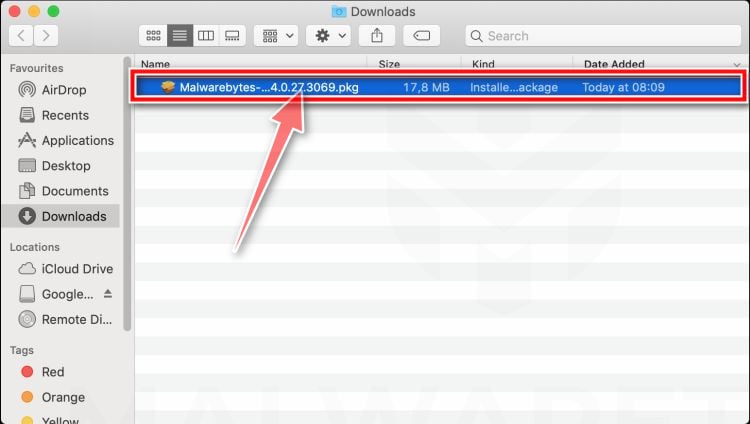
When the download finishes, open your Downloads folder and double-click the setup file to begin the installation.
-
Follow the On-Screen Prompts to Install Malwarebytes
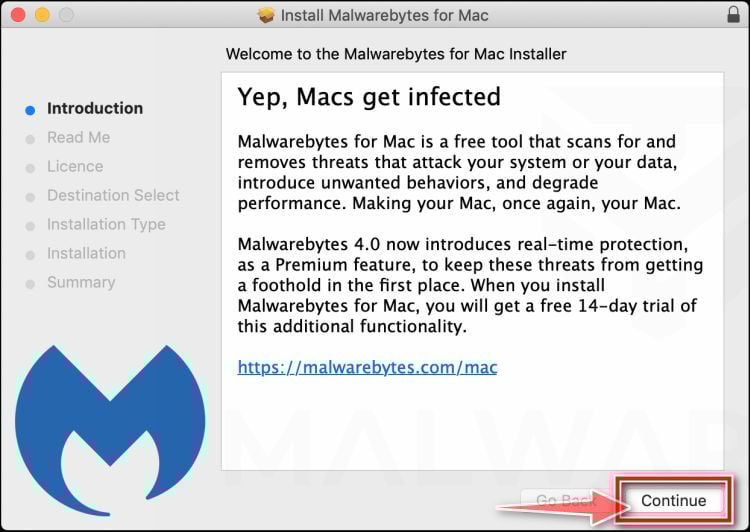
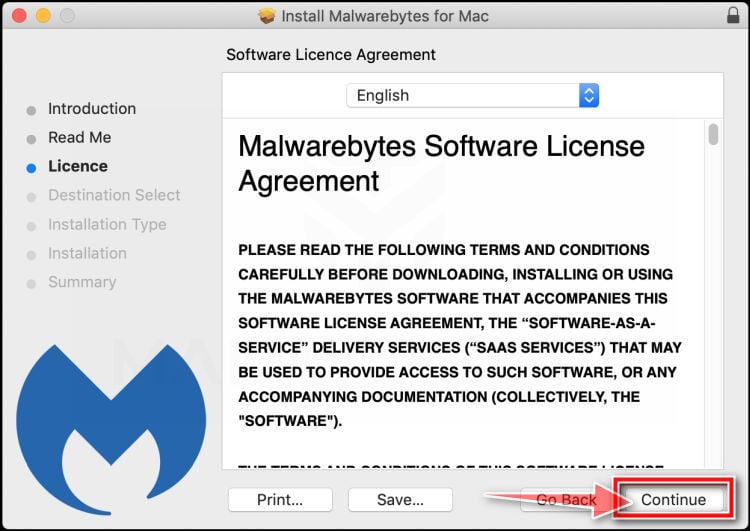
The Malwarebytes for Mac Installer will guide you through a few quick screens. Click “Continue” and keep following the prompts until the installation completes.
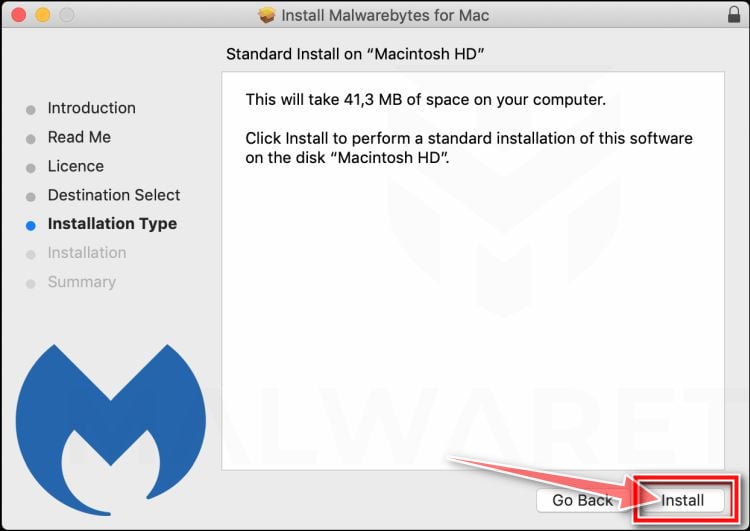
When the installation is complete, Malwarebytes opens to the Welcome to Malwarebytes screen. Click “Get started“.
-
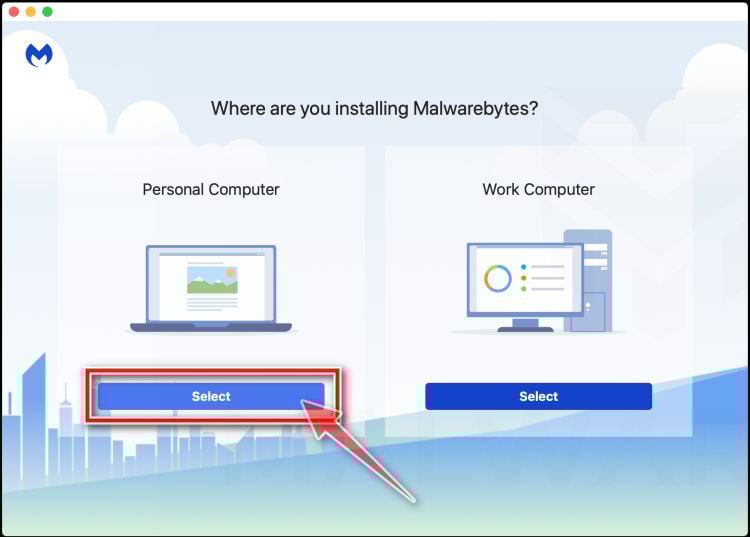
Select “Personal Computer” or “Work Computer”
Malwarebytes will ask what type of computer you’re installing it on. Click either Personal Computer or Work Computer, whichever applies.
-
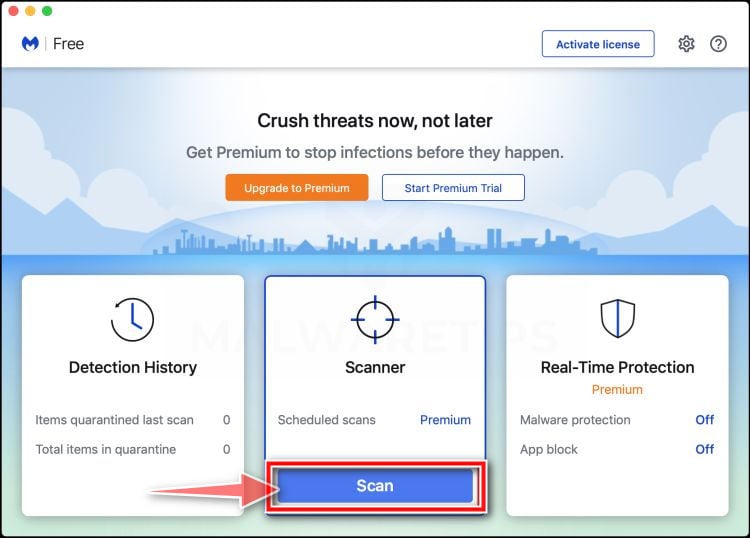
Start the Scan
Click the “Scan” button. Malwarebytes will automatically update its detection database and begin checking your Mac for malware.
-
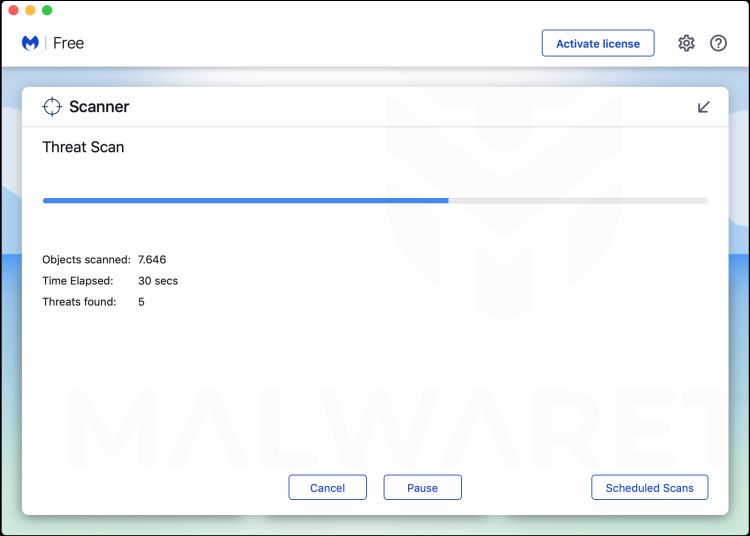
Wait for the Scan to Finish
Malwarebytes will scan your Mac for adware, browser hijackers, and other malicious programs. This can take a few minutes, so feel free to do something else — just check back occasionally to see the progress.
-
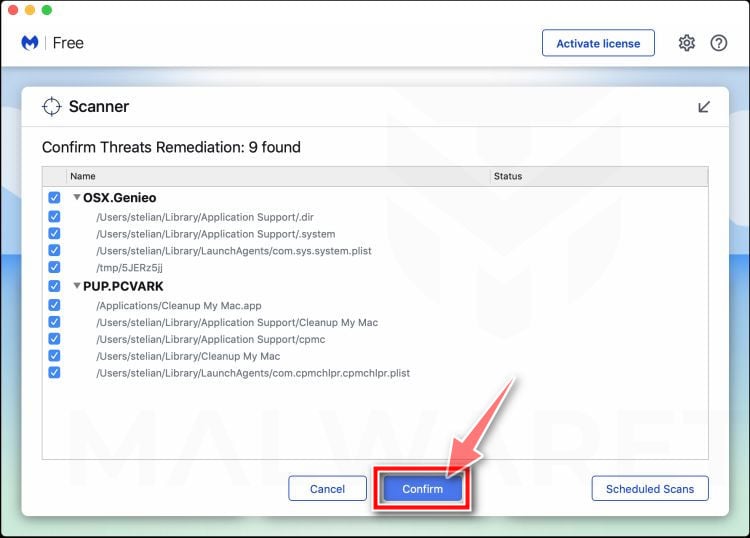
Quarantine the Detected Threats
When the scan is done, you’ll see a list of everything Malwarebytes found. Click the “Quarantine” button to remove all the threats at once.
-
Restart Your Mac
Malwarebytes will now remove all the malicious files it found. Some threats can only be fully removed after a reboot — if Malwarebytes asks you to restart, allow it. Once you’re logged back in, your Mac is clean.
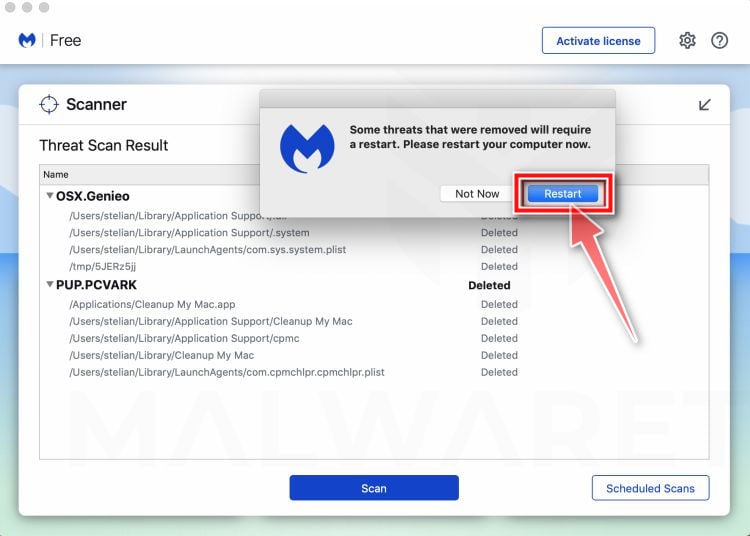
That’s it — your Mac is now free of adware, rogue browser extensions, and other potentially harmful software.
If you are still experiencing problems while trying to remove a malicious program from your computer, please ask for help in our Mac Malware Removal Help & Support forum.
Run a Malware Scan with Malwarebytes for Android
Malwarebytes for Android automatically detects and removes dangerous threats like malware and ransomware so you don’t have to worry about your most-used device being compromised. Aggressive detection of adware and potentially unwanted programs keeps your Android phone or tablet running smooth.
-
Download Malwarebytes for Android.
You can download Malwarebytes for Android by clicking the link below.
Get Malwarebytes for AndroidOpens Google Play in a new tab.Want real-time protection? See Malwarebytes Premium for AndroidMalwarebytes for AndroidScans your phone and removes malware at no cost -
Install Malwarebytes for Android on your phone.
In the Google Play Store, tap “Install” to install Malwarebytes for Android on your device.

When the installation process has finished, tap “Open” to begin using Malwarebytes for Android. You can also open Malwarebytes by tapping on its icon in your phone menu or home screen.

-
Follow the on-screen prompts to complete the setup process
When Malwarebytes will open, you will see the Malwarebytes Setup Wizard which will guide you through a series of permissions and other setup options.
This is the first of two screens that explain the difference between the Premium and Free versions. Swipe this screen to continue.
Tap on “Got it” to proceed to the next step.
Malwarebytes for Android will now ask for a set of permissions that are required to scan your device and protect it from malware. Tap on “Give permission” to continue.
Tap on “Allow” to permit Malwarebytes to access the files on your phone.
-
Update database and run a scan with Malwarebytes for Android
You will now be prompted to update the Malwarebytes database and run a full system scan.

Click on “Update database” to update the Malwarebytes for Android definitions to the latest version, then click on “Run full scan” to perform a system scan.

-
Wait for the Malwarebytes scan to complete.
Malwarebytes will now start scanning your phone for adware and other malicious apps. This process can take a few minutes, so we suggest you do something else and periodically check on the status of the scan to see when it is finished.

-
Click on “Remove Selected”.
When the scan has been completed, you will be presented with a screen showing the malware infections that Malwarebytes for Android has detected. To remove the malicious apps that Malwarebytes has found, tap on the “Remove Selected” button.

-
Restart your phone.
Malwarebytes for Android will now remove all the malicious apps that it has found. To complete the malware removal process, Malwarebytes may ask you to restart your device.
That’s it — your Android phone is now clean — no more malicious apps, adware, or browser redirects.
If you are still having problems with your phone after completing these instructions, then please follow one of the steps:
- Restore your phone to factory settings by going to Settings > General management > Reset > Factory data reset.
- Ask for help in our Mobile Malware Removal Help & Support forum.
Stay Protected: Block Ads and Malicious Sites
Now that your device is clean, keep it that way. Most infections start with a malicious ad or a fake download button — so blocking them at the source is your best defense.
We recommend AdGuard, which blocks malicious ads, phishing pages, and dangerous redirects before they can reach you.
👉 Download AdGuard and browse safely
Frequently Asked Questions
For additional facts about the fake USPS redelivery scam see these FAQs:
Are scammers able to spoof USPS tracking numbers?
Scammers can generate fake but valid-looking tracking numbers. However, they will either show no results or incorrect details when checked on USPS.com. Genuine tracking numbers match real in-transit packages when searched.
Why do scammers ask for credit card information?
Beyond using card numbers to make purchases, the card security code and expiration date allows scammers to commit identity theft. USPS would never contact you requesting financial account details.
Can fake USPS sites be detected through web browsers?
Sometimes. Current web browsers flag known fraudulent sites. However, scam sites can still slip through. You need to manually inspect sites for valid official domains and security certificates yourself before entering info.
Should I avoid clicking links on my mobile device?
Yes, extra caution should be used when clicking links on mobile devices. Fake sites can detect mobile users and send them to different scam sites optimized for smaller screens making them harder to analyze.
Can my information be stolen simply by visiting a scam site?
Possibly – some fraudulent sites can install malware and steal data simply via users visiting the page, even if no forms are completed. Having updated security software that runs frequent scans can detect these threats.
If scammed, how long do the ramifications typically last?
Stolen personal information can be used months or even years later for identity theft. Repairing compromised accounts and credit histories is a lengthy process. Maintain vigilance indefinitely once scammed, as damage can always re-emerge.
In Conclusion
This scam deceives recipients into paying fake USPS redelivery fees by spoofing legitimate notifications. However, understanding the common tricks these scammers use makes it easier to detect fraudulent communications and sites. Scrutinize all supposed USPS alerts thoroughly, and never provide information or payment without verifying legitimacy first through independent contact. Exercising skepticism protects you from having your identity and finances stolen.








