

A stylish watch can look perfect in a product photo and quite different on your wrist. A 30-day return promise makes ordering feel less risky.
With Waldor & Co., the important question is what you may do during those 30 days before a return becomes ineligible.
Overview
Waldor & Co. is a real watch seller, not a proven scam
Waldor & Co. operates a storefront with published delivery, returns, and warranty information. This article examines those terms, not an alleged fake company.
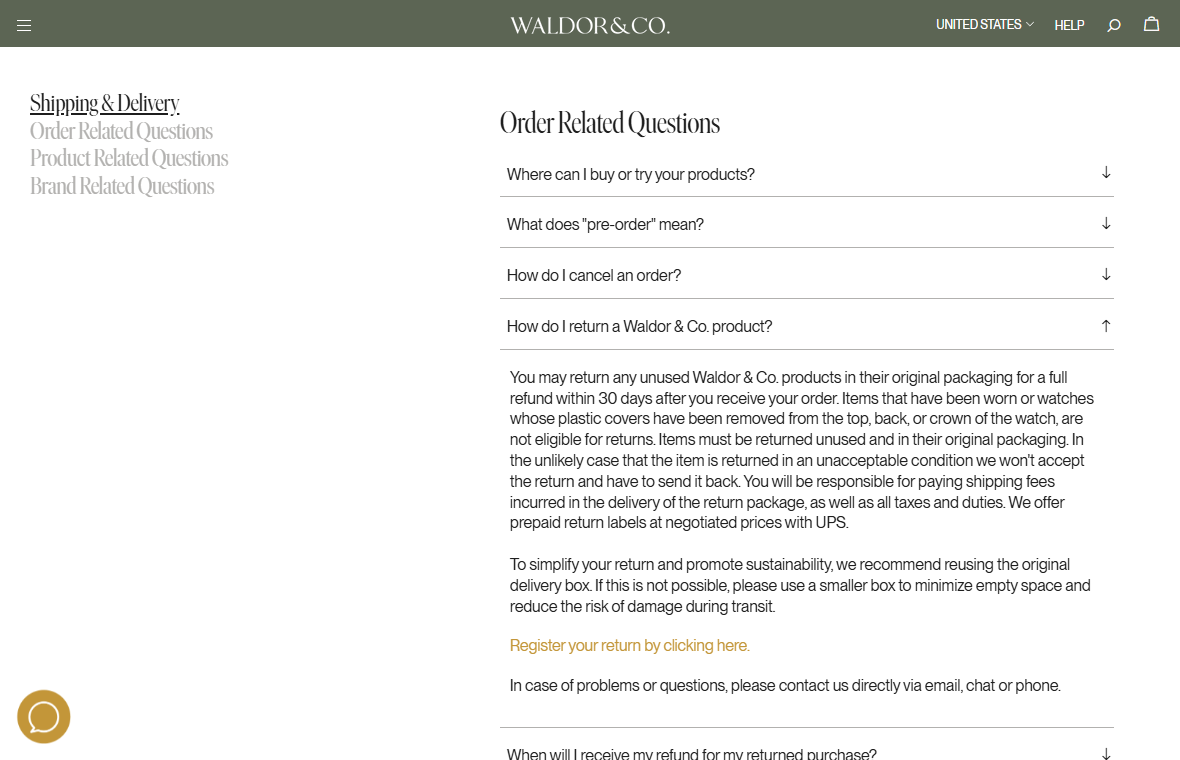
Its FAQ says customers can return an unused product in original packaging within 30 days after receipt.
For watches, removing protective plastic from the top, back, or crown makes the item ineligible under the stated return rule.
That detail changes how a buyer can evaluate a purchase. Trying on or handling a watch without care may undermine the apparent 30-day flexibility.
A “full refund” does not mean a cost-free return
The same FAQ says the buyer pays return shipping, plus associated taxes and duties. Those costs can make an ordinary return less attractive.
The company advertises free exchanges for unused items. That is a different remedy from receiving your money back.
There is no verified evidence here that Waldor systematically refuses valid returns. The published restrictions themselves are the concrete buyer risk.
For someone buying an expensive watch as a gift, those restrictions matter before the box is opened or the protective film is peeled away.
The decisive advice is to inspect before wearing
Buy only if you are comfortable testing size and appearance while preserving packaging and every protective cover. Ask support about any ambiguity beforehand.
Compare the 30-day return window with the 24-month manufacturer warranty. One addresses an unwanted unused item; the other addresses defined defects.
Before ordering, confirm these points:
- Whether the particular watch and any accessories have separate return rules.
- Which protective covers must remain in place during inspection.
- Whether international return shipping, taxes, or duties are your responsibility.
- How a free exchange differs from a refund to the original payment method.
- What the warranty covers if a defect appears after normal use.
What the 30-Day Return Promise Actually Allows
“Thirty days” tells you how long you have. It does not describe the condition in which the watch must come back.
Waldor’s published rule requires an unused item in original packaging. For watches, the protective covers on several surfaces must remain attached.
This is stricter than a shopper’s casual understanding of a home trial. A person may remove film to see the finish or photograph the watch.
That ordinary action can become the reason a return is refused. The company specifically lists removed protective covers among its exclusions.
Do not confuse a 30-day decision period with 30 days of wear. The terms do not promise a use-and-return trial.
If your decision depends on how the watch feels during a full day, ask whether that use would disqualify a return. Get the answer in writing.
The policy also says items returned in unacceptable condition may be sent back to the customer. That could add delay and more shipping expense.
Use the official return portal rather than mailing an item to an address found in a comment or old forum post.
Keep the original box, inserts, labels, and order number until you are sure. Packaging is part of the stated return condition.
When the package arrives, photograph it unopened and document any shipping damage immediately. A defect claim is different from dissatisfaction.
If the watch is clearly damaged on arrival, contact support before handling it further. Ask whether the issue qualifies for a prepaid label.
Do not assume a return exception from a broad banner saying “easy returns.” The detailed FAQ is the document that explains actual eligibility.
How a Waldor Watch Order and Return Work
Step 1: A polished product page makes the choice feel simple
The site presents watches with lifestyle imagery and style-focused descriptions. That helps buyers imagine the piece as part of an outfit or gift.
Product photography cannot tell you exactly how a case will sit on your wrist. Check measurements, movement, strap dimensions, and material descriptions.
Compare the model with another watch you already own. A millimeter difference can matter more than a promotional phrase.
If the listing offers different strap colors or sizes, verify the selected variant before paying. A later exchange is still a second shipping journey.
Step 2: Checkout establishes the order and deadline
Save the final product page, price, selected variant, delivery estimate, and checkout confirmation. Those records clarify what was promised.
Waldor says its return window starts when the customer receives the order, not when it was placed. Record the actual delivery date.
Check the shipping destination and any country-specific terms. Return cost can vary considerably for buyers outside the company’s main fulfillment route.
Use the official store and a payment method with a clear receipt. A social-media ad can lead to lookalike pages unrelated to the legitimate brand.
Step 3: Delivery invites the action that may void an ordinary return
Opening the box is not the same as removing protective film. Inspect the item gently and check the model against the order.
Keep covers on the front, back, and crown while examining the finish. Waldor’s FAQ names those surfaces specifically.
Do not resize a metal band, wear the watch outside, or discard packaging until you know you want to keep it.
If you are buying a gift, tell the recipient about the return conditions. A well-intentioned unboxing can close the ordinary refund route.
Step 4: A return request goes through the seller’s portal
The FAQ directs customers to register a return through its portal. Start there within 30 days of delivery and preserve the confirmation.
Ask for the return address and label cost before shipping. The company says return shipping, taxes, and duties are ordinarily the customer’s responsibility.
Its FAQ mentions prepaid labels at negotiated UPS prices. “Prepaid” in this context does not necessarily mean the seller absorbs the cost.
Use tracked shipping and keep a drop-off receipt. Without proof of delivery, an international return can become difficult to resolve.
Step 5: The warehouse evaluates eligibility before a refund
Sending a parcel does not automatically trigger repayment. The seller says its warehouse checks the returned item and can reject unacceptable condition.
The FAQ describes a five-working-day return process after receipt and acceptance, followed by additional banking time for the money to appear.
Ask for confirmation when the return is received and approved. If there is a dispute, request photographs explaining any alleged condition problem.
Keep communication factual. The strongest case is a documented, timely, unused return that follows the seller’s stated instructions.
Return Rights and Warranty Rights Are Different
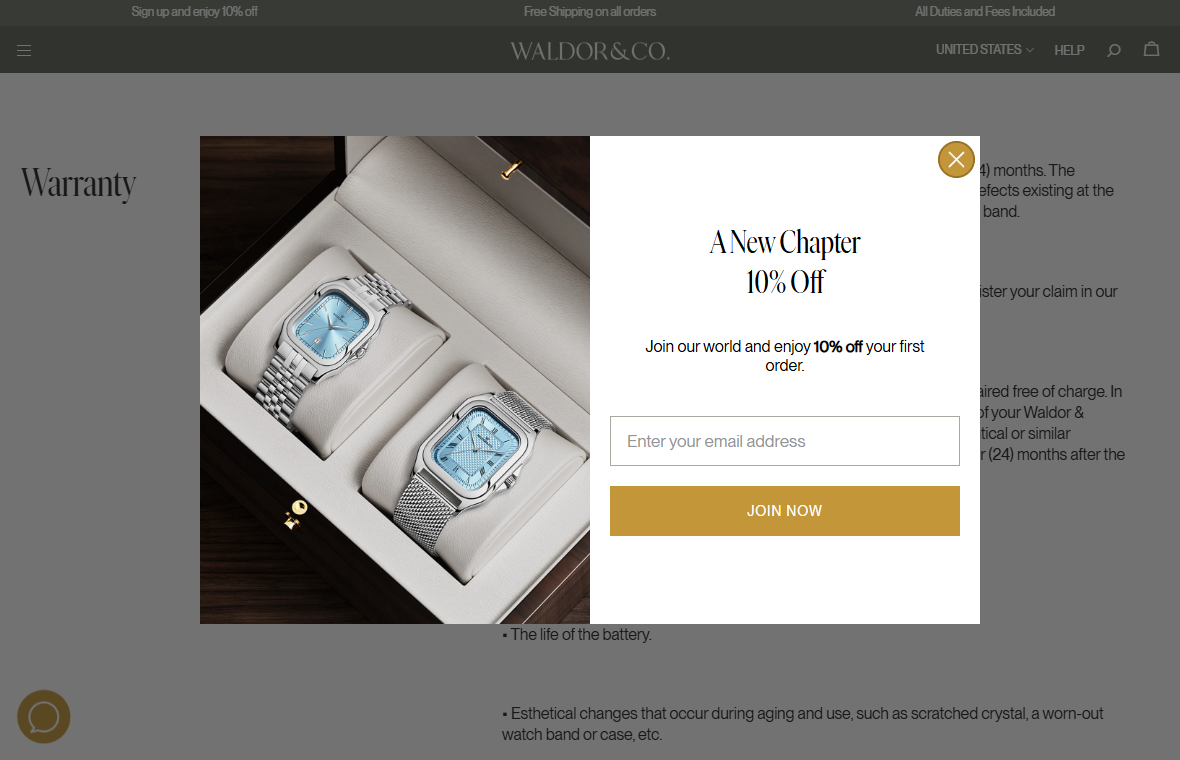
Waldor’s warranty page promises 24 months of coverage for material and manufacturing defects existing at delivery.
It describes repair without charge during the warranty period, with replacement if repair cannot restore normal use.
That does not mean every problem after two years of wear is covered. The page excludes battery life, cosmetic aging, and damage from misuse.
Scratches, a worn strap, accidental knocks, and certain water damage are also listed outside the manufacturer’s warranty.
A return because you dislike the style falls under the unused 30-day rule. A watch that fails because of a covered manufacturing fault is different.
Use the correct language when contacting support. “I changed my mind” and “the movement stopped after normal use” should not be mixed together.
Record when the fault appeared, how the watch was used, and any troubleshooting already attempted. Keep the original order confirmation.
If you have a defect, ask the company to register a warranty claim rather than accepting an ordinary return rejection as the final answer.
The warranty page says claims should go through the return portal with a detailed description of the issue.
Local consumer law may provide rights in addition to a manufacturer’s warranty. The answer depends on jurisdiction and the facts of the purchase.
We did not test a repair or return. Our conclusion rests on the current written rules, which are specific enough for shoppers to act on.
Origin, Fulfillment, and What the Brand Actually Says
Waldor describes its watches as designed and prototyped in Stockholm. That does not mean every component or finished watch is manufactured there.
Its FAQ says sourcing is global, with some Seiko-movement models produced in Japan and watches using Swiss Parts Ronda movements made in the Far East.
The exact movement varies by model. Check the specific watch rather than assuming every Waldor product shares one country of manufacture.
“Designed in Sweden” can describe a genuine design process while still leaving manufacturing elsewhere. Those statements should not be treated as identical.
Nor does manufacturing in Asia prove a product is low quality. Assess the movement, case, materials, finish, warranty, and total delivered price.
For a high-value purchase, ask support where that model ships from and where a return would go. Shipping geography affects cost and timing.
Do not rely on a social ad’s vague “European craftsmanship” phrasing if the detailed product page provides more precise specifications.
A useful seller response identifies the model, movement, water rating, and warranty process. Generic reassurance is less valuable than those facts.
Buying directly from the stated official store also helps avoid a separate problem: unauthorized lookalike ads using a real brand’s photographs.
The presence of an affiliate ad or an enthusiastic review does not prove the company’s own return policy is fraudulent. The written restrictions are enough to analyze.
When a Watch Is the Wrong Purchase for You
Some buyers need a no-questions-asked home trial. Waldor’s rule is not a good fit if you must wear the watch before deciding.
Others want a cheap return option. Return shipping and duties may make the final cost unpredictable, especially across borders.
A gift with an uncertain wrist size presents another issue. A free exchange can help, but the item still must meet unused-condition requirements.
If you are comparing models, choose one only after reading case diameter, thickness, lug width, strap adjustability, and movement type.
Ask whether a strap adjustment would count as use. The published FAQ does not answer every real-world handling question.
Do not order several variants solely to try them at home unless the seller confirms that return handling will preserve eligibility.
A store can have a legitimate product and a return policy that is too restrictive for your needs. Declining to buy is a perfectly rational conclusion.
If the specifications and conditions suit you, the same policy may be acceptable. The important thing is an informed purchase, not a dramatic label.
What to Do If You Ordered a Waldor Watch
- Check the delivery date. The ordinary return window is 30 days after receipt. Save tracking and delivery confirmation.
- Inspect without wearing. Keep the top, back, and crown covers attached. Preserve the box, inserts, and any product labels.
- Document a defect immediately. Photograph damage or a malfunction, then ask whether the case belongs under the warranty rather than an ordinary return.
- Register an eligible return. Use the official portal before the deadline. Ask what label, shipping, tax, or duty charges apply.
- Ship with tracking. Keep the receipt and proof of delivery. Include only the items requested by the return instructions.
- Follow the warehouse decision. If the return is refused, request the precise reason and photos showing the alleged condition problem.
- Escalate a genuine mismatch. If the seller fails to honor its written terms, present the order, screenshots, and correspondence to your payment provider.
There is no need to describe yourself as a scam victim because you dislike a real watch. State the specific policy or product issue.
Likewise, do not accept “you removed a cover” without checking the actual condition record. A careful buyer can ask for evidence.
Frequently Asked Questions
Is Waldor & Co. a scam?
We found an operating seller and published policies, not proof of a fake company. The practical concern is whether its return conditions suit you.
Can I wear a Waldor watch and return it within 30 days?
Its FAQ says returns require unused condition. Worn watches and those with specified protective covers removed are not eligible.
Who pays to return a Waldor purchase?
The FAQ says buyers pay return shipping, plus associated taxes and duties for ordinary returns. Ask for the actual label cost before shipping.
Are exchanges and refunds treated the same way?
No. The seller advertises free exchanges for eligible unused items, while ordinary refunds require a return that meets condition rules.
What does Waldor’s 24-month warranty cover?
It covers defined material and manufacturing defects, with exclusions for battery life, cosmetic wear, misuse, and other specified damage.
Are all Waldor watches made in Sweden?
No. The company describes Swedish design and prototyping alongside global sourcing and model-dependent production locations.
The Bottom Line
Waldor & Co. is a real watch seller. Its 30-day return window is not a 30-day wear test, and ordinary return costs can fall on you.
Keep every protective cover intact while deciding. If that level of caution does not work for your purchase, choose a seller with a more flexible trial.








