

A speaker, a useful desk accessory, or a small gift catches your attention on Voselun. The store looks familiar enough to make browsing feel routine.
Then the practical questions begin. When will it arrive, what happens if it disappoints, and how much protection does that return policy really leave you?
Overview
A general merchandise store with an important timing problem
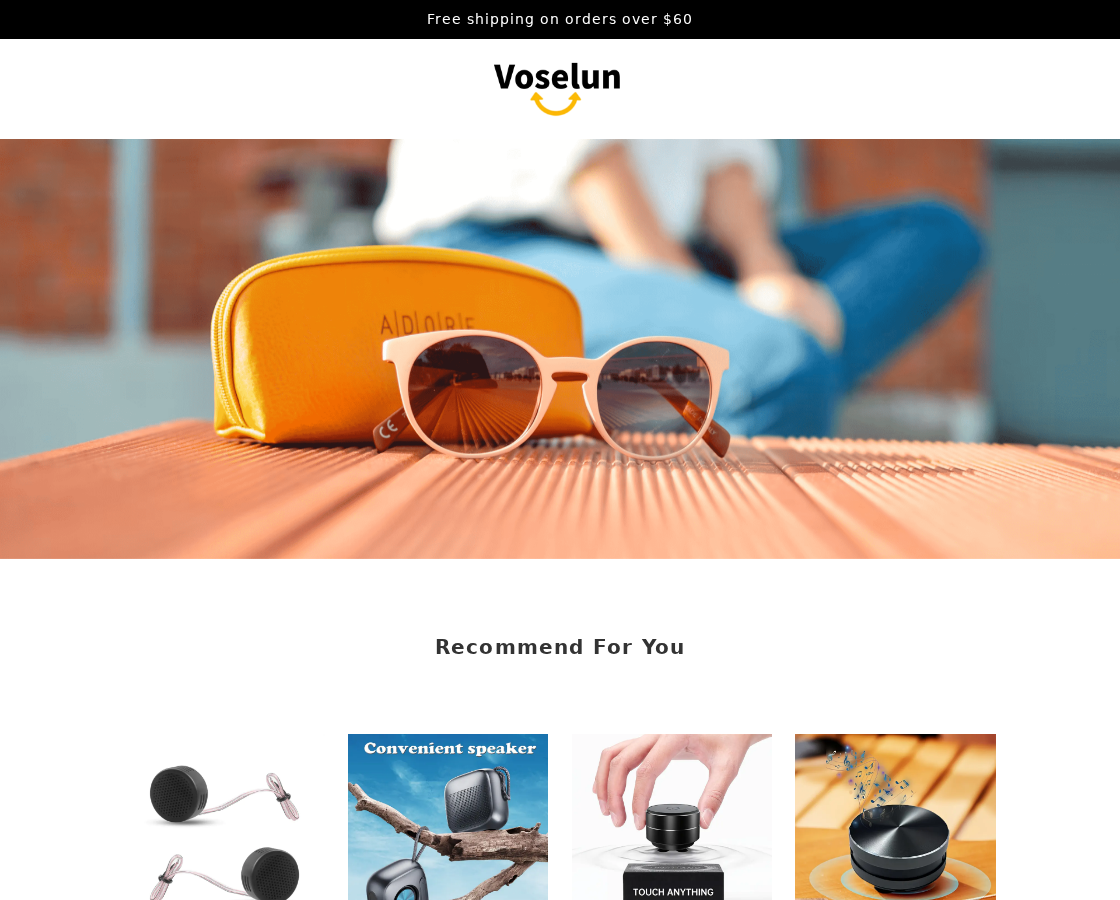
Voselun sells assorted products, including portable speakers, computer accessories, cable organizers, and household goods. Its homepage advertises free shipping on orders exceeding $60.
The key risk is not the breadth of that catalog. It is how the shipping schedule interacts with the advertised return period.
The return policy measures 30 days from purchase, not delivery. Meanwhile, free shipping is estimated at 12 to 25 days, after processing.
That combination can leave very little time to assess a delivered item, obtain authorization, and arrange a return. Under longer processing estimates, delivery could outlast the window.
The restrictions you need to see before paying
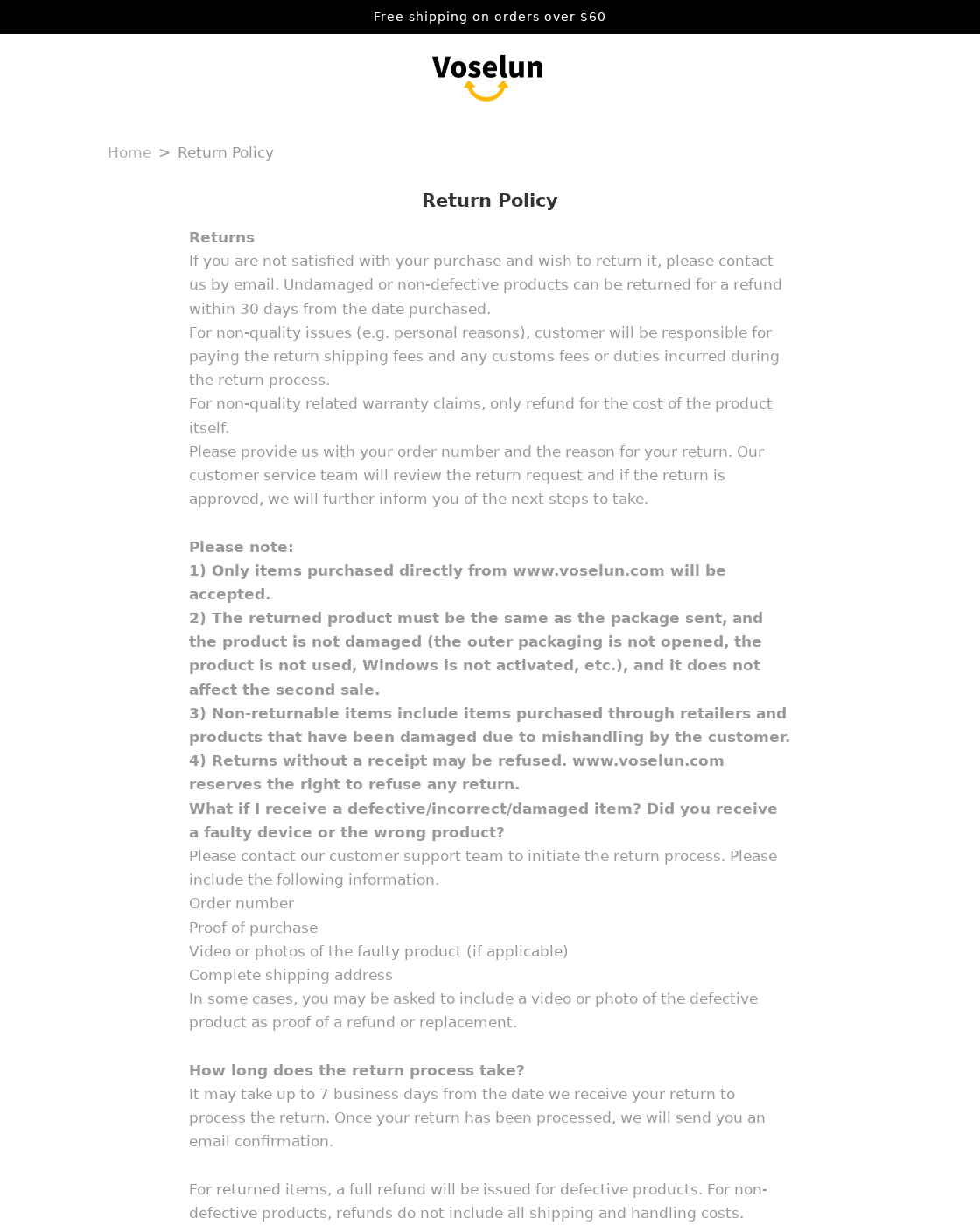
Voselun says ordinary returns must remain suitable for resale. Its examples include unopened outer packaging, an unused product, and Windows not being activated.
Change-of-mind returns place return shipping and associated customs charges on the customer. The destination is disclosed by email rather than identified on the return page.
Cancellation requests must be sent within 48 hours, and already packed or shipped orders cannot be changed or canceled under the stated policy.
- A purchase-based deadline runs while you wait for delivery.
- An unopened-package condition may obstruct evaluating an ordinary purchase.
- Return postage cannot be priced reliably without a destination.
- The contact page offers email but does not identify a separate legal operator.
A buying warning, not an invented fraud finding
These public terms make Voselun a risky choice, especially for something you need to test or receive promptly. They are enough to question the purchase.
They do not establish that every customer receives nothing, that all merchandise comes from China, or that the site secretly enrolls buyers in paid subscriptions.
No order was placed and no support conversation was tested. The warning concerns the actual terms a shopper can read before surrendering payment.
Do not buy while the return clock and delivery promise remain unresolved. A vague assurance of satisfaction cannot repair a deadline that expires in transit.
The 30-Day Return Window Can Shrink Before You Open the Parcel
Many shoppers read a 30-day return policy as 30 days to decide after receiving the item. Voselun’s wording does not give that assurance.
Its shipping policy ordinarily allows up to 72 hours for processing. It also permits up to a week for special cases.
For illustration, three processing days plus 25 transit days would consume 28 days after purchase. Only two days would remain in a 30-day purchase-based window.
A week of processing plus 25 days in transit would total 32 days. That arithmetic illustrates the policy conflict, not a measured customer delivery.
The page does not consistently explain calendar days versus business days across every estimate. That makes a written, order-specific clarification even more important.
A defect claim is also different from changing your mind. Voselun separately discusses faulty products and asks for photographs or video when appropriate.
You should not have to classify a problem before you have a realistic opportunity to inspect the goods. Ask which deadlines apply to each remedy.
If you are considering a gift, the mismatch becomes more awkward. Time spent waiting for the recipient to open it can further reduce any remaining window.
How the Voselun Ordering and Return Process Works
Step 1: A familiar catalog encourages a quick selection
The storefront organizes everyday gadgets into recommendations. Product titles describe features such as wireless playback, USB charging, portable dimensions, and computer compatibility.
Different listings have different requirements. A compact speaker requiring a USB connection is not interchangeable with a rechargeable wireless speaker just because their pictures look similar.
Before buying, connect every attractive claim to the exact listing and selected variant. Save its title, model information, included accessories, and listed power requirements.
For electronics, ask whether a charger is included and which connections are supported. A photograph of a cable is not necessarily a package-content commitment.
For straps or organizers, check size and quantity rather than assuming a photographed collection is included. Small accessories are particularly easy to misread in a thumbnail.
This is not evidence that Voselun substitutes products. It is the first practical defense against buying something different from what the promotional picture led you to expect.
Step 2: The free-shipping threshold can increase your spending
The homepage’s $60 threshold encourages adding another item to qualify for free shipping. That can turn a small purchase into a larger exposure.
Calculate the cost of the item you actually want with the available delivery charge. Compare it with the total after adding something you did not need.
Saving postage is not a saving if the extra product costs more than the postage would have. The threshold deserves arithmetic, not an automatic second purchase.
Record the displayed currency and complete checkout total. Prices in a product grid should not be assumed to include tax, shipping, or every selected variation.
Do not interpret a cart selection as an unauthorized charge. Keep evidence of your own choices so any later discrepancy can be explained accurately.
Nothing in the inspected email-signup wording establishes paid continuity. An invitation to subscribe to promotional emails is not proof of a recurring merchandise subscription.
Step 3: Payment starts both the delivery wait and the return clock
After ordering, processing occurs before transit begins. Voselun says orders are sent to a fulfillment center for dispatch within its processing period.
The shipping page lists standard shipping at seven to fifteen days and free shipping at twelve to twenty-five days. Its explanatory paragraph emphasizes the longer range.
A buyer choosing free delivery should not expect the shorter estimate by default. Confirm the specific service that appears on your order.
At the same time, the ordinary return period is already running from the purchase date. Tracking updates do not pause that deadline under the stated wording.
If an item is for a planned event, buy elsewhere unless the arrival date is genuinely suitable. A vague estimate is not a guaranteed deadline.
Keep processing and shipping separate when contacting support. An order marked confirmed is not necessarily dispatched, and a created tracking label is not proof of carrier possession.
Step 4: Testing the product can clash with the return conditions
The return page describes goods that can be resold without damage or use. It explicitly gives unopened outer packaging as one of its examples.
For a speaker, that creates an obvious problem. You cannot meaningfully assess audio, charging, or connectivity while the item remains inside a sealed box.
Ask whether opening the package solely to inspect it affects an ordinary return. Get an answer before paying rather than after a disappointing first test.
For a defective, incorrect, or damaged item, the policy asks buyers to contact support with purchase details and relevant photos or video.
Describe that problem precisely. A device that will not power on is different from one whose sound is less impressive than you hoped.
Do not assume the unopened condition eliminates legal remedies for defects. Store wording and applicable consumer protections are separate questions that depend on the transaction.
Step 5: Authorization comes before an undisclosed return destination
Voselun requires a return request to be reviewed before providing further instructions. The destination is sent privately by email.
Until you know that destination, you cannot determine the postage, customs paperwork, tracking cost, or practical value of returning a low-cost accessory.
The page says ordinary refunds exclude shipping and handling. It also makes customers responsible for change-of-mind return postage and associated customs fees.
For example, a hypothetical $35 product requiring $20 return postage would leave only $15 before any other deductions. Get an actual quote, not this illustration.
The policy allows up to seven business days to process a received return. Payment posting can add more time after that.
It lists three to five business days for PayPal credits and three to fifteen for card credits. Ask when the refund was actually initiated.
Ask whether requesting authorization within the window is enough or whether the parcel must arrive by then. The page should make that distinction clear.
Voselun Company, Support, and Fulfillment Questions
The brand name does not identify a legal operator
The inspected About and Contact pages describe Voselun and publish support@voselun.com. They do not clearly name a separate registered business responsible for the store.
Its terms refer broadly to an agreement with Voselun. Before payment, ask for the legal seller name and compare it with the invoice and card descriptor.
A brand can legitimately differ from a company name. The problem is leaving that relationship unexplained when a customer needs to enforce an order or refund.
The return address is withheld until a request is approved
No usable return destination appears in the inspected policy. This prevents a shopper from calculating the cost of exercising the advertised return option.
That is not proof of a fabricated warehouse. It is an avoidable information gap that puts the buyer at a disadvantage.
Require the return country, whether duties may apply, and whether a local return option exists. A marketing homepage cannot answer those logistical questions.
The 24-hour response promise needs a real answer
The contact page promises an email response within 24 hours and recommends using the email address associated with the order.
No response-time test was performed. It would be inaccurate to claim support never replies simply because the public contact options are limited.
Use a factual request identifying your order and remedy. Keep the sent message, replies, and dates instead of relying on an undocumented conversation.
The fulfillment center is not a named manufacturer
The shipping policy mentions a fulfillment center but does not identify its location or the manufacturers of the varied goods.
That wording does not prove Chinese dispatch, a common owner with another shop, or an unsafe product. Those claims require evidence specific to the shipment.
For electrical goods, request a model number and applicable safety documentation. On arrival, preserve the product label and sender information for any complaint.
What to Do If You Bought From Voselun
-
Work out your dates immediately. Record purchase, dispatch, delivery, and the first day you reported a problem. Save the policy measuring returns from purchase.
Ask support to confirm that delayed delivery will not prevent a reasonable inspection and return request.
-
Use the 48-hour cancellation route without delay. If you want to cancel, email support@voselun.com with your order number and explicit request.
Ask whether packing or dispatch has occurred. Retain the timestamp even if the seller replies later.
-
Capture a specific product mismatch or fault. Photograph packaging, labels, contents, and damage. Film a short test only when it is safe and relevant.
Compare the delivered variant with the saved listing rather than relying on a broad complaint about quality.
-
Obtain complete return instructions before posting. Request approval, destination, postage responsibility, customs requirements, and the applicable deadline in one written exchange.
Do not send a parcel to an assumed address or discard tracking evidence after shipment.
-
Escalate an unresolved transaction to the payment provider. Supply the receipt, shipping promise, return request, and the seller’s replies.
Ask about the deadline and appropriate dispute reason. An undelivered order, a defective item, and an unauthorized payment may require different procedures.
-
Keep refund follow-up separate from recovery scams. Check your original payment method for the promised credit and ask for a refund reference.
Do not pay a stranger to retrieve your money or share banking access with someone who approaches you after a public complaint.
Frequently Asked Questions
Is Voselun proven to be a scam store?
The public policies establish substantial buying risks, particularly timing and return restrictions. They do not prove that every transaction is fraudulent or that no goods are shipped.
When does Voselun’s 30-day return period start?
For ordinary non-defective returns, its policy measures the period from purchase. That is why processing and transit can consume much of the available time.
Can I open an item before returning it?
The ordinary return conditions cite unopened outer packaging and unused goods. Ask for clarification before testing; faulty or incorrect items have a separate reporting process.
How long does Voselun delivery take?
The policy lists twelve to twenty-five days for free shipping, after processing, and seven to fifteen days for standard shipping. Confirm your selected service.
Does Voselun provide a return address publicly?
The inspected return page says the address will be sent by email. Request the country and estimated return cost before deciding to purchase.
Is Voselun’s email signup a refill subscription?
No. The observed signup concerns promotional emails. A paid recurring arrangement would require separate billing terms and consent; none was established through that signup.
The Bottom Line
Avoid ordering from Voselun under the current terms. Long transit, a purchase-based return deadline, and an undisclosed return destination make a simple purchase unnecessarily difficult.
If you already ordered, act on the dates now. Request cancellation or a documented remedy, then involve your payment provider if the problem remains unresolved.








