

When your dog starts slowing down, you notice every small change. A longer nap or an uncomfortable walk can make an online health promise feel personal.
WildGut’s offer taps directly into that feeling with an eggshell story and the prospect of more years together. Here’s what deserves a closer look.

Overview
The Promise Is Bigger Than Routine Digestive Support
The getwildgut.com landing page says a simple eggshell hack can add up to five years to a dog’s life. It presents that claim above a video.
This is a longevity promise, not merely a claim that a supplement is convenient. It would require convincing evidence about the actual outcome being advertised.
The inspected material did not establish a WildGut lifespan trial demonstrating that additional time.
The Seller’s Own Guide Makes Strong Medical Claims
A guide hosted on the seller’s domain presents WildGut as a detox formula targeting Candida and describes extensive improvements in canine health.
It claims elimination of up to 100% of the organisms it calls Candida parasites. That is a much stronger claim than ordinary nutritional support.
Neither a reassuring ingredient name nor a customer story establishes that the finished product can treat infection or extend a dog’s life.
The Refund Isn’t a Completely Cost-Free Experiment
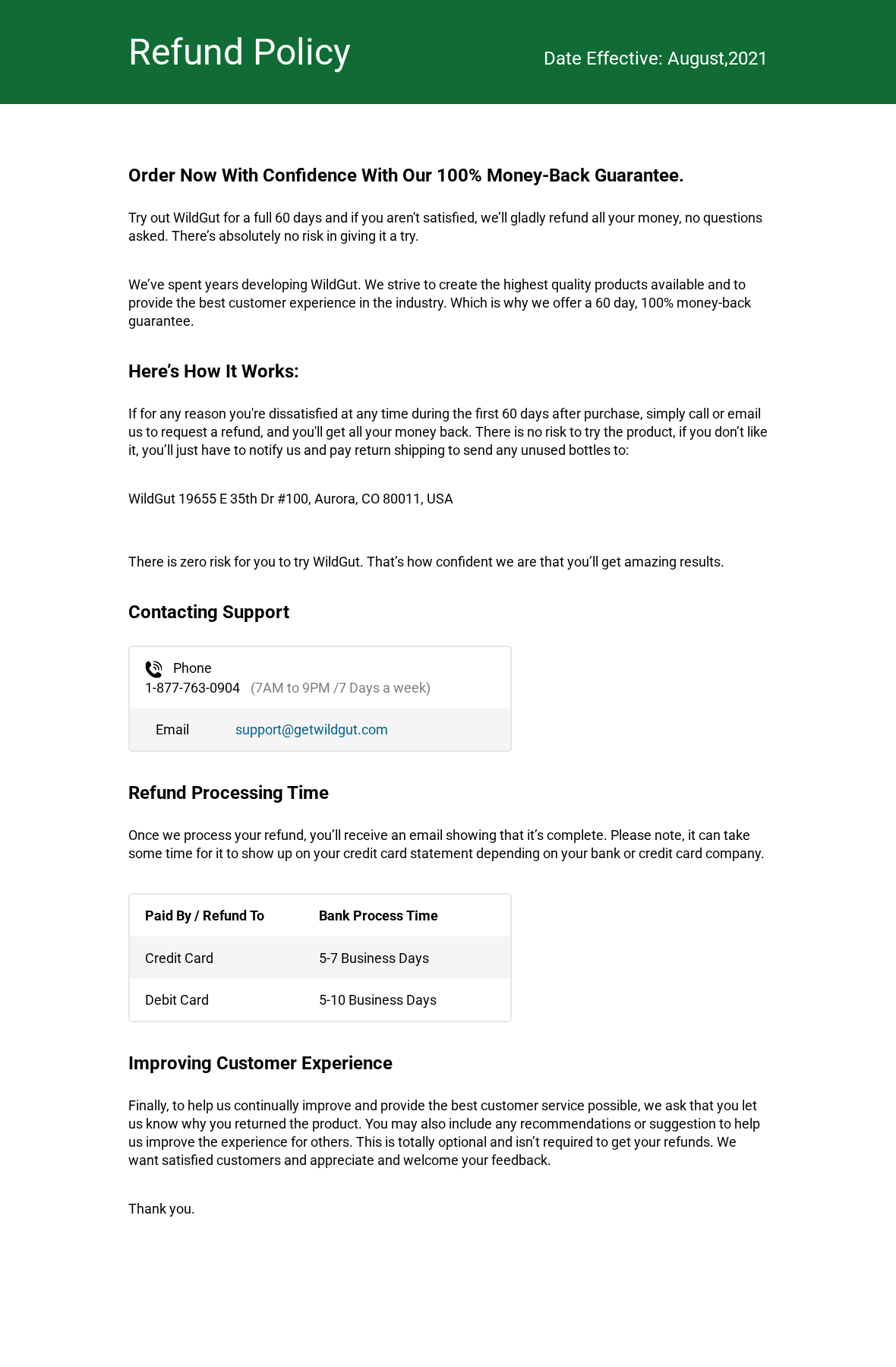
The published guarantee gives 60 days after purchase, while its return instructions require customers to pay postage and send unused bottles to a Colorado address.
The offer doesn’t establish a hidden refill arrangement from that policy alone. Recurring consent and an exact current checkout price were not verified.
Focus on the documented issues:
- A five-year longevity headline without an authenticated finished-product lifespan trial.
- Infection-treatment language in seller-hosted promotional material.
- Scientific references that don’t automatically validate the bottle.
- A refund clock starting at purchase rather than delivery.
- Customer-paid return postage despite repeated no-risk language.
Five Extra Years Is Not a Casual Wellness Claim
Aging dogs vary enormously by breed, size, existing illness, and care. A claim about adding years needs to explain which animals were studied.
It also needs enough follow-up to measure survival, a suitable comparison group, and information about other treatment and diet changes.
A short digestive study cannot answer that question. Neither can an owner reporting a shinier coat, improved energy, or a happier week.
The phrase up to doesn’t remove the need for evidence. It still invites shoppers to connect a kitchen-sounding trick with a major extension of life.
If the seller wants that claim to drive purchases, it should identify the study supporting it. A long bibliography isn’t the same answer.
Hope Can Make an Expensive Offer Feel Like a Duty
You don’t want to miss something that could help your dog. That is precisely why emotionally charged pet-health advertising can be so effective.
The right response isn’t to feel guilty for hesitating. It is to separate the wish for more time from evidence that a product can provide it.
Buying a supplement isn’t a measure of how much you love your pet. Appropriate diagnosis, a suitable diet, and dependable care are more useful priorities.
The Candida Explanation Needs Veterinary Evidence
The seller’s guide treats hidden Candida as an important reason for poor health and positions WildGut as a way to address it.
Candida is a yeastlike fungus, not an intestinal worm. The Merck Veterinary Manual describes candidiasis as a fungal infection requiring appropriate assessment.
That does not mean every tired, itchy, or gassy dog has candidiasis. Symptoms overlap with many other problems, and treatment depends on what is actually wrong.
A supplement advertisement cannot make that diagnosis for your dog. Don’t replace a veterinarian’s plan with the guide’s broad explanation.
Ingredient Research and Product Treatment Claims Are Different
The landing page lists references concerning topics such as canine osteoarthritis, probiotics, parasites, and pet nutrition.
Those subjects can be legitimate areas of research. Their presence doesn’t demonstrate that WildGut was tested for the advertised lifespan or infection outcome.
A study might use a different preparation, dosage, species, disease, or duration. You need those details before applying its result to a bottle.
The connection should be explicit: what exact product was tested, in which dogs, compared with what, and with which outcome.
Until that connection exists, treat the references as background, not permission to stop veterinary care.
How the WildGut Offer Builds the Purchase
Step 1: The Eggshell Hook Makes the Solution Sound Familiar
The opening frames the discovery as a simple household trick. That makes a large health claim feel approachable rather than complicated or clinical.
A pet owner may begin expecting practical advice, then become invested in the video because it promises to explain a bigger hidden problem.
But eggshell language doesn’t establish a safe recipe or an effective finished supplement. Don’t add ingredients to your dog’s food simply to imitate the hook.
A complete diet has a nutritional balance. Changes should be discussed with a veterinarian or qualified veterinary nutrition professional, especially for an animal with illness.
Step 2: A Video and News Logos Add Social Authority
The captured landing page included a social-video presentation and familiar media logos under a featured-in message.
Those visual cues can make the offer feel widely discussed or independently endorsed. The page did not authenticate an endorsement by those organizations.
A logo is not a news article, and a social-looking clip is not a clinical study. Look for the actual supporting report rather than the visual association.
Watch how the page separates independent evidence from advertising. If its media logos don’t link to a relevant report, the association remains only a claim.
Step 3: The Guide Turns General Pet Concerns Into a Supplement Program
The seller-hosted material identifies the WildGut formula as a central part of its program and associates it with gut balance, infection claims, and renewed vitality.
That is where the narrative moves from a household-sounding story to a commercial product. A pet’s health concerns become reasons to buy the branded formula.
The seller’s guide is promotional evidence, not an independently authenticated treatment protocol.
Do not transfer a general discussion of nutrition into a belief that this particular bottle reverses every problem described.
Ask for a readable label and finished-product evidence instead of relying on the guide’s confidence.
Step 4: General Improvements Can Be Mistaken for Proof
Stories about better breath, bathroom habits, coat condition, and energy can be persuasive because owners can recognize those changes at home.
They don’t establish a hidden infection was removed or a lifespan was extended. Improvement can have several explanations, including another diet or treatment change.
A controlled assessment needs a defined outcome, not a collection of positive impressions. A veterinarian can help distinguish a meaningful improvement from an unresolved illness.
If symptoms persist, don’t assume your dog merely needs a longer detox period. New or worsening problems should be assessed rather than explained away by advertising.
Step 5: The Refund Promise Makes the Decision Feel Easier
The refund page repeatedly describes a no-risk trial. Its detailed instructions introduce costs and timing that buyers need to notice.
The 60-day period starts after purchase. Time spent processing and delivering the order can therefore consume part of the advertised trial.
The instructions also require paying return shipping and sending unused bottles back. The policy needs clarification about an opened or emptied bottle used during a trial.
Ask what qualifies and what amount is refunded. A satisfaction banner doesn’t explain every expense or eligibility decision.
Step 6: The Order Documents Decide the Financial Commitment
A current completed checkout wasn’t inspected. That means no universal package quantity, renewal amount, or automatic subscription can responsibly be stated here.
If you reach an order page, read the product total and future-billing language before authorizing payment. A prominent bottle price may not represent the full package.
Confirm any continuity plan separately. Don’t assume it exists merely because other supplement campaigns use refills, and don’t assume it is absent without reading the order.
Keep the terms attached to your transaction. Another WildGut-branded promotional domain may display different claims or conditions.
The WildGut Operator, Support, and Bottle Traceability
The Brand Name Doesn’t Fully Identify the Business
The website’s terms describe the operator as WildGut. That is not enough to authenticate a manufacturer or every entity involved in accepting and fulfilling payment.
The guide presents Tony Palmer as an independent pet-health researcher. That description should not be mistaken for a verified veterinary qualification.
For an order problem, start with the legal merchant named on the receipt. The narrator of a health story isn’t necessarily the business handling refunds.
The Colorado Address Is a Return Destination
The policy gives 19655 E 35th Dr, Suite 100, Aurora, Colorado, for returns. A distribution business also publishes that street location.
That is consistent with a logistics role, not proof the premises are a WildGut headquarters or manufacturing plant.
Shared warehouse use also does not establish common ownership with other supplement brands. Use the address only after confirming instructions for your exact order.
Published Contacts Aren’t a Tested Refund Outcome
The site lists support@getwildgut.com and 1-877-763-0904. It describes broad support availability and quick replies.
No call, email, or refund request was submitted to test those statements. Preserve written instructions if you need a return.
Ask support about opened bottles, the request deadline, and postage. Get answers before paying for a parcel you expect to send back.
The Delivered Product Needs a Complete Identity
Check the package for the formula, amounts, species and weight directions, warnings, lot information, and responsible manufacturer or distributor.
A list of ingredients on an affiliate review page isn’t an authenticated label. Don’t borrow a formula from another WildGut-looking site.
No analysis established the contents, country of manufacture, or contamination. The concern is the unsupported offer, not a laboratory finding about the bottle.
Pet Products Aren’t Regulated Like Human Supplements
The FDA explains that the human dietary-supplement framework does not apply to animal products.
Depending on composition and intended use, an animal product can fall under animal-food or animal-drug rules. A human-style supplement disclaimer doesn’t settle its status.
That distinction matters when a promotion moves from supporting nutrition to claiming treatment of infection. Don’t read a disclaimer as government confirmation of effectiveness.
The useful questions remain practical: what is the product, what claim was actually tested, and is it appropriate for your dog?
What to Do If You Ordered WildGut
-
Discuss the health concern with your veterinarian. Explain the symptoms and bring the product label. Don’t diagnose a hidden Candida problem from the advertisement.
Do not stop prescribed treatment or replace a medically recommended diet simply because the video promises a more natural solution.
-
Identify the transaction. Find the order confirmation, merchant, product, quantity, total, and purchase date. Check whether any future shipment or charge was authorized.
Request cancellation of an unwanted pending order or recurring arrangement. Ask for written confirmation of exactly what was canceled.
-
Preserve the advertised guarantee. Save the 60-day promise and detailed return instructions. Calculate the request window from the purchase date described in that policy.
Don’t assume delivery starts a new 60-day period. Ask support to clarify any conflicting promise attached to your receipt.
-
Inspect and record the delivered bottle. Photograph the label, seal, batch, expiry, and package. Document substitutions or missing information before use.
If your dog has an adverse reaction, stop the product and contact a veterinarian. Keep the packaging available for identification.
-
Get an order-specific return decision. Contact the published support with the order number. Ask whether opened or unused bottles qualify and whether postage is reimbursed.
Use tracking for an authorized return and retain proof of delivery. A warehouse address alone isn’t confirmation that your parcel will produce a refund.
-
Escalate unresolved billing or delivery issues. Give your payment provider the confirmation, guarantee, correspondence, and tracking evidence. Ask about the deadline for the relevant dispute.
Describe the facts accurately. A product failing to meet expectations, non-delivery, and an unauthorized renewal require different explanations.
Frequently Asked Questions
Does WildGut Add Five Years to a Dog’s Life?
The inspected material did not establish a finished-product lifespan trial supporting that headline. Ordinary digestive or coat improvements are not evidence of additional years.
Is Candida the Hidden Cause of My Dog’s Symptoms?
An advertisement cannot establish that diagnosis. Candida is a fungus, and symptoms such as itching or digestive changes can have many causes requiring veterinary assessment.
Do the Scientific References Prove WildGut Works?
Not by themselves. The study must match the finished product, relevant dogs, dose, and claimed outcome before its results can support the specific promise.
Is the Refund Trial Really Free?
The policy requires customer-paid return postage. Ask about opened-bottle eligibility and the exact refund amount rather than treating no-risk wording as a complete cost explanation.
Does WildGut Automatically Send Refills?
A universal recurring plan wasn’t established. Check the terms on your actual receipt and order page, and cancel unwanted future shipments explicitly if enrolled.
Should I Try the Eggshell Recipe Instead?
Don’t change your dog’s diet to imitate a sales hook. Discuss supplementation and nutritional balance with a veterinarian, particularly if your pet has an existing condition.
The Bottom Line
Do not buy WildGut to extend your dog’s life or treat a supposed hidden Candida infection. The offer’s strongest promises are not supported by demonstrated finished-product evidence.
If you’ve ordered, put veterinary care first, identify any future billing, and request a documented remedy within the applicable window. More advertising is not a treatment plan.








