

A compact lamp can make a patio table or bedside corner feel finished. Zendra Light presents its wireless Nordic lamp as a simple way to do that.
Before choosing a color, take a closer look at the specifications. One small detail deserves much more attention than the sale banner gives it.
Overview
Our verdict: the water-protection claim does not match IP40
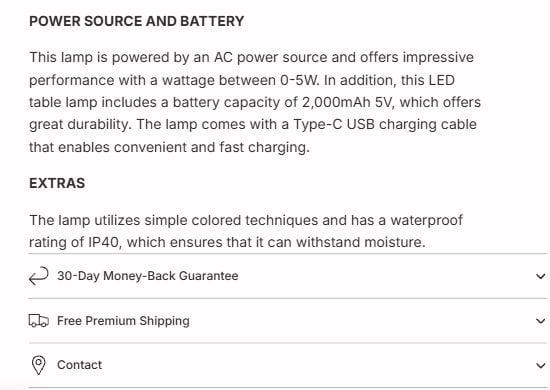
Zendra Light’s Nordic lamp listing promotes water resistance for outdoor and bathroom use. Farther down, it describes IP40 as a waterproof rating that withstands moisture.
That explanation is wrong. IP40 does not establish protection against water entering the enclosure. Buyers should not rely on it for rain, splashes, or wet placement.
We would skip this offer for an exposed patio or splash-prone location unless the seller supplies verifiable, model-specific documentation correcting the conflict.
This is a documented marketing concern, not a laboratory finding that the delivered lamp is defective. We did not purchase or electrically test a unit.
What else the buying offer includes
The inspected listing, titled Modern Wireless Nordic Table And Nightstand Lamp With Touch Control, displayed $44.95 and a discount for purchasing multiple items.
The store advertises free US shipping and a 30-day money-back guarantee. Those promises need to be read alongside its separate shipping and return policies.
- The lamp’s stated IP rating does not support the claimed moisture protection.
- The refund policy requires unused condition and charges buyers postage for preference returns.
- The store discloses an overseas warehouse, so a domestic return should not be assumed.
- The shipping page and tracking link refer to another store name.
Our October 8, 2026 investigation checked the live product page, policy pages, contact disclosures, and independent technical guidance about IP40.
The strongest concern is specific and checkable
A shopper does not need to decide whether the entire business is fraudulent to identify the problem. The rating and the moisture claim conflict on the listing.
That gives readers a useful decision: do not buy this lamp for wet exposure based on the website’s assurance. Ask for the actual product instructions first.
We did not establish stolen payment data, hidden recurring billing, or universal non-delivery. Our assessment stays tied to the claims and buying conditions we verified.
Why IP40 Does Not Mean Waterproof
The two digits describe different protections
An IP code describes an enclosure’s resistance to access, solid objects, and water. Its first and second digits address different kinds of exposure.
The second digit is the important one for this claim. A zero does not specify water protection, regardless of how substantial the enclosure looks.
Schneider Electric’s technical explanation explicitly distinguishes IP40 from ratings that protect against water. It describes IP40 as not watertight.
That guidance explains the code, rather than testing this particular lamp. It is enough to show why the advertised rating cannot justify the waterproof assurance.
A location example is not a test report
The word outdoor can describe very different conditions. A sheltered, dry table and a surface exposed to rain are not interchangeable environments.
Likewise, bathroom placement may involve steam, condensation, or accidental splashes. A broad location suggestion does not specify what the electrical product can safely tolerate.
Ask for the manual and the exact model’s approved operating environment. A lifestyle photograph or an informal assurance cannot supply missing protection information.
If a seller says the rating was a typing error, request the corrected specification and supporting documentation. Do not resolve a safety-related contradiction by guessing.
Charging arrangements deserve their own check
The listing also discusses mains power, a battery, and USB charging. Buyers need a clear account of what is supplied and how the delivered unit should operate.
Keep water-exposure questions separate from charging questions. A battery-powered lamp still has electrical components, and charging introduces additional equipment and instructions.
We cannot validate a charger, battery, or claimed certification from a sales description. Request documentation matching the exact item rather than another lamp’s specification.
How the Zendra Light Buying Process Works
Step 1: an appealing use case makes the lamp seem suitable
The listing presents a portable decorative lamp for several settings. A buyer may see one convenient product that can move between a bedroom, bathroom, and outdoor table.
The first decision should be your intended environment. If the lamp needs to tolerate rain or splashes, the unsupported water claim is a reason to stop.
If you only want a dry indoor light, other questions remain relevant: brightness, battery runtime, charging equipment, dimensions, and the return procedure.
Those are product requirements, not details to settle after delivery. A lamp that looks attractive may still be unsuitable for the job you need it to perform.
Step 2: reassuring labels compete with the specification
The offer uses familiar confidence signals, including a rating panel, shipping reassurance, and a money-back promise. Their presence can make a purchase feel straightforward.
None of those signals resolves the IP40 contradiction. Customer satisfaction, even when genuine, does not establish a technical rating or certify a product’s operating conditions.
The inspected lamp page also mentions certifications without giving us a verified, model-specific report. We are not claiming those certifications are fabricated.
We are saying that an unexplained label should not become the reason you disregard conflicting instructions. Ask for the underlying document when the claim matters.
Step 3: a quantity discount encourages a larger commitment
The offer promotes 10% off when purchasing two or more items. That can make a matching pair seem economical before the specifications are settled.
Do not double an uncertain purchase simply to obtain a reduction. First decide whether one unit meets your requirements, then compare the complete basket total.
Check colors, quantities, shipping, and any additional selections before paying. Retain the confirmation so an order error can be distinguished from a product problem.
We did not establish a subscription for these lamps. Buying multiple units and consenting to marketing emails are not evidence of automatic future product charges.
Step 4: the delivery policy reveals a broader operation
The shipping policy lists 1–2 business days of handling and 3–7 business days of transit for US orders. Those are seller estimates, not delivery times we tested.
The same page begins by referring to Every Wear, while later identifying Zendra Light. Its footer tracking link also points to every-wear.shop.
That overlap needs explanation before you treat a tracking page as belonging to your order. A copied name may reflect a shared operation or unfinished website editing.
It does not independently establish fraud or prove who owns both stores. It does show why the merchant should clarify the order and support relationship.
Step 5: the return guarantee becomes a set of conditions
The refund policy allows requests within 30 days of delivery but requires unused goods in their original condition, with packaging and accessories.
For preference returns, buyers pay postage. Defective or incorrectly supplied items have a different stated arrangement, with no return cost to the customer.
A product that works but disappoints is therefore different from a unit with a documented defect or a specific mismatch with the listing.
Ask whether a brief indoor inspection is permitted. Do not interpret the guarantee as permission to use the lamp outdoors for weeks before returning it.
Company, Address, and Fulfillment Checks
The current pages identify RESA Enterprises LLC
The sampled pages name RESA Enterprises LLC and publish company number 301473487. We did not independently establish that number’s registration authority or connection to the storefront.
A same-name company appearing in a registry search cannot automatically verify this merchant. Its jurisdiction, registration number, address, and business relationship need to match.
Do not accuse an unrelated company because its name resembles the disclosure. For your transaction, ask for the invoicing entity and compare it with your payment record.
We did not reproduce historical reports of changing company names on the pages checked today. Those older allegations should not be presented as our current findings.
The US address does not promise a US return
The disclosed business address is 1110 G St, Scott, LA 70583. The site separately lists a warehouse in Rio de Janeiro, Brazil.
That distinction matters because an administrative address and a return destination serve different purposes. A US contact address does not make international postage disappear.
We did not inspect either location or verify staffing. We cannot call them fabricated, and we cannot confirm that either accepts unsolicited customer parcels.
Request the authorized return country and recipient before buying. The disclosed warehouse makes that question concrete, but does not prove where every order or return travels.
The support channels are listed, but their performance is untested
The merchant publishes info@zendralight.com and +1 857 7587183. Its pages also describe weekday support hours and expected response times.
We did not send a message or place a call. Therefore, we cannot say the number is disconnected or that cancellation and refund requests go unanswered.
A useful preliminary inquiry would ask about the IP40 wording, permitted inspection, and the return location. Those questions should receive specific answers.
Keep any written clarification. If the answer merely repeats that the product is excellent, the important buying questions remain unresolved.
International sourcing is disclosed, not independently inspected
The About Us page says the business works with international factories and suppliers. That supports a sourcing model involving other manufacturers rather than an identified local factory.
It does not establish the country of manufacture for the lamp. Nor does it verify quality testing, certification, or the origin of every catalog image.
Look for a named manufacturer, model, electrical label, and appropriate instructions. Those details help connect a physical item with the claims used to sell it.
The Return Cost Question Behind the Guarantee
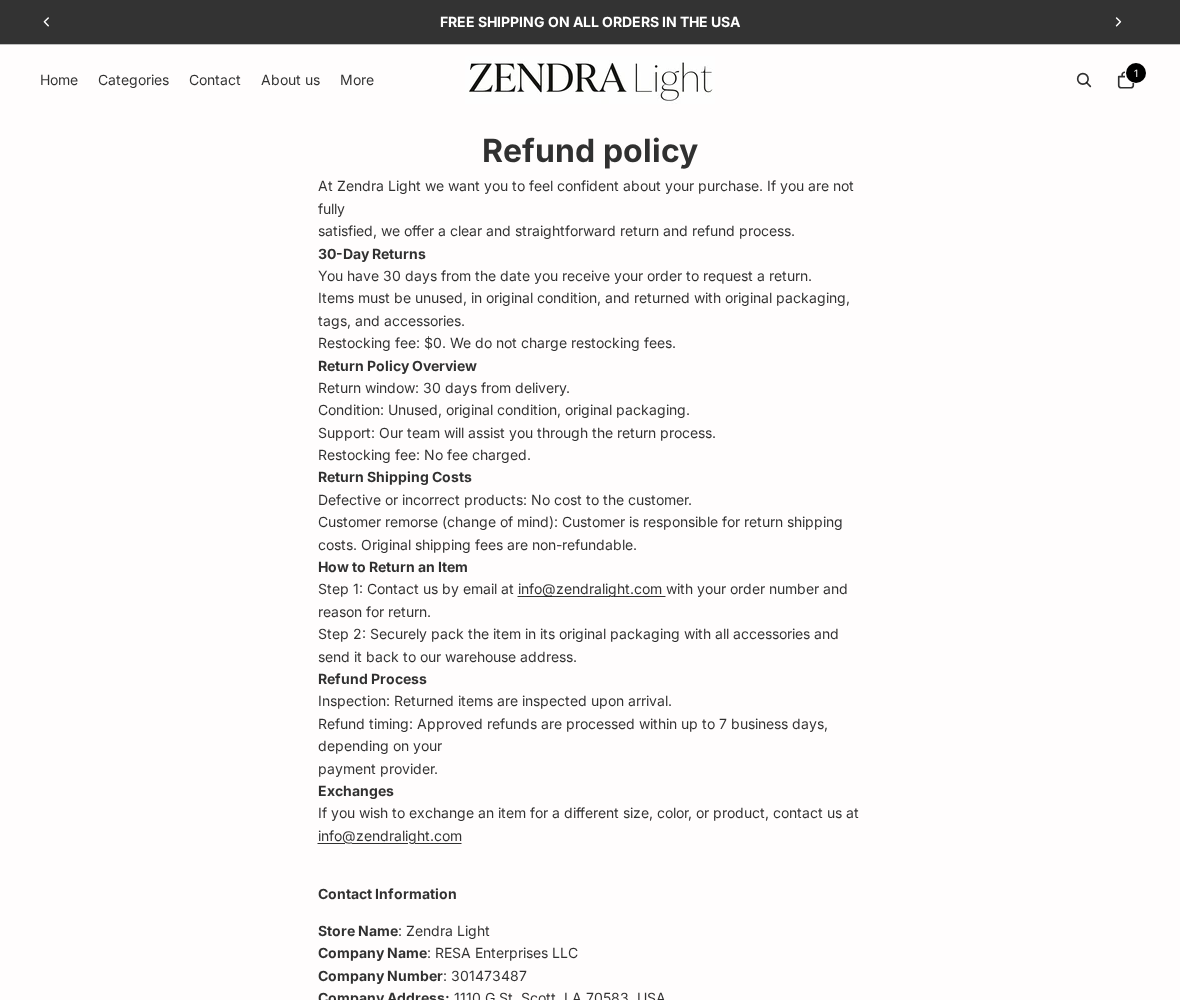
The published return conditions describe a real procedure. They should be evaluated alongside the likely reason you would send the lamp back.
If you bought it for an exposed outdoor location, clarify the conflicting specification before delivery. Waiting to discover the problem through wet use is a poor approach.
If you simply dislike the appearance, calculate return postage once an address is supplied. Shipping can materially change the economics of returning a relatively inexpensive lamp.
Do not assume a specific overseas destination from the warehouse disclosure. Ask, then evaluate the actual authorized route and any exclusions affecting your refund.
The same care applies to a partial-refund offer. Compare the amount with what you would retain and whether the item has any suitable use for you.
Accept a settlement only after understanding what it resolves. A new discount code should not substitute for an answer about the existing purchase.
What to Do If You Ordered From Zendra Light
Begin with the intended use and the delivered item’s documentation. You can address a misleading specification without making unsupported claims about the whole company.
- Preserve the listing and order details.
Save the water-resistance statement, IP40 paragraph, selected variant, price, and confirmation. Include the page address and date in your records.
Keep the shipping and return terms that applied when you paid. These records explain what you relied on if the description changes.
- Request a correction before using the lamp near water.
Email the merchant with your order number and ask which specification is accurate. Request the exact model’s manual and verifiable protection rating.
If wet-location use was the reason for buying, explain that clearly and request an appropriate remedy. Do not test an unsupported claim with water yourself.
- Inspect the delivered item and its labels.
Photograph the model label, supplied instructions, charging equipment, packaging, and visible damage. Compare those details with the saved offer before extended use.
Follow the supplied instructions. If equipment is visibly damaged or its electrical requirements are unclear, stop using it and seek appropriate advice.
- Ask for the specific return arrangement.
State whether you received the wrong item, found a defect, or relied on a conflicting advertised capability. Request written authorization and the proposed solution.
Confirm the recipient, destination country, shipping responsibility, and refund amount. Do not mail a parcel to the Louisiana address without permission.
- Keep a return traceable from start to finish.
If you accept an authorized return, retain photographs of the packed contents, postage receipt, and tracking. Save the merchant’s approval and promised refund timing.
Check the original payment account for the completed credit. A message saying a refund is planned does not establish that the money has arrived.
- Escalate an unresolved transaction through the payment service.
Ask your issuer or payment provider about the appropriate dispute route and deadline. Describe the actual issue accurately and supply the relevant listing and correspondence.
Different payment methods and locations provide different protections. Keep pursuing a documented answer while preserving any available opportunity for payment-provider review.
Questions the Seller Should Answer Before Another Purchase
Ask for a manual that names the model and states where it may operate. That is more useful than a general assurance about waterproof performance.
Request an explanation of the Every Wear references and tracking destination. The connection should be clear enough that you know which business handles your order.
Then obtain the return destination and acceptable inspection conditions. A purchase is easier to assess when you know what happens if the lamp is unsuitable.
If these answers remain vague, choose a seller that supplies clear specifications and usable return instructions. You do not need to complete a purchase to earn clarity.
For an outdoor light, compare products with documented protection appropriate to the intended exposure. Matching the operating environment matters more than matching the promotional photograph.
Frequently Asked Questions
Is Zendra Light a confirmed scam?
We found a specific misleading technical claim and buying-information concerns. We did not establish a confirmed fraudulent operation or a universal pattern of failed orders.
The lamp should not be bought for wet exposure based on the inspected IP40 assurance. That recommendation follows directly from the rating conflict.
Does IP40 protect a lamp from rain?
IP40 does not specify water protection. It cannot support a promise that the enclosure withstands rain or splashing.
Obtain documentation for the actual model and intended environment. A website using the word waterproof does not change the meaning of the code.
Does a battery make the lamp safe around water?
A battery does not establish water resistance or validate a product’s safety. The enclosure, circuitry, charging arrangement, and supplied instructions still matter.
Do not use a product where its documented protection is inadequate. This review did not perform a physical electrical assessment.
Will a Zendra Light return go to Brazil?
The site discloses a Brazilian warehouse, but we did not verify the destination for every customer return. Request order-specific instructions before sending anything.
Calculate postage only after receiving the approved address. A US business address should not be treated as confirmation of domestic returns.
Why does the shipping page mention Every Wear?
The name appears in the shipping introduction, and a footer tracking link points to every-wear.shop. We did not independently verify the ownership relationship.
Ask the seller to explain the connection. The overlap is a transparency concern, not sufficient proof that both stores are fraudulent.
Does the 30-day guarantee cover a used lamp?
The refund policy requires unused condition, so an unrestricted trial should not be assumed. Ask whether brief inspection is allowed before relying on the guarantee.
Describe a defect or advertising mismatch separately from preference. The seller’s stated postage arrangements differ according to the reason for returning.
The Bottom Line
Zendra Light’s IP40 description does not support its moisture-protection claim. Do not buy the reviewed lamp for exposed outdoor or wet use on that assurance.
The merchant should also clarify the tracking relationship, model documentation, and return destination. If it cannot answer those questions, choose a better-documented offer.
Already ordered? Save the listing, avoid unsupported water exposure, and request a specific remedy. Keep the evidence and your payment-provider options available.








